The Tool Desk
Outbyte PC Repair FREEClear out junk files and repair common Windows errorsFree Scan →Outbyte Driver Updater FREEFix the driver behind crashes, sound loss and screen glitchesFind Drivers →China’s technology giants are investing more in AI even as U.S. export controls limit or condition access to some advanced chips and semiconductor technologies. The clearest disclosed commitment is Alibaba’s pledge to spend more than US$53 billion on cloud and AI infrastructure over three years, announced in February 2025. The spending trend is real, but the evidence is uneven: company commitments, reported capital expenditure and industry forecasts are different measures, and none by itself proves that Chinese firms have matched U.S. capabilities.
What the spending figures show—and what they do not
AI expenditure is not a single accounting category. Capital expenditure can cover accelerators, servers, data centers, power, cooling, networking and storage. Research and development includes model work, chip design, software and talent. Operating expenses include cloud rentals, electricity and model serving. Strategic investment may include partnerships, supply-chain commitments and overseas facilities. Companies often disclose only a portion of these costs as AI-specific, so apparently comparable numbers may measure different things.
Alibaba offers the strongest company-level disclosure. In February 2025 it announced a commitment of more than US$53 billion over three years for cloud computing and AI infrastructure—more than it said it had invested in those areas during the previous decade. Later reporting put its AI- and cloud-infrastructure capital expenditure at about RMB120 billion over the four quarters covered by its late-2025 results. These are not pure AI-only figures: cloud infrastructure can serve non-AI workloads too. Alibaba’s investment announcement and its quarterly capex disclosure provide the company’s own framing.
Alibaba also reported AI-related product revenue at an annualized RMB35.8 billion in its fiscal-2026 reporting. Annualized revenue is a run rate, not revenue recognized over a full year. Its fiscal-2026 results and Form 20-F are useful for assessing the commercial side alongside the infrastructure commitment.
Do these 3 things before closing this tab:
1Fix the driver behind crashes, sound loss and screen glitches2Clear out junk files and repair common Windows errors3Scan for outdated or missing drivers - takes under a minute#1 Best Overall

- System Compatibility Note: This 2-slot card measures 271 x 112 x 39 mm and requires a single 12V-2x6-pin power connector. Please verify chassis and PSU compatibility before purchase.
- Dedicated Support: Please contact us directly through Amazon for any product questions or assistance you may require.
- Professional Intel Arc Pro B70 GPU: Built on the Intel Xe2-HPG architecture, it features 32 Xe cores and 256 XMX engines, designed to accelerate AI, rendering, and complex visualization workloads.
- Massive 32GB GDDR6 VRAM: Equipped with 32GB of high-speed GDDR6 memory on a 256-bit bus, running at 19 Gbps, which allows for handling large AI models and complex datasets locally.
- High-Performance Engine Clock: Delivers an engine clock of 2540 MHz, providing the compute power needed for demanding professional applications and AI inference.
Industry forecasts suggest the capital-spending push extends beyond Alibaba. TrendForce estimated that 2026 capital expenditure by major Chinese cloud and platform companies could grow by more than 80% year over year. This is a forecast, not audited or consolidated company spending, and should not be read as a precise measure of AI-only investment. TrendForce’s revised 2026 forecast includes Alibaba, Tencent, Baidu and ByteDance.
How the major companies approach AI investment
| Company | What is established | Strategy and evidence limits |
|---|---|---|
| Alibaba | More than US$53 billion committed over three years to cloud and AI infrastructure; about RMB120 billion in AI- and cloud-infrastructure capex over the four quarters reported in late 2025. | Its strategy connects T-Head processors, Qwen models, cloud services and applications. The spending figures include infrastructure that may serve both AI and other cloud workloads. |
| Tencent | Public disclosures do not cleanly establish a current, AI-only spending total. | It is investing in computing infrastructure and combines legally available foreign accelerators with domestic chips, internal ASIC work, cloud services and Hunyuan. Its distribution through WeChat, games, advertising and enterprise services offers routes to customers, but analyst estimates should not be presented as company-confirmed spending. |
| Baidu | No comparable current AI-capex commitment is established in the cited company results. | Its AI activity spans ERNIE, Baidu AI Cloud, Apollo Go and enterprise services. Baidu’s fiscal-2025 results can inform an assessment of performance, not support an invented AI-spending figure. |
| ByteDance | It does not publicly disclose capex guidance at the same level of detail as listed peers. | Its Doubao platform and large distribution base make it a major AI investor, but infrastructure-spending totals are industry estimates. TrendForce’s earlier forecast is an estimate, not a ByteDance filing. |
| Huawei | Huawei reported CNY880.9 billion in 2025 revenue and CNY68 billion in net profit; those are company-wide figures, not AI expenditure. | It supplies Ascend processors, servers, networking, cloud and the CANN software ecosystem, making it central to domestic infrastructure rather than a direct platform-company peer. Huawei’s 2025 annual report announcement describes the overall results. |
The evidence hierarchy matters: company capex guidance and filings are firmer than infrastructure disclosures with mixed uses; supplier orders and construction evidence are less direct; analyst forecasts are useful for direction, not company accounting. Tencent, Baidu and ByteDance should not be assigned precise AI spending totals without a source that explicitly supports them.
Rank #2

- NVIDIA Volta GV100 Architecture — 4,608 CUDA Cores, 640 1st-Gen Tensor Cores delivering 14 TFLOPS FP32 and 112 TFLOPS deep learning performance for AI training, inference, HPC, and scientific computing workloads
- 32GB HBM2 ECC Memory — 900 GB/s Bandwidth — High-bandwidth memory on a 4096-bit bus with ECC error correction provides the memory capacity and throughput required for the largest AI models, simulations, and datasets
- PCIe 3.0 x16 Interface — 250W TDP — Standard PCIe Gen3 connectivity with passive cooling designed for enterprise rack server deployment in HPE ProLiant, Dell PowerEdge, and Supermicro platforms with adequate chassis airflow
- NVLink — Scale to 96GB Unified Memory — Connect two V100 GPUs via NVLink at 300 GB/s bi-directional bandwidth to scale GPU memory from 32GB to 96GB for larger AI training and HPC workloads
- Multi-Precision Computing — Supports FP64 (7 TFLOPS), FP32 (14 TFLOPS), FP16 (112 TFLOPS) and INT8 precision modes for flexible deployment across training, inference, and scientific simulation workloads
What U.S. export controls restrict
“Export controls” do not mean one unchanging ban on every chip or AI service. U.S. rules can restrict advanced AI accelerators, semiconductor manufacturing equipment and related technologies, as well as certain transactions involving listed entities or advanced-node and supercomputer end uses. Licensing requirements may also affect cloud or infrastructure arrangements that provide access to controlled computing. The rules have evolved since major controls were introduced in October 2022 and updated in October 2023 and January 2025. The Bureau of Industry and Security’s overview of advanced-computing controls summarizes the policy framework.
As of August 16, 2026, China remains subject to stringent U.S. controls, but it is inaccurate to describe access as a simple all-or-nothing prohibition. On January 13, 2026, the U.S. Department of Commerce said applications for Nvidia H200, AMD MI325X and similar chips would be reviewed case by case under specified security conditions. Case-by-case review is not unrestricted access; licensing, customer screening, compliance requirements and supply availability still matter. The BIS policy announcement explains that change. January 2025 measures also strengthened controls and foundry due diligence, as described in BIS’s January 2025 announcement.
Quick wins for a faster PC:
Fix the driver behind crashes, sound loss and screen glitchesFind Drivers →Clear out junk files and repair common Windows errorsFree Scan →Rank #3

- Powered by Radeon AI PRO R9700 - Supercharge you workflow with the cutting-edge RDNA 4 Architecture and 2nd-gen AI Accelerators.
- 32GB GDDR6 with 256-bit memory bus - Tackle larger, more complex projects without limits.
- PCIe Gen 5 - Unlock lightning-fast data transfers with PCIe Gen 5 support.
- GIGABYTE TURBO Fan Cooling System - Indented metal cover and blower fan increase airflow intake, while the vapor chamber, all copper heat sink, and metal frame offer efficient heat dissipation. Optimized airflow design allows for easy multi-GPU scalability.
- Double Ball Bearing Fan - Delivers superior heat resistance and rotational efficiency for better performance and a longer lifespan compared to conventional sleeve fans.
Rules can reach beyond a chip’s physical destination: the headquarters or ultimate parent of a company may affect licensing obligations, including where an operating entity is located elsewhere. Relevant provisions include BIS Part 740, BIS Part 744 and BIS Part 748. The applicable rule depends on the product, parties, end use and transaction structure; a case-by-case policy does not guarantee approval.
Why invest more when advanced hardware is harder to obtain?
Commercial demand is growing
Cloud providers have a business reason to build capacity if customers are paying to train, deploy and run AI services. Alibaba’s cloud and AI disclosures point to a commercial growth strategy, not only a defensive response to controls. The key test is whether customer demand, recognized revenue, utilization and margins grow enough to justify capital costs. Alibaba’s fiscal-2026 filing provides company-reported context, though an annualized AI revenue run rate should not be mistaken for full-year sales.
Rank #4
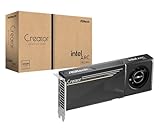
- System Compatibility Note: 2-slot card, 271x112x39mm, single 8-pin power, 200W TDP. Verify chassis clearance and PSU capacity before purchase.
- Dedicated Support: Please contact us directly through Amazon for any product questions or assistance you may require.
- 24GB GDDR6 on 192-Bit Bus: Massive 24GB memory with 456 GB/s bandwidth – ideal for LLMs, AI inference, 3D rendering, and generative design.
- Intel Xe2-HPG Architecture: Built on Intel's next-gen architecture with 20 Xe cores and 160 XMX engines for AI acceleration (197 INT8 TOPS).
- PCIe 5.0 Support: PCI Express 5.0 x16 interface for maximum bandwidth with the latest workstation platforms.
Scarce compute encourages early commitments
Uncertain access can make capacity more valuable. Companies may buy available compliant hardware, reserve cloud capacity, build data centers or secure domestic supply-chain commitments ahead of demand. That can improve resilience, but it also risks locking capital into equipment or facilities that may be costly or underused.
Domestic substitution takes more than designing a processor
A domestic accelerator is useful only as part of a working system. Companies and suppliers need memory, packaging, high-speed interconnects, compilers, libraries, cluster management, model optimization and developer tools. Matching a competitor’s chip on one benchmark would not by itself establish equivalent performance, cost or software support across real workloads.
Free tools Windows power users keep installed
One-click scans. No signup required.
Best Value

- Professional AI & Creator Workstation: AMD Radeon AI PRO R9700 GPU with 32GB GDDR6 is engineered for AI development, professional content creation, and compute-intensive workloads.
- Massive 32GB Memory Capacity: 32GB of GDDR6 memory on a 256-bit bus provides ample bandwidth for large AI models, 8K video editing, and complex 3D rendering.
- Advanced RDNA 4 with AI Accelerators: 64 Compute Units with 3rd Gen Ray Tracing and dedicated 2nd Gen AI Accelerators for groundbreaking AI performance and visual computing.
- Professional Blower Cooling: Efficient single blower design exhausts heat directly out of the chassis, ideal for multi-GPU workstation and server configurations.
- Enterprise-Grade Thermal Solution: Vapor chamber heatsink with industrial Honeywell PTM7950 thermal interface material ensures reliable cooling under sustained professional loads.
Software efficiency can stretch constrained hardware
Methods such as mixture-of-experts architectures, quantization, pruning, distillation, sparse computation and careful data selection can reduce compute needs, particularly for inference. Software improvements can make weaker or older chips useful; they do not erase the greater demands of training the largest frontier models. Model benchmark results alone do not reveal training duration, hardware utilization, total compute or inference cost.
Industrial policy and platform distribution reinforce spending
AI infrastructure aligns with Chinese efforts to develop domestic semiconductor capacity and reduce reliance on foreign technology. Meanwhile, platform companies can embed models in commerce, social media, advertising, search, games and enterprise tools. That creates routes to revenue beyond selling a general-purpose chatbot subscription.
Independent reader supportYour contribution helps us test, update, and keep practical guides available for everyone.How companies are adapting to the constraints
- Mixing hardware sources: Firms may use domestic processors alongside foreign accelerators where legally available, subject to product-specific controls and licensing.
- Building domestic systems: Investment can encompass chips, servers, networking and software stacks, with Huawei one important supplier.
- Optimizing workloads: Compression and more efficient model design can prioritize useful inference and applications rather than only maximum training scale.
- Expanding infrastructure: Data centers, power and cooling are part of the AI capacity equation, but construction does not guarantee strong utilization or returns.
- Using overseas capacity selectively: Overseas data centers may offer access to different hardware, but cross-border computing, model transfers, data security and export-control rules can constrain arrangements.
Open-source models and domestic software ecosystems can encourage adoption and improve compatibility, but openness does not remove hardware bottlenecks or regulatory restrictions. Nor does a chip falling below a formal threshold make it irrelevant: enough units in a cluster can still provide meaningful capacity, though at a different cost and efficiency.
Does higher spending mean China has caught up?
No. Spending data establishes an investment push, not technological parity. Three separate questions need separate answers:
Crashes, No Sound, or Screen Glitches?
Random freezes, missing sound and display glitches usually trace back to one bad driver. Find and replace yours safely.Free scan · under a minutePC Slower Than It Used to Be?
A free scan shows the junk files, broken settings and background clutter dragging Windows down - then fixes them in one click.Free scan · Windows 10 & 11- Can Chinese companies build useful, commercially relevant AI? Yes. Their platforms, cloud services and application businesses provide ways to deploy models and sell AI-enabled products.
- Has China demonstrated parity in the largest U.S. frontier-training clusters? The cited spending disclosures do not establish that. Access to leading accelerators, advanced manufacturing equipment, high-bandwidth memory and packaging remains uncertain, and benchmark performance alone would not settle the question.
- Can China build a self-sufficient AI hardware and software ecosystem? That effort is underway, but the ability to supply competitive chips at scale with mature software support remains unresolved.
Controls appear to have constrained choices and increased the complexity and cost of investment, but they have not stopped spending or AI development. Their effect is better understood as a capacity constraint and incentive for substitution than as a complete halt. Domestic alternatives may strengthen resilience while imposing near-term software-porting, performance and efficiency trade-offs.
Quick Recap
What investors and business readers should watch
- Comparable spending disclosures: Separate AI-specific commitments from total capex, cloud infrastructure, R&D and analyst forecasts.
- Commercial returns: Look for recognized AI revenue, customer adoption, cloud growth, utilization and margins—not just annualized run rates or model launches.
- Cost per useful workload: A less powerful accelerator may still be economical for inference if software and utilization compensate; training economics may be different.
- Supply and policy changes: Licensing rules, chip availability, equipment restrictions and customer eligibility can change, so older descriptions of access may no longer apply.
- Overbuilding risk: Data-center capacity built ahead of demand can depress utilization and returns, while power availability can limit practical capacity.
- Software ecosystem progress: Compiler support, developer adoption, cluster reliability and portability show whether domestic chips can be used efficiently beyond a demonstration.
Product prices and availability are accurate as of the date/time indicated and are subject to change. Any price and availability information displayed on Amazon at the time of purchase will apply.




