Do these 3 things before closing this tab:
1Scan for outdated or missing drivers - takes under a minute2Repair Windows errors before they cause bigger problems3Fix the driver behind crashes, sound loss and screen glitchesCoreWeave announced on July 3, 2025, that it was the first AI cloud provider to deploy NVIDIA GB300 NVL72 systems for customers. That was a meaningful early-deployment milestone—but it was a claim about a rack-scale platform, not simply a shipment of chips, and it did not prove a lasting lead in price, capacity, or customer results. By August 2026, GB300 was no longer NVIDIA’s newest platform.
What CoreWeave’s “first” claim actually means
CoreWeave’s July 3, 2025 announcement described the company as the first AI cloud provider to deploy NVIDIA GB300 NVL72 systems for customers. The claim is attributable to CoreWeave; it does not establish that CoreWeave was the first company anywhere to possess GB300 hardware, the first to manufacture the systems, or the first to offer them broadly in every region. Nor does it establish an independently audited industry-wide chronology. CoreWeave’s announcement is the primary source for the milestone.
| # | Preview | Product | Price | |
|---|---|---|---|---|
| 1 |
|
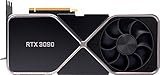
nVidia GeForce RTX 3090 Founders Edition Graphics Card | $2,389.99 | Buy on Amazon |
| 2 |

|
Nvidia GeForce RTX 3090 Ti Founders Edition | $2,449.99 | Buy on Amazon |
| 3 |

|
NVIDIA Tesla L4 24GB PCIe Graphics ACELLERATOR HH/HL 75W GPU 900-2G193-0000-000 | $3,950.00 | Buy on Amazon |
| 4 |

|
NVIDIA Quadro RTX 6000 | $1,499.96 | Buy on Amazon |
The timing matters. GB300 was presented as a new NVIDIA platform in July 2025. By June 2026, CoreWeave had announced a validated bring-up of NVIDIA Vera Rubin NVL72, a newer generation. NVIDIA’s list of early Vera Rubin cloud providers included AWS, Google Cloud, Microsoft, OCI, CoreWeave, Lambda, Nebius, and Nscale. “First” status is therefore a time-bound milestone in a fast-moving hardware cycle, not a permanent distinction. (CoreWeave’s Vera Rubin announcement; NVIDIA’s Rubin announcement)
GB300 NVL72 is a rack-scale system, not just a chip
The technically important object was the integrated NVL72 rack. CoreWeave’s documentation describes each rack as combining 72 NVIDIA Blackwell Ultra GPUs, 36 NVIDIA Grace CPUs, and 18 NVIDIA BlueField-3 DPUs, connected through NVLink and integrated with networking and cloud services. That coordinated system is what the deployment claim refers to—not simply individual “GB300 chips.”
#1 Best Overall
- Chipset: NVIDIA GeForce RTX 3090
- Video Memory: 24GB GDDR6X
- Memory Interface: 384-bit
- Output: DisplayPort x 3 (v1.4a) / HDMI 2.1 x 1
- Nvidia India 3 Year *
| Term | What it means |
|---|---|
| GB300 | NVIDIA’s Blackwell Ultra-based system designation. |
| GB300 NVL72 | A rack-scale platform with 72 Blackwell Ultra GPUs, 36 Grace CPUs, 18 BlueField-3 DPUs, and NVLink connectivity, as described in CoreWeave’s documentation. |
| Cloud instance | A customer-facing allocation or slice of provider infrastructure; it is not necessarily an entire rack. |
| GPU chip | The physical accelerator. Using “chips” for the whole deployment obscures the networking, compute, cooling, and software integration involved. |
CoreWeave said its deployment was developed with Dell, Switch, and Vertiv. Those partners point to the work behind a rack-scale launch: server and rack integration, facility power and cooling, networking, and operational readiness. A cloud provider cannot turn a GPU allocation into dependable capacity without those pieces.
Why early deployment could matter to AI buyers
GB300-class systems are aimed at demanding AI work, including large-scale training, fine-tuning, reasoning-model inference, mixture-of-experts models, long-context inference, and high-throughput production serving. A tightly connected rack can help workloads that need substantial communication among GPUs. It may be unnecessary, however, for a small service or an embarrassingly parallel job that does not benefit from that scale.
CoreWeave’s launch materials claimed up to 10× greater user responsiveness, 5× better throughput per watt than the previous NVIDIA Hopper generation, and 50× greater output for reasoning-model inference. These are vendor claims tied to specific workload comparisons and configurations, not universal gains or a promise of the same improvement for every model and customer. Buyers should ask what model, baseline, precision, serving setup, and measurement method underpin a comparison before using it to forecast cost or performance. (CoreWeave’s launch announcement)
The advantage depends on operating the whole stack
CoreWeave described GB300 as integrated with CoreWeave Kubernetes Service (CKS), Slurm on Kubernetes (SUNK), observability tools, its Rack LifeCycle Controller, cluster-health monitoring, and high-speed networking. For a distributed workload, scheduling jobs onto the right topology, detecting unhealthy components, and keeping network and thermal behavior stable can matter as much as the nominal GPU count.
What’s actually slowing this PC down?
Pick the symptom - the matching free tool is one click away.
Rank #2
- 900-1G136-2505-000
Infrastructure is also a constraint. CoreWeave’s FY2025 annual filing says its data centers use closed-loop liquid cooling to handle higher rack density and power requirements, and cites its track record of bringing NVIDIA GB200 and GB300 systems to market early. That supports a plausible operational advantage: facilities, power, cooling, equipment supply, networking, and software integration can determine how quickly a provider turns new hardware into usable capacity. It does not, on its own, prove that the capacity is cheaper or more reliable than competitors’ offerings. (CoreWeave FY2025 annual filing)
What the benchmark results show—and what they do not
In its MLPerf Training v6.0 submission, CoreWeave reported training DeepSeek-V3 671B to target quality in approximately 2.02 minutes using 8,192 GB300 GPUs across 2,048 nodes. It also reported 3.09 minutes using 4,096 GPUs and 5.54 minutes using 2,048 GPUs. For Llama 3.1 405B, CoreWeave reported reaching the reference target in 9.77 minutes on 4,096 GB300 GPUs.
| Reported task | GPU count and cluster size | Reported time | Source and qualification |
|---|---|---|---|
| DeepSeek-V3 671B to target quality | 8,192 GPUs across 2,048 nodes | Approximately 2.02 minutes | CoreWeave’s MLPerf Training v6.0 report. |
| DeepSeek-V3 671B to target quality | 4,096 GPUs | 3.09 minutes | CoreWeave-reported MLPerf Training v6.0 result; node count not stated in the cited summary. |
| DeepSeek-V3 671B to target quality | 2,048 GPUs | 5.54 minutes | CoreWeave-reported MLPerf Training v6.0 result; node count not stated in the cited summary. |
| Llama 3.1 405B to reference target | 4,096 GPUs | 9.77 minutes | CoreWeave-reported MLPerf Training v6.0 result; node count not stated in the cited summary. |
CoreWeave said it was the only v6.0 submitter to scale a GB300 platform beyond 2,048 GPUs for DeepSeek-V3. It attributed the results to NVIDIA NeMo Framework Release 26.04, CUDA graphs, tensor, pipeline, and context parallelism, topology-aware scheduling, NVIDIA Spectrum-X Ethernet using RoCE, rail-aware networking, and health checks across hardware, firmware, networking, and thermal systems. It also said the benchmark infrastructure was the same production infrastructure available to customers. Those are company statements accompanying its submission. (CoreWeave’s MLPerf report)
The results are evidence of large-cluster execution on a defined training benchmark, not a forecast for an ordinary customer job. A 2.02-minute result on 8,192 GPUs says little by itself about a smaller deployment, inference cost, service reliability, or the cost per useful output token. Benchmark training speed and customer economics are different questions.
Rank #3
- 24GB Video Memory
- Fourth Generation Tensor Cores
- HALF HEIGHT BRACKET ONLY
Customer availability and price require direct confirmation
CoreWeave announced the deployment “for customers” in July 2025. Its documentation later said GB300-powered instances were available in select regions from August 19, 2025, initially through CKS in the US-WEST-01A availability zone, with additional zones expected. The documentation page was last modified July 29, 2026. This establishes documented, region-specific availability—not unrestricted global access or capacity for every buyer. (CoreWeave GB300 release notes)
The public record cited here does not establish the allocation sizes, reservation terms, queueing, minimum commitments, supported software images in each region, or availability outside North America. A prospective customer should confirm these details with the provider for the intended region and workload.
CoreWeave’s pricing page lists GB300 NVL72 as “Contact sales,” with no public hourly GB300 rate shown. The page’s listed configuration includes four GPUs, 279 GB of VRAM, 144 vCPUs, 960 GB of system RAM, and 61.44 TB of local storage. That configuration is not a public price quote. The page separately lists GB200 NVL72 at $42 per hour for the displayed North American configuration; that is a GB200 listing and should not be treated as a GB300 rate. (CoreWeave pricing)
Independent reader supportYour contribution helps us test, update, and keep practical guides available for everyone.How to judge whether the lead matters for your workload
For a buyer, the relevant question is not only whether a provider deployed a system first. Compare the cost and operational fit of the capacity you can actually obtain.
Rank #4
- CUDA Cores: 4608 / NVIDIA Tensor Cores: 576 / NVIDIA RT Cores: 72
- GPU Memory: 24 GB GDDR6 with ECC / Bandwidth: 624 GB/Sec
- System Interface: PCI Express 3.0 x16
- Four DisplayPort 1.4 Connectors
- 3D Stereo Support with Stereo Connector
- Workload: Distinguish training from inference, dense models from mixture-of-experts models, and latency-sensitive reasoning from batch throughput. Ask whether the workload benefits from a large NVLink-connected domain.
- Scale and utilization: Confirm the number of GPUs available, whether the provider can scale beyond a rack, and whether your team can keep expensive capacity usefully occupied. Peak performance has limited value if much of the allocation sits idle.
- Software and portability: Check CUDA and framework compatibility, Kubernetes or Slurm requirements, distributed-training support, topology-aware placement, and the work needed to move the job elsewhere.
- Availability and contract: Verify region, capacity reservation, lead time, contract duration, and whether access is on demand or sales-mediated.
- Total economics: Compare cost per completed training run or useful inference output, including idle time, storage, data transfer, checkpointing, restart costs, and engineering effort—not just an hourly GPU figure.
- Reliability and facilities: Ask about health monitoring, failure replacement, straggler handling, checkpoint recovery, power and cooling capacity, and the service level that applies to your deployment.
- Geography and compliance: Confirm data residency, security and sector-specific requirements, and whether the required configuration is available in the compliant region.
These checks apply to CoreWeave and its alternatives. AWS EC2 accelerated computing may suit organizations already standardized on AWS; Google Cloud GPUs integrate with Google’s data and AI services; Azure GPU virtual machines may fit Microsoft-centered enterprise environments; Lambda and Nebius are specialist AI-cloud alternatives. Their general product pages do not establish that a particular GB300 configuration is available in a buyer’s region, at a given price, or at a needed scale. Capacity, terms, and software fit must be checked directly: AWS EC2 accelerated computing, Google Cloud GPUs, Azure GPU virtual machines, Lambda GPU Cloud, and Nebius AI Cloud.
Does “first” secure CoreWeave a lasting edge?
It establishes an early deployment achievement and supports the view that CoreWeave can coordinate hardware, facilities, software, and networking quickly. Later MLPerf results add evidence that the company could scale GB300 for a demanding training benchmark. Those facts make the milestone commercially relevant to teams seeking early access to large NVIDIA systems.
They do not establish the lowest customer cost, the largest GB300 fleet, best reliability, highest utilization, most GB300-related revenue, or durable customer retention. The platform can become available from more providers, while a rapid hardware cadence makes any “newest” advantage temporary. Early access can also come with sales-led pricing, capacity constraints, utilization risk, and the engineering costs of optimizing for a specific topology.
For investors and customers alike, a “key edge” is best understood as a possibility rooted in execution, not a demonstrated moat. The enduring test is whether early access can be converted into reliably available capacity with competitive total economics and software that customers can use effectively.
Quick wins for a faster PC:
Clear out junk files and repair common Windows errorsFree Scan →Scan for outdated or missing drivers - takes under a minuteDriver Scan →Quick Recap
Product prices and availability are accurate as of the date/time indicated and are subject to change. Any price and availability information displayed on Amazon at the time of purchase will apply.




