What’s actually slowing this PC down?
Pick the symptom - the matching free tool is one click away.
No. The $2 trillion figure was Elon Musk’s October 2024 savings target for the Department of Government Efficiency (DOGE), not a verified finding that it had uncovered $2 trillion in fraud. DOGE later claimed large savings, but those claims were not independently verified as a total. Musk allies have argued that DOGE’s larger purpose was to change how government operates; that argument describes their view of its aims, not proof that the institutional changes succeeded.
What did the $2 trillion figure mean?
In October 2024, Musk said DOGE could save the federal government at least $2 trillion. The figure was a campaign-era savings target—not a tally of detected fraud, money recovered, or independently verified savings. Ars Technica reported that the goal was later lowered to $1 trillion after the inauguration, and subsequently to $150 billion. Those, too, were targets or estimates rather than confirmed results. Ars Technica’s December 2025 account traces the changing targets and the dispute over what DOGE accomplished.
| # | Preview | Product | Price | |
|---|---|---|---|---|
| 1 |

|
A Primer on Government Spending | $3.52 | Buy on Amazon |
| 2 |
|
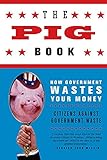
The Pig Book: How Government Wastes Your Money | $13.65 | Buy on Amazon |
| 3 |

|
Evaluating government spending | $13.32 | Buy on Amazon |
| 4 |

|
Understanding Money: An Informative Introduction to Bank Accounts, Taxes, Government Spending, and... | $12.00 | Buy on Amazon |
Fraud is only one possible source of waste, and identifying questionable spending is not the same as proving fraud. Nor is announcing a proposed cancellation the same as reducing federal outlays. A contract’s face value, funds deobligated from it, a lease or grant canceled, projected future savings, and spending actually avoided are different measures.
How much did DOGE say it saved?
In December 2025, Ars reported that DOGE claimed about $214 billion in overall spending savings, including about $61 billion attributed to canceled contracts. These were DOGE’s reported figures, not independently verified totals. Ars also described the public tracker and its accounting as unreliable, making the headline amounts difficult to treat as an audited measure of savings.
#1 Best Overall
The distinction matters for anyone trying to assess a government “saving” the way a household would assess a lower bill: a listed reduction does not establish that the government’s cash spending fell by that amount. In the same December 2025 reporting, Ars cited Cato Institute figures putting federal spending at $7.6 trillion during the first 11 months of calendar year 2025—about $248 billion more than by the same point in 2024. That comparison is not, by itself, an audit of DOGE’s individual actions, but it does not show an overall reduction in spending.
Cato’s report, as quoted by Ars, said DOGE had not cut spending by either an absolute-real-terms standard or a baseline-projection standard. It also praised the scale of workforce reductions. These are separate assessments: the first concerns budget outcomes, the second the size of staffing changes.
Rank #2
What did the GAO review find?
In 2026, The Washington Post reported on a Government Accountability Office review covering $110 billion in DOGE-reported savings associated with contracts, grants, and leases. That was a defined subset of reported claims, not an examination of every DOGE activity, a calculation of all federal fraud, or a validation or rejection of every figure in DOGE’s public tally. The Post reported that GAO found DOGE did not accurately report actions taken on contracts. The Washington Post’s account links to the GAO report.
- Leases: Of 264 leases DOGE listed for termination, 108 were already in termination processes when DOGE was established, according to the Post’s reporting on the review.
- Contracts: Nearly 2,000 of the 13,476 contract terminations DOGE claimed had not been terminated, the Post reported.
- Claimed contract savings: Nearly $35 billion of DOGE’s reported $61 billion in contract savings was either not terminated or could not be corroborated, according to the Post’s account.
The findings challenge the reliability of the reported contract savings within the reviewed material. They should not be stretched into a claim that GAO audited every DOGE action or measured the government’s total fraud losses.
Free tools Windows power users keep installed
One-click scans. No signup required.
Rank #3
A reported contract illustrates the accounting problem
The Associated Press reported that DOGE claimed $1.7 billion in savings from a Defense Department IT contract even though no action to terminate it had been taken. A claimed saving attached to a contract without a termination is not evidence that the stated amount was actually saved. The AP report on the GAO findings describes this example.
Why do Musk’s allies say the savings target was not the whole point?
Ars reported that five unnamed Musk allies told The Guardian DOGE had a broader purpose than reaching a particular savings number. They described its aims as normalizing hiring and firing, expanding the use of untested technologies, reducing resistance to boundary-pushing startups seeking federal contracts, and making government operate more like a company. These are reported arguments by anonymous allies, not verified official outcomes or findings that those changes improved government performance.
The distinction is between intent and results. A stated ambition to change procurement or management does not establish that the change lasted, improved services, lowered costs, or outweighed disruption to agencies. The reporting does not settle those questions.
Independent reader supportYour contribution helps us test, update, and keep practical guides available for everyone.How should DOGE’s record be judged?
There is no single number that answers whether DOGE “saved” the government money. A sound assessment keeps separate the initial $2 trillion target, the later targets, DOGE’s claimed totals, the subset GAO reviewed, and any demonstrated change in federal outlays or agency operations.
Crashes, No Sound, or Screen Glitches?
Random freezes, missing sound and display glitches usually trace back to one bad driver. Find and replace yours safely.Free scan · under a minutePC Slower Than It Used to Be?
A free scan shows the junk files, broken settings and background clutter dragging Windows down - then fixes them in one click.Free scan · Windows 10 & 11| Measure | What the cited reporting establishes | What it does not establish |
|---|---|---|
| Initial target | Musk said in October 2024 that DOGE could save at least $2 trillion, according to Ars. | That DOGE found $2 trillion in fraud or achieved that amount in savings. |
| Later targets | Ars reported that the target was lowered to $1 trillion and later to $150 billion. | That either figure was realized savings. |
| DOGE’s reported savings | Ars reported DOGE’s December 2025 claims of about $214 billion overall and about $61 billion in canceled-contract savings. | An independently verified total or an equivalent reduction in federal outlays. |
| GAO-reviewed claims | The Washington Post reported that GAO examined $110 billion in reported contract, grant, and lease savings and identified problems in the reviewed claims. | A complete audit of all DOGE activity, all reported savings, or federal fraud. |
| Broader institutional purpose | Ars reported anonymous allies’ argument that DOGE aimed to change government practices; Cato praised the scale of workforce reductions. | That the intended changes were achieved or produced lasting public benefits. |
Interpretations of DOGE’s impact remain contested. Elaine Kamarck, director of Brookings’ Center for Effective Public Management, told Ars in November 2025 that DOGE “cut muscle, not fat,” arguing that its members did not know what they were doing. That is her assessment of execution and agency capacity, not a GAO finding. It stands alongside the allies’ broader-purpose defense and Cato’s separate praise for workforce reductions; none of those views alone proves the lasting fiscal or institutional outcome.
Quick Recap
Product prices and availability are accurate as of the date/time indicated and are subject to change. Any price and availability information displayed on Amazon at the time of purchase will apply.




