Recommended Free Tools
A compelling StoryBrand website makes the customer the hero and the business the guide. It quickly explains who the offer is for, what problem it solves, and what the visitor should do next. The framework can help a small business, consultant, or financial-services firm make its message clearer—but it does not replace a sound offer, trustworthy evidence, accessible design, or testing.
Use the seven-part framework below to shape your homepage copy, calls to action, and page structure. Then review the examples and checklist to see whether your own site gives visitors a clear path forward.


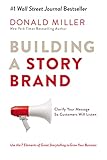


What is a StoryBrand website?
A StoryBrand website uses a simple story structure to organize a business’s message. The customer is the main character; the company acts as a guide that understands the problem and can help the customer take a next step. StoryBrand describes its approach as simplifying a business message through seven parts of a story (StoryBrand’s framework overview).
This is a messaging and information-architecture approach, not a visual style or a particular website platform. A site can be minimalist, highly visual, technical, or editorial and still use StoryBrand principles. The key is that a first-time visitor can understand the offer and find a relevant next action without decoding an abstract slogan.
The Tool Desk
Outbyte PC Repair FREEClear out junk files and repair common Windows errorsFree Scan →Outbyte Driver Updater FREEScan for outdated or missing drivers - takes under a minuteDriver Scan →#1 Best Overall
For a personal-finance business—such as a financial coach, tax preparer, bookkeeping service, or financial educator—the distinction matters. Visitors need to understand what kind of help is offered, who it is for, and what it does not promise. A clear story can organize those details, but it cannot substitute for accurate disclosures, appropriate credentials, or substantiated claims.
The seven StoryBrand elements, translated for a website
| StoryBrand element | Website translation | Question to answer |
|---|---|---|
| Character | The target customer | Who is this for? |
| Problem | The customer’s external, internal, and philosophical problem | What is frustrating, costly, risky, or unfair? |
| Guide | The company’s empathy and authority | Why should visitors trust you to help? |
| Plan | A short, understandable process | What happens after the visitor takes action? |
| Call to action | A clear button or next step | What should the visitor do now? |
| Failure | A credible description of what may remain at risk | What could happen if the problem stays unresolved? |
| Success | The customer’s desired outcome | What will be different afterward? |
These elements do not require seven separate blocks on the page. A homepage may combine the problem with empathy, the guide with proof, or stakes with the success vision.
How to build your StoryBrand message
1. Choose one primary audience
Write the homepage for the person most important to the business, rather than trying to address every possible customer at once. A financial coach serving first-time budgeters and a tax firm serving complex small businesses have different needs and should not be forced into the same headline.
If the audiences have different problems or buying paths, give them distinct service pages or landing pages. The homepage can briefly route visitors to the right option.
What’s actually slowing this PC down?
Pick the symptom - the matching free tool is one click away.
2. Define an observable result
Complete the sentence: “After working with us, the customer will be able to ____.” Choose an outcome a visitor can picture, such as organizing monthly cash flow or understanding what documents to prepare for a tax appointment. Broad phrases like “feel empowered” need a concrete explanation to be useful.
3. Identify the three layers of the problem
- External: The tangible issue, such as inconsistent bookkeeping, confusing bills, or uncertainty about how to prepare for a major purchase.
- Internal: How that issue feels to the customer—overwhelming, stressful, embarrassing, or hard to control.
- Philosophical: Why the situation feels wrong, such as the belief that people should be able to understand the costs before committing to a service.
Usually the external problem belongs in the main message. Internal and philosophical problems can inform supporting copy, but need not all appear in the hero.
4. Write a one-liner
A useful starting template is: “We help [audience] [solve a specific problem] so they can [achieve a meaningful result].” For example: “We help independent contractors organize their books so they can make informed decisions about taxes and cash flow.” Treat this as a draft to refine against real customer language, not a script that must appear word for word.
5. Show empathy and authority
A guide needs both: a credible sense that the business understands the customer’s situation and evidence that it can help. Depending on the service, proof may include relevant credentials, a transparent method, attributable customer feedback, case studies, or clearly explained experience. Keep claims specific and supportable—especially financial outcomes, savings, or investment-related results.
Windows Errors? Fix Them Before They Spread
Repair common Windows errors and clear accumulated junk for a smoother, more stable PC - no reinstall needed.Free scan · no reinstallCrashes, No Sound, or Screen Glitches?
Random freezes, missing sound and display glitches usually trace back to one bad driver. Find and replace yours safely.Free scan · under a minuteThe company’s biography can establish credibility, but it should not displace the customer’s problem and desired result as the main story.
Rank #2
6. Make the plan short and believable
Show the visitor what happens next. A three-step process might be: book an introductory call, receive a review of your situation, and get a written action plan. Explain what the customer must do, what the business does, and any relevant timing or commitment. Keep the homepage plan brief; link to a detailed process page when visitors need more information.
7. Choose a direct CTA and, if useful, a transitional CTA
Use one dominant direct call to action, such as “Book a Consultation,” “Request a Tax Preparation Quote,” or “See Pricing.” The button should lead to the action it promises, not a vague “Learn More” destination.
A transitional CTA can help visitors who are interested but not ready to commit. Offer something genuinely useful, such as a budgeting worksheet, document checklist, or service comparison guide. StoryBrand’s online marketing workbook recommends a visible direct CTA, a valuable transitional option, and follow-up connected to that offer.
8. State stakes proportionately and describe success
The failure element should explain a plausible cost of leaving the problem unresolved, not manufacture urgency. For example, a bookkeeping service might say that delayed reconciliation can leave owners making decisions with outdated figures. Avoid suggesting that every delay will cause financial disaster.
Then describe the customer’s improved situation in concrete terms: knowing which records are ready, seeing regular cash-flow updates, or understanding the next step. Do not promise savings, returns, or outcomes that the business cannot substantiate.
9. Add proof, answer objections, and test
Address practical questions visitors may have: what is included, who will provide the service, how long the process takes, what it costs, and what happens after an inquiry. Financial-services businesses should also explain relevant qualifications, limitations, privacy practices, and terms in language customers can find and understand.
Ask people unfamiliar with the business to review the page. Can they tell you who it serves, what it offers, what problem it addresses, and what they would click? Track meaningful outcomes such as completed inquiries, qualified leads, bookings, and lead-to-customer rate. Clicks and scroll depth can help diagnose behavior, but are not outcomes by themselves. Clear messaging may help; it does not guarantee conversion or revenue growth.
A practical StoryBrand homepage wireframe
- Hero: Outcome-led headline, brief explanation, primary CTA, and an image relevant to the customer’s desired outcome.
- Problem: Name the customer’s recognizable frustration and show understanding without exaggerating it.
- Guide: Pair a concise empathy statement with evidence such as credentials, process, or attributable customer proof.
- Plan: Explain the next three steps and what the visitor can expect.
- Benefits: Translate features into distinct customer outcomes rather than presenting an unexplained feature list.
- Proof and objections: Include relevant testimonials, case studies, qualifications, service details, or answers to common concerns.
- Stakes and success: Explain the realistic cost of inaction and the concrete future the customer is working toward.
- Final CTA: Repeat the main action and offer a lower-commitment alternative when it serves visitors.
- Footer: Provide navigation, contact information, legal and privacy links, and useful secondary resources.
This order is a starting point, not a rigid template. The framework is meant to clarify the decision path; the visual layout should still support readability, accessibility, mobile use, and the details customers need to make an informed choice.
StoryBrand copy formulas and examples
Hero headline
Try: “[Achieve a desired result] without [a major obstacle].” For a bookkeeping service: “Keep your books current without spending every weekend in spreadsheets.” Use this only if the service actually addresses that obstacle.
Problem statement
Try: “When [specific situation], it can be hard to [customer task or decision].” The statement should sound recognizable to the audience, not like a generic claim that every customer is overwhelmed.
Plan
Try: “[First action] → [what the business does] → [what the customer receives].” For example: “Share your records → we review the accounts → receive a prioritized list of next steps.”
Do these 3 things before closing this tab:
1Repair Windows errors before they cause bigger problems2Fix the driver behind crashes, sound loss and screen glitches3Clear out junk files and repair common Windows errorsBenefit and success statement
Try: “So you can [observable outcome] with [relevant improvement].” Prefer a result such as “review your monthly spending with a clearer picture of recurring costs” over an unsupported promise to save a particular amount.
CTA
Use an action label that sets expectations: “Schedule a 20-minute introduction” is more informative than “Get Started” if that is what the click actually does. State the duration only if it is accurate and consistent.
Before-and-after example: an operations consultancy
Unclear version
Innovative solutions for a better tomorrow. “We are a full-service consultancy with over 20 years of experience helping organizations transform their operations through strategic innovation and world-class expertise.”
The audience, specific offer, practical outcome, and next action are all difficult to identify. The copy centers the company’s capabilities rather than the visitor’s decision.
Quick wins for a faster PC:
Scan for outdated or missing drivers - takes under a minuteDriver Scan →Clear out junk files and repair common Windows errorsFree Scan →Fix the driver behind crashes, sound loss and screen glitchesFind Drivers →Clearer version
Headline: Build a simpler operation your team can manage.
Supporting copy: We help growing manufacturers identify process bottlenecks, reduce avoidable delays, and create a practical improvement plan.
Primary CTA: Book a Process Review.
Transitional CTA: Download the Bottleneck Checklist.
Rank #4
Plan: Map the current process, identify costly delays, and implement a prioritized improvement plan.
Success: Give the team a clearer workflow, fewer preventable delays, and better visibility into what needs attention next.
Two more examples by business type
Local roofing service
Audience: Homeowners considering a roof replacement who are concerned about unclear pricing and unreliable contractors.
Possible headline: Replace your roof with a clear plan and no surprise costs.
Supporting copy: Get a documented inspection, straightforward options, and a project timeline from a licensed local roofing team.
Plan: Schedule an inspection, review documented options, and approve the work.
CTAs: “Schedule a Roof Inspection” for the direct action; a roof replacement cost guide as a lower-commitment resource.
Stakes and success: Explain, without predicting a specific loss, that unresolved damage may worsen. Describe the intended outcome as a weather-ready home and a clear project timeline.
B2B software for operations teams
Audience: Operations leaders managing customer data across disconnected systems.
Problem and success: Manual transfers and inconsistent records can undermine confidence in reports; the desired outcome is a more dependable source of operational data.
Plan: Connect systems, configure workflows, and monitor data quality.
CTAs: “See the Platform in Action” for a direct evaluation; an integration-planning checklist for visitors still assessing the problem.
Software buyers may need more than a short emotional message. Include relevant integrations, security information, technical documentation, pricing, and product details alongside the story.
Free tools Windows power users keep installed
One-click scans. No signup required.
Where to find StoryBrand website examples
Example galleries can help you notice how different organizations translate messaging into design. Treat them as portfolios or inspiration, not proof that a site performs well: performance claims require evidence beyond an attractive page or a provider’s selection.
- ClearBrand’s gallery groups examples across categories including ecommerce, education, finance, health, nonprofits, SaaS, and contractors. It notes that not every listed site follows StoryBrand principles perfectly.
- StoryWorks’ gallery presents more than two dozen examples and describes many as using a StoryBrand and Marketing Made Simple wireframe process. It is a service-provider portfolio.
- Elementor’s guide combines an explanation of the framework with website examples and page-building discussion. Its platform recommendations come from a provider with a commercial interest in the builder.
- Telos Creative’s examples offer another set of sites to examine through the customer-as-hero framework.
For any example, look for the audience, problem, guide signals, plan, main CTA, proof, stakes, and desired outcome. Also note what remains unclear: for instance, whether pricing is available, which customers qualify, or what happens after the button click. Do not infer that a site converts well from its appearance alone.
Common mistakes and how to fix them
- A vague headline: Replace category jargon or abstract promises with a specific audience and result.
- The company remains the hero: Move the visitor’s problem and desired outcome ahead of company history; use credentials as supporting proof.
- Too many competing CTAs: Choose one primary action and, where useful, one transitional action. Keep secondary navigation from overwhelming the main path.
- No plan: Add a short explanation of what happens after the visitor acts.
- Benefits without evidence: Support claims with attributable proof, a clear method, or careful qualification. Do not present a testimonial as proof that the framework caused a financial result.
- Fear-based stakes: Replace catastrophic predictions with specific, plausible consequences proportionate to the decision.
- One message for unrelated audiences: Create distinct routes or pages when customer needs differ substantially.
- Clear copy, broken experience: Check that forms work, confirmation and follow-up messages exist, pages load reliably, and the site functions on mobile and with assistive technology.
When StoryBrand helps—and when it is not enough
StoryBrand is useful when visitors do not understand the offer quickly, the site is crowded with competing messages, the company talks mostly about itself, or prospects repeatedly need basic value explained. It can also help service businesses make a trust-based buying process easier to follow.
Use it cautiously when customers choose mainly by technical specifications, the business serves unrelated audiences, the offer is changing rapidly, or legal and regulatory disclosures shape the customer journey. In those cases, the framework should organize the message without displacing comparison information, required disclosures, or detailed product explanations.
Free tools Windows power users keep installed
One-click scans. No signup required.
Combine it with customer interviews, search-intent research, usability and accessibility testing, analytics, and conversion testing. If a clear site still fails to generate suitable business, investigate the offer, traffic quality, pricing, form friction, trust, mobile experience, follow-up, and sales process. A messaging framework cannot fix those problems by itself.
Quick Recap
StoryBrand website review checklist
Messaging
- The intended customer and main offer are clear near the top.
- The desired result and a real customer problem are stated plainly.
- The business shows empathy and gives visitors a reason to trust its expertise.
- The next steps are understandable, and the main CTA is visible.
- A useful transitional option is available when appropriate.
- Stakes are credible, and success is described as a customer outcome.
- Claims and testimonials are accurate, attributable, and current.
Design and operation
- The page has readable hierarchy, adequate contrast, and a usable mobile layout.
- Images support the customer’s intended outcome rather than distract from the message.
- Navigation and forms do not create avoidable friction.
- CTA destinations, form delivery, confirmation, and follow-up have been checked.
- Pricing, qualifications, limitations, privacy information, and relevant disclosures are easy to find.
- Analytics track meaningful actions, and the team reviews qualified leads rather than clicks alone.
Product prices and availability are accurate as of the date/time indicated and are subject to change. Any price and availability information displayed on Amazon at the time of purchase will apply.




