Windows Errors? Fix Them Before They Spread
Repair common Windows errors and clear accumulated junk for a smoother, more stable PC - no reinstall needed.Free scan · no reinstallCrashes, No Sound, or Screen Glitches?
Random freezes, missing sound and display glitches usually trace back to one bad driver. Find and replace yours safely.Free scan · under a minuteNetwork3’s pitch is to coordinate edge devices, computing power, bandwidth and data for AI work, using blockchain and token incentives to bring contributors together. In a September 2024 TechBullion interview, founder Rock Zhang described the project as an AI-focused Layer 2 and cited a large network of nodes and international participation. Those figures are historical claims from the interview, not independently audited measures of current activity. Network3’s January and February 2024 papers outline a technical and economic design, but the available material does not establish production-scale performance, sustainable customer demand or current token economics.
What Rock Zhang said Network3 is building
TechBullion published its interview with Network3 founder Rock Zhang on September 20, 2024. Zhang framed Network3 as infrastructure for AI developers: a globally distributed network where participants contribute resources and receive incentives. The project combines three ideas: AI workloads, physical resources coordinated through a DePIN model, and Web3 tools such as tokens and governance. Read the interview.


The strongest cautious description is that Network3 is a proposed and partially operational decentralized AI infrastructure project. Its public materials describe edge computing, federated learning, privacy mechanisms and token incentives. Design documents explain intended mechanisms; they do not by themselves show that every component is deployed together or performing reliably at production scale.
How AI, DePIN and Web3 fit together
AI is the workload
Network3’s materials focus on moving some AI processing closer to devices and data sources. Edge devices may be better suited to compact inference, preprocessing or local model updates than to training frontier-scale models. Hardware, memory, power, availability and network quality vary, so the label “edge AI” does not imply that every participating device can perform every task.
Free tools Windows power users keep installed
One-click scans. No signup required.
#1 Best Overall
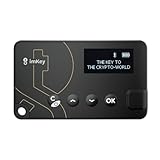
- Top-Tier Security Chip, Bank-Grade Asset Protection: Equipped with an industry-leading Infineon CC EAL 6+ certified security chip, also certified by EMVCo, this chip is widely used in bank payment and identity verification systems. Your private keys are generated and stored entirely offline within the chip, ensuring they never touch the internet. This physically blocks remote hacker attacks and eliminates the risk of private key leakage, building an impregnable first line of defense for your digital assets.
- What You See Is What You Sign, Hardware Button Protection: Every transaction requires manual confirmation via physical buttons on the imKey Pro's clear display. The device intuitively shows key transaction details like the amount and address, ensuring the data hasn't been tampered with during transmission—truly achieving "What You See Is What You Sign." It also features secure PIN code protection and a self-destruct mechanism after multiple incorrect attempts (the private key is wiped after 5 consecutive wrong entries), effectively preventing brute-force attacks even if the device is lost.
- Comprehensive Multi-Chain Asset Support, Access the Web3 Ecosystem: Fully supports major mainnets and Layer 2 networks, including Bitcoin (BTC), Ethereum (ETH), LTC, ATOM, FIL, TRX and more. By adding custom RPCs, you can easily access all EVM-compatible chains like BSC, Polygon, and Avalanche. Furthermore, imKey Pro perfectly supports Layer 2 solutions such as zkSync and Arbitrum, as well as the display and storage of NFTs, meeting all your diverse on-chain needs.
- Cold & Hot Wallet Separation, A Seamless Experience: Utilizing Bluetooth 4.1 wireless technology, it pairs seamlessly with the imToken App on your mobile phone or browser extension wallets on your PC without needing any cables. It combines the ultimate security of a cold wallet (offline private key storage) with the convenience of a hot wallet (online interaction). When a transaction is needed, you sign it offline with your imKey, and the app broadcasts it to the chain. This guarantees asset security without sacrificing the fluidity of use.
- Extremely Thin and Light, A Portable Digital Vault: The device is smaller than a credit card, measuring just 2.3mm thick and weighing approximately 17g. Crafted with a zinc alloy body and a PC panel, it offers a premium feel and is extremely portable. The built-in 33mAh lithium-polymer battery provides a battery life of up to approximately four weeks on a single charge. The package includes the hardware wallet, a USB cable, and mnemonic cards, making it ready to use right out of the box—a secure and reliable gateway to the crypto world.
DePIN is the resource layer
DePIN—decentralized physical infrastructure networks—uses participant-provided infrastructure coordinated by software and incentives. In Network3’s framing, contributions may include computing power, bandwidth, data and edge devices; the interview also refers to IP addresses. These are different kinds of contribution and should not be treated as equivalent evidence of useful AI capacity.
- Physical infrastructure: devices, connectivity and edge servers.
- Digital infrastructure: protocols, software, models and verification systems.
- Economic infrastructure: tokens, rewards, staking, governance and any penalties or reputation mechanisms.
Web3 is the coordination layer
The project’s economic materials describe token rewards, staking and governance as ways to coordinate contributors. Blockchain can record or coordinate some actions, but a token does not establish that customers need the service, that rewards are funded by durable revenue, or that control is meaningfully decentralized.
How Network3 says distributed AI would work
Network3’s January 2024 version 1.0 litepaper describes a decentralized federated-learning framework with five roles: task publishers, local trainers, local evaluators, aggregators and global validators. In a simplified workflow, a task publisher defines work; devices train locally; evaluators check updates; aggregators combine them; and validators assess the global result. The litepaper and technical whitepaper describe the project’s intended architecture.
Rank #2

- Instant Ethereum Access — No Wallet Setup Required: Pre-loaded Burner ETH Card gives you immediate Ethereum access without needing an exchange account or complicated wallet setup. Perfect for beginners and experienced crypto users looking for a fast, secure onboarding option.
- Secure, Anonymous & Easy to Activate: No personal information, KYC, or lengthy verification process. Simply follow the activation instructions on the card to claim your ETH safely and privately.
- The Perfect Crypto Gift for Any Occasion: Great for holidays, birthdays, graduations, stocking stuffers, employee rewards, or gifting crypto to someone curious about Web3. A modern way to introduce family and friends to Ethereum.
- Use Your ETH Anywhere Ethereum Is Supported: Once activated, funds transfer to your preferred wallet—MetaMask, Coinbase Wallet, Ledger, Trust Wallet, and more. Spend, trade, stake, or hold your ETH just like any other Ethereum balance.
- Physical Card With Simple Step-By-Step Instructions: Premium-quality physical card includes clear instructions for activating and accessing your ETH. Everything is securely contained inside—no codes printed on receipts.
- Keep some data at its source: A device can process local data and send model updates rather than the raw dataset.
- Coordinate distributed work: Participants train or evaluate updates, while other roles aggregate and validate them.
- Use edge resources: More demanding operations may be outsourced to capable edge servers; model compression and pruning are described as ways to reduce model and communication costs.
This approach may reduce the need to centralize raw data, but federated learning is not a guarantee of privacy or correctness. Updates can still leak information, and malicious or low-quality contributions need effective detection. The public materials describe mechanisms; the available sources do not establish independent production benchmarks or a third-party security audit.
What “AI Layer 2” does—and does not—tell you
Network3’s whitepaper calls it a Layer-2 protocol for decentralized data transmission and computation. That label alone does not identify the settlement chain or establish the security properties of a particular blockchain design. The available documents do not clearly specify whether the system uses a rollup, sidechain, appchain, validium or another architecture, or fully explain finality, data availability, deployed contracts and how AI results are verified on-chain.
In particular, coordinating model work through a blockchain is not the same as proving that a model update is useful, that a computation was performed correctly, or that a dataset is sound. A developer assessing the design would need current technical documentation for the actual workload and verification path.
Privacy and security: mechanisms are not proof of protection
Network3’s technical materials describe anonymous certificateless signcryption, data-correctness verification, IP anti-tracking, homomorphic encryption, secret sharing, Reed–Solomon coding and federated learning. The whitepaper presents these as components intended to support authenticated, anonymous and reliable transmission and computation.
Those descriptions should not be read as proof that a production system is fully anonymous, private or secure. Federated-learning updates can reveal information, while anonymity can make abuse attribution harder. A prospective user should establish what data and metadata leave a device, who controls keys, what observers can see, how malicious updates are handled, and whether code and security claims have been independently reviewed. The available sources do not establish a third-party audit or formal verification.
The Tool Desk
Outbyte PC Repair FREERepair Windows errors before they cause bigger problemsFix Now →Outbyte Driver Updater FREEScan for outdated or missing drivers - takes under a minuteDriver Scan →What the token model says—and what remains unclear
The February 2024 version 1.0 economic-model litepaper describes $N3 rewards for model training, resource sharing and governance. It also describes staking, a lock-up mechanism that produces $veN3, and a stated allocation of 75% of network gas-fee income for staker rewards. These are descriptions in the project’s economic materials, not independently verified evidence of current revenue or payouts. See the economic-model litepaper.
The same public materials do not present one internally consistent allocation account. The web version says 90% of token release goes to model training and resource sharing and 10% to the team, while its detailed table lists 50% community rewards, 10% ecosystem, 5% airdrop, 10% team and other categories. The economic-model PDF uses a different framing, describing 50% for training and resource sharing and 50% for other contributors. The PDF should be read alongside the web version; these figures should not be combined into a definitive current tokenomics summary without current token-generation, vesting and contract documentation.
For a personal-finance decision, the crucial distinction is between rewards funded by token issuance, rewards funded by paying customer demand, and revenue generated by network fees. The cited materials describe incentives and a gas-fee-linked staking mechanism, but the available sources do not establish the size or durability of customer demand, independently reported fee income, token liquidity, circulating supply or vesting schedules. None of this supports treating node operation or staking as predictable passive income.
Independent reader supportYour contribution helps us test, update, and keep practical guides available for everyone.Adoption claims from the 2024 interview
Zhang’s interview reports the following figures and claims. They are attributed historical statements, not independently audited current metrics.
Best Value
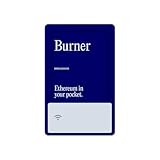
- Instant Ethereum Access — No Wallet Setup Required: Pre-loaded Burner ETH Card gives you immediate Ethereum access without needing an exchange account or complicated wallet setup. Perfect for beginners and experienced crypto users looking for a fast, secure onboarding option.
- Secure, Anonymous & Easy to Activate: No personal information, KYC, or lengthy verification process. Simply follow the activation instructions on the card to claim your ETH safely and privately.
- The Perfect Crypto Gift for Any Occasion: Great for holidays, birthdays, graduations, stocking stuffers, employee rewards, or gifting crypto to someone curious about Web3. A modern way to introduce family and friends to Ethereum.
- Use Your ETH Anywhere Ethereum Is Supported: Once activated, funds transfer to your preferred wallet—MetaMask, Coinbase Wallet, Ledger, Trust Wallet, and more. Spend, trade, stake, or hold your ETH just like any other Ethereum balance.
- Physical Card With Simple Step-By-Step Instructions: Premium-quality physical card includes clear instructions for activating and accessing your ETH. Everything is securely contained inside—no codes printed on receipts.
| Interview claim | What the source establishes | What a reader would need to verify |
|---|---|---|
| More than 310,000 nodes | Zhang or the interview reported this figure in September 2024. | What counts as a node; unique active devices versus accounts or wallets; activity over a defined period; and completed, verifiable workloads. |
| More than 1,800 N3 Edge V1 devices “on-chain” | The interview reported this figure in September 2024. | What “on-chain” means, and how many devices were sold, shipped, active and independently verified. |
| Users in more than 185 countries | The interview reported this geographic reach in September 2024. | Whether this means registered users, active contributors or verified devices, and how locations were determined. |
| Top-three DePIN project by earnings | The interview attributed this ranking to the project. | The ranking source, definition of earnings, comparison period and whether the figure reflects customer payments or token emissions. |
The interview also names relationships involving IoTeX Mask, Particle, PredX, Inferix, QuestN and SFT Protocol. It does not, by itself, establish that each relationship is a technical integration, paying customer arrangement or independently validated deployment. The interview’s account of adoption and partners is useful context, but it is not an audit or a current operating dashboard. The available sources do not independently establish whether those 2024 figures remain accurate in 2026.
What to check before participating
If you are a developer
- Confirm the specific workload supported: edge inference, federated learning, bandwidth routing, model validation or general compute.
- Check hardware and framework compatibility, model-size limits, latency and reliability against your own requirements.
- Map what data and metadata leave the device, how keys and updates are controlled, and what privacy protections operate in production.
- Ask how the network detects fake computation, poisoned updates and Sybil participation, and whether work receipts or independent benchmarks are available.
- Compare total cost—including integration, hardware, bandwidth and token exposure—with cloud, edge and conventional federated-learning services.
If you are considering running a node
- Get current hardware and operating-system requirements, bandwidth and power estimates, reward rules, withdrawal terms and software support details before committing resources.
- Consider residential-IP exposure, device permissions, background activity, electricity, hardware wear, token volatility and the ability to uninstall cleanly.
- Do not infer earnings from node counts or a ranking; seek dated reward schedules and evidence that rewards correspond to useful work or customer demand.
- The official registration page asks for email, password, an optional referral code and acceptance of terms. Its existence does not establish a complete current node-installation guide, hardware specification or earnings schedule.
If you are evaluating $N3
- Verify the official contract address and chain, token-generation and circulating supply, vesting, liquidity and holder concentration.
- Look for independently reported fee revenue, audited contracts, transparent emissions and governance concentration data.
- Assess whether token utility is tied to actual service demand or mainly to incentives and speculation; include legal and tax exposure in your decision.
The practical assessment
Network3 presents an interesting design thesis: use edge resources and federated learning to support AI work without routing every task through a centralized cloud, with Web3 mechanisms to coordinate and reward contributors. Its technical papers give readers mechanisms to examine, but the evidence available here does not establish independent production-scale performance, durable customer demand, current operating metrics or settled token economics. Treat the interview’s scale figures as historical claims and assess participation as a technology and financial risk—not as a guaranteed income opportunity.
Quick Recap
Product prices and availability are accurate as of the date/time indicated and are subject to change. Any price and availability information displayed on Amazon at the time of purchase will apply.




