IBM Apptio can transform enterprise IT planning by connecting technology budgets and forecasts with portfolio priorities, delivery capacity, and work in progress. The distinction that matters is that IBM Apptio Planning handles financial and investment planning, while IBM Targetprocess supports strategic portfolio planning and execution. Their integration is intended to link the two; it does not create reliable data, sound governance, or realized business value on its own.
Why enterprise IT planning gets disconnected
A large organization may track spending in finance systems, project approvals in spreadsheets, software work in delivery tools, and strategic goals in presentations. Finance can see a budget without knowing which work it funds; delivery leaders can see backlogs without a consistent view of total cost or available capacity. When priorities change, reconciling those views manually can turn planning into a series of static snapshots.
IBM positions Apptio as a Technology Business Management portfolio for connecting technology spending with business value. In practical terms, the planning problem it addresses is how to compare proposed and ongoing technology work using financial, strategic, and execution information together—not simply how to digitize an annual budget. See IBM’s Apptio overview.
For example, imagine a company weighing a cloud migration, a regulatory program, and a new customer-facing product while engineering capacity is constrained and infrastructure costs are rising. A useful planning model would let leaders compare expected cost, strategic contribution, capacity needs, dependencies, and delivery status. The software can organize that evidence; leaders still have to decide what to fund, defer, or stop.
#1 Best Overall

- EFFECTIVELY MANAGE YOUR MONEY - Our budget planner helps you take control of your finances by providing sections for financial goals, savings, debts, daily expenses, monthly budget, monthly budget review. This finance planner is a good finance book and will help you manage your money effectively.
- PREMIUM QUALITY - Our budget planner is made with high-quality 100gsm paper that reduces ink leakage, fraying, and shade issues. The sturdy and flexible cover,, helps protect the pages. The metal lay-flat twin-wire binding ensures durability and longevity.
- ORGANIZED MONTHLY GOALS & BUDGETS - Our 12-month budget planner helps you set monthly goals, budgets, reviews, and develop good monetary habits, strategies, and action plans. Write down monthly financial goals, put reminders of bills and payments on the calendar, plan your monthly budget in each category, track daily expenses, and review the monthly budget at the end of the month.
- FLEXIBLE USAGE - Our undated finance planner allows you to start at any time and place, making it convenient to use. It has a perfect size of 8.6x5.9 inches and fits in every bag, so it's always at hand.
- CREATE FINANCIAL FREEDOM - Our budget planner is your chance to develop monthly habits, monetary strategies, and action plans to start your journey to long-term financial freedom. It allows you to track monetary flow and review each area for improvements. With this 1-Years budget book, you can take the first step towards financial freedom.
Which Apptio product handles which job?
“Apptio” can refer to a portfolio of products rather than one all-purpose portfolio tool. IBM’s public materials list capabilities including Costing, Planning, Billing, and Benchmarking; Targetprocess is the portfolio and execution product most relevant to strategy-to-delivery planning. Product packaging and names can vary, so buyers should confirm the modules and entitlements included in a proposed deployment. The current Apptio site provides the broader product context.
| Product or layer | Primary role in planning | Useful question it helps address |
|---|---|---|
| IBM Apptio Planning | Technology budgets, forecasts, investment costs, expense and labor planning, CapEx/OpEx visibility, and build-and-run financial planning. | What will this investment cost, what labor does it require, and how could it affect the budget? |
| IBM Targetprocess | Strategic portfolio management and execution planning across initiatives, programs, products, value streams, dependencies, capacity, and delivery work. | What work supports the strategy, who is needed, and what risks or dependencies could affect delivery? |
| Apptio–Targetprocess financial integration | An intended connection between execution information and financial models, including labor spend and cost-to-value views. | How does planned or ongoing work relate to financial plans and costs? |
The names are not interchangeable. IBM documentation describes integrated investment planning in Apptio Planning, formerly referred to as Integrated Investment Planning. Targetprocess is positioned for strategic portfolio management, including Agile, waterfall, and hybrid delivery. The integration’s scope, connectors, data direction, and licensing need to be checked for the buyer’s environment; documented capabilities are not a guarantee that every connection is included or automatic. See IBM’s Apptio Planning documentation, the Targetprocess portfolio-management overview, and the financial-integration overview.
How the planning workflow can change
A common fragmented pattern is for business units to submit requests by email or spreadsheet, a PMO to consolidate project lists, finance to build a separate budget, and technology teams to estimate capacity elsewhere. Executives then review a snapshot, while changes during the year require manual reconciliation. This is an illustrative pattern, not a description of every enterprise.
An integrated planning process can instead connect demand, investment decisions, delivery, and review:
Crashes, No Sound, or Screen Glitches?
Random freezes, missing sound and display glitches usually trace back to one bad driver. Find and replace yours safely.Free scan · under a minuteWindows Errors? Fix Them Before They Spread
Repair common Windows errors and clear accumulated junk for a smoother, more stable PC - no reinstall needed.Free scan · no reinstall- Capture demand. Record initiatives and proposals in a consistent intake process.
- Connect proposals to strategy and portfolio structure. Associate work with the relevant objectives, portfolios, products, programs, or value streams.
- Estimate funding and capacity together. Model labor, expense, financial impact, and delivery capacity rather than approving a budget in isolation.
- Compare scenarios. Assess the implications of different funding levels, priorities, assumptions, or timing before making commitments.
- Approve and connect work to execution. Make decision rights clear, then link approved investments to delivery work where the configured integration supports it.
- Monitor delivery and variance. Review progress, dependencies, risks, resource needs, and planned-versus-actual financial information.
- Revisit priorities as conditions change. Use portfolio reviews to decide whether to continue, defer, accelerate, or stop work.
- Review outcomes. Compare the intended benefits with what was delivered and measured, rather than treating an approved budget or completed project as proof of value.
IBM’s Planning Standard documentation says authorized users can add, edit, or delete projects at plan level. The documented roles include Admin, Budget Process Owner, IIP Portfolio Manager, and users granted the relevant permission. Exact permissions depend on configuration. See IBM’s project-management documentation.
Rank #2
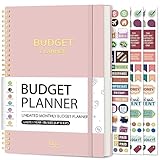
- Effective Budget Planning - Take control of your finances with the budget account book. This comprehensive planner allows you to plan and track your income, expenses, savings, and financial goals in one convenient place. With its intuitive layout and easy-to-use sections, you can stay organized and make informed decisions to achieve financial success.
- User-Friendly Layout - The budget planner features a user-friendly layout designed for easy navigation and organization. Each month, you'll find dedicated budget pages where you can set financial goals, track your income, and plan your expenses. Additional sections include debt trackers, savings goals, bill payment trackers, and more, making it simple to stay on top of your finances.
- Undated Monthly Calendar & Bonus Stickers - Featuring undated calendar each month, you'll have ample space to mark paydays, bills due, appointments, and important dates. Say goodbye to difficult writing spaces. Plus, we've included 3 cute sticker sheets that allow you to personalize your financial organizer and make budgeting more fun. Dates are not pre-printed and are completed by the user.
- Reliable and Convenient Design - Our monthly budget planner is designed for your convenience and built to last. The elastic band keeps everything securely in place, and the dual-sided pocket provides extra storage. Experience a budget planner that combines practicality and durability.
- Master Budgeting with Ease - Our financial planner includes a complete guidebook that provides valuable insights and instructions for optimal usage. From setting financial goals to tracking expenses, this guidebook offers step-by-step guidance and practical tips. Whether you're new to budgeting or an experienced user, this resource will help you make the most of your budget planner, empowering you to achieve financial success.
How portfolio prioritization works
Portfolio software does not determine which initiative deserves funding. It can give decision-makers a more consistent basis for comparing proposals and seeing consequences across a portfolio. A useful prioritization framework can include:
- Strategic alignment and expected business value.
- Regulatory or other mandatory status.
- Customer, revenue, or risk-reduction impact.
- Total cost of ownership and ongoing run costs.
- Available skills, delivery capacity, and time to value.
- Dependencies, technical health, and delivery risk.
- Run-versus-change balance and confidence in estimates.
- How and when expected benefits will be measured.
Targetprocess’s portfolio-management materials describe centralized intake, prioritization, funding, status visibility, alignment tracking, and ongoing portfolio optimization. These are product-positioning claims: the organization must define its criteria, keep information current, and have people empowered to act on the resulting view. See Targetprocess portfolio management.
How financial plans connect to delivery work
Apptio Planning is the financial side of the model. Its documented capabilities include expense and labor planning, investment planning, CapEx/OpEx visibility, and build-and-run cost planning. Planning can use role-based or name-based labor assumptions and examine financial impact across an investment’s lifecycle. Build-and-run planning is relevant because delivering a system may add ongoing operating costs after the initial project spend.
Targetprocess is the execution and portfolio side: it organizes work and helps show how initiatives relate to portfolios, programs, products, teams, dependencies, and capacity. The financial-integration proposition is to map execution information into financial models, so labor and spending can be considered alongside products, services, initiatives, or value streams. Whether a deployment can show actual effort, cross-charging, capitalization, or other desired details depends on source data, configuration, integration scope, and applicable modules. IBM’s descriptions are capability statements, not evidence that every customer automatically obtains those views.
This connection can make cost changes easier to examine. If scope expands, for instance, decision-makers may be able to assess the associated labor or forecast impact alongside the delivery plan. It still takes an agreed method for assigning shared services, labor rates, contractors, and costs to make the financial view meaningful.
Rank #3

- 【Take Control Of Your Money】Easily plan your monthly budget, track income & expenses, and stay on top of your finances. This budget planner helps you clearly see where your money goes and avoid overspending.
- 【Designed For Real Life Use】Perfect for young professionals, families, students, and anyone working toward financial goals. Whether managing daily expenses or planning long-term savings, this budget book keeps everything organized.
- 【All-In-One Budget System:】Our monthly budget planner features a well-thought-out layout that simplifies your budgeting process. Includes monthly budget pages, expense trackers, bill organizers, savings goals, and debt trackers. Everything you need to manage money in one convenient planner.
- 【12-Month Duration】Our budget planner covers a total of 12 months, giving you an extended period of financial organization. Now you can make income and expense records at any time, ensuring every financial decision aligns with your long-term goals.
- 【Premium Quality and Convenience】Crafted with attention to detail, this budget planner boasts superior quality. The sturdy pink and gold coil binding allows for effortless flipping, while the metal corner protectors effectively prevent damage to the cover, ensuring long-lasting durability.
Hybrid delivery: one portfolio, different ways of working
Enterprise portfolios commonly combine waterfall infrastructure programs, Agile software teams, product organizations, vendor-led implementations, regulatory projects, cloud migrations, and operational work. Targetprocess says it supports Agile, waterfall, and hybrid delivery models within portfolio management. That can help bring work into a broader planning view, but a shared tool does not resolve differences in operating models by itself.
Teams and portfolio leaders need common minimum definitions for items such as initiative, project, program, product, epic, value stream, milestone, capacity, and completion. Without them, two groups can report apparently comparable portfolio data while using different meanings. Targetprocess’s documented hierarchy can include portfolios, portfolio epics, initiatives, ARTs, and products; available objects depend on configuration and edition. See IBM’s Targetprocess data-hierarchy documentation.
Recommended Free Tools
What continuous planning means—and what it does not
Continuous planning is not the same as re-running the annual budget every week. It means keeping assumptions and portfolio decisions current enough to respond when strategy, costs, delivery conditions, or capacity change. In practice, that requires reviewing demand, funding, and capacity; evaluating scenarios before changing commitments; and monitoring variance during delivery.
IBM positions Apptio Planning around budgeting, forecasting, variance analysis, and scenario planning, while Targetprocess is positioned to connect strategic priorities with portfolio execution. The value depends on an organization actually holding regular or event-triggered reviews and making funding and capacity decisions from them. A tool configured for scenarios does not, by itself, change an annual-only decision culture. See Apptio’s strategic portfolio management overview.
Data and governance required for a useful view
A connected model is only as dependable as its source information. Depending on the planning scope, relevant data may include:
Rank #4

- MANAGE YOUR MONEY EFFECTIVELY - This budget planner will help to learn to achieve your financial goals, take to earn more money & take to cut your expenses for managing your money effectively. You can change some of your bad spending habits after a year of budgeting, so that you can better manage your money and spend it on some essential thing.
- MONTHLY TRACKER - You can record your 12-month monthly plan and monthly budget on monthly undated finance planner. In this way, you can clearly know in which aspects of your money management have been good in this month, and in which aspects of money management needs to be improved. 12 month budget planner helps you to set monthly goals, budget, review, and develop monthly habits, monetary strategies & action plans well.
- UNDATED & 1 YEAR USE - Budget books start with 2 pages for writing your strategy and goals, 1 page for planning, 5 pages for expense tracking, 1 page for writing down monthly review and 1 page for ideas & notes, followed by 12 months (8 pages per month). At the end of the monthly budget planner, there are 4 pages for saving tracking, and 4 pages for debt tracking to track your progress throughout the year. It is undated, so you could start at any time, suitable for 1 year use.
- EFFECTIVE ORGANIZATION - This budget book with twin-wire binding for easy lay-flat 360°, inner pocket for putting in some small cards & elastic closure for keeping the budget planner without falling off. These effective designs can make the accounting book better play its own role and bring you great convenience in the process of using it.
- Premium Thick Paper - This bill organizer features 12-month archival-quality pages made from thick paper, which can prevent planner from damages of light and air then ensure long-lasting performance from one year to the next of this budget planner. The premium white papers in this undated finance planner are environmentally friendly and adequately protects your eyes.
- General-ledger information, budgets, forecasts, cost centers, and organizational structure.
- Employee and contractor records, labor rates, and capacity or allocation data.
- Projects, products, programs, initiatives, delivery work, and status.
- Actual effort or time data, where used.
- Vendor and contract spend, plus cloud and infrastructure costs where relevant.
- Application or service inventories when planning includes those costs.
- Strategic objectives, expected outcomes, benefit measures, owners, and review dates.
Before implementation, assign an authoritative source and owner for each important data field. Define how often it can be refreshed, how missing or conflicting records are handled, and how users can see data freshness and confidence. A common model can bring information together; it cannot make incomplete time records, inconsistent project definitions, unreliable labor rates, or unowned benefit estimates accurate.
Implementation is an operating-model project
Successful implementation is more than installing software and importing a project list. A practical sequence is:
- Choose the planning decisions to improve. Specify whether the priority is financial planning, portfolio selection, execution visibility, or a combination.
- Agree on the portfolio taxonomy. Define how objectives, portfolios, initiatives, programs, products, epics, and value streams relate; allow local extensions only when enterprise reporting remains comparable.
- Identify authoritative systems. Set ownership for finance, people, delivery, application, and strategy information.
- Standardize data and rules. Define financial mappings, labor assumptions, allocation methods, estimation conventions, and benefit measures.
- Configure governance. Set roles, permissions, approval paths, planning calendars, and decision rights.
- Connect the systems and test the data. Validate the actual fields, refresh frequency, direction of data flow, and handling of conflicts before relying on dashboards.
- Pilot a bounded portfolio. Test intake through outcome review with representative finance and delivery users.
- Validate planned versus actual reporting. Confirm that reports reconcile sufficiently for the decisions they are meant to support.
- Expand after ownership is established. Scale only when teams maintain source data and governance responsibilities are clear.
IBM documentation describes role-based permissions in Apptio Planning and configurable hierarchy in Targetprocess. That makes roles and taxonomy implementation concerns, not incidental administration. Excessive customization may preserve old processes but can make upgrades and cross-business comparisons more difficult.
Independent reader supportYour contribution helps us test, update, and keep practical guides available for everyone.Benefits to evaluate—and what is not automatic
A deployment may improve visibility into investment costs, prioritization, capacity constraints, and delivery status if the underlying data and governance are sound. Those are enabling conditions for better decisions, not proof that the decisions will improve or that expected business value will be realized. Benefits tracking requires baselines, measures, owners, and review dates set before funding decisions.
Apptio product pages advertise outcome figures including faster answers to IT-finance questions, shorter planning cycles, and Targetprocess metrics such as faster time to market or increased productivity. Treat such figures as vendor-reported claims unless the underlying case studies, baselines, samples, measurement methods, and independent validation are available. Results can vary with implementation quality and organizational scope. See IBM Apptio product information and Targetprocess portfolio management.
Do these 3 things before closing this tab:
1Clear out junk files and repair common Windows errors2Fix the driver behind crashes, sound loss and screen glitches3Repair Windows errors before they cause bigger problemsBest Value

- Effective Budget Plan Book – Take control of your finances with the SUNEE budget account book. This all-in-one budget planner allows you to plan and track your income, expenses, savings, and financial goals. Its intuitive layout and easy-to-use sections help you stay organized and make smart decisions to reach financial success. Our financial planner also included a comprehensive guidebook with valuable tips and instructions to help you get the most out of your budgeting planner.
- Full-Page Calendars – Each month’s full-page calendar provides plenty of space to track paydays, bills due dates, appointments, and important events. No more cramped boxes or tight writing areas, you can easily plan and organize your schedule at a glance.
- Colorful Pages Layout and Tabs – This vibrant budget planner features a user-friendly design for easy navigation and organization. Each month includes dedicated budget pages to set financial goals, track income, and plan expenses. Additional sections like debt trackers, savings goals, and bill payment trackers make managing your finances a breeze. The colorful backgrounds on each page offer clear, instant visibility.
- Bonus 4 Stickers and Convenient Design – This monthly budget planner is built for convenience and durability. Water-resistant cover protects against spills, while the elastic band keeps everything secure, and the dual-sided pocket offers extra storage. Plus, we’ve included 4 adorable sticker sheets to personalize your planner and make budgeting more enjoyable. Experience a budget planner that combines practicality with lasting quality.
- UNDATED DESIGN & 1 YEAR USE - Undated finance books start with 1 page-financial goals, 1 page-Mind Map, 1 page-Financial Strategy, 1 page-Tactics, 2 pages-Important Dates, 4 pages-Bill Tracker, 4 pages-Saving Tracker, 8 pages-Debt Tracker, followed by 12 Months(10 pages per month, 1 unique color for each month). 2 pages-Christmas Budgeting, 2 pages-Yearly Summary, 2 pages-Check Register and 12 pages-Notes(dotted). It is UNDATED, so you could start at any time, suitable for 1 year use.
Common failure modes to plan for
- Inconsistent portfolio taxonomy: Local meanings for products, projects, services, and value streams make comparisons unreliable. Establish a common minimum model.
- Automated bad data: Faster reporting is not better reporting when source records are incomplete. Assign owners and validation rules.
- Funding without capacity: Approved work can still be undeliverable. Review skills, people, vendors, and technical constraints with the financial plan.
- Execution data that never returns: If delivery teams work in Jira, Azure DevOps, spreadsheets, or other systems without dependable synchronization, portfolio information can become a manually maintained reporting layer. Test real data flows and specify which system owns each field.
- Annual-budget habits in a continuous-planning tool: Scenario features have limited value if leaders make decisions only once a year. Set regular or trigger-based reviews tied to explicit choices.
- Forcing all work into projects: A product or value-stream model can be distorted by project-only structures. Use the planning object that fits how work is funded and governed.
- Confusing cost visibility with value realization: Knowing what an initiative cost does not show that it achieved its goal. Define outcome measures and accountability in advance.
When Apptio is a fit—and when it may be too much
Apptio is most compelling when an organization needs enterprise-scale technology financial management and wants to connect it with portfolio funding, capacity, and delivery across multiple business units or mixed delivery models. It is less compelling when the requirement is only lightweight task tracking, a basic roadmap, or simple departmental budgeting. A sophisticated planning platform adds governance and implementation work; that overhead may exceed the benefit if the organization does not need portfolio-level decisions or cannot maintain reliable data.
Before evaluating, identify whether the main requirement is IT financial management, strategic portfolio management, or both. IBM presents an ITFM-plus-SPM approach for connecting financial and delivery information, but each organization should confirm the relevant products, integration architecture, licensing, connectors, and services for its use case.
How Apptio compares with other portfolio options
These products overlap in strategic portfolio management, but they are not interchangeable. The best comparison is against the systems and operating model the organization already uses.
| Option | Positioning and potential fit | Evaluation trade-off |
|---|---|---|
| IBM Apptio Planning and Targetprocess | Potentially relevant when the goal is to connect technology financial management with portfolio planning and delivery execution. | Confirm module scope, integration architecture, data ownership, and implementation needs; the combined view depends on these details. |
| ServiceNow Strategic Portfolio Management | Could suit organizations already standardized on ServiceNow and seeking strategic planning, demand, portfolio, resource, and workflow capabilities. | Assess whether the broader ServiceNow platform scope fits if the central need is specialized IT financial modeling. ServiceNow SPM. |
| Planview Strategic Portfolio Management | Emphasizes connecting strategy, investment, capacity, execution, and outcomes, with broad integration positioning. | May be more than needed when the main problem is IT cost modeling rather than broad strategy-to-execution management. Planview SPM. |
| Broadcom Clarity | Positions itself for enterprise portfolio governance, financial tracking, resource optimization, scenario planning, and ValueOps integration. | Evaluate implementation scope against the maturity of the PMO and the complexity of portfolio requirements. Clarity product information. |
| Atlassian Jira Align | Worth considering where Jira is central and the need is scaled Agile planning and strategy-to-work traceability. | Do not assume it is equivalent to Apptio’s IT financial-management capability. Verify current product scope and assess non-Agile work, financial planning, and cost allocation needs. |
Questions to ask before choosing
- Is the core need IT financial management, strategic portfolio management, or an integrated combination?
- Can the product model the organization’s hierarchy without extensive customization?
- Which systems own actual cost, labor, work status, capacity, and strategic objectives?
- How often can each data source refresh, and how are conflicts resolved?
- Can finance own financial definitions while delivery teams maintain work information?
- How are labor rates, contractors, shared services, and capitalization handled?
- Can the model represent products and value streams as well as projects?
- How are mandatory initiatives separated from discretionary investments?
- How are scenarios versioned, compared, approved, and audited?
- Can a user trace an objective through funding, teams, work, costs, and measured outcomes?
- Which integrations and capabilities are included, and which require additional licensing or services?
- Which features require Apptio Planning Standard or an ITFM-plus-SPM bundle?
- What implementation services and internal data ownership are needed?
- How will the organization define benefits realization, and what happens when financial and delivery data disagree?
IBM’s public pages reviewed for these products do not establish a current standard list price. Request a scoped quote and clarify the modules, users, integrations, services, and support in it rather than inferring a per-seat price or assuming a trial offer represents a free production tier.
Free tools Windows power users keep installed
One-click scans. No signup required.
Quick Recap
Product prices and availability are accurate as of the date/time indicated and are subject to change. Any price and availability information displayed on Amazon at the time of purchase will apply.




