Recommended Free Tools
Europe is not abandoning AWS, Microsoft Azure or Google Cloud. It is trying to make reliance on them less unavoidable, especially for sensitive government and regulated workloads. The clearest sign is the European Commission’s April 17, 2026 award of a sovereign-cloud framework worth up to €180 million over six years. The award gives EU institutions a procurement route to European-led providers; it does not mean they have already moved their systems off U.S. clouds. The Commission’s announcement is evidence of strategic diversification, not a continent-wide cloud breakup.
What does “breaking up with U.S. cloud” mean?
Cloud dependence is not a single question of where a server sits. A buyer may depend on a provider’s ownership, legal environment, operating staff, technology, supply chain, service catalog and pricing. Moving data to a European data center changes one part of that picture, but not necessarily the others.
- Ownership: Is the provider European-owned, a U.S. company with a European subsidiary, or a European partner operating technology supplied by a U.S. company?
- Jurisdiction: Which laws may apply to the provider, its parent, staff, subcontractors and technology? Data residency alone does not settle questions about legal compulsion or access.
- Operations: Who controls the management plane, privileged access, patches, incident response, account suspension and recovery?
- Technology and supply chain: Does the service rely on foreign chips, firmware, identity, security tools, databases, software or AI models?
- Economics: Can the provider match the hyperscalers’ scale, regions, service breadth, investment and purchasing power?
“European cloud” and “sovereign cloud” therefore need a more precise description. A service can offer European data residency without European ownership; a European-operated service can still rely on foreign technology. Neither arrangement is automatically unsuitable. The right question is whether its dependencies and controls meet the needs of a particular workload.
Why is Europe seeking more control now?
Data protection and exposure to foreign legal demands are part of the concern, but the policy push is broader. Governments and companies also weigh concentration risk, cloud lock-in, supply-chain disruption, access to AI infrastructure, public-sector continuity and the strategic value of keeping critical capabilities available within Europe. These concerns have become more prominent amid U.S.–EU trade and security tensions.
Free tools Windows power users keep installed
One-click scans. No signup required.
#1 Best Overall

- Entry-level NAS Personal Storage:UGREEN NAS DH2300 is your first and best NAS made easy. It is designed for beginners who want a simple, private way to store videos, photos and personal files, which is intuitive for users moving from cloud storage or external drives and move away from scattered date across devices. This entry-level NAS 2-bay perfect for personal entertainment, photo storage, and easy data backup (doesn't support Docker or virtual machines).
- Set Your Devices Free, Expand Your Digital World: This unified storage hub supports massive capacity up to 64TB.*Storage drives not included. Stop Deleting, Start Storing. You can store 22 million 3MB images, or 2 million 30MB songs, or 43K 1.5GB movies or 67 million 1MB documents! UGREEN NAS is a better way to free up storage across all your devices such as phones, computers, tablets and also does automatic backups across devices regardless of the operating system—Window, iOS, Android or macOS.
- The Smarter Long-term Way to Store: Unlike cloud storage with recurring monthly fees, a UGREEN NAS enclosure requires only a one-time purchase for long-term use. For example, you only need to pay $459.98 for a NAS, while for cloud storage, you need to pay $719.88 per year, $2,159.64 for 3 years, $3,599.40 for 5 years. You will save $6,738.82 over 10 years with UGREEN NAS! *NAS cost based on DH2300 + 12TB HDD; cloud cost based on 12TB plan (e.g. $59.99/month).
- Blazing Speed, Minimal Power: Equipped with a high-performance processor, 1GbE port, and 4GB RAM on Board, this NAS handles multiple tasks with ease. File transfers reach up to 125MB/s—a 1GB file takes only 8 seconds. Don't let slow clouds hold you back; they often need over 100 seconds for the same task. The difference is clear.
- Let AI Better Organize Your Memories: UGREEN NAS uses AI to tag faces, locations, texts, and objects—so you can effortlessly find any photo by searching for who or what's in it in seconds. It also automatically finds and deletes similar or duplicate photo, backs up live photos and allows you to share them with your friends or family with just one tap. Everything stays effortlessly organized, powered by intelligent tagging and recognition.
On June 3, 2026, the European Commission framed its technology-sovereignty package around reducing risky dependencies on dominant suppliers, individual companies and third countries across areas including cloud, AI, semiconductors and open source. That is an industrial and resilience agenda as well as a data-location debate. The Commission’s announcement sets out that policy framing.
What the Commission’s cloud framework changes—and what it does not
On April 17, 2026, the Commission announced a sovereign-cloud procurement framework for EU institutions, bodies, offices and agencies. Its maximum value is €180 million over up to six years. Suppliers had to reach at least SEAL-2; several selected groups achieved SEAL-3. The framework evaluates sovereignty across areas such as legal jurisdiction, operational control, supply chains, technology, security and compliance, rather than treating a European server location as sufficient. The Commission’s framework explanation describes the procurement and assurance approach; its press-release PDF gives the framework’s value.
The four selected supplier groups are:
- Post Telecom with Clever Cloud and OVHcloud
- STACKIT
- Scaleway
- Proximus with S3NS, Clarence and Mistral
The award matters because it creates an approved procurement route and makes sovereignty a concrete public-sector buying criterion. It is not proof that EU institutions have already migrated all workloads, nor that private European companies are doing so. The framework’s €180 million ceiling is a procurement signal, not a measure of the entire European cloud market.
Why U.S. clouds remain difficult to replace
They sell ecosystems, not just servers
A comparable virtual machine is only one line in a cloud bill. AWS, Azure and Google Cloud offer broad portfolios spanning storage, databases, identity, analytics, security, containers, serverless computing, networking, observability and AI. A European provider may be a strong fit for infrastructure or particular managed services without matching every part of that catalog.
PC Slower Than It Used to Be?
A free scan shows the junk files, broken settings and background clutter dragging Windows down - then fixes them in one click.Free scan · Windows 10 & 11Crashes, No Sound, or Screen Glitches?
Random freezes, missing sound and display glitches usually trace back to one bad driver. Find and replace yours safely.Free scan · under a minuteLarge organizations also have years of accumulated integrations: cloud engineers, infrastructure-as-code modules, security tools, data pipelines, enterprise agreements, marketplace contracts and staff certifications. Replacing a cloud service can mean redesigning and validating those dependencies, not just copying data to another provider.
Rank #2

- Value NAS with RAID for centralized storage and backup for all your devices. Check out the LS 700 for enhanced features, cloud capabilities, macOS 26, and up to 7x faster performance than the LS 200.
- Connect the LinkStation to your router and enjoy shared network storage for your devices. The NAS is compatible with Windows and macOS*, and Buffalo's US-based support is on-hand 24/7 for installation walkthroughs. *Only for macOS 15 (Sequoia) and earlier. For macOS 26, check out our LS 700 series.
- Subscription-Free Personal Cloud – Store, back up, and manage all your videos, music, and photos and access them anytime without paying any monthly fees.
- Storage Purpose-Built for Data Security – A NAS designed to keep your data safe, the LS200 features a closed system to reduce vulnerabilities from 3rd party apps and SSL encryption for secure file transfers.
- Back Up Multiple Computers & Devices – NAS Navigator management utility and PC backup software included. NAS Navigator 2 for macOS 15 and earlier. You can set up automated backups of data on your computers.
AI and global operations raise the bar
For frontier or large-scale AI workloads, compute capacity alone is not enough. Buyers may need GPUs, fast networking, specialized storage, managed training and model-serving tools, and access to leading models. Likewise, a company serving customers across continents may need global regions, consistent identity and policy controls, cross-border networking and geographically distributed disaster recovery. A European-only service can suit a European workload while being an incomplete replacement for a globally distributed application.
The Commission’s market action is not a migration report
On June 25, 2026, the Commission announced a preliminary position that AWS and Azure should be designated under the Digital Markets Act as market-leading cloud services. The action reflects their continuing importance in the market; related competition concerns include interoperability, access to data, tying and bundling, and contractual terms. A preliminary position is not the same as a final designation or evidence that customers have switched providers. The Commission’s announcement explains the position, while its cloud market investigation notice describes the earlier investigation.
The Commission has also acknowledged continued use of Microsoft, Google and AWS in European public-sector contexts in a written answer to the European Parliament. That answer is a reminder that procurement policy and actual cloud use can coexist: institutions may seek alternatives for some workloads while retaining established services for others.
Do these 3 things before closing this tab:
1Clear out junk files and repair common Windows errors2Fix the driver behind crashes, sound loss and screen glitches3Repair Windows errors before they cause bigger problemsA practical spectrum of cloud sovereignty
Rather than labeling a service simply “sovereign” or “not sovereign,” buyers can place it on a spectrum and check which controls it actually provides.
- European data residency: The workload is hosted in an EU data center. This can help meet location requirements, but does not by itself establish European ownership, control of the management plane, personnel restrictions or independence from foreign technology.
- A U.S. hyperscaler’s European or sovereign region: The customer seeks hyperscaler tools alongside stronger location, isolation or staffing controls. It may be useful when compatibility matters, but ownership and legal exposure still require assessment.
- A European-operated partner service: A European company operates a cloud built with technology from a U.S. provider. The Commission-selected S3NS group illustrates the model: the Commission identifies S3NS as a Thales–Google Cloud joint venture. European operation may provide meaningful controls, but buyers should establish exactly which party controls each layer.
- A European-controlled public cloud: Ownership and operations are European, with varying degrees of technological independence. Providers such as OVHcloud, Scaleway, STACKIT and Clever Cloud offer different service mixes; none should be assumed to match every hyperscaler capability.
- Customer-controlled or disconnected infrastructure: The customer controls hardware, software, keys and operations, potentially with the ability to work through external connectivity disruption. This can suit defense, intelligence or highly sensitive national systems, but brings greater cost and operational responsibility.
These levels are not universal certifications, and they do not determine cybersecurity quality by themselves. AWS, for example, announced general availability of its AWS European Sovereign Cloud on January 15, 2026, and says the environment is entirely in the EU, physically and logically separate from other AWS Regions and operated by EU residents. Those are AWS’s product claims, not an independent legal conclusion that the service is outside all U.S. jurisdiction. AWS’s launch announcement describes its design and operating claims. AWS also says it has achieved SOC 2, C5 Type 1 and seven ISO certifications for the service; buyers should verify which reports and certifications cover their intended services and use case. AWS’s compliance announcement lists those milestones.
Rank #3
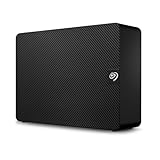
- Easy-to-use desktop hard drive—simply plug in the power adapter and USB cable
- Fast file transfers with USB 3.3
- Drag-and-drop file saving right out of the box
- Automatic recognition of Windows and Mac computers for simple setup (Reformatting required for use with Time Machine)
- Enjoy peace of mind with the included limited warranty and Rescue Data Recovery Services
Which European cloud providers might fit?
European providers are not interchangeable. Their strengths range from basic infrastructure and bare metal to developer platforms, enterprise operations and sovereign partnerships. The table is a starting point for workload evaluation, not a ranking or claim that any provider meets every sovereignty requirement.
| Provider or model | Potential fit | Key limitation to evaluate |
|---|---|---|
| AWS European Sovereign Cloud | Customers seeking AWS tooling with stronger European isolation and residency claims. | Still an AWS product; verify required service availability, ownership and legal/control questions. |
| OVHcloud | European-controlled public cloud, bare metal, storage and hosting. | Assess managed-service breadth, global reach and the effort to replace proprietary hyperscaler services. |
| Scaleway | European cloud-native teams and selected developer or AI infrastructure needs. | Check whether its specific managed services, regions and integrations cover the workload. |
| STACKIT | German and European enterprise or public-sector use cases. | Assess geographic breadth, service maturity and ecosystem fit for the application. |
| Clever Cloud | European application-platform and developer-oriented workloads. | It is not necessarily a direct replacement for every infrastructure-as-a-service workload. |
| Hetzner | Price-conscious virtual machines, dedicated servers and teams comfortable managing more of the stack. | Check managed-service breadth, enterprise requirements and global reach. |
| IONOS and T-Systems / Open Telekom Cloud | Business, enterprise and regulated workloads where managed operations or established provider relationships matter. | Compare architecture, service catalog, pricing and developer experience with the actual requirements. |
| S3NS and other European-led partnerships | Customers seeking European operation combined with technology from a larger cloud provider. | Map the precise division of ownership, operational control, updates, telemetry and foreign technology dependencies. |
Price comparisons need the same caution as sovereignty comparisons. OVHcloud’s public pricing page showed a b3-8 instance at €0.0512 per hour and a b3-16 at €0.1023 per hour, excluding VAT, with pricing marked as of April 1, 2026. Those are specific instance prices, not a like-for-like total-cost comparison or a guarantee of current rates; region, billing model, storage, networking and operating system affect the bill. OVHcloud’s pricing page provides the listed figures.
How to decide whether a workload should move
Start with sensitivity, not the provider’s nationality
Classify the workload before comparing vendors. Public information, routine internal systems, personal data, confidential commercial records, regulated data, critical operations and defense or national-security systems do not all require the same controls. A sensitive database may justify a different hosting decision from the rest of an application.
Ask for evidence about control
Ask providers and partners to answer these questions in contracts and technical documentation, not just in marketing language:
- Where are production data, backups, logs and telemetry stored?
- Who operates the control plane and can access privileged systems?
- Where are support staff located, and which subcontractors can reach the service?
- Who controls encryption keys, and can the customer operate or rotate them independently?
- Which parent-company laws may apply, and what safeguards govern requests for data?
- What foreign technology is essential to the stack, who controls updates, and what happens if the partnership ends?
- Can the service keep operating if international connectivity is disrupted?
- How many regions and availability zones are available, and what are the provider’s recovery arrangements?
Compare the whole workload
Compare required capabilities rather than headline compute prices: Kubernetes, databases, object storage, identity and single sign-on, private networking, load balancing, infrastructure-as-code, monitoring, backup, disaster recovery, GPU access, AI services, integrations and support. A provider that covers the core compute layer may still require another vendor or more in-house operations for the rest.
Rank #4
- Value NAS with RAID for centralized storage and backup for all your devices. Check out the LS 700 for enhanced features, cloud capabilities, macOS 26, and up to 7x faster performance than the LS 200.
- Connect the LinkStation to your router and enjoy shared network storage for your devices. The NAS is compatible with Windows and macOS*, and Buffalo's US-based support is on-hand 24/7 for installation walkthroughs. *Only for macOS 15 (Sequoia) and earlier. For macOS 26, check out our LS 700 series.
- Subscription-Free Personal Cloud – Store, back up, and manage all your videos, music, and photos and access them anytime without paying any monthly fees.
- Storage Purpose-Built for Data Security – A NAS designed to keep your data safe, the LS200 features a closed system to reduce vulnerabilities from 3rd party apps and SSL encryption for secure file transfers.
- Back Up Multiple Computers & Devices – NAS Navigator management utility and PC backup software included. NAS Navigator 2 for macOS 15 and earlier. You can set up automated backups of data on your computers.
Estimate a credible exit cost
Before committing, write down the costs of data export and egress, parallel operation, application changes, database migration, rebuilding identity and monitoring, testing, staff retraining, contract termination and disaster-recovery redesign. A cheaper virtual machine can cost more overall if it adds engineering work or removes managed capabilities the team currently relies on.
Quick wins for a faster PC:
Fix the driver behind crashes, sound loss and screen glitchesFind Drivers →Clear out junk files and repair common Windows errorsFree Scan →Make new systems easier to move
For new or redesigned applications, portable components can reduce—but not eliminate—future migration work. Options include Kubernetes, PostgreSQL, OpenTelemetry, Terraform or OpenTofu, S3-compatible storage, standard Linux images and open-source identity or observability tools. Portability still requires testing and operational expertise; it does not make two providers identical.
What the shift means for European businesses
The Commission procurement and DMA actions point in different but compatible directions: institutions are creating a path to procure cloud with stronger sovereignty assurances, while the Commission is scrutinizing the market power of the largest U.S. providers. Neither development alone proves mass migration. AWS’s European Sovereign Cloud launch also shows that U.S. providers are adapting their offers to compete for sovereignty-conscious customers.
For a business, the practical choice is often selective rather than all-or-nothing. Keep a workload where it is when the benefits of moving do not justify the cost; consider moving or duplicating a particularly sensitive workload if stronger control is worth the operational trade-off; and make new systems easier to move where feasible. European clouds can create useful alternatives, but the right provider depends on the workload’s risk, service needs, recovery requirements and total cost.
Quick Recap
Product prices and availability are accurate as of the date/time indicated and are subject to change. Any price and availability information displayed on Amazon at the time of purchase will apply.
What’s actually slowing this PC down?
Pick the symptom - the matching free tool is one click away.




