PC Slower Than It Used to Be?
A free scan shows the junk files, broken settings and background clutter dragging Windows down - then fixes them in one click.Free scan · Windows 10 & 11Crashes, No Sound, or Screen Glitches?
Random freezes, missing sound and display glitches usually trace back to one bad driver. Find and replace yours safely.Free scan · under a minute“AI expert” is not a standardized job title. It covers work ranging from building AI applications and operating machine-learning systems to conducting research, managing AI products, and assessing risk. The most practical way to enter the field is to choose a target role, then pair software, data, or domain expertise with the ability to evaluate and explain AI systems.
What does an AI expert do?
The work depends on the role and employer. An AI engineer at one company might connect a language model to internal documents; at another, the job could involve training models or operating large-scale inference infrastructure. The U.S. Bureau of Labor Statistics (BLS) does not list “AI expert” as a standalone occupation, so the phrase is best understood as an umbrella for several careers.
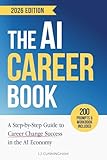

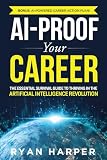

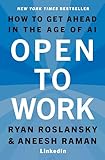
AI work can involve building or adapting models, creating applications around them, preparing and governing data, deploying and monitoring systems, evaluating performance, or managing risks and human oversight. Prompting is one useful technique, but prompt writing alone does not cover the engineering, data, evaluation, and operational work many employers need. Microsoft’s description of AI engineering, for example, combines software development, programming, data science, and data engineering: Microsoft’s AI engineer career path.
Which AI career pathway fits you?
Choose based on the work you want to do and the strengths you already have. A useful starting point is one primary role and one supporting specialty—not an attempt to master every branch of AI at once.
Recommended Free Tools
| Pathway | Good starting background | Typical focus |
|---|---|---|
| AI application engineer | Software development or technical career change | AI-powered applications, APIs, retrieval, testing, and integration |
| Machine-learning engineer | Software engineering, data science, or data engineering | Training, serving, and maintaining production models |
| Data scientist | Statistics, analytics, or business analysis | Data analysis, experiments, prediction, and decision support |
| AI research scientist | Computer science, mathematics, or scientific research | New methods, experiments, and research publications |
| MLOps or AI infrastructure | Cloud, DevOps, SRE, or data engineering | Model pipelines, deployment, reliability, and infrastructure |
| AI product or technical leadership | Product, consulting, analysis, or domain leadership | Use-case selection, requirements, delivery, and outcomes |
| AI governance, risk, safety, or security | Compliance, privacy, cybersecurity, law, audit, or policy | Controls, documentation, risk assessment, and oversight |
| AI-enabled domain specialist | Experience in a field such as health, finance, education, or manufacturing | Applying and evaluating AI in a real workflow |
AI application engineer
This path suits developers and technically inclined career changers who want to build useful products with existing models. Typical work includes connecting model APIs to business systems, building retrieval-augmented generation (RAG), handling structured outputs and tool use, and adding authentication, tests, observability, and security. Core skills include Python or JavaScript/TypeScript, HTTP and APIs, SQL, Git, testing, deployment, and model evaluation. A strong first project is a deployed application with a defined use case, measured answer quality, error handling, and clear limitations.
Machine-learning engineer
ML engineers prepare data, train and validate models, build pipelines, deploy models for batch or real-time use, and monitor quality, latency, and drift. The work calls for Python, SQL, statistics, machine-learning fundamentals, a deep-learning framework such as PyTorch or TensorFlow, and production practices such as Docker, CI/CD, and monitoring. Google’s Professional Machine Learning Engineer role description emphasizes production ML, data and ML pipelines, deployment, monitoring, retraining, and responsible AI.
A common route is software engineering or data science followed by a production ML project, then an ML engineering or MLOps role. Not every ML engineer needs a graduate degree; employers’ requirements vary with the role and its research depth.
Data scientist
Data scientists turn questions into analyses, experiments, and models, then explain what the evidence means to stakeholders. The work often includes cleaning data, building baselines, validating models, visualizing results, and recommending decisions. Useful skills include statistics, probability, Python or R, SQL, data visualization, experimentation, and domain knowledge. O*NET’s data scientist profile lists tasks and technologies spanning machine learning, natural-language processing, databases, APIs, and data-processing tools.
Data science is not automatically AI engineering: many data-science jobs focus on analytics, forecasting, experimentation, or business intelligence rather than deploying models.
AI research scientist
Research scientists develop or investigate methods, design experiments, analyze model behavior, and publish results. The pathway suits people who enjoy mathematics and open-ended technical questions. It generally calls for strong programming, algorithms, probability, statistics, optimization, experimental design, and research writing. Many advanced industrial research roles expect a Ph.D. or an equivalent research record, although expectations vary. Applied scientists and research engineers may bridge research and production without having the same responsibilities as research scientists.
MLOps, platform, and AI infrastructure
This pathway suits cloud engineers, DevOps and site-reliability engineers, data engineers, and systems programmers. The work includes automating model deployment, maintaining data and ML pipelines, serving models, monitoring systems, controlling access, and managing reliability and cost. Linux, networking, containers, cloud infrastructure, CI/CD, orchestration, logging, and security are central; GPU and distributed-computing knowledge can matter for some jobs.
AI product management and technical leadership
AI product managers identify valuable use cases, define success measures, assess feasibility and data readiness, and coordinate engineering, security, legal, and operations teams. They do not necessarily train models, but need enough technical fluency to question assumptions, interpret evaluation results, and consider whether conventional software, search, or rules would solve the problem better.
Do these 3 things before closing this tab:
1Scan for outdated or missing drivers - takes under a minute2Repair Windows errors before they cause bigger problems3Fix the driver behind crashes, sound loss and screen glitchesAI governance, risk, safety, and security
These roles assess system risks and establish controls around data, privacy, security, reliability, documentation, and human oversight. They suit professionals in compliance, cybersecurity, privacy, audit, law, policy, and risk. They are not inherently nontechnical: sound assessment requires understanding system boundaries, data flows, failure modes, and evidence. NIST’s AI Risk Management Framework is voluntary guidance for incorporating trustworthiness into AI design, development, use, and evaluation; it is not a universal legal requirement.
Domain specialist who uses AI
Professionals in fields such as medicine, finance, law, manufacturing, education, and logistics can build valuable AI careers by applying their existing expertise. They can identify useful workflows, judge whether model outputs are acceptable, surface risks, and translate real requirements for technical teams. Knowing where a system fails can be as important as knowing how to use it.
How to choose a first target role
Start from your existing experience and the work you want to do. Then review job descriptions in your target industry to identify recurring requirements; title names vary, so compare responsibilities rather than relying on labels alone.
- If you enjoy coding and product building: explore AI application engineering.
- If you enjoy statistics and explaining evidence: explore data science.
- If you like software systems and model operations: explore ML engineering or MLOps.
- If you want to invent methods and pursue open-ended questions: explore research, and assess the degree and research-record expectations.
- If you prefer coordination and decisions: explore AI product management or technical program work.
- If your strengths are risk, policy, security, or audit: explore governance and assurance roles.
- If you already know an industry deeply: look for ways to apply AI to a specific workflow in that field.
Your first AI-related job may not have “AI” in its title. Software engineer, data analyst, data engineer, backend developer, cloud engineer, research assistant, product analyst, technical consultant, and governance analyst can all provide relevant experience.
What’s actually slowing this PC down?
Pick the symptom - the matching free tool is one click away.
Skills to learn, in a useful order
Technical foundations
For technical roles, build a working foundation in Python, Git, SQL, Linux and the command line, APIs, JSON, authentication, debugging, testing, and basic data structures. Add statistics and probability early. These skills help you work with real data and integrate AI into software rather than treating a model as a standalone demonstration.
Machine-learning fundamentals
Learn train, validation, and test splits; classification and regression; overfitting; baselines; cross-validation; data leakage; metrics such as precision, recall, F1, and calibration; and error analysis. A competent practitioner should be able to explain how the evaluation was constructed and what it does not establish.
Generative AI and system evaluation
For generative-AI applications, learn tokenization, embeddings, context windows, retrieval, prompting, fine-tuning, structured outputs, and tool calling. Understand how to build an evaluation set and examine failure cases. A demo that produces fluent text is not evidence that it is accurate, safe, or suitable for a particular workflow.
Deployment, security, and responsible practice
Learn enough deployment and operations to understand versioning, latency, availability, cost, logging, monitoring, access control, privacy, and recovery from failures. Responsible design begins by defining intended use, identifying affected people, testing foreseeable failures, deciding where human review is needed, and documenting limitations.
Communication and domain knowledge
Employers need people who can explain assumptions, trade-offs, and results to technical and nontechnical colleagues. Domain expertise helps distinguish an interesting model output from one that is useful and acceptable in a real setting.
A staged learning roadmap
Time to employment depends on your starting point, target role, available study time, and local hiring conditions. Treat these stages as a sequence of work to complete—not a promise that a job will follow on a fixed schedule.
- Choose a role. Select one primary pathway and one supporting specialty. Review several job descriptions and note the recurring skills and tools.
- Establish foundations. Learn the relevant programming, data, statistics, and system basics. If your route is nontechnical, focus on understanding system components, evaluation, risk, and workflow design.
- Build a small, complete project. Define a problem, establish a baseline, implement a solution, evaluate it, and write down what failed. Deploy it if the target role involves software or operations.
- Specialize after the fundamentals. Choose a field such as LLM applications, computer vision, speech, recommendation systems, forecasting, AI security, MLOps, or a domain-specific use case.
- Seek real-world feedback. Pursue an internship, research assistantship, internal project, open-source contribution, volunteer engagement, or scoped consulting project. Make the work reproducible and document your contribution.
- Prepare for the role, not just the exam. Practice explaining design choices, evaluation methods, failure handling, and trade-offs. Technical candidates should also prepare for coding or system-design interviews where relevant.
Build a portfolio that proves judgment
A collection of tutorial copies or generic chatbot demos is weak evidence. Choose projects that show you can define a problem, evaluate a solution, and communicate limitations.
End-to-end AI application
Build an application or API with a clear user and task. Include data ingestion, model interaction or retrieval, testing, authentication, error handling, deployment instructions, and an evaluation of answer quality. Record relevant latency and cost assumptions rather than claiming performance without measurements.
Classical machine-learning project
Use a clearly described dataset and target. Document data-cleaning decisions, establish a baseline, explain the evaluation method, analyze errors, and state limitations. Be explicit about data provenance and any risks of leakage.
Production or MLOps project
Containerize a service, automate tests, track model or prompt versions, add logging and monitoring, and explain how you would roll back or recover from failure. This is particularly useful evidence for infrastructure and ML engineering roles.
Responsible-AI or domain assessment
Document intended and out-of-scope uses, relevant privacy and security questions, foreseeable failure cases, bias or reliability tests, and a human-oversight plan. For a domain project, explain why AI is preferable to a simpler alternative and how success would be measured.
For each project, publish a short problem statement, architecture diagram, setup instructions, data provenance, evaluation method, known failure cases, and a demonstration. A clear account of what did not work can show more judgment than an unqualified success claim.
The Tool Desk
Outbyte PC Repair FREEClear out junk files and repair common Windows errorsFree Scan →Outbyte Driver Updater FREEFix the driver behind crashes, sound loss and screen glitchesFind Drivers →Best Value
Degrees, courses, and certifications: what is worth paying for?
When a degree may make sense
A computer-science, statistics, or related degree can provide structured fundamentals, research opportunities, faculty and peer networks, and recruiting access. A graduate degree is a more defensible investment for many research-heavy roles and some scientific specialties. It takes time and money, may not teach current production tools, and does not by itself prove that you can build or operate a system.
Self-study can be more efficient for experienced software engineers and domain professionals targeting application development, data work, MLOps, or product roles. It requires discipline and a deliberate way to validate skills through projects and experience.
When a certification helps
A certification is most useful when it is current, relevant to the target employer’s platform, and aligned with the role. It can structure learning and signal familiarity with a vendor ecosystem, but it does not guarantee a job or substitute for practical work.
| Credential | Status and details checked August 18, 2026 | Best fit and caution |
|---|---|---|
| AWS Certified Machine Learning Engineer – Associate | AWS lists a $150 USD exam fee, 130 minutes, and 65 questions. The current English MLA-C01 exam ends September 28, 2026; registration for MLA-C02 opens September 1, 2026. | Relevant to AWS and SageMaker-focused work. AWS describes the target candidate as having at least one year of experience with SageMaker and other AWS ML services. Check the exam version before registering: AWS credential page. |
| Google Cloud Professional Machine Learning Engineer | Google lists a $200 fee plus applicable tax, a two-hour exam, and no formal prerequisites. It recommends three or more years of industry experience, including at least one year designing and managing Google Cloud solutions. | Relevant to production ML on Google Cloud; likely a poor first credential for an absolute beginner. See Google’s credential page. |
| Microsoft Azure AI Engineer Associate | Microsoft’s page states that the certification and renewal assessment are retired. | Do not treat the legacy credential as current. Check Microsoft’s credentials catalog for a relevant replacement before buying training: Microsoft credential page. |
| NVIDIA certifications and learning paths | NVIDIA offers topic- and role-based learning paths; exam prices vary and should be checked on the individual exam page. | Best suited to relevant work in GPUs, accelerated computing, AI infrastructure, or NVIDIA-centered environments. See NVIDIA learning paths and NVIDIA certifications. |
Credential availability, exam versions, and prices change. Check the issuing organization’s page before paying. A platform-neutral foundation—Python, SQL, Git, Docker, APIs, Linux, and evaluation—can be more transferable when you do not yet know which cloud platform your target employers use.
How to assess a course or boot camp
Before paying, check the curriculum depth, prerequisites, instructor support, total cost, refund terms, project requirements, and how any graduate-outcome claims were measured. Favor programs that teach evaluation, deployment, security, and data quality alongside model use. Treat guaranteed employment or salary promises skeptically unless the evidence and conditions are transparent.
U.S. employment and wage context
Because “AI expert” is not a BLS occupation, adjacent occupational figures are more defensible than an unqualified national AI salary claim. BLS reports that data scientists had a median annual wage of $112,590 in May 2024, with 245,900 jobs in 2024 and projected employment growth of 34% from 2024 to 2034, or about 23,400 openings per year. Those figures describe data scientists broadly, not AI jobs alone: BLS data scientist profile.
For computer and information research scientists, BLS reports a median annual wage of $140,910 in May 2024, 40,300 jobs in 2024, and projected growth of 20% from 2024 to 2034. This is also a broader occupation, not an AI-only pay measure. BLS says research scientists typically need at least a master’s degree; data scientists typically need at least a bachelor’s degree, though employer requirements vary. See the BLS research scientist profile.
These are U.S. occupational figures, not global salary expectations or estimates for every AI engineer. Pay varies by role, employer, location, seniority, and compensation methodology.
Common mistakes that slow an AI career change
- Relying on prompt writing alone. Treat prompting as one part of application development, alongside data, integration, evaluation, security, and workflow design.
- Collecting courses instead of building. Use a build-to-learn loop: learn a concept, implement it, test it, deliberately break it, document the failure, and improve the system.
- Making only toy demos. Add evaluation, failure handling, security, deployment, and stated limitations to show that you understand what production use entails.
- Blaming the model for every problem. Missing data, poor labels, duplicates, leakage, stale documents, inconsistent schemas, or unclear ground truth can be the real cause of failure.
- Treating benchmarks as proof of business impact. A public benchmark, offline evaluation, controlled pilot, and real-world outcome are different kinds of evidence.
- Leaving risk and security until last. Address privacy, access control, logging, human escalation, and recovery as part of system design.
- Overstating salary prospects. Do not infer an AI career’s pay from a broad occupation figure without naming its geography, date, job category, and scope.
How to pursue your first AI-related role
- Target a small set of job titles. Compare responsibilities across roles such as software engineer, data analyst, data engineer, ML platform engineer, research assistant, or governance analyst.
- Match your evidence to the work. Put relevant skills, project links, and measurable contributions near the top of your resume. Describe your own contribution accurately.
- Make projects easy to verify. Keep a working demo where feasible, a readable repository, setup steps, evaluation results, and documented limitations.
- Get experience through adjacent work. Look for internships, internal automation projects, open-source contributions, scoped client work, research assistance, or volunteer projects with real users.
- Practice explaining trade-offs. Be ready to discuss why you chose an approach, how you tested it, what failed, and what would need to change before deployment.
For a research path, build a record of rigorous projects, paper reading, experiments, and—where appropriate—research mentorship or graduate study. For application, data, infrastructure, product, and governance roles, the most persuasive evidence will depend on the target job, but it should connect your skills to a real problem.
Quick Recap
Product prices and availability are accurate as of the date/time indicated and are subject to change. Any price and availability information displayed on Amazon at the time of purchase will apply.




