Do these 3 things before closing this tab:
1Clear out junk files and repair common Windows errors2Scan for outdated or missing drivers - takes under a minute3Repair Windows errors before they cause bigger problemsHygon’s proposed merger with server maker Sugon was meant to connect Chinese chip design with complete computing systems. It never closed: Hygon terminated the deal in December 2025, citing changes in market conditions and transaction complexity. The proposal remains a useful case study in China’s effort to build a more integrated domestic computing industry, but it should not be described as a completed merger.
What Hygon proposed to buy
On May 26, 2025, Shanghai-listed Hygon Information Technology announced a plan to absorb Dawning Information Industry, whose products are widely marketed under the Sugon name. The proposed transaction was an all-share merger: Sugon shareholders would receive newly issued Hygon shares, and Sugon would be delisted if the deal proceeded. The announcement was initially a letter of intent, not final closing documentation. Trading in both companies’ shares was suspended while the proposal was considered. Caixin Global reported the initial proposal; Sugon’s investor announcement archive contains transaction filings.
More detailed terms released in June set an exchange ratio of 0.5525 Hygon shares for each Sugon share. The plan also included a proposed private placement to raise supplementary funds. These were proposed terms, not a completed exchange. Caixin’s account of the termination reports the ratio and a proposed Sugon valuation of approximately 115.967 billion yuan.
What each company would have brought
Hygon: processor design
Founded in 2014 and listed on Shanghai’s STAR Market in 2022, Hygon is a fabless Chinese chip designer. Its portfolio includes general-purpose CPUs for data centers and other computing uses, as well as Deep Computing Units (DCUs) aimed at AI and deep-learning workloads. Its early development involved cooperation with AMD on x86-related technology; that history does not make Hygon an AMD subsidiary or mean its products are equivalent to AMD products. Company background and the relationship are described by Caixin Global and Network World.
Free tools Windows power users keep installed
One-click scans. No signup required.
#1 Best Overall
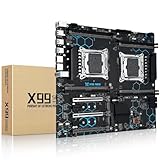
- Intel Dual CPU Sockets: This C612 chipset server motherboard is designed with dual CPU sockets, which can support Xeon E5 V3/V4 series processors. (Note: Core i7 not support Dual-CPU mode, if only one CPU is installed, please install it in the left slot)
- DDR4 Memory Slots: The memory slots of the LGA 2011-v3 motherboard is designed with 8-channel, which can support DDR4, DDR4 ECC, DDR4 RECC RAM. It supports effective frequencies is 2133/2400MHz, and the maximum capacity is 256GB. (Note: When use E5 v4 CPU, can not support Desktop DDR4 RAM)
- PCIe 3.0 Protocol: Equipped with 2 PCIe 3.0 X16 graphics card slots (with steel case), and 1 PCIe 3.0 X8, 2 PCIe 2.0 X1. The transfer rate can reach 15.754 GB/s. Equipped with 2 M.2 hard disk slots, which can achieve fast reading even if multiple programs are running
- Stable Power Supply: The X99 Dual CPU motherboard use 24+8+8pin standard power supply interface, 8-phase power supply. Precise modularization provides good heat dissipation and makes the program run more stably
- Strong Expandability: The X99 gaming motherboard is equipped with multiple expansion interfaces to ensure that the motherboard has more room for improvement, include 4*USB 3.0 ports, 2*USB 2.0 ports, 8*SATA 3.0 ports, 2*network ports
Sugon: systems and deployment
Sugon is the English brand associated with Dawning Information Industry Co., Ltd., a Shanghai-listed company trading under stock code 603019. Its businesses include high-performance servers, supercomputing systems, storage, cloud computing, big-data infrastructure, and related information-infrastructure products. See the company’s official investor profile and English company profile.
Why connect chip design to servers?
The strategic rationale was vertical integration: bring processor design closer to the systems that use those processors. Hygon supplied CPUs and DCUs; Sugon built servers and larger computing platforms. Under common ownership, the companies might have coordinated validation, firmware, software adaptation, system tuning, procurement, and customer support more directly. This could have made it easier to optimize selected domestic systems for AI, research, government, enterprise, and data-center workloads. Those were potential benefits of the proposed combination, not demonstrated outcomes.
That kind of integration is narrower than a self-sufficient semiconductor supply chain. The merger would not have given the companies control over advanced chip fabrication, lithography equipment, memory manufacturing, packaging, networking, every server component, or the full software and developer ecosystem. It also would not, by itself, have made Hygon a replacement for Nvidia’s broader combination of accelerators, networking, software, and developer tools. Network World’s analysis framed the transaction as chip-to-system integration, not control of every layer.
How the proposal fit China’s technology strategy
U.S. export controls on advanced computing technology formed important geopolitical context. Coverage interpreted the proposed deal as part of China’s effort to reduce exposure to foreign suppliers and expand domestic computing capability. But sanctions should not be treated as the sole formally stated reason for the transaction: the companies also presented it in terms of strengthening their core businesses, improving system-level capabilities, and pursuing opportunities in China’s computing and AI markets. Caixin Global and Network World discuss the controls and industrial context.
Rank #2

- Ready for Advanced AI PC: Designed for the future of AI computing, with the power and connectivity needed for demanding AI applications
- Intel? LGA 4710-2 socket: Ready for Intel Xeon 600 Processors for Workstation
- CPU and memory overclocking: The performance of ECC R-DIMM DDR5 memory (2DPC) is further enhanced by the exclusive NitroPath DRAM technology
- Ultrafast connectivity: 7 PCIe 5.0 x16 slots, Realtek 10Gb LAN and Intel? 2.5Gb LAN, 4 M.2, 2 SlimSAS, and USB4? and USB 20Gbps Type-C
- Server-grade IPMI remote management: Hardware and software-level with ASUS IPMI expansion card support, plus a real-time monitoring and management software – ASUS Control Center Express
A more integrated domestic supplier could have offered selected customers another route to procure and deploy locally designed processors and systems. That is not the same as eliminating foreign dependencies or avoiding every future effect of export restrictions. In particular, chip design does not guarantee access to leading-edge manufacturing capacity, and a domestic CPU or DCU does not automatically reproduce the performance, compatibility, or software ecosystem available from global suppliers.
The proposed financial scale—and what the figures mean
Several financial figures describe different things and should not be conflated:
| Figure | What it describes |
|---|---|
| More than 400 billion yuan | Combined market capitalization around the announcement period, as reported by a Shanghai government news summary. It was not the transaction value. |
| Approximately 115.967 billion yuan | Proposed valuation of Sugon under the share-swap terms, as reported by Caixin Global. The merger was terminated before closing. |
| Hygon revenue: 9.16 billion yuan; Sugon revenue: 13.2 billion yuan | Each company’s reported 2024 revenue. Hygon’s was up 52.4% year over year; Sugon’s was down 8.4% year over year. Both reported profits of approximately 1.9 billion yuan for 2024, according to Caixin Global. |
The 2024 revenue and profit figures are historical company results, not current figures. Likewise, market capitalization fluctuates with share prices; it is not a measure of cash paid or the value of the transaction itself.
Independent reader supportYour contribution helps us test, update, and keep practical guides available for everyone.What happened to the merger
- May 26, 2025: Hygon announced its intention to absorb Sugon through a share swap; trading in the companies’ shares was suspended. Caixin Global covered the announcement.
- June 2025: Detailed transaction documents set out the 0.5525-to-1 exchange ratio, the proposed delisting of Sugon, and a planned private placement. The documents are available in Sugon’s investor archive.
- December 10, 2025: Hygon terminated the acquisition plan. It cited major changes in market conditions and transaction complexity. The company said termination would not severely affect its operations, financial position, or future cooperation with Sugon, according to Caixin Global.
The stated explanation is the one confirmed publicly in the cited coverage. Valuation disagreements, dilution concerns, regulatory complexity, and changing market assumptions are possible analytical explanations for why a complex merger might not proceed, but they are not established as the causes of this termination.
The Tool Desk
Outbyte Driver Updater FREEFix the driver behind crashes, sound loss and screen glitchesFind Drivers →Outbyte PC Repair FREEClear out junk files and repair common Windows errorsFree Scan →Rank #3

- AMD socket sTR5 supports up to 96-core CPUs: Ready for AMD Ryzen Threadripper PRO 7000 WX-Series Processors.
- Ultrafast connectivity:Seven PCIe 5.0 x16 slots, dual 10 Gb LAN ports, four M.2 slots, two rear USB4 40Gbps Type-C and SlimSAS NVMe support.
- CPU and memory overclocking: Support for up to 2TB ECC R-DIMM DDR5 memory modules (1DPC)
- Robust power and thermal design: 32 power stages with two 8-pin power connectors for the CPU, massive VRM cooling, chipset and M.2 heatsinks with active fans, and M.2 thermal pad.
- PCIe Q-release Slim: Remove the graphics card by directly pulling it up, instead of pressing a PCIe latch.
What the collapse does—and does not—tell us
The termination means the proposed merger did not create a combined Hygon–Sugon company. It does not establish that the companies ended all cooperation: Hygon said the termination would not severely affect future cooperation, but that statement alone does not establish a specific continuing arrangement.
The episode illustrates both the appeal and the difficulty of China’s chip-to-system strategy. Bringing processor design and server engineering under one corporate roof could improve coordination and strengthen a domestic option for selected workloads. But consolidation cannot substitute for manufacturing capacity, advanced equipment, components, software compatibility, or reliable demand. A larger corporate structure may also introduce dilution, governance and execution challenges. China’s push for more integrated computing systems can continue even though this particular merger did not.
For additional context on the companies and the proposed sector consolidation, see the South China Morning Post’s coverage.
Quick Recap
Product prices and availability are accurate as of the date/time indicated and are subject to change. Any price and availability information displayed on Amazon at the time of purchase will apply.
What’s actually slowing this PC down?
Pick the symptom - the matching free tool is one click away.




