Do these 3 things before closing this tab:
1Fix the driver behind crashes, sound loss and screen glitches2Clear out junk files and repair common Windows errors3Scan for outdated or missing drivers - takes under a minuteThere probably won’t be one new FAANG. Generative AI is more likely to produce several leaders across chips, cloud computing, foundation models, enterprise software, and consumer products. NVIDIA is best positioned in AI infrastructure; Microsoft has formidable enterprise distribution; Alphabet is the broadest vertically integrated contender; and Amazon is a major cloud and model-marketplace player. OpenAI, Anthropic, and Meta could lead important parts of the model and consumer markets without owning the entire stack.
For investors and business leaders, the distinction matters: a company can lead in model capability without capturing the most profit. Durable leadership depends on distribution, compute, customer relationships, and the ability to turn heavy spending into repeatable returns—not just on having a popular chatbot.
What does it mean to lead generative AI?
“AI leader” can describe very different things. A company may build a strong model, sell the chips that run it, host it in the cloud, or put AI inside software used by millions of people. Those roles have different costs, risks, and ways of making money.
A useful comparison looks at several dimensions rather than treating benchmark performance as a complete ranking:
Free tools Windows power users keep installed
One-click scans. No signup required.
#1 Best Overall
![Arduino® UNO™ Q 4GB [ABX00173]- Hybrid Board, Qualcomm Dragonwing QRB2210 microprocessor (MPU) & STM32U585 Microcontroller(MCU), AI Vision, Voice, IoT, Robotics, Linux Debian OS, Wi-Fi 5, USB-C](https://m.media-amazon.com/images/I/51cl4xygwGL._SL160_.jpg)
- Dual-Brain Hybrid Power: Combines the Qualcomm Dragonwing QRB2210 MPU (Quad-core Arm Cortex-A53 @ 2.0 GHz CPU, Adreno GPU, AI acceleration) and the real-time, low-power STM32U585 MCU for advanced applications like object recognition, voice commands, and motion detection.
- AI & Linux Capabilities: Unlocks AI-powered vision and sound solutions; runs Linux Debian OS for coding in Python and supports the Arduino ecosystem with libraries and Sketches; quick start with Arduino App Lab.
- Advanced Features: Equipped with 4 GB LPDDR4 RAM, 32 GB eMMC built-in storage, ideal for single-board computer (SBC) mode, running multiple simultaneous high-level processes, more complex AI or ML models, extensive logs. Dual-band Wi-Fi 5 (2.4/5 GHz), Bluetooth 5.1, and high-speed headers for vision, audio, and display peripherals.
- Seamless Expansion & Connectivity: Features the classic UNO form factor for shields compatibility, an 8x13 LED matrix, and a Qwiic connector for easy expansion with Modulino nodes; power and connect via the USB-C connector.
- Intended Use & Development: The perfect platform for prototyping robotics or IoT projects, empowering innovators with a unified development experience to mix Arduino Sketches, Python scripts, and containerized AI models in a single interface.
- Technology: model capability, research, inference efficiency, and software maturity.
- Infrastructure: access to accelerators, data centers, networking, electricity, and the capacity to keep expanding.
- Distribution: consumer reach, developer adoption, cloud relationships, and enterprise procurement access.
- Monetization: recurring revenue and the ability to earn more than the cost of compute, operations, and customer acquisition.
- Durability: proprietary data, switching costs, ecosystem strength, security, and the resources to keep investing.
A technically impressive model may be commercially dependent on another company’s cloud or software. Conversely, a cloud provider can earn revenue from AI workloads even when a rival owns the model.
Why the FAANG comparison only goes so far
The FAANG label captured companies with global reach, strong platforms, customer habits, and the ability to reinvest at scale. Those traits still matter. AI leaders will also need distribution, ecosystem effects, cash generation, and products that customers keep using.
But generative AI differs from the earlier internet-platform era. Building and serving frontier models requires substantial computing capacity, and costs continue after training because each user request consumes resources. Models can be accessed through cloud marketplaces, open-weight alternatives can put pressure on prices, and a leading model company may not own the infrastructure or customer relationship around it. Partnerships and investments also blur the boundaries between competitors.
That makes a single five-company list misleading. The likely market is a set of overlapping layers, with different winners and economics in each.
The AI stack has several potential leaders
| Layer | Leading candidates | What leadership means |
|---|---|---|
| Accelerators and AI systems | NVIDIA, AMD, Google, Amazon, Broadcom | Supplying chips, networking, systems, and supporting software. |
| Semiconductor manufacturing | TSMC | Manufacturing advanced chips and related components for customers. |
| Cloud compute | Microsoft Azure, AWS, Google Cloud, Oracle Cloud, CoreWeave | Providing the capacity and services to train, deploy, and run AI workloads. |
| Foundation models | OpenAI, Google DeepMind, Anthropic, Meta, xAI, Mistral | Developing models that can power products and other companies’ applications. |
| Enterprise AI platforms | Microsoft, Google, Amazon, Salesforce, ServiceNow, Oracle | Integrating AI into business software, data, identity, and workflows. |
| Consumer distribution | Google, Microsoft, Meta, Apple, OpenAI | Reaching users through familiar devices, services, and products. |
| AI applications and infrastructure | Specialist software firms, data-center providers, utilities, and infrastructure companies | Serving focused use cases or supplying the facilities and power AI requires. |
Which companies are best positioned?
NVIDIA: the leading infrastructure supplier
NVIDIA’s position is broader than selling accelerators. Its stack includes chips, networking, high-speed interconnects, CUDA software, AI libraries, and complete systems. That makes it a supplier to companies competing with one another for models, cloud workloads, and users.
NVIDIA reported fiscal-2026 revenue of $215.9 billion. Its SEC filing reported year-over-year growth of 59% in Data Center compute revenue and 142% in Data Center networking revenue. These company results show the scale and growth of its business, but they do not establish how much of the market’s future spending NVIDIA will retain. NVIDIA’s fiscal-2026 SEC filing provides the reported figures. The company also announced a broad set of infrastructure partnerships; announcements indicate ecosystem reach, not guaranteed equivalent revenue from every partner. NVIDIA’s fiscal-2026 results announcement describes those relationships.
How it makes money: Selling accelerators, networking, systems, and related products to cloud providers, model developers, enterprises, and governments.
What could weaken its lead: Hyperscalers are developing custom chips, competing accelerator ecosystems could improve, and customers may seek lower-cost inference as workloads mature. NVIDIA’s software ecosystem and complete systems are meaningful advantages, but custom silicon is a risk to dependence on its hardware.
Recommended Free Tools
Likely role: The clearest current infrastructure leader—and a potential economic winner even if another company owns the consumer AI interface.
Microsoft: the enterprise-distribution leader
Microsoft’s central advantage is the ability to sell AI through products and relationships businesses already use: Azure, Microsoft 365, Teams, GitHub, Dynamics, and security services. Its Foundry platform also offers access to more than one model provider, which can help customers avoid relying on a single lab.
Microsoft reported that Microsoft Cloud revenue surpassed $50 billion in a quarter and that more than 1,500 customers had used both Anthropic and OpenAI models on Foundry. These are company-reported measures of scale and usage, not a measure of the profitability of every deployment. Microsoft’s fiscal-2026 second-quarter investor materials describe its cloud and Foundry results. The company reported Azure and other cloud services revenue growth of 40% in its fiscal-2026 third-quarter materials. Microsoft’s fiscal-2026 third-quarter cloud performance provides that figure.
How it makes money: Through cloud consumption, software subscriptions, AI features, and developer and enterprise services. Its identity, productivity, and developer products can place AI inside established workflows.
Rank #2
- Dual-Brain Hybrid Power: Combines the Qualcomm Dragonwing QRB2210 MPU (Quad-core Arm Cortex-A53 @ 2.0 GHz CPU, Adreno GPU, AI acceleration) and the real-time, low-power STM32U585 MCU for advanced applications like object recognition, voice commands, and motion detection.
- AI & Linux Capabilities: Unlocks AI-powered vision and sound solutions; runs Linux Debian OS for coding in Python and supports the Arduino ecosystem with libraries and Sketches; quick start with Arduino App Lab.
- Advanced Features: Equipped with 2 GB LPDDR4 RAM, 16 GB eMMC built-in storage, ideal to develop in PC-connected mode, running the OS, Python scripts, and basic network services (SSH) without a demanding GUI or heavy multitasking; great for lightweight AI and memory-optimized TinyML applications, needing local storage for basic OS and core libraries. Dual-band Wi-Fi 5 (2.4/5 GHz), Bluetooth 5.1, and high-speed headers for vision, audio, and display peripherals.
- Seamless Expansion & Connectivity: Features the classic UNO form factor for shields compatibility, an 8x13 LED matrix, and a Qwiic connector for easy expansion with Modulino nodes; power and connect via the USB-C connector.
- Intended Use & Development: The perfect platform for prototyping robotics or IoT projects, empowering innovators with a unified development experience to mix Arduino Sketches, Python scripts, and containerized AI models in a single interface.
What could weaken its lead: Copilot adoption might not justify the cost of building and operating the service; capital spending can raise depreciation and capacity costs; and customers may resist deeper platform dependence. Microsoft’s relationship with OpenAI also creates strategic dependence and potential channel conflict.
Likely role: A leading enterprise AI platform. Its strongest claim is distribution and monetization, not exclusive ownership of the best model. Microsoft’s business Copilot page describes its product positioning.
Alphabet and Google: the vertically integrated challenger
Google combines AI research through Google DeepMind, Gemini models, custom TPUs, Google Cloud, Search, Android, YouTube, and Workspace. Few competitors can both build models and deploy them across such a wide range of consumer and enterprise products.
On its 2025 fourth-quarter earnings call, Alphabet said Gemini models were processing more than 10 billion tokens per minute through direct API use, Google Cloud revenue had grown 48% year over year, and more than 120,000 enterprises were using Gemini. Alphabet also gave 2026 capital-expenditure guidance of $175 billion to $185 billion. These are company-reported figures and guidance, not independent measures of customer value or future returns. Alphabet’s 2025 fourth-quarter earnings-call materials contain the figures. Alphabet describes Google Cloud’s AI offering as spanning infrastructure, Vertex AI, Gemini Enterprise, Workspace, cybersecurity, and data analytics in its company overview.
How it makes money: Cloud services and AI products, alongside the opportunity to improve or extend Search, advertising, YouTube, Android, and Workspace.
What could weaken its lead: AI-generated answers may change the economics of traditional Search; products can be fragmented across interfaces; and heavy infrastructure investment may pressure near-term cash flow. Enterprise buyers may also find Microsoft easier to procure.
Likely role: The strongest full-stack technical contender. Google’s case rests on combining research, chips, cloud, consumer distribution, and enterprise software—not on any single model comparison.
Amazon: the cloud and model-marketplace contender
Amazon’s AI position centers on AWS, Bedrock, its Trainium and Inferentia chips, Amazon’s models, and its relationship with Anthropic. Bedrock lets customers access models from multiple providers, which can make AWS useful even when Amazon does not own the model a customer chooses.
Amazon said its chips business exceeded a $25 billion annualized revenue run rate in 2026 and that Anthropic and OpenAI had made multiyear, multigigawatt Trainium commitments. The company’s announcement is evidence of reported scale and commitments; it does not by itself establish realized usage or return on the associated investment. Amazon’s second-quarter 2026 report describes the claims. Amazon’s earlier results described Bedrock as offering more than 20 managed models, including models from Amazon, Anthropic, Google, OpenAI, NVIDIA, Mistral, Cohere, and others. Amazon’s fourth-quarter results describe that offering.
How it makes money: Cloud infrastructure, model access, and custom chips, with the possibility of lower costs or greater supply resilience from its silicon.
What could weaken its lead: AWS could provide the infrastructure while model providers capture more of the customer relationship and margin. Custom chips must compete on software compatibility, availability, and cost as well as performance. Customers may also switch models frequently even when they stay on Bedrock.
Likely role: A neutral enterprise AI operating layer and major cloud provider, rather than necessarily the owner of a dominant consumer model. AWS’s Bedrock pricing page shows why buyers should evaluate service and model charges for their own workloads rather than rely on a single generic cost.
Windows Errors? Fix Them Before They Spread
Repair common Windows errors and clear accumulated junk for a smoother, more stable PC - no reinstall needed.Free scan · no reinstallOutdated Drivers Are Slowing You Down
One free scan finds every outdated or missing driver and matches the right update for your exact hardware.Free scan · exact hardware matchRank #3
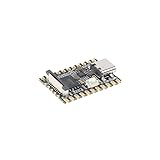
- Single core ARM Cortex-A7 32-bit core, integrated with NEON and FPU
- Built in Micro's self-developed 4th generation NPU, with high computational accuracy and support for mixed quantization of int4, int8, and int16. Among them, int8 has a computing power of 0.5 TOPS and int4 has a computing power of up to 1.0 TOPS
- Built in self-developed 3rd generation ISP3.2, supports 4 million pixels, and supports various image enhancement and correction algorithms such as HDR, WDR, and multi-level denoisin
- It has powerful encoding performance, supports intelligent encoding, adapts to save bit rates according to the scene, and saves more than 50% of the bit rate compared to conventional CBR mode, making the captured images high-definition, smaller in size, and doubling the storage space
- The design with built-in RISC-V MCU supports low-power fast startup, 250ms fast capture, and simultaneous loading of AI model library, enabling facial recognition to be completed within 1 second
OpenAI: a major model and interface company
OpenAI has strong consumer recognition, developer adoption, API distribution, enterprise offerings, and a growing presence in coding and agent workflows. Its direct interface gives it a relationship with users that a company selling only through cloud marketplaces may not have.
How it makes money: Consumer and business subscriptions, API usage, and enterprise products. Its business pricing page lists a Business plan at $25 per user per month when billed monthly, and its displayed regional pricing includes £15 per user per month. Enterprise pricing is handled through sales. Plan terms and displayed regional prices can change; buyers should confirm the current offer for their location. The page also lists controls such as SAML single sign-on, centralized administration, data protections, and enterprise support. OpenAI’s business pricing page gives its current published plan details.
What could weaken its lead: Compute costs may stay high; OpenAI depends on larger partners for significant infrastructure and distribution capabilities; and model differentiation can narrow quickly. Enterprise customers may prefer vendors that combine AI with existing cloud, security, and procurement arrangements.
Likely role: A key frontier-model and application company, but not one with the same established infrastructure and cash-generation advantages as Microsoft, Alphabet, or Amazon.
Anthropic: an enterprise and coding-model challenger
Anthropic is a credible alternative model provider with a focus on business use, coding, long-context work, and safety-conscious deployments. Claude is available through its own products and developer platform, as well as through cloud relationships, giving customers more than one route to access its models.
How it makes money: Subscriptions, API access, and enterprise sales. Its product pages show consumer and team plans, enterprise sales options, and developer access; specific pricing and availability depend on the product and terms displayed. Claude’s pricing page lists its plans and products, while the Anthropic developer platform provides API documentation and access.
What could weaken its lead: Anthropic has less consumer distribution than Google, Meta, or Microsoft and relies on partners for much of its compute and market access. Open models and cloud-bundled offerings can put pressure on prices, while continued expansion requires substantial capital.
Likely role: A strategically important frontier-model supplier that could prosper in enterprise clouds without becoming a mass-market consumer platform.
Quick wins for a faster PC:
Repair Windows errors before they cause bigger problemsFix Now →Fix the driver behind crashes, sound loss and screen glitchesFind Drivers →Clear out junk files and repair common Windows errorsFree Scan →Meta: an open-model and consumer-scale contender
Meta can put AI into Facebook, Instagram, WhatsApp, and Messenger, while using its research and recommendation systems to improve products and advertising. Its open-model approach can encourage developers to build around its technology, even when that adoption does not translate directly into model sales.
How it could make money: By increasing engagement, improving advertising, and adding useful AI features to high-use consumer products. The business case is less direct than selling cloud compute or paid AI seats.
What could weaken its lead: Open-model adoption can create ecosystem influence without producing equivalent direct revenue. Consumer willingness to pay for assistants is uncertain, and large infrastructure spending must eventually earn an adequate return. NVIDIA identified a multiyear partnership with Meta spanning on-premises and cloud infrastructure and large-scale GPU deployment; this demonstrates a supply relationship, not proof of future returns for either company. NVIDIA’s announcement describes the partnership.
Likely role: An influential open-model and consumer AI leader whose financial gains may appear in advertising and product engagement rather than a standalone AI subscription business.
The Tool Desk
Outbyte PC Repair FREERepair Windows errors before they cause bigger problemsFix Now →Outbyte Driver Updater FREEScan for outdated or missing drivers - takes under a minuteDriver Scan →Rank #4

- 【POWERFUL ESP32‑S3 CONTROLLER】Built‑in Xtensa 32‑bit LX7 dual‑core processor, 512KB SRAM, 8MB PSRAM, 16MB Flash for stable AI voice computing and multitask processing.
- 【Preloaded Dual AI Platforms】Comespre-installed with complete Deepseek and OpenAI voice dialogue projects.Experience intelligent voice interaction instantly. (Note: OpenAI functionality requires your own API key.)
- 【STABLE WIRELESS & CLEAR AUDIO】Integrated 2.4GHz Wi‑Fi + Bluetooth 5 (LE); dedicated audio decoding module for natural, responsive voice interaction.
- 【USER‑FRIENDLY VISUAL & PLUG‑AND‑PLAY】2” TFT‑SPI color screen shows real‑time chat; modular design, no extra wiring, ready to use after setup.
- 【FULL LEARNING SUPPORT】45 programmable GPIOs, rich interfaces, online web tutorials, free technical support for beginners & developers.
Other companies that may benefit without owning the user interface
AI can create meaningful opportunities for suppliers and specialist infrastructure providers that never become household AI platforms.
- AMD: A potential accelerator alternative. Its position will depend on real deployments, software maturity, and customer adoption relative to NVIDIA’s ecosystem.
- Broadcom: A supplier positioned in AI infrastructure, including networking and custom silicon.
- TSMC: A critical semiconductor manufacturer for customers across the industry.
- Oracle and CoreWeave: Cloud and specialized-compute providers that may supply capacity, while facing capital, utilization, and customer-concentration risks.
- Data-center and power providers: Potential beneficiaries of demand for facilities, networking, and electricity, though the scale and profitability of that demand are not guaranteed.
These companies have different exposure from model developers or software platforms. Their prospects depend on supply, customer commitments, financing, utilization, and the economics of infrastructure—not simply on the popularity of generative AI.
Independent reader supportYour contribution helps us test, update, and keep practical guides available for everyone.Which advantages are most likely to endure?
Distribution can beat a narrow model lead
A model that is slightly better on a particular task may lose commercially to one already integrated into a company’s email, documents, cloud, identity, or developer tools. Microsoft, Google, and Amazon have routes to market that standalone model providers must build or access through partnerships. OpenAI and Anthropic, however, can compete through brand, direct products, APIs, and specialist strengths.
Infrastructure is a moat, but also a financial burden
Compute capacity can constrain rivals and support growth. Yet building data centers and buying accelerators commits capital before the ultimate demand and returns are certain. NVIDIA sells equipment to many competitors; cloud providers and model companies must invest in or pay for the infrastructure on which their services depend. Those are different business models, with different exposure to depreciation, utilization, and hardware changes.
What’s actually slowing this PC down?
Pick the symptom - the matching free tool is one click away.
Custom chips from Google, Amazon, and Microsoft could improve bargaining power, supply resilience, or cost for particular workloads. They are not automatic replacements for NVIDIA GPUs. Buyers and developers care about software compatibility, compiler maturity, availability, performance per dollar and watt, and the work required to deploy a new platform.
Enterprise integration can create switching costs
Large businesses evaluate more than model output. Security, identity, data governance, auditability, support, reliability, predictable billing, and the ability to change vendors all matter. Platforms that combine these with business workflows may become harder to replace than a standalone model endpoint. Model choice can reduce lock-in to a particular AI lab while still deepening dependence on the cloud or software platform that manages the deployment.
Consumer habit is not the same as monetization
A large user base is valuable only if people return, convert to paid use, or create measurable benefits such as stronger engagement or advertising performance. Relevant signals include retention, paid conversion, usage frequency, willingness to delegate tasks, and the effect on existing products. A raw user count does not establish recurring revenue or attractive margins.
What could prevent today’s leaders from capturing durable profits?
- Inference costs: Frequent model use creates ongoing computing expense. Revenue must cover serving, infrastructure, support, and product development.
- Falling model prices: Open models and competing providers can make it harder to sustain premium pricing, even as AI adoption grows.
- Weak customer returns: A popular feature may not justify a separate price, particularly when it is bundled into existing software.
- Excess infrastructure: Spending ahead of demand can lead to underused capacity, depreciation pressure, lower cloud prices, and financing stress for specialist providers.
- Energy and hardware constraints: Electricity, data-center construction, networking, and chip availability can limit deployment or raise costs; hardware can also become obsolete.
- Regulation and liability: Copyright disputes, data residency rules, sector-specific requirements, hallucination liability, cyber risks, misuse, export controls, and government procurement rules may affect which providers customers can use.
- Agent control points: If AI agents execute work across business applications, control of identity, permissions, data, tools, audit trails, and procurement may matter more than the chatbot interface alone.
These risks do not point to one inevitable loser. They explain why commitments, model benchmarks, and capital-spending plans should not be confused with proven recurring revenue or returns on invested capital.
Free tools Windows power users keep installed
One-click scans. No signup required.
How to evaluate the likely winners
Rather than ask which company has “the best AI,” track evidence that connects a company’s strategic position to its economics:
- For infrastructure suppliers: customer breadth, product demand, software adoption, and whether custom alternatives are gaining ground.
- For cloud platforms: AI workload growth, customer retention, utilization, and whether investment is earning a return.
- For model providers: paid usage, API and enterprise retention, inference economics, and dependence on partners for compute and distribution.
- For enterprise software companies: adoption and renewal quality, integration into daily workflows, and whether AI adds revenue or reduces costs enough to justify its expense.
- For consumer platforms: recurring engagement, paid conversion, trust, and measurable effects on the core business.
Separate recurring paid use from announcements, planned commitments, and general claims of adoption. A partnership can show strategic intent, but only realized usage and sustainable margins show whether it has become an attractive business.
Likely leaders by category
| Category | Strongest current candidate | Why |
|---|---|---|
| AI infrastructure | NVIDIA | Its accelerators, networking, software, and systems give it a broad position across competing AI platforms. |
| Enterprise distribution | Microsoft | It can integrate AI into widely used productivity, cloud, developer, identity, and security products. |
| Full-stack technical position | Alphabet | It combines research, models, custom chips, cloud, consumer products, and enterprise software. |
| Cloud model marketplace | Amazon | AWS can host multiple models and monetize infrastructure even when another company supplies the model. |
| Consumer model and interface | OpenAI | It has substantial consumer and developer mindshare, with the continuing challenge of infrastructure economics. |
| Enterprise-focused model challenger | Anthropic | It is a credible model supplier for business and coding use cases, distributed through multiple routes. |
| Open-model and consumer scale | Meta | It can distribute AI across major consumer platforms and influence developer adoption through open models. |
| Indirect infrastructure exposure | TSMC, Broadcom, AMD, and data-center and power providers | They may benefit from demand without owning a dominant AI platform or assistant. |
This is a map of strategic positions, not a stock ranking. Leadership in a growing market does not establish that a company’s shares are attractively valued; that requires separate analysis of valuation, balance sheets, capital needs, and downside risk.
Quick Recap
Product prices and availability are accurate as of the date/time indicated and are subject to change. Any price and availability information displayed on Amazon at the time of purchase will apply.




