Do these 3 things before closing this tab:
1Scan for outdated or missing drivers - takes under a minute2Repair Windows errors before they cause bigger problems3Fix the driver behind crashes, sound loss and screen glitchesNVIDIA completed its acquisition of Israeli software company Run:ai on December 30, 2024. The often-cited price of about $700 million was reported by news outlets; NVIDIA did not disclose the deal’s financial terms. Run:ai makes software for scheduling and managing AI workloads on GPU clusters. The purchase therefore extends NVIDIA’s reach beyond chips into the software that allocates access to them.
What NVIDIA bought
Run:ai is a GPU-orchestration and AI-workload-management platform, not a GPU maker, cloud GPU provider, or AI model developer. It runs with Kubernetes and helps organizations manage workloads across on-premises, cloud, and hybrid infrastructure. The European Commission described the acquisition as involving GPU-orchestration software: its merger decision.
| # | Preview | Product | Price | |
|---|---|---|---|---|
| 1 |
|
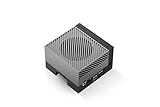
NVIDIA Jetson AGX Orin 64GB Developer Kit with Ethernet, USB, Display Port | $3,399.00 | Buy on Amazon |
| 2 |
|
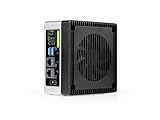
reComputer Super J4012 - Advanced Edge AI Computer with NVIDIA Jetson Orin NX 16GB | $1,799.00 | Buy on Amazon |
In practical terms, imagine three teams sharing a cluster: one training a model, one running an interactive notebook, and one serving predictions. An orchestration layer can apply rules about which jobs run first, how much capacity each team may use, and where work is placed. Run:ai’s product documentation describes a Kubernetes application installed on a cluster, with supported cloud-control-plane and self-hosted deployment approaches: cluster setup.
The platform’s documented functions include resource pooling, quotas, priorities, multi-queue scheduling, workload visibility, and usage analytics. Run:ai also describes capabilities such as automatic pause and resume and multi-node training; these are vendor-described features, not a guarantee of a particular utilization or cost improvement. See its GPU scheduling guide and dashboard documentation.
#1 Best Overall
- The NVIDIA Jetson AGX Orin 64GB Developer Kit makes it easy to get started with Jetson Orin. Compact size, lots of connectors, and up to 275 TOPS of AI performance make this developer kit perfect for prototyping advanced AI-powered robots and other autonomous machines.
- The developer kit includes a Jetson AGX Orin 64GB module, and can emulate all the Jetson Orin modules. It supports multiple concurrent AI application pipelines with the NVIDIA Ampere GPU architecture, next-generation deep learning and vision accelerators, high-speed IO and fast memory bandwidth. Now you can develop solutions using your largest and most complex AI models to solve problems such as natural language understanding, 3D perception, and multi-sensor fusion.
- Jetson runs the NVIDIA AI software stack, and use-case specific application frameworks are available, including Isaac for robotics, DeepStream for vision AI, and Riva for conversational AI. You can save significant time with NVIDIA Omniverse Replicator for synthetic data generation (SDG), and by using NVIDIA TAO toolkit to fine-tune pretrained AI models from the NGC catalog.
- Jetson ecosystem partners offer additional AI and system software, developer tools, and custom software development. They can also help with cameras and other sensors, as well as carrier boards and design services for your product.
- With the computing capability of more than 8 Jetson AGX Xavier systems in a developer kit that integrates the latest NVIDIA GPU technology with the world’s most advanced deep learning software stack, you’ll have the flexibility to create tomorrow’s AI solution as well as today’s.
What the reported $700 million means
The purchase price was not officially disclosed. NVIDIA’s April 24, 2024 announcement announced a definitive agreement but did not state a value. Contemporary reporting put the estimate at roughly $700 million; for example, TechCrunch reported the figure while covering the closing. The EU transaction record identifies the parties and review but does not establish a public purchase price: case M.11766. Treat $700 million as a reported estimate, not a confirmed exact payment.
How GPU orchestration fits into an AI cluster
Orchestration sits above the components that make accelerators usable. A simplified stack looks like this:
- Hardware: GPUs, servers, networking, and storage.
- Acceleration software: Drivers, CUDA, container runtime, and GPU plugins.
- Cluster management: Kubernetes or another system that schedules containers and exposes GPUs as resources.
- AI workload management: Queues, priorities, quotas, policies, workload visibility, and team-level governance.
Kubernetes can schedule GPU resources, but a cluster with AI workloads may need more than a count of available devices. A distributed training job may require GPUs across multiple nodes; a notebook may need responsive access; an inference service may have latency targets; and teams may need fair-share rules. GPU memory and other workload constraints can also leave resources difficult to reuse even when a cluster’s headline utilization looks high. Run:ai’s newer workload API combines Kubernetes manifests with Run:ai-specific scheduling metadata: Workloads V2 API documentation.
Scheduling can improve allocation and visibility, but it cannot guarantee lower spending. Results depend on workload patterns, memory requirements, data pipelines, policies, and whether demand expands to consume capacity freed by better scheduling.
Free tools Windows power users keep installed
One-click scans. No signup required.
Why NVIDIA wanted the software
Strategic analysis: Run:ai gives NVIDIA a foothold in the operational layer that decides who uses GPUs, when, and under which rules. That matters as organizations invest in costly accelerators and need to coordinate access among teams.
- Utilization and allocation: Pooling, queues, and quotas can help administrators manage uneven demand and fragmented capacity. The size of any gain depends on each customer’s workloads.
- A broader infrastructure platform: NVIDIA already sells or develops components across the AI stack. Orchestration can connect hardware and software to the policies and workflows enterprises use to run AI.
- Enterprise relationships: A management layer can become part of how customers deploy workloads, monitor usage, and govern teams. Deeper integration may make NVIDIA’s overall stack more attractive, while also raising switching and portability questions.
The acquisition is significant less as a bet on another model company than as a move toward the control plane for AI computing. NVIDIA said Run:ai had been a close collaborator since 2020 in its acquisition announcement.
Why regulators reviewed the deal—and why the EU cleared it
Italy referred the transaction to the European Commission under Article 22 of the EU Merger Regulation, even though Run:ai’s revenues were too small to meet the usual EU merger-notification thresholds. The Commission accepted the referral on October 31, 2024; the transaction was notified on November 15 and cleared without conditions on December 20. The Commission’s decision summary and the transaction record document the milestones.
The competition question was about ecosystem leverage, not a major overlap between the two companies’ existing businesses. Regulators considered whether NVIDIA might make Run:ai work better with NVIDIA GPUs, reduce compatibility with other GPUs, or use its GPU position to disadvantage rival orchestration software. The Commission found that NVIDIA likely held a dominant position in global data-center discrete GPUs, but concluded that this transaction would not raise competition concerns under the theories it examined. It cited compatibility tools, a lack of sufficient incentive to undermine rival orchestration providers, Run:ai’s limited current market position, and alternatives customers could use or build.
Recommended Free Tools
Rank #2
- Supercharged AI Performance: Powered by NVIDIA Jetson Orin NX 16GB, delivers up to 157 TOPS in MAXN Super Mode — ideal for vision AI, robotics, autonomous machines, and generative AI workloads.
- Advanced Thermal Engineering for Full-Power Operation: Equipped with a vacuum copper heat pipe system, ultra-low thermal resistance medium, and high-emissivity black-coated surface combined with high-performance active cooling — ensuring stable full compute power even at 60°C ambient temperature.
- Energy-Efficient & Flexible Power Modes: Adjustable power profile from 10W to 40W, enabling a perfect balance between performance and efficiency for edge AI computing in diverse environments.
- Industrial-Grade Reliability & Design: Ruggedized for operation from -20°C to 60°C at 40W (up to 65°C at 25W), providing dependable performance in industrial automation and outdoor AI deployments.
- Rich Connectivity & AI-Ready Platform: Features 2×RJ45, SIM slot, 4×USB 3.2, HDMI 2.1, CAN, M.2 Key E/M, Mini-PCIe, and 4×CSI camera ports — supporting multi-camera vision, IoT, and robotics projects. Pre-installed with JetPack 6.2 and 128GB NVMe SSD, fully compatible with NVIDIA Isaac, ROS 1/2, and Hugging Face frameworks.
Unconditional clearance does not mean the Commission found NVIDIA’s wider ecosystem position harmless. It means the Commission cleared this transaction without remedies after assessing the specific risks before it.
There were also reports of U.S. regulatory scrutiny. The available public milestones establish that the deal closed after the EU’s unconditional clearance; they do not establish a public U.S. enforcement action that blocked or conditioned the closing. That is not the same as saying the U.S. Department of Justice formally approved it.
Independent reader supportYour contribution helps us test, update, and keep practical guides available for everyone.What customers could gain—and what they should watch
NVIDIA ownership could bring more engineering resources, closer integration with NVIDIA hardware and software, and a larger enterprise support channel. Those are possible benefits, not a guarantee that every customer will see better performance or lower costs.
- Hardware neutrality: Ask which GPU vendors and versions are supported for the precise Run:ai release under consideration. Do not assume universal compatibility.
- Deployment and data boundaries: The documented SaaS model connects customer clusters to a cloud control plane, while the documentation also covers self-hosted paths. Buyers with air-gapped, sovereign-cloud, or data-residency requirements should verify which functions work in their required configuration. See the cluster setup overview and self-hosted project-management documentation.
- Permissions: Installation requires administrative access and cluster-level components. Review the generated Kubernetes roles and permissions with security teams; Run:ai documents that process in its access-roles guide.
- Costs and licensing: Public list pricing was not established in the cited materials. Confirm which features are included, what requires an enterprise agreement, and how pricing may change before committing.
- Operational fit: Kubernetes, GPU drivers, identity integration, network connectivity, quotas, roles, and workload migration all require planning. A scheduler does not remove the need for platform engineering.
Does “open source” mean the whole platform is free?
No such conclusion should be assumed. NVIDIA said it would open-source Run:ai’s software, but a buyer needs to check the license and feature split for the specific release: open-source components do not necessarily include every hosted control-plane, enterprise-support, or proprietary capability. Run:ai’s documentation continues to describe a supported platform with administration and APIs, but documentation alone does not establish the license status of every component. Check the relevant product support policy and API documentation alongside the license for the version being evaluated.
What’s actually slowing this PC down?
Pick the symptom - the matching free tool is one click away.
Run:ai and the main alternatives
| Option | Best suited to | Main trade-off |
|---|---|---|
| Run:ai | Teams seeking Kubernetes-based GPU scheduling, quotas, and workload governance. | Requires infrastructure integration; confirm licensing, control-plane deployment, and hardware support for the specific release. |
| Kubernetes plus NVIDIA GPU Operator | Teams wanting a modular, self-managed Kubernetes GPU stack. | More engineering work may be needed for scheduling policies, governance, dashboards, and chargeback. See NVIDIA GPU Operator and Kubernetes GPU scheduling. |
| Slurm | HPC, research computing, and batch-oriented training environments. | Its queueing and fair-share model is established for HPC, but it is not automatically a Kubernetes-native application workflow. See Slurm. |
| Volcano | Organizations seeking Kubernetes-native batch-scheduling primitives. | Enterprise governance, dashboards, support, and cost analytics may require additional components or engineering. See Volcano. |
| Cloud-provider GPU services | Teams already standardized on a cloud and prioritizing managed operations. | Compare GPU availability, pricing, data residency, storage and egress fees, and portability; service capabilities vary by provider. |
Run:ai’s comparison of itself with Slurm reflects the vendor’s positioning, not independent validation: Run:ai’s comparison material.
When this kind of orchestration is worth evaluating
A dedicated GPU scheduler is most relevant when several teams share multiple clusters, workloads have different priorities, or administrators need quotas, usage visibility, and governance. It may be excessive for a small GPU deployment controlled by one team, a simple batch environment, or an organization that does not want Kubernetes.
Before adopting it, measure allocated and idle GPU time, identify workload bottlenecks, and test scheduling policies against real jobs. Check version compatibility among the control plane, cluster components, and CLI, and confirm support windows in the applicable release documentation. Run:ai’s support policy says full support extends for 12 months after a major-version release, followed by six months of extended support.
Quick Recap
- Do we have enough GPUs and teams to justify a dedicated scheduler?
- Are our workloads already Kubernetes-based, or would the platform require a larger migration?
- Do we need quotas, priorities, chargeback, or multi-cluster visibility?
- Must the control plane be self-hosted, and which features are available in that mode?
- How much non-NVIDIA hardware must remain supported?
- Can we measure idle allocated GPU hours and workload waiting times before and after deployment?
- What would it take to export policies and workloads if licensing or roadmap priorities change?
Product prices and availability are accurate as of the date/time indicated and are subject to change. Any price and availability information displayed on Amazon at the time of purchase will apply.
The Tool Desk
Outbyte PC Repair FREERepair Windows errors before they cause bigger problemsFix Now →Outbyte Driver Updater FREEFix the driver behind crashes, sound loss and screen glitchesFind Drivers →



