Quick wins for a faster PC:
Fix the driver behind crashes, sound loss and screen glitchesFind Drivers →Repair Windows errors before they cause bigger problemsFix Now →Para calcular cuánto creció un valor entre dos fechas, divide el valor final entre el inicial, réstale 1 y multiplica por 100: ((valor final / valor inicial) − 1) × 100. Si lo que necesitas es expresar ese cambio como una tasa anual constante equivalente, calcula el CAGR: ((valor final / valor inicial)^(1/n) − 1) × 100, donde n son los años transcurridos.
Elige qué crecimiento quieres medir
La expresión «tasa de crecimiento acumulado» puede referirse a más de una medida. Antes de calcular, identifica cuál responde a tu pregunta:
- Crecimiento total: cuánto cambió el valor desde el inicio hasta el final, como porcentaje del valor inicial.
- Crecimiento por periodo: cuánto varió entre dos observaciones consecutivas.
- CAGR o tasa anual compuesta: la tasa anual constante equivalente que conecta los valores inicial y final mediante capitalización.
- Acumulación de tasas sucesivas: el resultado de componer los cambios de varios periodos, cada uno calculado sobre una base que ya cambió.
Estas medidas no son intercambiables. La Universidad Autónoma Chapingo presenta por separado el crecimiento por periodo, el promedio anual compuesto y una medida denominada tasa acumulada; por eso conviene nombrar con precisión el resultado que se reporta (Universidad Autónoma Chapingo, documento académico).
Cómo calcular el crecimiento total
Usa esta fórmula cuando quieras saber el cambio porcentual total entre dos valores:
What’s actually slowing this PC down?
Pick the symptom - the matching free tool is one click away.
#1 Best Overall
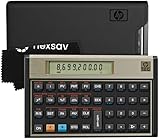
- HP 12C: INDUSTRY STANDARD SINCE 1981 – Trusted by professionals in real estate, banking, and finance for over 40 years. The HP 12C finance calculator remains the go-to tool for fast and accurate calculations in high-stakes business environments.
- 120+ FUNCTIONS FOR FINANCIAL ANALYSIS – Calculate loan amortization, bond pricing, mortgage payments, NPV, IRR, depreciation, and more with this large calculator. Built-in business and statistical functions allow you to perform complex calculations in just a few keystrokes.
- RPN ENTRY FOR FASTER WORKFLOWS – Reverse Polish Notation (RPN) allows for efficient data entry with fewer keystrokes and no formulas. This RPN calculator is perfect for a mortgage payment calculator, accounting calculator, business calculator, or real estate calculator for desktop.
- PROGRAMMABLE FOR REPEAT TASKS – The HP12C desk calculator stores custom keystroke sequences for repeated use. This large calculator supports up to 20 cash flows for IRR/NPV analysis, modeling investment scenarios, projecting returns, and automating routine calculations.
- INCLUDES CLEANING CLOTH, CASE & BATTERIES – Compact design fits easily on a desk or crowded table area. Includes a protective carrying case, cleaning cloth, and comes with pre-installed batteries so it's ready to use out of the box. A great choice for home finances, business professionals, and accountants.
Crecimiento total (%) = ((VF / VI) − 1) × 100
- VI: valor inicial.
- VF: valor final.
Por ejemplo, si una inversión o métrica pasa de 100 a 150, el cálculo es ((150 / 100) − 1) × 100 = 50 %. El resultado significa que el valor final es 50 % mayor que el inicial; no significa que haya crecido 50 % cada año.
Cómo calcular el crecimiento anual compuesto (CAGR)
El CAGR responde a una pregunta distinta: ¿qué tasa anual constante, compuesta cada año, llevaría del valor inicial al final en el plazo indicado?
Rank #2

- HP 10BII+ FOR STUDENTS & PROFESSIONALS – This HP calculator is built for business, finance, accounting, and statistics courses. Perfect for learners and professionals who need to solve common financial problems quickly without memorizing formulas or relying on spreadsheets.
- 100+ FUNCTIONS FOR REAL WORLD MATH – Quickly solve time value of money, interest rates, loan payments, NPV, IRR, cash flows, and more. The 10bII+ also includes probability distributions for statistics courses—a feature not often found in financial calculators.
- ALGORITHMIC INPUT WITH DEDICATED KEYS – This high-school/college calculator uses algebraic and chain logic with minimal keystrokes. Layout appears the same as standard calculators for easy learning. Dedicated keys give quick access to commonly used financial and statistical functions
- APPROVED FOR MAJOR EXAMS – The HP 10bII+ algebra calculator is permitted for use on SAT, PSAT/NMSQT, and AP tests. An ideal statistics calculator and business calculator for school finance and accounting students preparing for class, coursework, or standardized exams.
- INCLUDES TRAVEL CASE, CLEANING CLOTH & BATTERIES– Slim, durable, and easy to keep on hand or store in a backpack or locker. Includes a protective case, cleaning cloth, and batteries so it’s ready out of the box. Large screen with clear contrast (non-backlit) is easy to read during exams or lectures.
CAGR (%) = ((VF / VI)^(1/n) − 1) × 100
n es el número de años transcurridos entre las observaciones. Si el valor pasa de 100 a 150 en tres años, el CAGR es ((150 / 100)^(1/3) − 1) × 100, aproximadamente 14,47 % anual. Es una tasa equivalente calculada a partir de los extremos, no una descripción de lo que ocurrió exactamente en cada año. Microsoft Support describe el CAGR como una tasa «suavizada» que representa el crecimiento como si hubiera sido constante y compuesto anualmente (Microsoft Support: Calcular una tasa de crecimiento anual compuesta (CAGR) en Excel).
Si tus observaciones son trimestrales o mensuales
Declara la periodicidad y usa una unidad coherente. La Oficina de Análisis Económico de Estados Unidos (BEA) distingue la periodicidad de los datos, m —por ejemplo, 1 para anual, 4 para trimestral o 12 para mensual—, del número de periodos entre observaciones, n (BEA: How is average annual growth calculated?). Una tasa trimestral, una mensual y una anualizada no deben etiquetarse como si fueran la misma tasa. Comprueba la fórmula adecuada para la periodicidad concreta y especifica la unidad del resultado.
Rank #3

- HP 12C PLATINUM: FOR FINANCE PROFESSIONALS – Designed for advanced users in banking, investing, and corporate finance. The HP 12C Platinum finance calculator is ideal for pros who require precision, flexibility, and the ability to handle more complex financial modeling.
- 130+ FUNCTIONS FOR ADVANCED ANALYSIS – Calculate loan payments, interest rates, bond prices, amortization, depreciation, IRR, NPV, and more with this large calculator. The 12CP's expanded functionality supports more in-depth business analysis and financial decision-making.
- RPN OR ALGEBRAIC ENTRY + UNDO KEY – Choose between Reverse Polish Notation or standard algebraic logic. Includes both Undo and Backspace keys. This RPN calculator is perfect for a mortgage payment calculator, accounting calculator, business calculator, or real estate calculator for desktop.
- 30 CASH FLOWS + EXAM APPROVED – Store up to 30 cash flows for internal rate of return and net present value calculations. This desk calculator is approved for use on CFP, CFA, and GARP FRM exams. Part of HP’s trusted lineup of exam-ready financial calculators used by professionals for decades.
- INCLUDES CLEANING CLOTH, CASE & BATTERIES – Slim and easy to store on any desk or workspace. Comes with a protective case, cleaning cloth, and pre-installed batteries so you can start using it right away. Suitable for office use, meetings, exam prep, or daily financial work.
Cómo acumular tasas de varios periodos
Cuando ya tienes una tasa para cada periodo, compón los factores de crecimiento en vez de sumar los porcentajes directamente. Convierte cada tasa porcentual a decimal, suma 1 y multiplica los factores; al final resta 1:
Crecimiento total = (1 + r₁)(1 + r₂)…(1 + rₙ) − 1
Rank #4

- HP 17BII+: ADVANCED FUNCTIONS FOR PROFESSIONALS – Designed for high-level finance, accounting, and real estate work. This HP calculator handles time-sensitive decisions, complex projections, and recurring calculations with the flexibility and depth demanded by experienced business users.
- 250+ OPERATIONS FOR FINANCIAL MODELING – Includes TVM, IRR, NPV, amortization, forecasting, bond pricing, balloon payments, currency conversions, and statistical functions. This multi-step finance calculator supports two-variable statistics, percentages, and list-based data entry.
- RPN OR ALGEBRAIC ENTRY OPTIONS – Choose your preferred logic for data entry. Use as a business calculator, accounting calculator, high school calculator, college calculator, or math solver calculator with both Reverse Polish Notation (RPN) and algebraic formats.
- 2-LINE DISPLAY WITH CASE & BATTERIES – View prompts, menus, and equations clearly on the two-line, 22-character LCD screen. The compact lightweight body includes a protective case and comes with two CR2032 batteries pre-installed for immediate use. Also comes with a cleaning cloth.
- SOLVER, MEMORY, MENUS, AND MORE – Use the HP Solve app to define and reuse custom equations. Navigate functions using on-screen menus and prompts. Store up to 28KB of data, including lists, variables, and editable calculations across multiple sessions.
Por ejemplo, para dos periodos con tasas de 10 % y 5 %, el cálculo es (1 + 0,10)(1 + 0,05) − 1 = 0,155, es decir, 15,5 % acumulado. No es 15 % porque el segundo 5 % se aplica sobre una base que ya aumentó.
Independent reader supportYour contribution helps us test, update, and keep practical guides available for everyone.Cómo hacerlo en una calculadora u hoja de cálculo
- Anota el valor inicial, el valor final y las fechas de las dos observaciones.
- Calcula los años transcurridos si buscas CAGR; para el cambio total, no necesitas dividir por el tiempo.
- Para crecimiento total, divide el valor final entre el inicial, resta 1 y multiplica por 100.
- Para CAGR, eleva el cociente entre valor final e inicial a la potencia de 1 dividido entre los años transcurridos; resta 1 y multiplica por 100.
- En una hoja de cálculo, expresa el cociente y la potencia con la función de potencia disponible, y aplica formato de porcentaje al resultado. Microsoft documenta el cálculo de CAGR en Excel y también menciona XIRR para ciertos análisis de inversiones; XIRR corresponde a flujos de efectivo con fechas irregulares, no sustituye automáticamente la fórmula de CAGR para cualquier comparación.
Qué significa el resultado y cuáles son sus límites
El crecimiento total compara solamente el punto inicial y el final. El CAGR traduce esos mismos extremos en una tasa anual compuesta equivalente. Si el valor subió y bajó durante el intervalo, el CAGR no revela esa trayectoria ni demuestra que cada año registró la tasa calculada. Para comparar CAGR de inversiones, usa el mismo periodo de inversión, como recomienda Microsoft Support.
Best Value

- Work with full data available at your fingertips.
- Intelligently calculate when is the best time to buy/sell.
- Si el valor inicial es cero, no se puede dividir por él; estas fórmulas no producen un resultado definido.
- La interpretación habitual de crecimiento compuesto presupone valores positivos. Con un valor inicial o final negativo, o con un cociente negativo al que se aplica una potencia fraccionaria, la fórmula estándar puede no dar un resultado real con sentido para el caso.
- En esos casos, describe la variación con una medida adecuada a la métrica y su contexto, en lugar de forzar un CAGR.
Para poblaciones y otros fenómenos modelados bajo una hipótesis de crecimiento exponencial, puede ser pertinente un modelo exponencial; el Instituto de Estadística y Censos de la Ciudad Autónoma de Buenos Aires explica esa interpretación para la tasa media anual de crecimiento poblacional (Instituto de Estadística y Censos de la Ciudad Autónoma de Buenos Aires: Tasa de crecimiento medio anual total (Población)). No se debe asumir que un modelo de este tipo describe cualquier serie de datos.
Quick Recap
Product prices and availability are accurate as of the date/time indicated and are subject to change. Any price and availability information displayed on Amazon at the time of purchase will apply.




