Quick wins for a faster PC:
Repair Windows errors before they cause bigger problemsFix Now →Scan for outdated or missing drivers - takes under a minuteDriver Scan →Clear out junk files and repair common Windows errorsFree Scan →Amazon, Microsoft and Exxon joined a 17-member voluntary carbon-market task force organized by the Bipartisan Policy Center. The group set out to assess the market and recommend ways to make it more fair, efficient and transparent, including possible federal policy changes. That is a policy effort—not a new certification system or proof that carbon credits have become reliable.
The timing reflects a central tension: major companies need credible ways to address emissions they have not yet eliminated, but their demand for credits also gives them a financial interest in keeping the market available. For anyone weighing corporate climate claims, the task force’s membership matters less than whether its proposals lead to transparent project data, enforceable rules and honest claims about what a credit accomplishes.
What did Amazon, Microsoft and Exxon join?
TechCrunch reported on February 18, 2025, that the Bipartisan Policy Center had organized a task force of 17 independent members to examine voluntary carbon markets and develop policy recommendations. The reported participants included Amazon, Microsoft, Exxon, climate and carbon-removal companies such as Heirloom, Isometric and BeZero, nonprofits, Weyerhaeuser and Verra’s former head. The stated aims were to assess the market and improve its credibility, fairness, efficiency and transparency, including through possible federal action. TechCrunch’s report described a policy task force, not a commercial joint venture or shared credit-buying platform.
The task force’s original page, linked in that report, now returns a 404 page: Bipartisan Policy Center task-force page. The available account therefore establishes the group’s announced purpose and membership, not its current status, final recommendations or whether any policy was adopted. A recommendation would not itself become federal law.
#1 Best Overall

- FARMERS MARKET TILE LAYING STRATEGY GAME: In the Market Fresh game, go up against fellow farmers to run the most successful stand! Stack a stall with produce and shut competitors out of the market
- BEAUTIFUL TACTILE TILES: Draft colorful tiles shaped like crates of fruit and veggies. Strategically place them on a shopfront board to earn points. The more produce players stack, the more they’ll earn
- EASY TO LEARN, CHALLENGING TO MASTER: This immersive spatial puzzle game is easy enough for players of all skill levels to quickly learn, while the strategy brings them to the table again and again
- AWARD-WINNING DESIGNERS: By Azul creator Michael Kiesling and Wolfgang Kramer, the renowned team behind many bestselling strategy board games
- SOLO PLAY & EXTRA CHALLENGES: Enjoy as a 1 player game to master the market! For more challenges, flip the boards for smaller grids, or try a variation that rewards more points for higher stacks
What a carbon credit does—and does not—mean
A voluntary carbon market lets companies or individuals buy credits by choice, often to finance climate projects or support emissions claims. That differs from a compliance market, where regulated entities must meet legal requirements such as surrendering allowances under a cap-and-trade system.
A carbon credit is commonly expressed as one metric ton of carbon-dioxide equivalent (CO₂e) in claimed reductions, avoided emissions or removals. The one-ton unit is an accounting convention; it is not automatic proof that one additional ton was prevented or taken out of the atmosphere. An “offset” is a credit used to compensate for emissions elsewhere, but the word can imply that the buyer’s emissions have been neutralized—a claim that depends on the credit’s quality and the accounting behind it.
- Avoided emissions: A project claims it prevented emissions that would otherwise have occurred, as in forest protection. The claim depends heavily on a hypothetical baseline.
- Carbon removals: Activities such as direct air capture, biochar, enhanced rock weathering or durable biomass storage aim to remove carbon dioxide from the atmosphere. Removal does not by itself guarantee durable storage or accurate measurement.
- Compliance allowances: These are instruments used in regulated systems and should not be confused with voluntary project credits.
Why trust in voluntary credits was damaged
A major flashpoint was a Guardian-led investigation published on January 18, 2023, into rainforest credits issued under Verra’s program. It concluded that more than 90% of the examined credits were likely “phantom credits.” That finding concerned a subset of rainforest projects, not every credit or every Verra project. Verra disputed the investigation’s methodology and conclusions; the article also described limits in comparing scientific studies with Verra’s accounting approach. The Guardian investigation reported that threatened forest loss appeared overstated by roughly 400% on average in one analysis, with a higher figure when certain unusually successful projects were excluded.
The dispute illustrates why a registry name or third-party audit is not enough to establish the climate value of a credit. A project may follow an approved method while that method’s assumptions remain weak. The Guardian also reported allegations of forced evictions and conflict with residents around a Peruvian forest project. Verra’s chief executive later announced plans to resign; that event does not, by itself, prove the allegations or settle the methodological dispute. The Guardian reported the resignation announcement.
Rank #2

- Fun & Simple Financial Education: Easily grasp stocks, bonds, commodities, and Bitcoin investing through engaging, interactive gameplay. Perfect for teens and adults!
- Ideal Group Size: Designed for 2-6 players, ages 12 and up. Great for family game nights, classroom activities, or friend gatherings.
- STEM-Authenticated & Engaging: Approved by STEM educators, this game offers an addictive learning experience that's both intellectually stimulating and incredibly fun.
- Develop Real-World Skills: Face exciting market scenarios and cryptocurrency challenges to sharpen your decision-making skills in a highly engaging format.
- Play with Purpose: Enjoy an easy-to-learn, captivating game that gives back - a portion of our profits supports Feeding America, adding meaning to your gameplay.
Additionality and baselines
Additionality asks whether the project would have happened without credit revenue. If a project would have proceeded anyway, its credits may support useful activity but may not represent an additional climate benefit.
Baseline choices are especially consequential for avoided-deforestation projects. Developers estimate what would have happened to a forest without protection. If that scenario assumes too much future clearing, a project can issue more credits than the emissions it actually prevents. The counterfactual cannot be observed directly, so transparent assumptions, conservative estimates and independent scientific scrutiny matter.
Permanence and leakage
Carbon stored in forests can return to the atmosphere if trees burn, die or are logged. Credible programs need ongoing monitoring, reversal safeguards and a way to replace credits if stored carbon is lost. Leakage is a separate risk: protecting one area may shift logging or agricultural expansion elsewhere. A project that does not account for displaced activity can overstate its net benefit.
Verification, double counting and social safeguards
Auditors may check whether a project followed a methodology without proving the methodology measures climate impact well. Monitoring can also be infrequent, project data hard to inspect, or key assumptions controlled by developers. Auditor independence and accessible project-level evidence are therefore important.
The Tool Desk
Outbyte PC Repair FREEClear out junk files and repair common Windows errorsFree Scan →Outbyte Driver Updater FREEScan for outdated or missing drivers - takes under a minuteDriver Scan →Rank #3
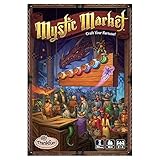
- Trusted By Families Worldwide - With Over 50 Million Sold, Thinkfun Is The World'S Leader In Brain And Logic Games
- Develops Critical Skills - Playing This Strategy Card Game Helps Hone Your Strategy And Math Skills, And Helps Give A Basic Understanding Of Economics And Theory Of Value
- What You Get - Mystic Market Comes With 6 Ingredient Vials, 1 Value Track, 66 Ingredient Cards, 20 Potion Cards, 6 Supply Shift Cards, 4 Reference Cards And An Instruction Manual
- Clear Instructions – Easy To Learn With A Clear, High Quality Instruction Manual. You Can Start Playing Immediately
Double counting occurs when the same emissions reduction is claimed by more than one party—for example, a project, a corporate buyer, a host country against its national climate target, or another organization. Clear ownership, public issuance and retirement records, and applicable accounting adjustments are needed to prevent conflicting claims. Climate quality is not the only concern: land rights, Indigenous consent, local participation and benefit-sharing affect whether a project is responsible and legitimate.
Why large corporate buyers have a stake in credibility
Amazon and Microsoft face rising emissions pressures as cloud and AI operations expand. TechCrunch reported that Microsoft’s emissions rose nearly 30% in 2023 even though it had almost 20 gigawatts of renewable power under contract, and that Amazon’s emissions progress had stalled. These are reporting-period observations, not current 2026 emissions figures. Renewable-power contracts can support electricity decarbonization, but they are not carbon removals and do not erase other sources of emissions. The February 2025 report linked the pressure in part to growing AI and cloud activity.
Amazon’s renewable-power purchases show both the scale of its clean-energy activity and why procurement is not the whole climate picture. TechCrunch reported in January 2025 that Amazon bought more renewable power than any other company in the preceding year. That distinction does not establish that Amazon’s total emissions fell. The report on Amazon’s purchases is about renewable power, not proof of carbon removal or a complete emissions inventory.
Microsoft’s Chestnut Carbon agreement
In January 2025, TechCrunch reported that Microsoft agreed to purchase more than 7 million tons of credits under a 25-year agreement tied to reforestation across about 60,000 acres in Arkansas, Louisiana and Texas. The report also cited Microsoft’s 17.1 million tons of greenhouse-gas emissions in 2023 before offsets. A purchase agreement is not the same as credits already issued, delivered, retired or independently verified; the reported total should not be treated as a completed offset. The deal involved different standards for different project types. TechCrunch’s account of the Chestnut deal said Chestnut used Verra for some improved-forest-management credits and Gold Standard for certain afforestation, reforestation and revegetation credits. The registry alone does not settle the quality of any project.
Windows Errors? Fix Them Before They Spread
Repair common Windows errors and clear accumulated junk for a smoother, more stable PC - no reinstall needed.Free scan · no reinstallOutdated Drivers Are Slowing You Down
One free scan finds every outdated or missing driver and matches the right update for your exact hardware.Free scan · exact hardware matchRank #4

- BECOME A SAVVY INVESTOR: Market Mayhem is a board game that combines the thrill of the stock market with strategic decision-making. You'll navigate a dynamic market, buying low and selling high to build your wealth.
- UNLEASH MARKET MAYHEM!: Land on exciting spaces that trigger unpredictable events, from special dividends to market crashes! These events keep the game dynamic and full of surprises.
- CHALLENGE YOUR FELLOW INVESTORS: Think you can outmaneuver your opponents? Market Mayhem features interactive spaces that allow you to directly impact their financial fortunes. Devise clever strategies to gain the upper hand!
- TRACK THE MARKET: The Pit Board keeps you informed of current stock prices across different industries. Use this information to make informed investment decisions and maximize your profits!
- BASE GAME CONTENTS: Game board, Gold Bar game token, 36 Market Mayhem cards, Pit Board, Pit Board stand, play money, 2 dry erase markers, 4 pencils, sharpener, 4 calculators and 2 Silver Nugget dice.
Why Exxon’s participation calls for a different question
Exxon’s presence does not show that every task-force member shares the same climate goals. One constructive possibility is that a company with technical, financial and policy influence could contribute to standards for measurement, carbon removal and market infrastructure. A competing concern is that an offset market can help fossil-fuel companies make climate claims without reducing the underlying production and combustion of fossil fuels.
Those possibilities are reasons to scrutinize governance and claims, not evidence of Exxon’s specific motive or policy demands. Buyers and readers should distinguish support for high-quality removals from offsets used for residual emissions, and both from marketing a product as “carbon neutral.” They should also ask whether a company discloses direct emissions reductions separately from credits and whether it lobbies for rules that expand credit demand or weaken accountability.
Independent reader supportYour contribution helps us test, update, and keep practical guides available for everyone.What would make a carbon market more trustworthy?
Credibility requires more than a better-sounding standard. A market needs evidence about each project, rules that prevent misleading claims, and consequences when credits fail.
- Sound accounting: Publish methodologies, use conservative baselines, test additionality, account for leakage and disclose uncertainty.
- Ongoing evidence: Make project-level data public, use appropriate satellite or remote-sensing monitoring, commission independent scientific review and continue monitoring after credits are issued.
- Durability and liability: Set clear reversal rules, maintain adequate safeguards, and specify who must replace or compensate for credits that are invalidated.
- Traceable ownership: Provide public records of issuance, transfers and retirement; prevent duplicate claims and clarify how credits interact with national climate targets.
- Independent governance: Disclose members’ financial conflicts, funding, meeting records, draft recommendations and dissent. Include scientists, civil society, affected communities and relevant public authorities.
- Rights and remedies: Document land tenure, Indigenous and local-community consent, benefit-sharing, grievance procedures and remedies for affected people.
- Honest claims: Distinguish reductions, avoided emissions, removals and climate contributions. Set clear limits on using credits for net-zero or consumer-facing “carbon neutral” claims.
For companies, credits should come after emissions accounting and direct reductions: measure Scope 1, Scope 2 and material Scope 3 emissions; reduce operational and value-chain emissions through efficiency, clean energy and other changes; then consider high-quality credits or removals for genuinely residual emissions. A credit may also finance climate action without being presented as neutralizing the buyer’s emissions. Those are different uses and should be described differently.
What’s actually slowing this PC down?
Pick the symptom - the matching free tool is one click away.
Best Value

- 🎓 Educational & Fun for All Ages: Dive into financial freedom with "Paycheck to Billionaire," a strategic board game that imparts skills in cost management and smart investing from startup to empire. Ideal for family game nights and educational play, this game is engaging for adults and kids ages 8 and up. 🌟
- 🎲 Interactive Family Game Time: Bring excitement to your family gatherings and game nights with this engaging board game that offers a fun way to learn about economics without the complexity of bankruptcy or monopoly rules. Ideal for kids, teens, and adults. 🎉
- 🎉 Perfect Party Game: Light up the party with "Paycheck to Billionaire," where young entrepreneurs aged 8-12 and older can strategize and compete to build their business empire. It's a hit at parties, fostering lively interaction and competitive spirit. 🏆
- 🍎 Teacher’s Educational Pick: A must-have for educational environments, this game allows teachers to introduce financial concepts and critical thinking skills in a fun, interactive manner. It's an excellent tool for classrooms and homeschool settings, encouraging students to engage with real-world economic strategies. 📚
- 🎁 Perfect for Building Business Mind: "Paycheck to Billionaire" is the ideal gift for minds keen on entrepreneurship. This engaging board game offers a fun and educational pathway to understanding business and finance, making it a superb choice for nurturing future business leaders during family game nights or as a thoughtful present. 🌐
How a corporate buyer can examine a credit
Before buying or using a credit in a public claim, request project-specific evidence rather than relying on a generic rating or registry name.
- Identify the unit: Request the registry and project ID, project location, credit vintage, methodology, credit type (reduction, avoidance or removal), and whether the unit has been issued, delivered or retired.
- Test the climate case: Review additionality, baseline calculations, uncertainty ranges, monitoring reports, leakage analysis and the evidence for storage duration or reversal safeguards.
- Check people and governance: Ask for land-tenure documentation, evidence of community consent and benefit-sharing, grievance procedures, auditor identity and conflict-of-interest disclosures.
- Trace the claim: Confirm who owns the credit, whether it is retired, whether another party or host country may claim the same outcome, and precisely how the buyer intends to describe it.
- Compare alternatives honestly: Consider the project type, durability, monitoring and delivery terms—not just price, a rating score or the registry. Separate credit spending from reported emissions reductions.
Price illustrates why these checks matter but cannot replace them. TechCrunch reported that Chestnut sold improved-forest-management credits at about $34 per ton in the prior year, while estimating direct-air-capture credits at $600–$1,000 per ton at the time of its January 2025 report. These are dated, different products and not like-for-like market prices. Differences can reflect durability, monitoring costs, technology and delivery schedules; price alone neither proves nor disproves quality. Lower-cost credits may suit climate-finance contributions without supporting a claim that emissions have been neutralized.
What to watch for in the task force’s work
The task force’s value can be judged by outputs, not by the prominence of its members. The key tests are whether its recommendations set transparent project-data and claim rules, address conflicts and community rights, distinguish removals from avoided emissions, and assign responsibility when credits fail. It also matters whether independent experts and affected communities have meaningful influence and whether minutes, funding and disagreements are public.
Even strong recommendations may not change practice if Congress does not act, agencies lack authority, standards remain voluntary, international accounting rules conflict or buyers continue to favor volume and low cost. Until implementation and enforcement are demonstrated, participation in the task force should be treated as an attempt to shape policy—not evidence that the market’s credibility problem has been solved.
Recommended Free Tools
Quick Recap
Product prices and availability are accurate as of the date/time indicated and are subject to change. Any price and availability information displayed on Amazon at the time of purchase will apply.




