Outdated Drivers Are Slowing You Down
One free scan finds every outdated or missing driver and matches the right update for your exact hardware.Free scan · exact hardware matchWindows Errors? Fix Them Before They Spread
Repair common Windows errors and clear accumulated junk for a smoother, more stable PC - no reinstall needed.Free scan · no reinstallTo buy bullion intelligently, compare the metal content, all-in purchase price, and dealer buyback quote—not just the advertised price. The difference between what you pay and what you could receive on resale can be substantial, and storage, insurance, shipping, and account fees add to the cost. Physical gold and silver can lose value; neither is a guaranteed hedge or a risk-free investment.
What counts as bullion—and what are you buying?
The U.S. Mint defines a bullion coin as “an investment-grade coin that is valued by its weight and fineness of a specific precious metal.” In practical terms, weight tells you how much metal is present, while fineness describes its purity. The Mint distributes U.S. bullion coins through authorized purchasers and a dealer market; it does not sell bullion coins directly to the public. Its Bullion Coins page describes American Eagle gold coins in one-ounce, half-ounce, quarter-ounce, and tenth-ounce sizes, and the American Eagle silver bullion coin in a one-ounce size. Those are examples of Mint products, not a complete list of market choices or recommendations.
First decide whether you want metal exposure or a collectible coin. Bullion is generally valued chiefly for its metal weight and fineness. Numismatic coins may also be valued for rarity, condition, and age; collectible or semi-numismatic labels do not by themselves show that a coin is fairly priced or easy to resell.
What is the spot price, and what is the spread?
Spot is the cash price for immediate delivery of a metal, commonly quoted in U.S. dollars per troy ounce. It is a reference point, not the price a retail buyer necessarily pays. A dealer generally sells above spot and buys back below spot. The gap between the dealer’s selling price and its buyback price is the spread. The CFTC and FINRA explain both terms in their Customer Advisory: 10 Things to Ask Before Buying Physical Gold, Silver, or Other Metals.
Free tools Windows power users keep installed
One-click scans. No signup required.
#1 Best Overall

- Purity: .999 Fine Silver
- Diameter: 40.6 mm; Thickness: 3.2 mm
- Stock Photo; Image is indicative of quality
- Metal Content: 1 Troy Ounce per Coin; Total: 20 Troy Ounces
- You will receive twenty coins per purchase in an official United States Mint Tube; DISCLAIMER: Please note that we pull random year coins from the same tube, so all coins received per purchase will be from the same year— mixed bags are highly unlikely, ensuring a consistent and uniform collection for your enjoyment!
For example, if a dealer quotes a purchase price and a separate price it would pay to buy the same item back, subtract the second from the first to see the quoted spread. That gap is an immediate hurdle to recover before other costs or a change in the metal’s market price. Request both figures for the exact item and quantity you are considering; a general buyback promise is not a usable quote.
How should you compare coins and bars?
There is no universally best format established by these sources. A recognized coin issue may suit someone who values a familiar product, while a buyer focused on metal weight may prefer to compare other available forms. Your budget and likely resale route matter. Compare products on the same basis rather than assuming that a coin or bar is automatically cheaper or more liquid.
Rank #2
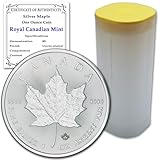
- Purity: .9999 Fine Silver
- Diameter: 38 mm; Thickness: 3.29 mm
- Metal Content: 1 Troy Ounce per Coin; Total: 10 Troy Ounces
- Stock Photo; Image is indicative of quality; Maple Tubes Available with coins while supplies last
- DISCLAIMER: Please note that we pull random year coins from the same tube, so all coins received per purchase will be from the same year— mixed bags are highly unlikely, ensuring a consistent and uniform collection for your enjoyment!
- Metal content: Verify exact weight and fineness. Match the unit in the spot quote to the product; a fractional-ounce coin should not be compared as though it contained a full ounce.
- All-in price and premium: Calculate the retail price relative to the metal value represented by the current spot quote. Ask the dealer to explain the premium and each added charge.
- Buyback and resale: Get the dealer’s current buyback quote for the same product and quantity. Consider how you would sell it if you did not use that dealer.
- Verification: Check published specifications, including weight and diameter, and ask what guarantee or third-party certification covers metal content and weight.
- Holding costs: Include shipping, payment charges, insurance, and storage, as applicable.
The Mint’s Bullion Consumer Awareness guidance recommends checking spot prices, premiums, product specifications, key features, and seller guarantees or third-party certification.
How do you find a reputable dealer?
Dealer screening is essential: the joint CFTC/FINRA advisory says retail metal dealers are not regulated at the federal level. Government information about bullion or consumer warnings should not be mistaken for an endorsement of a particular seller.
What’s actually slowing this PC down?
Pick the symptom - the matching free tool is one click away.
Rank #3
- Purity: .9999 Fine Silver
- Diameter: 38 mm; Thickness: 3.29 mm
- Metal Content: 1 Troy Ounce per Coin; Total: 25 Troy Ounces
- Stock Photo; Image is indicative of quality; Coins will come with twenty-five certificates of authenticity
- You will receive twenty-five coins with an original Royal Canadian Mint acrylic tube; DISCLAIMER: Please note that we pull random year coins from the same tube, so all coins received per purchase will be from the same year— mixed bags are highly unlikely, ensuring a consistent and uniform collection for your enjoyment!
- Research the dealer’s reputation and search for complaints involving the business, its owners, or salespeople.
- For an online seller, verify its business address and operating history rather than relying only on a polished website or sales call.
- Ask for product specifications, written pricing, fees, delivery or storage terms, and a buyback quote before paying.
- Be cautious if the seller will not explain the premium, will not provide terms in writing, or steers the conversation away from the metal content and resale price.
What costs and terms should you get in writing?
Request a written, itemized quote before committing. The price you see in an advertisement may not include the full cost of acquiring and holding the metal. Ask the dealer to state:
- The exact product, weight, fineness, quantity, and total purchase price.
- The spot reference used and the premium over the metal value.
- Commissions, transaction or payment fees, shipping, and insurance.
- Any storage and ongoing insurance costs, including how charges recur.
- The dealer’s buyback terms and quote for the same item and quantity.
If the purchase is through a retirement account, include the custodian’s and administrator’s costs as well. Do not treat an oral estimate or an advertised price as a complete comparison.
Rank #4

- ✔️1 oz 2026 American Silver Eagle Coin
- ✔️Obverse: Adolph A. Weinman’s design of Lady Liberty wrapped in the American flag and elegantly striding over a ridge while the sun rises.
- ✔️Reverse: One eagle flying into land while carrying an oak branch in its talons.
How to make the purchase decision
- Set the purpose. Decide whether the goal is owning physical metal or collecting a coin. If you mainly want metal exposure, distinguish bullion from proofs, commemoratives, rare coins, and other products priced partly on collectible appeal.
- Check a current spot quote. Use a live quote for the metal you are considering and note its unit. Do not rely on an old example or a stale price.
- Compare the exact item. Match its weight and fineness to the quote, then compare its total retail price with the metal value implied by spot.
- Get a resale number. Ask what the seller would pay to buy that same item back and calculate the spread.
- Screen the seller and verify the product. Research complaints and business details; check specifications, guarantees, and any certification.
- Review written terms and holding arrangements. Add purchase and holding costs, then decide where the metal will be kept and how it will be insured before sending payment.
Which sales tactics are warning signs?
The CFTC warns that precious-metal prices can fluctuate and that metals are not automatically safe or low-risk. Bullion does not generate dividends or earnings growth. Buying, selling, storage, and insurance costs raise the return needed to break even. The CFTC’s Precious Metal Frauds guidance highlights risks that should make a buyer pause:
- Unsolicited calls or emails and pressure to decide immediately.
- Claims of guaranteed safety or unusual returns.
- Unexplained collectible premiums, hidden costs, or reluctance to provide written terms.
- Financing or leverage used to encourage a larger purchase.
- Promises of storage or insurance that cannot be verified.
The CFTC and FINRA advisory reports more than $500 million in alleged overpriced precious-metals sales charged by the CFTC over the prior decade; the page does not state a publication year. This is a rolling-decade enforcement claim, not a stated final adjudicated loss total. The CFTC also describes cases involving nonexistent storage or insurance and customer funds used for leveraged futures trades instead of buying metal.
Best Value

- Purity: .9999 Fine Silver
- Stock Photo; Image is indicative of quality
- Diameter: 37.97 mm; Thickness: 3.29 mm
- Metal Content: 1 Troy Ounce per Coin; Total: 5 Troy Ounces
- You will receive five coins per purchase; DISCLAIMER: Please note that we pull random year coins from the same tube, so all coins received per purchase will be from the same year— mixed bags are highly unlikely, ensuring a consistent and uniform collection for your enjoyment!
Where should you store bullion?
Physical possession gives you direct control but leaves you responsible for safeguarding the metal and arranging appropriate insurance. Professional storage shifts custody to a service provider and can add recurring storage and insurance costs; verify what is stored, who holds it, what insurance applies, and how withdrawals work before agreeing. Compare these trade-offs in writing rather than treating storage as an incidental detail.
Retirement-account bullion has an additional custody constraint: for the applicable IRS exception, qualifying bullion must be physically held by a bank or approved non-bank trustee. That is not the same as storing IRA metals at home. Review the IRS rules and your account documents before choosing a storage arrangement.
Can you buy gold or silver bullion in an IRA?
Eligibility depends on the specific product and account. The IRS says collectibles generally include metals and coins, subject to specified exceptions. Its guidance describes exceptions for certain gold, silver, or platinum coins under the law, and for gold, silver, platinum, or palladium bullion of a certain fineness when a bank or approved non-bank trustee keeps physical possession. If an account acquires a collectible that is not excepted, the IRS describes a deemed distribution and potential tax consequences.
Read the IRS page, Investments in collectibles in individually directed qualified plan accounts, and verify the current treatment of the exact product with a qualified tax or financial professional. The IRS explanation is limited; product eligibility, account terms, and individual circumstances matter, so this guide cannot determine the tax result for a particular buyer.
Quick Recap
Product prices and availability are accurate as of the date/time indicated and are subject to change. Any price and availability information displayed on Amazon at the time of purchase will apply.




