A scalable AI platform for an insurer should connect to—not replace—the systems that own policy, billing, claims, and customer transactions. It should assemble fresh, permission-aware context for each workflow, route work among rules, models, tools, and people, and preserve a trace from source evidence to final action. Build those controls into the architecture from the start; adding them after deployment makes it harder to establish who or what influenced an insurance decision.
What should an insurance AI backbone do?
It should make governed AI capabilities available across insurance workflows while keeping business authority and accountability clear. The National Association of Insurance Commissioners (NAIC) identifies uses including underwriting, pricing, customer service, claims, marketing, and fraud detection. Those applications do not all carry the same risk: a tool that summarizes a document has a different role from a system that influences a coverage or pricing decision.
Design around the decisions and actions each workflow needs, rather than beginning with a model or platform product. The platform can provide shared integration, data, retrieval, orchestration, security, and monitoring capabilities, while the rules for what AI may recommend, prepare, or execute remain specific to the use case and the insurer’s obligations.
What belongs in the architecture?
Systems of record and controlled integration
Keep policy, billing, claims, and other transactional systems authoritative for the records and actions they own. Connect them through controlled, versioned APIs and event interfaces, with clear ownership, identity matching, data contracts, error handling, and service expectations. IBM’s hybrid-cloud insurance reference architecture describes integration across insurer applications, partners, and regulatory applications, alongside API management and core insurance functions.
What’s actually slowing this PC down?
Pick the symptom - the matching free tool is one click away.
#1 Best Overall
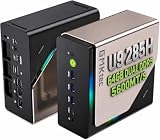
- EVOLUTION CORE ULTRA 9 285H MINI PC - GMKtec EVO-T1 is the next evolution in AI mini PC Ultra 9 series. The Core Ultra 9 285H offers 16 cores (six P-cores + eight E-cores + two LPE-cores) and 16 threads with a turbo clock of 5.4 GHz. It is currently one of the best value for performance AI mini PC computers.
- AI NPU - The 285H features an Intel AI Boost NPU, capable of up to 13 TOPS (Tera Operations per Second) for INT8 calculations, which is designed to accelerate AI tasks.
- INTEL ARC 140T GAMING PC - The Arc 140T GPU includes 8 Xe cores and supports features like DirectX 12, OpenGL 4.5, and OpenCL 3, making it capable of handling modern games and creative applications. It also supports Quick Sync Video for efficient video encoding and decoding, as well as AV1 encoding and decoding.
- 64GB DDR5 RAM + 1TB SSD - The EVO-T1 is equipped with Dual 32GB (Total 64GB) SO-DIMM DDR5 5600MHz memory sticks. 2TB PCIE 4.0 SSD Drive with 3x M.2 2280 Expansion slots. Each slot capable of reading up to 4TB. (12TB MAX)
- QUAD SCREEN 8K DISPLAY SUPPORT - EVO-T1 AI Mini PC support 4-screen 4K/8K output via HDMI 2.1 (8K@60Hz), DisplayPort 1.4 (4K@60Hz), and USB Type-C Transfer speed (supporting PD3.0/DP1.4/DATA). Ideal for gaming, video editing, and multitasking, it provides expansive and crisp multi-display support.
This boundary matters: an AI layer may assemble facts or recommend an action, but it should not silently become the system of record. The workflow that commits a business transaction should have an explicit authority and should leave an auditable record of what was committed.
Trusted data and current context
Curate data for its intended use. Establish who owns each data product, how quality is checked, which identities and permissions apply, how long information is retained, and how its origin can be traced. For an insurance decision, the useful context may combine structured records with approved documents such as policy wording, endorsements, claim notes, or transcripts. Which sources are appropriate depends on the workflow and the insurer’s rules.
TCS’s proposed insurance data-plane pattern describes streaming and curated data feeding components such as vector stores, knowledge graphs, operational stores, and feature stores. These are architectural options, not a required stack. Select components based on the data and retrieval needs you can demonstrate.
At decision time, retrieve a compact context relevant to the task and permitted for the requesting user or service. MongoDB’s insurance context-layer pattern places retrieval between systems of record and AI-assisted workflows; it describes combining structured and unstructured information and propagating changes. The context layer can make evidence available without taking ownership of the underlying transaction.
Recommended Free Tools
Rank #2

- LOW ENERGY HIGH PERFORMANCE MINI PC - The Intel Core Ultra 5 125U is part of the Ultra 5 lineup, using the Meteor Lake architecture with BGA 2049. Intel Hyper-Threading technology is available and effectly doubles the core-count of the P-Cores, to a total of 14 threads. Core Ultra 5 125U has 12 MB of L3 cache and operates at 1300 MHz by default, but can boost up to 4.3 GHz, depending on the workload. With a TDP of 15 W, the Core Ultra 5 125U consumes very little energy but outputs high performance efficiency
- 32GB DDR5 RAM + 512GB SSD - The K15 mini computer is equipped with Dual 16GB (Total 32GB) SO-DIMM DDR5 4800MHz memory sticks. 512GB PCIE 4.0 SSD Drive with 3x M.2 2280 Expansion slots. Each slot capable of reading up to 8TB. (24TB MAX)
- QUAD SCREEN 4K DISPLAY SUPPORT - K15 Mini PC support 4-screen 4K/8K output via HDMI 2.1 (8K@60Hz), DisplayPort 1.4 (4K@60Hz), and USB Type-C Transfer speed (supporting PD3.0/DP1.4/DATA). Ideal for gaming, video editing, and multitasking, it provides expansive and crisp multi-display support
- OCULINK PORT - The Oculink port on the rear interface enables higher bandwidth capabilities, better frame rates and lower lag. The standard also operates at PCIe x4 speeds, compared to Thunderbolt's x3. Gamers and content creators can benefit from Oculink's higher bandwidth, resulting in better performance and lower lag for eGPU setups
- DUAL NIC FAST 2.5GBE + WIFI 6E + BT 5.2 - Dual Ethernet 2.5GbE LAN port design provides more applications, such as firewall, multichannel aggregation, soft routing, file storage server. Built-in WIFI 6E / Bluetooth 5.2 is more stable and efficient to connect multiple wireless devices such as projector, printer, monitor, speakers and etc
Workflow orchestration and action controls
Use a workflow layer to route tasks to deterministic rules, predictive models, language models, tools, and human reviewers as appropriate. The layer should enforce authentication, least-privilege access, allowed actions, input and output checks, rate limits, escalation paths, and review requirements. A model’s ability to produce a plausible answer is not authorization to act on it.
For each consequential workflow, define what the AI may recommend, what it may prepare for a person, and what it may execute. Set human approval requirements according to the insurer’s policies and applicable jurisdiction. Record the evidence retrieved, relevant model or system versions, decision trace, user or agent identity, human overrides, and the final action. BriteCore and NTT DATA describe examples of governed orchestration and oversight in vendor announcements; those descriptions establish their stated approaches, not independent proof of effectiveness.
Security, audit, and operations
Design for the full path of a decision, not only the model call. Identity and permissions need to travel with retrieved context; logs should connect source evidence, system output, human intervention, and committed action. Define owners and escalation paths for data problems, access events, errors, and incidents.
Monitor data freshness and quality, retrieval behavior, workflow outcomes, latency, cost, errors, access events, drift, overrides, and incidents. Use staged releases, change approval, rollback plans, and validation appropriate to the workflow’s consequences. These are operating requirements for the complete system; evaluating model quality alone will not reveal failures in integrations, data, permissions, or handoffs.
The Tool Desk
Outbyte PC Repair FREEClear out junk files and repair common Windows errorsFree Scan →Outbyte Driver Updater FREEScan for outdated or missing drivers - takes under a minuteDriver Scan →Rank #3

- Entry-level NAS Personal Storage:UGREEN NAS DH2300 is your first and best NAS made easy. It is designed for beginners who want a simple, private way to store videos, photos and personal files, which is intuitive for users moving from cloud storage or external drives and move away from scattered date across devices. This entry-level NAS 2-bay perfect for personal entertainment, photo storage, and easy data backup (doesn't support Docker or virtual machines).
- Set Your Devices Free, Expand Your Digital World: This unified storage hub supports massive capacity up to 64TB.*Storage drives not included. Stop Deleting, Start Storing. You can store 22 million 3MB images, or 2 million 30MB songs, or 43K 1.5GB movies or 67 million 1MB documents! UGREEN NAS is a better way to free up storage across all your devices such as phones, computers, tablets and also does automatic backups across devices regardless of the operating system—Window, iOS, Android or macOS.
- The Smarter Long-term Way to Store: Unlike cloud storage with recurring monthly fees, a UGREEN NAS enclosure requires only a one-time purchase for long-term use. For example, you only need to pay $459.98 for a NAS, while for cloud storage, you need to pay $719.88 per year, $2,159.64 for 3 years, $3,599.40 for 5 years. You will save $6,738.82 over 10 years with UGREEN NAS! *NAS cost based on DH2300 + 12TB HDD; cloud cost based on 12TB plan (e.g. $59.99/month).
- Blazing Speed, Minimal Power: Equipped with a high-performance processor, 1GbE port, and 4GB RAM on Board, this NAS handles multiple tasks with ease. File transfers reach up to 125MB/s—a 1GB file takes only 8 seconds. Don't let slow clouds hold you back; they often need over 100 seconds for the same task. The difference is clear.
- Let AI Better Organize Your Memories: UGREEN NAS uses AI to tag faces, locations, texts, and objects—so you can effortlessly find any photo by searching for who or what's in it in seconds. It also automatically finds and deletes similar or duplicate photo, backs up live photos and allows you to share them with your friends or family with just one tap. Everything stays effortlessly organized, powered by intelligent tagging and recognition.
How should you choose an architecture pattern?
The alternatives below are complementary patterns, not mutually exclusive products. An insurer may combine a hybrid-cloud foundation with a context layer, or use an embedded insurance platform for selected workflows. Choose according to operational need rather than treating any one pattern as a universal winner.
| Pattern | What it contributes | When it may fit | Important limitation |
|---|---|---|---|
| Hybrid-cloud reference architecture | Integration across insurer applications, ecosystem partners, and regulatory applications; API management and core insurance functions. | When systems and workloads span different environments and need a coordinated integration design. IBM’s insurance architecture is an example. | A reference design does not establish how well it will perform for a particular insurer; validate deployment, security, and operational fit against your requirements. |
| Operational context layer | Retrieval and assembly of structured and unstructured information between systems of record and AI-assisted workflows; the MongoDB pattern also describes audit traces and change propagation. | When workflows need current cross-system context, write-back or decision traceability. | MongoDB cautions that this adds complexity and is a poor fit for analytics-only, archival, or batch workloads that do not need real-time context, writes, and auditability. |
| Embedded insurance-core AI | AI capabilities integrated into an insurance platform’s operational workflows. BriteCore’s May 20, 2026 announcement describes its governed, API-first strategy and embedded P&C copilots. | When evaluating whether an existing or prospective core platform can support AI inside its operational boundary. | The announcement is a vendor account of its strategy and capabilities, not independent comparative evidence. Check integration, controls, portability, and operational suitability for your environment. |
| Managed implementation or services | External support for architecture, implementation, or governance. NTT DATA’s August 5, 2026 announcement describes its insurance AI services. | When the insurer needs implementation capacity or specialist support and can define clear ownership and acceptance criteria. | Service descriptions and announced capabilities do not establish neutral performance benchmarks. Set responsibility, handoff, security, and exit requirements contractually. |
For analytics, reporting, archival, and batch work, use the simplest architecture that satisfies data governance and workload needs. A live operational context layer is not automatically beneficial if real-time retrieval, write-back, and decision-level auditability are unnecessary.
How do you engineer and roll out the platform?
- Map decisions and risk tiers. List target workflows across underwriting, pricing, claims, service, fraud, and document processing. For each, specify what the system can recommend, prepare, or execute, and where a person must approve or take over under the insurer’s rules and jurisdiction.
- Inventory authoritative systems and interfaces. Identify the owners of policy, claims, billing, customer, and relevant third-party records. Document available APIs and event interfaces, identity matching, data contracts, versioning, error handling, and operating expectations before building retrieval or orchestration around them.
- Establish data products for the workflows. Assign data ownership and define quality checks, permissions, retention, and lineage. Select the approved structured records and documents each workflow requires; choose streaming, retrieval, vector, graph, operational, or feature components only where the use case warrants them.
- Assemble task-specific context. Retrieve the minimum relevant, permission-aware evidence at the decision point. Keep the original systems authoritative, and ensure the workflow can identify the sources behind the context it presents to a model or reviewer.
- Constrain orchestration and actions. Route tasks among rules, models, tools, and people with explicit access scopes and allowed actions. Add input and output checks, escalation, human review, and trace recording before enabling a workflow to affect a business transaction.
- Validate the whole workflow before expanding it. Set acceptance criteria for data quality and freshness, retrieval relevance, access control, audit records, error handling, latency, cost, resilience, and human handoffs. Test failure and recovery paths as well as expected behavior, then use staged release, monitoring, and rollback.
What should insurers evaluate before committing?
Compare options using the insurer’s own workflows, constraints, and acceptance criteria. A platform description or model-routing claim is not evidence that a design will meet a particular production requirement.
- Integration: Can it connect to the actual systems of record and partner ecosystem without obscuring which system owns a transaction?
- Data: Can it maintain freshness, quality, ownership, permissions, and source lineage across structured records and unstructured documents?
- Deployment and security: Does the deployment boundary, identity model, data control, and access design meet the insurer’s security and regulatory needs?
- Workflow governance: Can the design enforce escalation and human approval, and preserve the evidence and decision trace needed for review?
- Portability and dependencies: How dependent is the insurer on a vendor’s models, orchestration, schemas, or lifecycle tooling, and how would it migrate or change them?
- Operations: Can the insurer monitor resilience, latency, throughput, cost, incidents, and recovery against its own targets?
- Complexity: Does a separate context layer solve a real operational problem, or would it add another service and data boundary without a corresponding need?
The reviewed architecture descriptions provide design options, not an independent comparison of throughput, latency, reliability, or cost. Those qualities need to be measured against the insurer’s workload and acceptance criteria.
Rank #4

- [Powerful PC] Gaming PC equipped with Core i9-14900F, 24 Cores 32 Threads, 36M Cache, Max Turbo Frequency: 5.8GHz, Windows 11 pro (64 Bit). With GeForce RTX 50 Series GPUs. Adopting DLSS 4 technology, it dramatically improves frame rate performance, supports FP4 low-precision computing, and doubles the efficiency of AI inference. SD graph generation speed is 3 times faster than RTX 4070 Super, significantly increasing creative productivity. Graphics work productivity has increased significantly.
- [High Speed DDR5 RAM & PCIE4.0 SSD] The desktop computer is equipped with Dual-DDR5 RAM (dual channel DDR5 high-speed memory, which can support up to 128GB RAM), 1 x M.2 2280 PCIE4.0 high-speed SSD, and support add 2 x 2.5-inch SATA HDD/SSD(not include) is enough to accommodate system files and massive games, Excellent reading and writing speed greatly shortening your boot time.
- [8K@60Hz Quad-Display] Desktop PC with GeForce RTX 5070 12G GDDR7, supporting DLSS 4, ray tracing, and AI cores. Easily connect 4 monitors via 1×HDMI 2.1 + 3×DP 1.4a — all ports support 8K@60Hz. Delivers stunning visuals and ultra-smooth performance for home entertainment, live streaming, video editing, AI workloads, 3D rendering, and AAA gaming.
- [Functional Interfaces] Mini computer is equipped with 4 x USB 3.2, 4 x USB2.0, 1 x HDMI2.1 port, 3 x DP ports, 2xRJ-45 Gigabit Network Ethernet, 1 x Fiber Optic PORT, 1 x Audio in/out. Built-in Bluetooth 5.4 and IEEE 802.11be wifi 7, Higher transfer rates and lower latency. Mini PC supports multiple device connection and can be used with servers, monitoring equipment, office equipment, projectors, televisions, etc, Mini desktop computer support automatic power on and Wake On Lan.
- [Warranty & Liquid Cooling] Warrant: 2 year/24 months. The compact computer size: 11.6*9.3*3.9in, 9.25lb, Chassis built-in 2 large copper fans, built-in liquid cooling device, to further enhance the computer heat dissipation, and at the same time can reduce noise, give full play to the overall performance of the computer.
What does US insurance AI oversight require?
The NAIC says its Model Bulletin on the Use of Artificial Intelligence by Insurance Companies was adopted in December 2023. The bulletin reminds insurers that AI-supported decisions must comply with applicable insurance laws and consumer-protection requirements and sets expectations around governance and information regulators may request. The NAIC’s guidance states: “When insurers use AI, they remain responsible for complying with insurance laws, regulations, insurance standards, and consumer protection rules.”
On its page marked updated April 3, 2026, the NAIC said its AI Systems Evaluation Tool was being piloted by 12 states as of March 2026. The page anticipated adoption at the NAIC’s 2026 Fall National Meeting; that was an expectation stated at publication, not confirmation that adoption later occurred. Insurers should verify the tool’s current status and applicable requirements for their jurisdictions.
These are US examples, not a complete account of insurance regulation elsewhere. The architecture should make it possible to explain how AI informs a decision and to retrieve the evidence, controls, and human actions associated with it.
How to interpret vendor adoption figures
NTT DATA’s August 5, 2026 announcement attributes figures to its 2026 Global AI Report: two-thirds of insurers said they wanted to use AI in front-office interactions, while 86% supported AI in back- and mid-office workflows. These are figures reported by the vendor and attributed to its report; they are not independent performance measures and do not establish what architecture an insurer should choose.
Quick wins for a faster PC:
Scan for outdated or missing drivers - takes under a minuteDriver Scan →Clear out junk files and repair common Windows errorsFree Scan →Fix the driver behind crashes, sound loss and screen glitchesFind Drivers →Quick Recap
Product prices and availability are accurate as of the date/time indicated and are subject to change. Any price and availability information displayed on Amazon at the time of purchase will apply.




