Do these 3 things before closing this tab:
1Repair Windows errors before they cause bigger problems2Fix the driver behind crashes, sound loss and screen glitches3Clear out junk files and repair common Windows errorsSouth Korea’s Korea Fair Trade Commission (KFTC) fined four foreign banks a combined ₩693 million in January 2019 after finding that their employees coordinated prices on customer foreign-exchange derivative transactions.
The case involved seven transactions for five Korean corporate customers between March 2010 and February 2012. It was a competition-law case involving allegedly collusive bids—not a finding that the banks manipulated the global spot-FX market or the WM/Reuters currency benchmark.

Which banks were fined?
| Bank | Korean entity named in the decision | Fine |
|---|---|---|
| JPMorgan Chase | JPMorgan Chase Bank | ₩251 million |
| HSBC | The Hongkong and Shanghai Banking Corporation | ₩225 million |
| Deutsche Bank | Deutsche Bank | ₩212 million |
| Standard Chartered | Standard Chartered Bank Korea | ₩5 million |
| Total | ₩693 million | |
The KFTC also issued corrective orders requiring the banks to take measures addressing the conduct.
It was South Korea’s antitrust agency, not its financial regulator
The enforcing authority was the Korea Fair Trade Commission, South Korea’s antitrust agency. Reports sometimes describe the matter generally as a financial-regulatory action, but that is imprecise.
#1 Best Overall
- Language: english
- Book - trading: technical analysis masterclass: master the financial markets
- It is made up of premium quality material.
The fines were imposed under the KFTC’s competition-law authority. South Korea’s Financial Supervisory Service was separately examining some foreign-exchange-derivatives matters, but it did not impose the fines in this case.
What the banks allegedly rigged
The decision concerned customer bids for over-the-counter foreign-exchange derivatives. The products included:
- Currency swaps and cross-currency swaps
- Foreign-exchange forwards
- Foreign-exchange swaps
These products are commonly used by companies to manage currency and interest-rate exposure. For example, a business expecting to receive dollars later may use a forward to lock in an exchange rate. A company with borrowing or cash flows in two currencies may use a swap to exchange payment obligations.
The five customers were Korean corporations seeking derivatives for hedging purposes. The KFTC did not publicly identify them.
The Tool Desk
Outbyte Driver Updater FREEScan for outdated or missing drivers - takes under a minuteDriver Scan →Outbyte PC Repair FREERepair Windows errors before they cause bigger problemsFix Now →How the alleged coordination worked
According to the KFTC’s findings, bank sales employees exchanged pricing information through messaging applications and telephone calls. The coordination took two main forms.
Rank #2

- Large Capacity & Secure Side Loading: Includes 30 currency sleeves offering up to 180 pockets for storing paper money. The side-loading design keeps banknotes securely in place, while the wider pockets make it easier to insert and remove soft or delicate currency without damage
- Expandable 3-Ring Binder: Features a standard stainless steel 3-ring binder that allows you to easily add or remove pages. This flexible design lets you customize the album based on your growing paper money collection
- Safe and Durable Materials:The inner currency sleeves are made of high-quality polypropylene with reinforced heat-sealed seams, ensuring durability and sturdiness. They are acid-free, non-toxic, PVC-free, non-stick, and non-glare, providing long-lasting protection for your banknotes
- Clear and Transparent Pages – Crystal-clear sleeves allow you to view both sides of your banknotes easily, making it convenient to admire details and share your collection with others without removing the notes
- Perfect for Collectors and Gifts – Suitable for collecting banknotes, bills, tickets, and more, this stylish currency album is ideal for both beginners and experienced collectors. It also makes a thoughtful gift for anyone interested in currency collecting
- Similar bids when several banks would be appointed: If a customer intended to transact with multiple banks, the banks agreed to submit the same or similar prices instead of competing aggressively for the business.
- Rotating winning bids: If a customer planned to choose one bank, the banks coordinated so that one institution could submit the favorable price while the others submitted deliberately unfavorable or similar quotes. The banks could then take turns winning mandates.
In practical terms, a customer asking several dealers for competing quotes may not receive genuinely independent prices if the dealers have already discussed who will win or how close their bids should be.
Examples cited in reporting
One transaction involved Deutsche Bank, HSBC and JPMorgan selling cross-currency swaps to an unnamed Korean company on May 4, 2010. Each swap had a notional amount of ¥10 billion.
Deutsche Bank initially offered a rate below 4.28%. After coordinating with HSBC, it raised the quote to 4.28%; the final transaction price was reported as 4.30%.
A separate example involved HSBC and Deutsche Bank coordinating on a $52 million dollar/won foreign-exchange forward on February 23, 2012.
What this case does—and does not—mean
Calling the matter “FX rigging” is accurate only in the narrower sense of alleged bid-price collusion in customer FX-derivatives transactions.
Rank #3
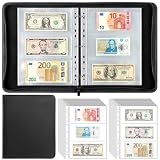
- Premium Leather Construction: The Uncle Paul money binder is crafted from high-quality artificial leather, offering durability and a sophisticated, professional look for your currency collection.
- Ample Storage Capacity: Comes with 40 sheets Currency Pages(240 pockets) to neatly organize and store a large number of paper money bills, banknotes, and coupons, keeping them safe and easily accessible.
- Double-Sided Design: Each page features a double-sided insert with 3 rows and 6 pockets, maximizing storage space and allowing for efficient categorization and display of your paper money collection.
- Secure Zipper Closure: The currency holder album is equipped with a reliable zipper closure, ensuring that your valuable currency collection remains protected from dust, moisture, and accidental spills.
- Sturdy and Well-Structured: Its robust build and well-thought-out design provide excellent support for the pages, preventing sagging or bending, and ensuring your collection stays in pristine condition over time.
The case was not presented as a finding that the banks:
- Manipulated the global spot-currency market;
- Manipulated the WM/Reuters FX fix;
- Used spoofing or other deceptive trading orders;
- Front-ran customer orders; or
- Submitted false information to a global currency benchmark.
That distinction matters for consumers and investors. A headline about “rigging the FX market” can suggest that every exchange rate, currency fund or retail foreign-exchange transaction was affected. The KFTC case was much more specific: it involved negotiated prices offered to five Korean corporate customers for seven derivative transactions.
What’s actually slowing this PC down?
Pick the symptom - the matching free tool is one click away.
Why the conduct could affect a customer
Derivative pricing is not usually a single publicly posted rate in the way a consumer might see a quoted exchange rate at an airport or on a banking app. Dealers calculate prices using factors such as market rates, interest-rate differentials, credit risk, transaction size, maturity and liquidity.
That makes competitive bidding important. A corporate customer asking several banks for quotes expects each dealer to independently assess the transaction and offer its best price. If banks coordinate their bids, the customer may receive less favorable terms than genuine competition would produce.
For an individual, the case is not evidence that a particular personal currency exchange was overcharged. The customers were Korean companies entering relatively large over-the-counter derivative trades, including transactions denominated in billions of yen and tens of millions of dollars. Retail FX spreads, remittance fees and card-conversion charges are separate products and were not the subject of this decision.
Rank #4
Do not confuse this case with the 2020 Korean case
A separate KFTC enforcement action announced in March 2020 involved four other foreign banks and resulted in combined penalties of ₩1.32 billion. That case concerned four currency-swap bids between January and September 2010.
Windows Errors? Fix Them Before They Spread
Repair common Windows errors and clear accumulated junk for a smoother, more stable PC - no reinstall needed.Free scan · no reinstallCrashes, No Sound, or Screen Glitches?
Random freezes, missing sound and display glitches usually trace back to one bad driver. Find and replace yours safely.Free scan · under a minute| 2019 case | Separate 2020 case |
|---|---|
| JPMorgan Chase, HSBC, Deutsche Bank and Standard Chartered | Citibank Korea, HSBC, Crédit Agricole Corporate and Investment Bank, and JPMorgan Chase |
| Seven transactions involving five Korean corporate customers | Four currency-swap bids |
| ₩693 million in fines | ₩1.32 billion in combined penalties |
JPMorgan and HSBC appear in both cases, but the cases are not the same. In the 2020 matter, JPMorgan received a corrective order but no fine, while Citibank Korea received a ₩900 million fine, HSBC ₩387 million and Crédit Agricole ₩34 million.
Earlier related Korean enforcement
The 2019 decision followed earlier KFTC action involving Deutsche Bank. In March 2016, Deutsche Bank and HSBC were fined a combined ₩59 million for coordinating bids in FX swaps worth approximately $88 million.
In 2017, Deutsche Bank and BNP Paribas were sanctioned for coordinating bids on 45 forward-exchange contracts between 2011 and 2014.
Independent reader supportYour contribution helps us test, update, and keep practical guides available for everyone.Key facts at a glance
- Announcement date: January 18, 2019
- Agency: Korea Fair Trade Commission
- Conduct period: March 2010 to February 2012
- Customers: Five unnamed Korean corporations
- Transactions: Seven FX-derivatives transactions
- Total fines: ₩693 million
- Products: Currency swaps, cross-currency swaps, FX forwards and FX swaps
FAQ
Which South Korean agency fined the banks?
The Korea Fair Trade Commission, or KFTC, imposed the fines. It is South Korea’s antitrust agency, not the Financial Supervisory Service or another financial regulator.
Best Value
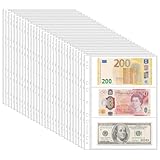
- 150 Spacious Pockets – Size: 7.5"x3.5"/190x90mm. Each oversized pocket fits global banknotes, coupons, stamps, or trading cards. 50 sheets hold 150+ items securely.
- PVC-Free & Acid-Safe PP Material – Non-toxic, archival-quality sleeves protect against yellowing, tears, and humidity damage.
- Side-Load Lock Design – Collectibles stay firmly in place when flipping binder pages, no slips or misalignment.
- Dual Binder Compatibility – Page dimensions: 11.0" x 8.5"/280 x 215 mm. Fits US 3-ring (11”x8.5”) and EU 4-ring (280x215mm) systems for worldwide collectors.
- Universal Collecting Utility – Organize bills, coupons, stickers, labels, or thin cards in museum-grade clarity.
Which banks were fined in the 2019 case?
JPMorgan Chase, HSBC, Deutsche Bank and Standard Chartered. Their fines were ₩251 million, ₩225 million, ₩212 million and ₩5 million respectively.
How much did the fines total?
The fines totaled ₩693 million.
Did the case involve the WM/Reuters FX fix?
No. The case involved coordination of customer bids for over-the-counter FX derivatives. The KFTC findings did not establish manipulation of the WM/Reuters benchmark or the wider global spot-FX market.
Could this affect my personal currency exchange or card purchase?
The case does not establish that retail customers were overcharged. It involved large derivative transactions for five Korean corporate customers, so ordinary exchange fees, remittance charges and card-conversion spreads are separate matters.
The Bottom Line
South Korea’s antitrust agency fined JPMorgan Chase, HSBC, Deutsche Bank and Standard Chartered a combined ₩693 million for coordinating prices on seven customer FX-derivatives transactions between 2010 and 2012. The important qualification is scope: this was alleged collusion over corporate derivative bids in Korea, not a finding of manipulation of the global spot-FX market or the WM/Reuters benchmark.
Quick Recap
Product prices and availability are accurate as of the date/time indicated and are subject to change. Any price and availability information displayed on Amazon at the time of purchase will apply.




