The Tool Desk
Outbyte Driver Updater FREEFix the driver behind crashes, sound loss and screen glitchesFind Drivers →Outbyte PC Repair FREERepair Windows errors before they cause bigger problemsFix Now →Becoming an entertainment entrepreneur means building a business around creative work, services, talent, audiences, or intellectual property—not following one guaranteed career ladder. Start by choosing a focused lane, testing whether customers or audiences will pay for what you offer, and building a realistic plan for costs, revenue, financing, and the legal requirements that apply where you operate.
What does an entertainment entrepreneur do?
An entertainment entrepreneur develops, produces, represents, markets, or distributes creative work through a business. The label covers many kinds of ventures, from independent production to talent services; it is not a single job title with one standard route into the industry.
A 2020 California Bureau for Private Postsecondary Education program filing lists examples such as film and television producer, online content creator, development executive, media strategist, casting and talent management, sports media, and music business. These examples illustrate the range of possible paths; they are not a comprehensive industry classification or evidence that a particular degree is required.
Choose a lane with a clear customer and revenue model
Before settling on a business name or seeking funding, describe what the venture will provide, who pays for it, and how money will come in. The same creative field can support different business models, so define the transaction rather than relying on a broad label such as “media company.”
#1 Best Overall

- No app or device requirement: Share your dot.Profile with anyone, as others don't need an app or a dot.device to receive your information.
- Hassle-free sharing: Easily share your dot.Profile with unlimited free shares of your digital business card.
- Simple sharing process: Tap your dot.device to a compatible phone or scan the dot.Profile QR code to share your profile. Compatible with a wide range of phones.
- Update information on the go: Keep your dot.Profile up to date by easily modifying and updating your information as it changes, ensuring you always have the most accurate details.
- Privacy and security: Protect your information with dot, as no passwords are ever needed to link your social accounts. Dot uses only usernames and links to create your digital business card.
- Production: You create or produce work for a client, a commissioning partner, or an audience. Clarify who pays for production and who controls the resulting rights.
- Talent or creator services: You represent, manage, or provide services to performers or creators. Define the services, fees, responsibilities, and contract terms.
- Creator-led media: You build a channel, publication, or other audience-facing offering. Identify the intended audience and the potential sources of revenue, such as sponsorship or distribution.
- Live experiences: You organize events or performances. Work out who buys tickets or services and what operational and location-specific requirements apply.
- Music business: You might focus on management, marketing, or other services around music. Make the scope of the service and the way it earns revenue explicit.
These are starting examples, not fixed categories. A workable first concept is specific enough to test: for example, a defined service for a particular kind of client or a particular type of project for a known audience.
How to test whether the business idea can work
The U.S. Small Business Administration (SBA) places market research and competitive analysis at the start of its business-planning guidance. Use them to examine demand, alternatives, potential customers, and what could make your offer distinct.
- Name the payer. Identify who would pay: a client, buyer, sponsor, investor, ticket-holder, or distribution partner. An audience and a paying customer may be different people.
- Investigate the alternatives. Look at how prospective customers address the same need now, including competing services and the option of doing nothing.
- Test the offer before scaling it. Ask potential customers specific questions about their needs and willingness to pay. Where practical, seek a small paid project, pilot, or other concrete signal of demand rather than treating compliments as proof of a market.
- Check rights and responsibilities. Establish what work or rights you need to deliver the offer and what permissions or agreements may be involved. Do not assume that creating, funding, or promoting a project automatically gives you every right connected to it.
The SBA’s “10 steps to start your business” page, last updated May 3, 2023, describes market research as a way to assess whether an idea has an opportunity to become a successful business. Its planning guidance is general small-business advice, not an entertainment-specific forecast.
Build a plan and budget before committing major cash
A business plan should connect the creative proposition to its economics. Write down the target customer, offer, operating model, costs, revenue assumptions, milestones, and amount of funding needed. Treat estimates as assumptions to test—not guaranteed income.
Rank #2
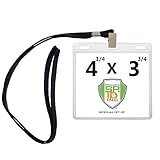
- COMPATIBLE WITH AVERY 5392 3X4 LABELS - UNIVERSAL FIT - Fits Any and All Name 3 x 4 & 4 X 3 Name Tag Refills / Inserts - Slide in Your Credential from the Top Opening and Display Your Name, Exhibitor Badges, Press, Access, VIP Passes, QR Codes, Barcodes, School ID, or Other Important Company Schedule or Event Information
- EXTRA ROOM JUST IN CASE!! - Don’t Show up For the Party Just to Find the Badges Don’t Fit!! Whether Your Credentials are Laminated, a Bit Bigger Than Expected, Or You Just Need Extra Room, These Fit With Any 4X3 Template Badges or Print Out Card You Have! Protector Sleeves to Showcase Your Identification and Networking Credentials - Flip Around to Display Either Side
- LONG LASTING PREMIUM BULLDOG CLIP WOVEN LANYARDS - COMFORTABLE ⅜ WIDE - NOT ROUND!!! - Don’t Cheap out on Your Attendees for Your Event! Reusable and Economical, These can be used for Multiple Events or Get Togethers. Both the Lanyards and the Plastic Sleeves are Premium Quality and Long Lasting
- PROFESSIONAL APPEARANCE - PREMIUM QUALITY BADGE HOLDER AND LANYARD - Ready for Your Next Big Event! Convenient Event Badge Holder with Lanyard Sets - Great for Large Group Meetings, Business Conference, Convention, Symposium, Seminar, Exhibition, Fundraiser, Gala, Workshop, Trade Show, Festival, Office and More!
- NO ANNOYING ZIPPER - CRYSTAL CLEAR HOLDERS DESIGNED FOR QUICK INSERT - User-Friendly and Simple! No Noisy Snap or Zip Distraction - Easy and Fast Access for Small or Large Fingers to Remove - Transparent to Scan Barcodes or Swipe without Needing to Remove
Separate startup costs from ongoing costs
List the costs needed to begin and the costs that recur while the business operates. Depending on the venture, the list may include production or development expenses, equipment, marketing, professional services, staffing, insurance, and location-related costs. The exact items and amounts depend on the business and where it operates; the sources here do not establish a standard entertainment-startup budget.
Make a cash-flow plan
Map when expenses are due against when customer payments or project revenues are expected. A venture can appear profitable on paper and still run short of cash if it must pay costs before collecting revenue. Build a conservative case alongside your expected case, and identify which expenses can wait if revenue arrives late.
- Keep business income and expenses trackable, and use business banking once the business is set up.
- Record the assumptions behind projected rates, sales, audience size, and payment timing.
- Set milestones for spending more—for example, after a customer commitment or a successful pilot—rather than funding every future phase at once.
- Decide how much personal money you can risk without putting essential personal obligations at risk.
Compare funding options by cost, control, and fit
The SBA describes self-funding, loans, crowdfunding, and venture capital as possible funding paths. They differ in repayment, ownership, control, and suitability; outside investment is not a requirement for starting an entertainment business.
| Funding path | Cash cost or obligation | Ownership and control | Potential fit and tradeoff |
|---|---|---|---|
| Self-funding | You supply the capital; the amount available depends on your resources. | No outside equity is required for the money you contribute. | Can suit a smaller or staged launch, but limits the venture to what you can afford to put at risk. |
| Loan | Borrowed money must be repaid under the loan terms. | A loan does not by itself require selling equity, though obligations depend on the agreement. | May fit a business with a credible repayment plan; debt creates a payment obligation even if revenue disappoints. |
| Crowdfunding | Terms and costs depend on the crowdfunding approach and its arrangements. | Ownership and control effects depend on what supporters receive and the campaign structure. | Can fit a defined creative project, including a documentary, but a campaign is not proof of recurring demand for a broader business. |
| Venture capital | Capital is exchanged for an ownership stake; specific terms vary. | Investors may participate in the business, so founders share ownership and potentially decision-making. | May fit a venture seeking substantial growth capital, but is not a neutral substitute for self-funding or project financing. |
Compare actual offers before deciding. Consider how soon the money is needed, whether repayment is realistic, how much ownership or control you are willing to share, and whether the scale of the opportunity justifies the funding structure.
Rank #3

- BRAND REPRESENTATION: Showcases your brand and reflects your unique design aesthetic
- DURABILITY: Made with high-quality materials for durability and longevity
- DIGITAL FUNCTIONALITY: Easy sharing of contact information and social media handles
- TAP-TO-SHARE: Convenient tap-to-share feature allows for effortless sharing of details on another person's phone
- NETWORKING SIMPLIFIED: Simplifies networking and makes a lasting impression on potential clients or customers
Set up the business for its activity and location
Business formation is not a single universal checklist. SBA guidance explains that legal structure can affect taxes, fundraising, paperwork, and personal liability. Registration, tax IDs, permits, and other obligations can also vary with the business activity and location.
For a U.S. business, use current federal, state, and local government guidance to investigate the steps that apply. The SBA’s “10 steps to start your business,” “Plan your business,” and “Launch your business” resources outline planning and launch topics, including structure, naming, registration, tax IDs, permits, and banking. Consult a qualified local attorney or tax professional when the consequences of a choice are significant or the rules are unclear.
- Check that the proposed business name and brand are usable before investing heavily in them.
- Ask which entity forms are available and how each could affect liability, tax treatment, fundraising, and paperwork in your jurisdiction.
- Identify permits and other requirements tied to your actual activity and location; do not assume that a rule for one city, state, or country applies elsewhere.
- Document ownership of creative work and use written agreements that clearly address services, payment, rights, and responsibilities.
- Investigate insurance and business banking appropriate to the venture and its operations.
The SBA information is U.S.-oriented. Founders outside the United States should consult official guidance and qualified advisers in their own jurisdictions.
Independent reader supportYour contribution helps us test, update, and keep practical guides available for everyone.Develop the skills the business model requires
Creative judgment matters, but an entertainment venture also needs operational and financial capability. The California program filing cited above lists coursework examples including business law, intellectual property, marketing, strategic planning, budgeting, contracts and negotiation, financing, acquisition and distribution, and project management. These are useful areas to learn; the filing describes one program, not a universal curriculum or credential requirement.
Rank #4

- PRECISION LASER ENGRAVING: Customize both sides with names, company logos, QR codes, or unique designs using high-accuracy laser engraving. Permanent markings ensure your custom metal business cards stay sharp, professional, and fade-proof for years
- PREMIUM 0.45 MM ANODIZED ALUMINUM: Made from durable brushed or mirror-polished aluminum, with color embedded into the metal—no peeling, flaking, or fading. A stylish upgrade from paper cards, perfect for engraved aluminum business cards, VIP passes, and metal gift cards
- LIGHTWEIGHT, SCRATCH-RESISTANT & WATERPROOF: Coated to resist scratches, fingerprints, and moisture, ensuring your personalized name tags and custom metal cards look pristine in wallets, pockets, or badge holders—ready for daily use and travel
- MULTI-COLOR OPTIONS FOR EVENTS & BRANDS: Choose from 9 vibrant colors to match your corporate identity, wedding theme, or event style. Perfect as custom business cards, metal name badges, event name tags, wedding place cards, or networking keepsakes
- ECO-FRIENDLY & READY TO IMPRESS: 100% recyclable aluminum reduces waste while reflecting your commitment to sustainability. Every custom engraved metal card is carefully inspected, securely packaged, and delivered ready to wow clients, guests, and business partners
- Business and financial literacy: Build skill in budgeting, reading cash flow, pricing work, and evaluating financing terms.
- Rights and contracts: Learn enough about intellectual property and agreements to spot questions that need qualified legal advice.
- Marketing and audience development: Explain the offer clearly and understand how the intended customers or audience will find it.
- Project and relationship management: Coordinate schedules, collaborators, clients, and delivery commitments reliably.
- Distribution and deal-making: Understand how the work reaches its customer or audience and what terms govern that route.
You can build these competencies through education, work experience, mentorship, or professional advisers. A degree may be relevant to an individual’s goals, but the cited program filing does not show that one is necessary to become an entrepreneur.
Read industry employment figures in context
The U.S. Bureau of Labor Statistics projects employment in entertainment and sports occupations overall to grow about as fast as average for all occupations from 2025 to 2035, with about 91,100 openings per year on average during that period. The openings figure includes jobs associated with workers leaving occupations permanently as well as employment growth. It describes a broad occupational group, not startup survival, business revenue, founder earnings, or demand in a particular entertainment niche.
Use employment projections as broad labor-market context, not as a forecast that a new company will succeed. Your own business case depends on its customers, offer, costs, competition, and ability to deliver.
Quick Recap
Product prices and availability are accurate as of the date/time indicated and are subject to change. Any price and availability information displayed on Amazon at the time of purchase will apply.
Recommended Free Tools




