PC Slower Than It Used to Be?
A free scan shows the junk files, broken settings and background clutter dragging Windows down - then fixes them in one click.Free scan · Windows 10 & 11Outdated Drivers Are Slowing You Down
One free scan finds every outdated or missing driver and matches the right update for your exact hardware.Free scan · exact hardware matchSpaceX’s acquisition of xAI is presented as completed: the company’s SEC filing gives an effective date of February 2, 2026. The accompanying orbital-computing ambition is at a very different stage. SpaceX asked the Federal Communications Commission (FCC) for authority to operate up to one million satellites, but the FCC notice opened a review and comment process; it did not approve the constellation. The proposal is a high-stakes bet that SpaceX can combine AI, launch, satellites and networking—not an operating space data-center network.
What SpaceX acquired—and what the filing says
SpaceX’s filing says it acquired xAI effective February 2, 2026. It also says xAI had acquired X Holdings effective March 28, 2025. The resulting corporate grouping brings xAI’s AI models and computing work, including Grok, together with SpaceX’s launch vehicles, satellite manufacturing, Starlink operations and X. SpaceX describes the combination as joining AI development with launch, broadband, direct-to-mobile communications and social media. SpaceX’s SEC filing is the source for those effective dates and the company’s account of the transaction.
The strategic idea is vertical integration: SpaceX could build and launch spacecraft, operate a satellite network and potentially supply infrastructure for xAI’s computing needs. That may give xAI access to assets and expertise within the combined business, but it does not establish that Grok will run in orbit or that terrestrial AI facilities will be replaced.
What the FCC application actually proposes
In an application filed January 30, 2026, SpaceX sought authority for a system it calls the SpaceX Orbital Data Center System. The FCC public notice describes a request for up to one million non-geostationary satellites, with proposed orbital shells from 500 to 2,000 kilometers and inclinations including 30 degrees and sun-synchronous orbits. “Up to” is a requested maximum, not a deployment commitment or a launch schedule.
#1 Best Overall

- 1:200 Scale SpaceX Starship Model: This NikolaToy model offers a precise 1:200 scale replica of the SpaceX Starship, showcasing a realistic design for aviation and space enthusiasts.
- LED Lights & Misting Effect: Equipped with LED lights and a misting function, this model creates a dynamic and interactive experience, simulating rocket exhaust in a unique way.
- Durable PLA+ Construction: Made from PLA+, a strong and eco-friendly material, ensuring a sturdy, long-lasting model with fine detailing.
- Precision 3D Printing: Crafted with high-precision 3D printing technology to capture every detail of the SpaceX Starship, from its sleek body to the intricate features.
- Ideal Gift for Space Enthusiasts: A perfect gift for space lovers, engineers, or collectors, adding both a decorative touch and an engaging conversation piece to any home or office.
The proposed network would use optical links between satellites, connect with proposed spacecraft and existing first- and second-generation Starlink systems, and use specified radio-frequency bands for communications between space and Earth. The notice also describes telemetry, tracking and command operations. These are elements of a proposed communications architecture; the notice does not establish the network’s eventual bandwidth, latency or service quality.
On February 4, 2026, the FCC accepted the application for filing and requested public comment. The notice set March 6, 2026, for comments or petitions, March 16 for responses or oppositions, and March 23 for replies. Acceptance for filing is a procedural step, not final authorization to deploy the system.
“Power” means computing capacity, not just electricity
The proposal is about putting computing equipment in orbit, where it could process AI workloads. Four separate pieces have to work together:
Rank #2

- Name:1:233 Falcon 9 Block 5 Material::Alloy+resin
- Size:Approximately 22x7cm (8.6*2.7inch) Function: Static desktop display
- For collection or display, Not suitable for children to play with Handmade, there may be minor flaws
- Model is a highly Simulated SpaceX Falcon9 Dragon+F9 Starship Heavy Falcon Falcon 9 Biock 5 rocket model. The main body of the first-stage rocket is precision aluminum alloy tube, and the rest of the rocket materials are made of high-quality imported resin-with excellent laser forming ability and long-lasting preservation
- Energy: solar panels could generate electricity in orbit. That is not the same as delivering usable AI capacity.
- Compute: processors and supporting systems would have to run AI workloads reliably.
- Cooling: equipment must shed the heat it generates.
- Networking and ground infrastructure: data must reach the spacecraft and results must get back to users or terrestrial systems, using satellite links and ground facilities.
SpaceX’s filing discusses solar energy, orbital data centers and inter-satellite networking as company plans and beliefs, not as independently demonstrated commercial performance. Orbital systems might suit some workloads better than others: applications with strict latency needs or large, frequent data transfers could be constrained by the path between Earth and orbit. Government and enterprise customers may also have data-handling or sovereignty requirements that limit where information can be processed.
Do these 3 things before closing this tab:
1Fix the driver behind crashes, sound loss and screen glitches2Repair Windows errors before they cause bigger problems3Scan for outdated or missing drivers - takes under a minuteWhy SpaceX thinks orbit could be useful for AI
The company’s thesis is that abundant solar energy, fewer terrestrial land and grid constraints, reusable launch vehicles and large-scale satellite production could eventually make orbital computing attractive. Starlink’s existing operations offer relevant experience: SpaceX’s filing said the network had about 9,600 broadband and mobile satellites in low Earth orbit and more than 23,000 inter-satellite lasers as of March 31, 2026. Those figures describe Starlink, not an orbital AI-compute fleet.
SpaceX and Elon Musk point to Starship as the vehicle that could eventually deliver the mass needed for a much larger system. That case depends on future launch performance and cadence; projected Starship capabilities should not be mistaken for a demonstrated deployment rate for this proposal.
Rank #3
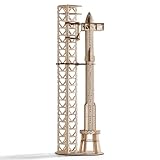
- HANDS-ON ENGINEERING EXPERIENCE: Build this detailed 3d puzzle for adults and explore the complex engineering of the legendary SpaceX Super Heavy booster. A truly immersive dive into aerospace technology
- IMPRESSIVE DISPLAY MODEL: Once completed, this highly detailed and cool-looking model makes a perfect decorative centerpiece for your office, study, or game room, showcasing your unique interests
- SATISFYING MENTAL CHALLENGE: Enjoy hours of focused, relaxing fun. This 3D puzzle provides the perfect level of difficulty, offering a great sense of accomplishment upon completion
- THE PERFECT GIFT IDEA: An unforgettable and inspiring gift for birthSpace-X Falcon Heavydays, holidays, or any occasion. Ideal for space enthusiasts, model kit fans, teens, and adults who love a good challenge
- PREMIUM & SAFE MATERIALS: Made from high-strength, eco-friendly materials with precisely cut pieces for a smooth build. The finished model is robust and durable, designed for long-term display
Ars Technica reported that Musk told employees a deployment rate of one million tons of satellites per year, each carrying 100 kilowatts of compute per ton, would add 100 gigawatts of AI-compute capacity annually. That arithmetic is a projection attributed to Musk, not a measured output or an approved plan. The same reporting said Musk forecast that space could become the lowest-cost source of AI compute within two to three years. That, too, is a forecast rather than an established cost comparison. Ars Technica’s account also discusses the proposed launch strategy and expert concerns about orbital safety.
The engineering challenges are larger than generating power
Rejecting heat in a vacuum
On Earth, data centers commonly move heat into air or water systems. In space, there is no surrounding air to carry waste heat away by convection. SpaceX’s filing discusses radiators, vapor chambers, active cooling loops and coatings, but the public materials cited here do not establish a final design or demonstrate that it can support dense AI hardware at commercial scale. Solar power does not solve this thermal problem.
Quick wins for a faster PC:
Repair Windows errors before they cause bigger problemsFix Now →Scan for outdated or missing drivers - takes under a minuteDriver Scan →Clear out junk files and repair common Windows errorsFree Scan →Keeping electronics reliable and replaceable
AI accelerators and their supporting electronics would face radiation, vacuum, launch vibration and limited opportunities for repair. Terrestrial operators can replace failed parts and upgrade equipment directly; an orbital system would need to rely on redundancy, servicing where practical, or replacement and disposal of spacecraft. SpaceX’s filing refers to reliability requirements and redundant maneuverability, but does not establish the final radiation-hardening approach, satellite lifetime, replacement rate or servicing plan.
Rank #4
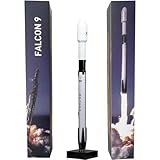
- Name:1:233 Falcon 9 Material::Alloy+resin
- Size:Approximately 28x2.4cm (11*1.5inch) Function: Static desktop display
- For collection or display, Not suitable for children to play with Handmade, there may be minor flaws
- Model is a highly Simulated SpaceX Falcon9 Dragon+F9 Starship Heavy Falcon Falcon 9 Biock 5 rocket model. The main body of the first-stage rocket is precision aluminum alloy tube, and the rest of the rocket materials are made of high-quality imported resin-with excellent laser forming ability and long-lasting preservation
Moving data and controlling the network
Optical inter-satellite links could route data among spacecraft, but they do not remove the need for ground connections, suitable gateways, secure command and control, and links that work reliably in the intended conditions. Weather can affect ground-based optical links, while radio connections have their own capacity, interference and licensing constraints. The FCC notice describes proposed links and frequency bands; it does not prove that the completed system would meet the throughput or availability requirements of AI customers.
Launching, maintaining and replacing a fleet
A million-satellite authorization request implies an unprecedented potential scale. Even if launch costs fall, the system would still have to pay for manufacturing, launch, communications equipment, thermal controls, propulsion, ground infrastructure, insurance and regulatory compliance. Satellites can fail, lose communications, suffer software faults or become outdated as chips improve. Replacement economics matter as much as initial deployment: hardware that becomes obsolete before its launch and operating costs are recovered could undermine the business case.
Independent reader supportYour contribution helps us test, update, and keep practical guides available for everyone.Orbital safety and environmental questions
More spacecraft mean more objects to track and more opportunities for close approaches. SpaceX says the proposed system would include redundant maneuvering, and Ars Technica reported on its Stargaze space-situational-awareness effort. Those are mitigation plans, not proof that collision risk is solved. A credible operating plan must address detection and coordination with other operators, propulsion failures, loss of command, and how failed spacecraft are removed.
Free tools Windows power users keep installed
One-click scans. No signup required.
Best Value
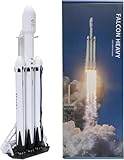
- Extremely exquisite Falcon Heavy rocket model (For collection or display, not a toy! Children should not buy it)
- This model is a highly simulated SpaceX Falcon Heavy rocket model. First-stage super heavy-duty booster is made of precise aluminum alloy tubes.Second-level starship is embedded with reinforced aluminum alloy tubes
- The proportional model:1:233
- Actual height: 32cm (the core diameter is 24mm, the real rocket is 9 meters in diameter) This ratio is the best choice for desktop placement
- Note: This model is not a toy model, it is not recommended to buy for children, please buy with caution to avoid unnecessary trouble for your shopping
Altitude affects how long an object can remain in orbit after a failure. Ars Technica quoted space-safety experts warning that debris at some of the proposed altitudes could take centuries to naturally deorbit. The filing discusses end-of-life disposal options, including higher or heliocentric orbits; experts cited by Ars Technica questioned the energy needed for heliocentric disposal. A stated disposal approach is not a guarantee that a spacecraft can be safely removed after every failure mode.
There are broader effects to assess, too. Reentering satellites may deposit aluminum and other materials in the atmosphere; a million-spacecraft-scale system could raise concerns for optical astronomy, radio astronomy and the night sky. The materials cited here do not provide a finalized brightness, orbital-density or environmental-impact assessment. Manufacturing and repeatedly launching a large fleet also use materials and energy, so a claim that orbital computing would reduce emissions would require a lifecycle comparison that is not established here.
The economic test: total cost, not launch price
The relevant comparison is the cost of delivering dependable compute over time—not whether a rocket can put a satellite in orbit cheaply. Terrestrial data centers benefit from mature power systems, cooling, networking and on-site maintenance. Orbital facilities might avoid some land and grid bottlenecks, but would add launch, radiation protection, thermal management, communications, insurance, replacement and disposal costs.
| Potential orbital advantage | Corresponding cost or constraint |
|---|---|
| Solar energy in orbit | Power systems add mass, and heat still has to be rejected through spacecraft thermal systems. |
| SpaceX control of launch and satellite production | The economics depend on manufacturing scale and launch performance that have not been demonstrated for this fleet. |
| Starlink links between spacecraft and Earth | Ground infrastructure, spectrum, capacity and reliable data routing remain necessary. |
| Compute capacity placed around the planet | Latency, data movement, customer requirements and repairs may limit which workloads fit. |
| Potentially rapid capacity growth | Rapid chip advances can make orbital hardware obsolete before replacement is economical. |
The verdict depends on whether orbital systems can supply useful, reliable AI capacity at a lower total cost than terrestrial facilities while meeting customer, regulatory and safety requirements. The available materials do not establish an independent cost comparison, a detailed financing plan or a completed orbital compute design.
The Tool Desk
Outbyte PC Repair FREERepair Windows errors before they cause bigger problemsFix Now →Outbyte Driver Updater FREEScan for outdated or missing drivers - takes under a minuteDriver Scan →What the deal could mean for Grok, X and SpaceX’s Mars ambitions
For xAI, the combination could provide access to SpaceX’s launch infrastructure, satellite manufacturing, Starlink operations and capital. X could serve as a distribution channel and real-time information environment for AI products. But the proposal does not confirm that all, or any specified portion, of Grok’s training or inference will move to satellites.
The deal also concentrates technical and financial bets across AI, launch, broadband and social media. Integration could produce useful efficiencies, but it could also create governance and execution challenges. SpaceX has framed orbital computing as a way to build technology, revenue and industrial capacity for lunar and Martian development. Supporters can view AI infrastructure as a funding engine for space exploration; critics can reasonably ask whether it will divert money and engineering attention from Mars. That future business case is a corporate vision, not an established outcome.
Quick Recap
Product prices and availability are accurate as of the date/time indicated and are subject to change. Any price and availability information displayed on Amazon at the time of purchase will apply.




