If you are injured in a crash involving a vehicle with automated-driving technology, the technology’s presence alone does not determine who is responsible. Liability depends on which system was operating, what it was doing at the time, the conduct of any human driver or operator, the available evidence, and the laws and insurance rules that apply in the state where the crash occurred.
Why “self-driving” does not tell you who is at fault
Vehicles described as autonomous may use very different systems. The distinction matters because the system’s role—and the human’s responsibilities—can change what investigators examine.
Level 2 driver assistance
The National Highway Traffic Safety Administration (NHTSA) describes Level 2 advanced driver-assistance systems (ADAS) as providing steering and speed inputs while requiring the human driver to remain fully engaged. A vehicle using such assistance is not, on that description, taking over the entire driving task. Whether the feature was engaged, what the driver was doing, and how the system responded may all matter to a claim.
Automated driving systems
NHTSA describes a mature automated driving system (ADS) as performing the driving task within a defined operational design domain—the conditions in which it is designed to operate—without driver involvement. That description does not mean every vehicle marketed as “self-driving” operates this way, or that an ADS can operate in every place or condition. NHTSA’s automated-vehicle safety page, checked October 7, 2026, says deployment remains limited, restricted, and designated.
Recommended Free Tools
#1 Best Overall

- UPSCALED 4K FRONT + 1080P REAR DUAL DASH CAM: The ROVE R2-4K DUAL records the road ahead and behind at the same time. The front camera captures at 2.5K (QHD) and intelligently upscales to 4K (2160P) for higher-detail playback, while the rear camera records at Full HD 1080P. This is upscaled 4K, not native 4K, engineered to show sharper everyday detail than standard 1080P dash cams, so you can read license plates, signs, and surroundings in front and rear footage.
- SONY STARVIS 2 IMX675 SENSOR + SUPER NIGHT VISION: The front camera uses a Sony STARVIS 2 IMX675 5MP image sensor with a wide F1.5 aperture (F1.8 rear) and HDR to pull in more light for clearer low-light footage. This advanced sensor enhances nighttime clarity, helping capture license plates, road signs, and surrounding vehicles with greater reliability when driving after dark, through tunnels, or in dusk and dawn conditions.
- ULTRA FAST 5.8GHz WIFI/ UP TO 20MB/s DOWNLOAD SPEED: With its built-in dual-band 5.8GHz and 2.4GHz WiFi, you can use the ROVE dash cam app to view and manage dash cam recordings instantly on your iPhone and Android smartphone. Using the ROVE app, download your recorded videos directly to your smartphone at up to 20 MB/sec, then easily share them on social media with friends and family. Additionally, manage camera settings and update the latest firmware over-the-air via the ROVE App.
- CAR CAMERA WITH GPS: The new front and rear dashcam comes with built-in GPS, which enables you to view real-time live speed and compass on the 3” IPS wide camera screen. It records precise driving routes, locations, and speed stamps directly on the video so you can watch dashcam videos with GPS data using ROVE's free GPS Player on your PC or Mac & get additional evidence when you need it.
- FEATURES WITH STATE-OF-THE-ART TECHNOLOGY INCLUDED: Experience peace of mind with this front and rear car dash cam. It comes with a free 128GB microSD card and offers advanced features such as an f1.5 aperture, motion detection, G-sensor, seamless loop recording, emergency video lock, screen saver, live speed and compass direction, voice guidance, ring of threads for optional CPL filter, a built-in supercapacitor for extended product life, support for up to 1TB microSD cards, and many more.
For a specific crash, identify the vehicle, the feature or system, its operating mode, and whether it was engaged. A general label such as “autonomous” cannot answer those questions.
Who might be responsible for an injury claim?
There is no nationwide automatic rule, established by the NHTSA material reviewed here, that assigns fault to the driver, vehicle owner, manufacturer, or software provider whenever automation is involved. Potential responsibility depends on the facts and the applicable state law. A lawyer may evaluate one or more of these possible paths:
- Driver or operator negligence: whether a human driver or other responsible operator acted unreasonably, including how they monitored or responded to the vehicle or a handoff.
- A vehicle or component defect: whether a vehicle or part may have been defective and whether that alleged defect caused the injury.
- Software or warning issues: whether software behavior, system limits, or warnings may have contributed to the collision.
- More than one contributing cause: the driver’s conduct, system behavior, roadway conditions, or another factor may each be relevant. The legal allocation, if any, depends on the evidence and jurisdiction.
These are issues a claim may raise, not claims guaranteed to be available or successful. NHTSA itself frames liability and insurance as policy questions: its automated-vehicle safety page says they are among the issues policymakers are working to address as automated driving systems mature. That policy framing does not decide the outcome of an individual case.
What evidence can help explain how the crash happened?
Investigators need to distinguish what the system was designed to do from what it did in the particular collision. Questions may include:
The Tool Desk
Outbyte PC Repair FREEClear out junk files and repair common Windows errorsFree Scan →Outbyte Driver Updater FREEFix the driver behind crashes, sound loss and screen glitchesFind Drivers →Rank #2
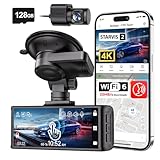
- [4K+1080P Dual Recording] REDTIGER F7N TOUCH captures your drive journey in stunning 4K UHD resolution with STARVIS 2 sensor 170° wide-angle view for the front dash cam and 1080P FHD resolution 140° wide-angle for the rear car camera. Equipped with WDR and HDR technology, the enhanced super night vision ensures better visibility even in low-light situations, providing you with reliable recordings day and night.
- [Voice Control & Touch Screen] F7NTOUCH dashcam features voice commands, allowing for hands-free control of your 4K car camera, which enhances safety by minimizing distractions. The dual camera dash cam also has smart touchscreen that can lock emergency video, turn on wifi, and capture scenery with one click. Redtiger also retains the buttons, multiple control methods are integrated.
- [Built-in GPS & 5.8GHz WiFi] Both Android and IOS users can connect to dashcam WiFi via the REDTIGER Cam app. Although the dash cam is installed wired, you can enjoy wireless control on your smartphone, faster 20MB/s download speed and share your driving experiences in real-time with friends and insurance companies. Car recorder built-in GPS provides traceable location, speed, and accurate route in the recordings.
- [Loop Recording & G-Sensor] REDTIGER F7N TOUCH dual channel dash cam automatically overwrites the oldest footage when the memory is full, ensuring endless recording with the included 128GB card. With a built-in G-sensor that detects sudden movements or impacts, it automatically locks and protects the associated footage when an event is detected on the road, ensuring it won't be overwritten during loop recording.
- [24-hour Parking Monitoring*] REDTIGER Car dashboard camera offers G-Sensor Parking Mode that automatically record when it detects any collisions or sudden motion while vehicles is parked. Time Lapse Parking Mode provides continuous surveillance by offering a condensed overview of any events that may occur during parking periods. *Please note that the parking monitoring function requires a separate hardwire kit.
- What system, version, and vehicle were involved?
- Was the system engaged, and when? What operating conditions was it designed for?
- Were there warnings, a request for the driver to take control, or a handoff—and how did the human driver, remote operator, or fleet operator respond?
- What do the crash scene, road and surface conditions, witnesses, and available electronic or physical records show?
- Which state’s law and insurance rules apply?
NHTSA’s public incident files include fields such as reporting entity, vehicle make, model and year, incident information, road and surface context, crash-scene details, whether a law-enforcement investigation was indicated, and narrative information. The agency says it redacts information where publication could disclose personally identifiable information or protected business information. Those public files do not establish that a claimant can obtain a vehicle’s complete logs, video, software records, or a company’s internal records; access depends on the circumstances and applicable law.
In a claim, keep distinct the question of what evidence may exist from the question of who can obtain it. NHTSA reporting and public incident files can provide safety information, but they are not a substitute for the evidence and legal analysis in an individual injury case.
What NHTSA crash reports do—and do not—show
NHTSA’s Standing General Order (SGO) requires entities identified by the agency to report certain crashes involving ADS and Level 2 ADAS. It is not a universal requirement that every person involved in a crash personally file an SGO report. The order is intended to provide timely safety information, help the agency evaluate possible defects, and support investigation or enforcement. Its third amendment took effect June 16, 2025, superseding the 2023 second amended order.
The reporting criteria differ by system. NHTSA’s current overview describes ADS reports for crashes in which ADS was in use within 30 seconds and specified injury or property-damage conditions apply. For Level 2 ADAS, the overview identifies criteria including a vulnerable road user being struck, a fatality, air-bag deployment, or hospital transport. The order contains definitions and multiple reporting requests; whether a particular event meets a criterion requires consulting the current order and its definitions.
Outdated Drivers Are Slowing You Down
One free scan finds every outdated or missing driver and matches the right update for your exact hardware.Free scan · exact hardware matchPC Slower Than It Used to Be?
A free scan shows the junk files, broken settings and background clutter dragging Windows down - then fixes them in one click.Free scan · Windows 10 & 11Rank #3

- 💖💖【Important Note】Due to soaring memory chip costs, many brands have eliminated memory cards entirely, requiring a separate purchase. However, to save you the hassle of buying extra accessories, we are resisting cost pressures without raising our dashcam's price. Starting June 26, 2026, this camera will include a 32GB memory card (previously 64GB) so you can still use it out of the box. For extended storage, we highly recommend purchasing a Class 10, U3, and V30 (or higher) memory card.
- 【4K 2160P Resolution Dash Cam】Capture every drive in stunning 4K UHD resolution with the Galphi front dash cam, featuring a 160-degree wide-angle lens for clear, cinematic video footage. Ideal for family cars, new drivers, and Uber/Lyft drivers, it provides reliable video evidence for accident disputes and insurance claims.
- 【Advanced 5GHz WiFi with App】 Featuring cutting-edge 5GHz WiFi and a free app, the video download speed reaches up to 8MB/s, compared to just 2MB/s with the 2.4GHz option. This greatly reduces download times and minimizes lag during video playback.
- 【No Screen & Less Distraction】This dash camerma features a screen-free design, minimizing distractions while you drive so you can stay focused on the road. Enjoy peace of mind knowing your camera is recording without taking your attention away from the journey.
- 【Compact and Super Easy to Install】The dash cam's slim and compact design ensures it won't obstruct your view. With easy installation and clear, detailed instructions included, even first-time users can set it up without any hassle.
A report is not a finding that anyone was negligent, that a product was defective, that the system caused the crash, or that an injured person is entitled to damages. NHTSA’s purpose is safety oversight. The agency’s Third Amended Standing General Order describes its information-gathering authority concerning crashes, potential safety defects, and compliance with federal vehicle safety standards; that authority does not itself establish a claimant’s private discovery rights.
Limits of the public incident files
NHTSA warns that its incident data have reporting and classification limitations, including possible duplicate reports and prior misclassification of ADS or ADAS incidents. Its overview describes files covering June 16, 2025 through August 17, 2026. Treat the files as agency-reported safety information, not a complete count of crashes, a comparative crash-rate measure, or an adjudicated record of fault. The sources cited here do not establish population-level statistics on injury claims or liability outcomes.
Example of enforcement over reporting
On September 30, 2024, NHTSA announced a consent order with Cruise concerning two reports that did not disclose post-crash details of an October 2, 2023 collision. NHTSA said a Cruise ADS-equipped vehicle dragged a pedestrian approximately 20 feet after the initial impact. The order included a $1.5 million penalty and corrective-action requirements. This was an agency action about reporting compliance, not a universal ruling on private injury liability or a determination governing other crashes.
Independent reader supportYour contribution helps us test, update, and keep practical guides available for everyone.Why state law and insurance matter
Autonomous-vehicle rules differ by state and by activity, such as testing or deployment. The National Conference of State Legislatures (NCSL) tracks state legislation on topics including vehicle definitions, licensing, registration, operation, testing, insurance, and liability. Its database says it includes introduced legislation from 2017 onward and is updated monthly; a bill’s appearance in a database does not by itself mean it became law. Check a rule’s enacted status and current state text before relying on it.
Rank #4
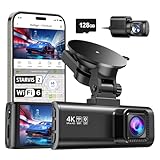
- [4K+1080P Front & Rear Recording] REDTIGER F7NP dash cam captures every detail with stunning 4K front and 1080P rear video. Featuring the advanced STARVIS 2 sensor plus the 170° front and 140° rear wide-angle lens, this dash camera delivers sharper images, balanced lighting, and reliable evidence day or night. Ideal for commuting, road trips, rideshare drivers, and new drivers.
- [STARVIS 2 Sensor & WDR Night Vision] Equipped with the advanced STARVIS 2 sensor, F1.5 large aperture, and 6-layer optical lens, F7NP 4K dual dash cam delivers clear, high-contrast footage in any lighting. WDR and HDR technology balance highlights and shadows, ensuring sharp night vision and crisp details day or night, providing reliable evidence and enhanced safety for every drive.
- [Built-in 5.8GHz WiFi & Smart App] Connect your smartphone to the dashcam’s built-in 5.8GHz WiFi to enjoy ultra-fast downloads up to 20MB/s. Using Redtiger Cam app, you can preview, download, and replay videos in real time, check GPS ata (route, speed, and location), and manage settings effortlessly, making it simple to review footage and share important moments.
- [Loop Recording & Free Memory Card] This car camera supports seamless loop recording to ensure continuous coverage without interruption. Older files are automatically overwritten when storage is full, while important events are safely locked. A free memory card is included, giving you ample space for 4K recordings and allowing you to use the camera right out of the box.
- [24/7 Parking Mode* & G-Sensor] Enjoy round-the-clock protection with two parking modes: time-lapse recording for continuous low-bitrate monitoring and G-sensor mode that records when collision is detected. The car security camera with G-sensor automatically locks important clips, ensuring crucial evidence is safely preserved even while your vehicle is parked.(*Hardwire kit needed.)
California illustrates the limits of state-specific rules
California’s regulations provide one concrete example, not a national standard. Under California Code of Regulations, title 13, section 227.04, manufacturers seeking a specified public-road testing permit must demonstrate $5 million in financial responsibility. Section 228.04 sets a separate financial-responsibility framework for deployment and permits insurance, a surety bond, or self-insurance as evidence. These are conditions for specified manufacturer activities. They do not guarantee a particular source of compensation or a particular recovery for every person injured in a California crash.
For an injured person, the available insurance and potential recovery depend on the relevant policies, the parties involved, state law, and the facts. A financial-responsibility requirement for a testing or deployment permit is not the same as a ruling on fault or the value of an individual claim.
How injury claims may change as automation develops
The central challenge is identifying the system’s role and connecting its conduct—or a person’s conduct—to the injury using evidence that may be distributed among drivers, vehicle owners, manufacturers, software providers, or fleet operators. As systems and operating models change, the factual questions may change too: who was expected to monitor the vehicle, when control was transferred, what the system was designed to do, and which records can establish what happened.
Federal reporting can give NHTSA information for safety monitoring and potential defect investigations, while state law and insurance rules shape individual claims. Those functions should not be confused. NHTSA’s incident files are not a claims database or a measure of comparative safety, and the sources cited here do not establish a single future liability rule. For an individual crash, the practical analysis remains tied to the system and mode, the people and entities involved, the evidence, and the applicable state law.
Quick Recap
What to do after a crash involving driver-assistance or automated technology
- Record what is known about the vehicle and system. Note the make, model, model year, and feature or mode reportedly in use, without assuming that a marketing term accurately describes the operating system.
- Preserve the ordinary crash details. Keep available scene documentation, witness information, and communications about the collision. Do not assume an NHTSA public report contains every record relevant to the event.
- Identify the human and organizational roles. Clarify whether a driver, remote operator, fleet operator, or other party was involved, and what each was expected to do at the time.
- Check the applicable state rules and insurance policies. Reporting requirements, financial-responsibility rules, and coverage vary; a rule for a manufacturer’s testing permit should not be treated as an individual claim guarantee.
- Get advice based on the facts and jurisdiction. Because potential claims and evidence access are case-specific, a local personal-injury attorney with motor-vehicle or product-liability experience can assess the relevant state law and options.
Product prices and availability are accurate as of the date/time indicated and are subject to change. Any price and availability information displayed on Amazon at the time of purchase will apply.




