Do these 3 things before closing this tab:
1Repair Windows errors before they cause bigger problems2Scan for outdated or missing drivers - takes under a minute3Clear out junk files and repair common Windows errorsA monthly household budget starts with a simple calculation: list the money your household expects to receive, list what it expects to spend or save, then subtract expenses from income. Track what actually happens during the month and use the results to improve next month’s plan. The six steps below turn that process into a practical routine.
1. Gather the records you need
Start with recent pay stubs, bills, bank or account statements, and any records you keep of everyday spending. Use them to ground your first budget in what your household actually receives and pays—not in what you think you should be spending. The Federal Trade Commission’s Making a Budget guide recommends gathering bills and pay stubs before filling out a budget worksheet.
If you have several months of statements or spending records, keep them together. A single month may not show costs that come up only occasionally.
2. Estimate monthly take-home income
Write down the income your household expects to have available each month. Include additional sources of household income, not just a primary paycheck. For an amount that does not arrive monthly, the FTC advises adding what you received over the previous year and dividing by 12 to estimate a monthly figure. Treat that result as an estimate and adjust it when actual income differs.
Crashes, No Sound, or Screen Glitches?
Random freezes, missing sound and display glitches usually trace back to one bad driver. Find and replace yours safely.Free scan · under a minuteWindows Errors? Fix Them Before They Spread
Repair common Windows errors and clear accumulated junk for a smoother, more stable PC - no reinstall needed.Free scan · no reinstall#1 Best Overall
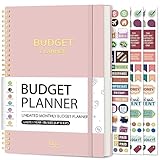
- Effective Budget Planning - Take control of your finances with the budget account book. This comprehensive planner allows you to plan and track your income, expenses, savings, and financial goals in one convenient place. With its intuitive layout and easy-to-use sections, you can stay organized and make informed decisions to achieve financial success.
- User-Friendly Layout - The budget planner features a user-friendly layout designed for easy navigation and organization. Each month, you'll find dedicated budget pages where you can set financial goals, track your income, and plan your expenses. Additional sections include debt trackers, savings goals, bill payment trackers, and more, making it simple to stay on top of your finances.
- Undated Monthly Calendar & Bonus Stickers - Featuring undated calendar each month, you'll have ample space to mark paydays, bills due, appointments, and important dates. Say goodbye to difficult writing spaces. Plus, we've included 3 cute sticker sheets that allow you to personalize your financial organizer and make budgeting more fun. Dates are not pre-printed and are completed by the user.
- Reliable and Convenient Design - Our monthly budget planner is designed for your convenience and built to last. The elastic band keeps everything securely in place, and the dual-sided pocket provides extra storage. Experience a budget planner that combines practicality and durability.
- Master Budgeting with Ease - Our financial planner includes a complete guidebook that provides valuable insights and instructions for optimal usage. From setting financial goals to tracking expenses, this guidebook offers step-by-step guidance and practical tips. Whether you're new to budgeting or an experienced user, this resource will help you make the most of your budget planner, empowering you to achieve financial success.
Compare expenses with take-home pay—the money available after payroll deductions—so the plan reflects what can actually be spent. The Consumer Financial Protection Bureau (CFPB) recommends using monthly take-home pay when assessing spending.
3. List and categorize expenses
Use bills and records to list expenses, then group them into categories that make sense for your household. A useful budget can include both essential bills and discretionary spending, as well as payments and contributions that are easy to overlook.
Rank #2

- Effective Budget Planning - Take control of your finances with the budget account book. This comprehensive planner allows you to plan and track your income, expenses, savings, and financial goals in one convenient place. With its intuitive layout and easy-to-use sections, you can stay organized and make informed decisions to achieve financial success.
- User-Friendly Layout - The budget planner features a user-friendly layout designed for easy navigation and organization. Each month, you'll find dedicated budget pages where you can set financial goals, track your income, and plan your expenses. Additional sections include debt trackers, savings goals, bill payment trackers, and more, making it simple to stay on top of your finances.
- Undated Monthly Calendar & Bonus Stickers - Featuring undated calendar each month, you'll have ample space to mark paydays, bills due, appointments, and important dates. Say goodbye to difficult writing spaces. Plus, we've included 3 cute sticker sheets that allow you to personalize your financial organizer and make budgeting more fun. Dates are not pre-printed and are completed by the user.
- Reliable and Convenient Design - Our monthly budget planner is designed for your convenience and built to last. The elastic band keeps everything securely in place, and the dual-sided pocket provides extra storage. Experience a budget planner that combines practicality and durability.
- Master Budgeting with Ease - Our financial planner includes a complete guidebook that provides valuable insights and instructions for optimal usage. From setting financial goals to tracking expenses, this guidebook offers step-by-step guidance and practical tips. Whether you're new to budgeting or an experienced user, this resource will help you make the most of your budget planner, empowering you to achieve financial success.
Include costs beyond the regular monthly bills
Review several months of records to spot expenses that do not occur every month. The CFPB’s spending guidance identifies costs such as insurance payments, medical expenses, school clothes, tuition, family support, seasonal and recreational spending, gifts, charitable giving, and vacations. Giving these costs a place in the budget makes your monthly estimate more realistic.
Choose categories that fit your household
The FTC’s Budget Worksheet includes categories such as health insurance, prescriptions and copays, childcare, support to family, clothing, entertainment, tuition, student-loan and other debt payments, savings deposits, and investment contributions. You can combine or rename categories, but keep enough detail to see where money is going.
Free tools Windows power users keep installed
One-click scans. No signup required.
Rank #3

- Monthly Budget Planner: Take control of your finances and achieve your financial goals with our A5 budget planner. This beautifully designed budget book combines functionality and style to enable you to effectively manage your budget month after month.
- Classic Design: The elegant Green cover with the striking "Budget Planner" in gold adds a touch of sophistication to your financial planner. Carry it with pride and make a statement as you take charge of your financial
- Comprehensive Layout: Our monthly budget planner features a well-thought-out layout that simplifies your budgeting process. With a dedicated monthly budget page, four expense tracking pages, a monthly summary, and a notes section, you have all the tools you need for effective financial planning
- 14-Month Duration: Unlike many other planners on the market, ours covers a total of 14 months, giving you an extended period of financial organization. Now you can make income and expense records at any time, ensuring every financial decision aligns with your long-term goals
- Premium Quality and Convenience: Crafted with attention to detail, this budget planner boasts superior quality. The sturdy pink and gold coil binding allows for effortless flipping, while the A5 size makes it the perfect companion for your daily adventures, fitting into your bag or backpack without taking up too much space
4. Make savings and goals part of the plan
Include planned savings contributions in your expenses instead of treating savings as whatever happens to be left at the end of the month. The FTC worksheet lists savings deposits and investment contributions as separate lines in its budget calculation.
An emergency fund is a reserve for unplanned expenses, such as car or home repairs, medical bills, or lost income. The CFPB’s guide to building an emergency fund says the appropriate amount depends on individual circumstances; it does not set one target that fits every household. If you are building savings, choose a contribution that your current budget can support and revisit it as circumstances change.
Rank #4

- Effective Budget Planning - Take control of your finances with the budget account book. This comprehensive planner allows you to plan and track your income, expenses, savings, and financial goals in one convenient place. With its intuitive layout and easy-to-use sections, you can stay organized and make informed decisions to achieve financial success.
- User-Friendly Layout - The budget planner features a user-friendly layout designed for easy navigation and organization. Each month, you'll find dedicated budget pages where you can set financial goals, track your income, and plan your expenses. Additional sections include debt trackers, savings goals, bill payment trackers, and more, making it simple to stay on top of your finances.
- Undated Monthly Calendar & Bonus Stickers - Featuring undated calendar each month, you'll have ample space to mark paydays, bills due, appointments, and important dates. Say goodbye to difficult writing spaces. Plus, we've included 3 cute sticker sheets that allow you to personalize your financial organizer and make budgeting more fun. Dates are not pre-printed and are completed by the user.
- Reliable and Convenient Design - Our monthly budget planner is designed for your convenience and built to last. The elastic band keeps everything securely in place, and the dual-sided pocket provides extra storage. Experience a budget planner that combines practicality and durability.
- Master Budgeting with Ease - Our financial planner includes a complete guidebook that provides valuable insights and instructions for optimal usage. From setting financial goals to tracking expenses, this guidebook offers step-by-step guidance and practical tips. Whether you're new to budgeting or an experienced user, this resource will help you make the most of your budget planner, empowering you to achieve financial success.
5. Balance the plan against income
Add your expected monthly expenses, including savings contributions, and subtract that total from your monthly take-home income. The result shows whether the plan fits the money available.
- If the result is above zero: Decide deliberately whether the remaining amount will go to savings, a goal, or planned spending.
- If the result is zero: The plan assigns all available income. Check that irregular expenses and savings goals have not been left out.
- If expenses exceed income: Look for budget items that can change, such as flexible spending or the timing and amount of a savings contribution. Recheck the figures against your records before making decisions.
The FTC says the result should be more than zero and advises looking for expenses that can change when the budget runs short. Keep category amounts realistic: the CFPB’s household-budget activity treats its costs as teaching examples, not amounts every household should expect to pay.
Best Value

- 2026 - 2027 Academic Planner: Come with 12 months (July 2026 - June 2027) of monthly and weekly pages, plus 3 additional monthly pages (Apr 2026 - Jun 2026), providing a fresh start for a school year! This agenda planner features a simplified layout for ease of use, offering spacious writing space to plan your schedule freely. The elegant design with attention-grabbing colors, adds a touch of sophistication to any setting!
- Upgraded Quality: Unlike other flimsy planners, our calendar planner features a sturdy hard cover with metal corner guards to prevent pages from creases or wrinkles. Monthly tabs for simplify navigation are laminated to resist tears. Thick, no-bleed paper for easy writing.
- Monthly Calendar & Weekly Planner: Each monthly spread with large date box helps you easily mark appointments, agenda, important dates, bills due, etc. Weekly two-page spreads provide generous lined writing space for more detailed planning, helping you keep track of top priorities and daily tasks.
- Additional Planner Features: This calendar planner starts with Yearly Goals page for goal setting. It also includes reference calendars, contact page, important dates page and holiday lists to keep on top of your special dates. Bonus extra notes pages to jot down your thoughts.
- Organize Your Day & Keep Focus: How tricky it can be when a thousand things buzzing around your head! This planner journal is definitely a life saver, helping you stay focused on your tasks throughout the week. Use this notebook to simplify your life and organize your day for maximum efficiency. Measuring 8.5" x 11", perfect size to fit in your tote or backpack and take anywhere!
6. Track spending, compare, and revise
Use the plan during the month. Record actual spending, check bills as they are paid, and compare the month’s results with your estimates. At month end, use what you learned to plan the next month, as the FTC recommends.
Check whether the numbers match real life
Compare your expected leftover amount with what typically remains in your account, and check bank statements against your records. If the two do not agree, revisit your income and expense figures; a missing or underestimated cost may explain the gap.
Account for timing, not just totals
A budget can balance on paper while still being difficult to manage if bills are due before income arrives. Record bill due dates and when income is expected so you can see whether cash will be available when payments are due. The CFPB advises tracking due dates because timing can matter even when monthly totals appear adequate.
Keep the format easy to review
A worksheet, notebook, spreadsheet, or app can work if it lets your household record income and expenses, note bill timing, and compare planned with actual spending. Official consumer guidance uses worksheets and recordkeeping; it does not establish that one format is better than another. A household budget planner or budgeting notebook is optional—an ordinary worksheet or another format can do the same job.
Quick wins for a faster PC:
Clear out junk files and repair common Windows errorsFree Scan →Scan for outdated or missing drivers - takes under a minuteDriver Scan →Update the plan when income changes, a recurring bill shifts, or your spending habits become clearer. A budget is a plan to reuse and adjust, not a one-time calculation.
Quick Recap
Product prices and availability are accurate as of the date/time indicated and are subject to change. Any price and availability information displayed on Amazon at the time of purchase will apply.




