What’s actually slowing this PC down?
Pick the symptom - the matching free tool is one click away.
No occupation is automatically best for everyone with ADHD. A better starting point is to compare the actual work—its pace, structure, interests, interruptions, and demands—with your strengths and support needs. Here are 27 roles to explore, with practical fit considerations. The available sources do not establish comparable salary figures for this list, so the article explains how to find current wage data without guessing.
How to use this list
These roles are prompts for self-assessment, not a ranking or a claim that ADHD predicts career success. A job title can hide very different day-to-day conditions across employers. Consider whether the work holds your interest, how priorities and deadlines are communicated, how much task switching and paperwork it involves, and how much planning you must do independently.
Some people may find urgency, movement, variety, or fast feedback engaging; others may prefer predictable routines, written procedures, and fewer interruptions. The same feature can help one person and hinder another. Healthline’s updated September 14, 2026 article groups examples by possible job characteristics, not by evidence that those jobs work best for people with ADHD. The University of Washington Career & Internship Center’s June 10, 2026 repost of a Mentra article likewise emphasizes work conditions over titles.
27 jobs to consider, with fit factors and trade-offs
Each note describes a possible fit to investigate, not a general recommendation. Training, licensing, safety, emotional demands, local openings, and the actual employer’s working conditions all matter.
#1 Best Overall

- ADHD FRIENDLY DAILY PLANNER A simple, structured ADHD planner designed to help neurodivergent adults organise tasks, reduce overwhelm and stay focused on what matters each day
- PRIORITISE WHAT NEEDS DOING FIRST Guided daily prompts help you choose your most important tasks, break down your day and avoid getting lost in a long, stressful to do list.
- BRAIN DUMP SPACE FOR BUSY MINDS Capture all the thoughts, reminders, ideas and distractions in one place, then turn them into clearer actions when you are ready.
- CHECKLISTS, REWARDS & MOTIVATION Includes task checklists and reward prompts to help make planning feel more positive, motivating and manageable.
- UNDATED A5 PRODUCTIVITY NOTEBOOK Use it any time of year with no wasted pages. Compact A5 size, ideal for work, study, home admin, routines, appointments and everyday organisation.
- Social worker: Meaningful client work may sustain interest; emotional demands, documentation, and caseload management can be substantial.
- Fitness trainer: Active, people-facing sessions may offer variety and immediate feedback; client scheduling, sales, and irregular hours may add administrative load.
- Clergy member: A strong personal connection to the work may be motivating; responsibilities can be broad, emotionally demanding, and difficult to confine to set hours.
- Psychologist: In-depth work with people may be rewarding for someone drawn to the subject; extensive education, careful records, and sustained attention are part of many roles.
- Special education teacher: Relationship-based, varied work may feel engaging; lesson planning, paperwork, competing demands, and classroom interruptions need consideration.
- Author: Creative work can offer autonomy; that freedom may also require substantial self-direction, deadline management, and tolerance for uncertain income.
- Registered nurse: Direct patient care and clear procedures may suit some; shifts, interruptions, documentation, and high-stakes decisions can be demanding.
- Veterinarian: Work with animals may be compelling; training, clinical precision, emotional strain, and business or recordkeeping duties vary by setting.
- Detective: Investigative problem-solving may sustain interest; case documentation, long timelines, and unpredictable or stressful situations are important trade-offs.
- Police officer: Active work with defined procedures may appeal to some; safety-critical decisions, shift work, and exposure to traumatic events are significant considerations.
- Emergency dispatcher: Clear protocols and urgent calls can provide structure and immediacy; sustained concentration, rapid task switching, and high stress are central demands.
- Sports coach: Movement, interaction, and fast feedback may be motivating; planning, logistics, travel, and irregular schedules can be part of the job.
- Firefighter: Team-based, hands-on work may appeal to someone who values action and procedure; physical and safety requirements, shift patterns, and emergency stress matter.
- Project manager: Defined milestones and coordinating varied work may suit some; tracking details, follow-up, meetings, and competing deadlines can create heavy executive demands.
- Data analyst: Structured problem-solving may be satisfying for someone who enjoys patterns; long focus periods, precision, and changing stakeholder requests should be assessed.
- Software tester: Clear test cases and finding defects may offer structure and focused problem-solving; repetitive checks and detailed documentation may be part of the work.
- Accountant: Rules and recurring cycles can make expectations explicit; accuracy, deadlines, and sustained detail work are important to evaluate.
- Insurance claims adjuster: Investigating varied cases may hold interest; documentation, deadlines, negotiation, and emotionally difficult claims can add pressure.
- Mechanic: Hands-on troubleshooting may provide immediate, concrete feedback; physical demands, safety procedures, and job-to-job variability matter.
- Graphic designer: Creative problem-solving may be engaging; client revisions, deadlines, and balancing several projects can require careful tracking.
- Interior decorator: Visual and client-facing work may offer variety; sourcing, budgets, scheduling, and managing changing preferences can add coordination work.
- Architect: Design challenges may be compelling and project work can have clear phases; training, regulations, precision, and long project timelines should be considered.
- Entrepreneur: Autonomy can allow someone to shape work around interests; it also brings planning, finances, follow-through, and uncertainty that may be difficult without support.
- Construction foreman: Active, practical work and clear deliverables may suit some; coordinating people, safety, schedules, and unexpected changes can be demanding.
- Commercial diver: Specialized hands-on work may offer novelty and focus; significant training, strict safety procedures, physical risk, and limited local opportunities require careful research.
- Software designer: Building and iterating on products may combine creativity with problem-solving; independent planning, collaboration, and shifting requirements vary by workplace.
- Airplane pilot: Checklists and established procedures provide structure; extensive training, medical and licensing requirements, safety-critical attention, and irregular schedules are essential considerations.
These examples are adapted from categories and occupations in Healthline’s article. They are not a validated list of ADHD-compatible careers. Healthline also describes Sarah Dhooge, a pediatric speech and language pathologist with ADHD, who said, “I’m successful at what I do because I love it.” That is one person’s account, not evidence that speech pathology—or any occupation—is broadly suited to people with ADHD.
How to compare two roles before choosing
Compare specific jobs and workplaces rather than relying on an occupation label. For example, two analyst positions may differ in meeting load, interruption frequency, written procedures, and how much uninterrupted focus time is available.
Rank #2
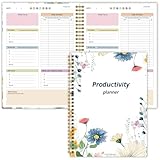
- Stay Organized and Focused: This planner is specifically designed to help individuals with ADHD or busy lifestyles prioritize their day with clear prompts, ensuring that the most important tasks are tackled first
- Comprehensive Layout: With 100 thoughtfully designed pages, including sections for daily scheduling, task prioritization, self-care, and brain dumps, this planner helps reduce distractions and keep your thoughts organized
- Motivation Through Rewards: Keep yourself engaged and motivated with built-in checklists and reward systems that make completing tasks more satisfying
- Flexible and Undated Design: Use this planner at your own pace—it's undated, so you can start anytime without worrying about wasted pages
- Durable and Convenient: Featuring a 7" x 10" size, a sturdy hardcover, and spiral binding for durability, this planner is easy to carry and perfect for daily use
- Interest: Does the subject matter hold your attention across ordinary, repeated tasks—not just the most exciting parts?
- Pace and feedback: Would urgency, variety, and quick results feel energizing or overwhelming?
- Structure: Are priorities, instructions, deadlines, and responsibilities explicit?
- Task profile: How much routine, paperwork, detail tracking, interruption, and context switching does a typical day involve?
- Autonomy: How much self-starting, prioritizing, planning, and follow-through does the role require?
- Environment: Consider noise, movement, social contact, remote or hybrid expectations, and whether focus time is possible.
- Practical route: Check education, training time, licensing, safety, emotional demands, local openings, and wages.
- Support: Ask what supervision, written instructions, schedule flexibility, assistive tools, or workplace accommodations may be available.
ADHD At Work, a CHADD page dated June 2019 that reprints an excerpt from Russell A. Barkley and Christine M. Benton’s Taking Charge of Adult ADHD (2010), puts the emphasis on matching tasks, procedures, environment, and people. Its editor’s note says, “There’s no right-every-time ADHD-compatible career, but there is a career that matches your strengths, interests and passions.” Treat that as career-fit guidance, not a promise of a particular outcome.
How to find salary information for these jobs
This list does not include salary amounts because the available occupation-level wage figures are not comparable or established for all 27 roles. Filling gaps with unsourced estimates would make the comparison misleading: wages change by location, experience, industry, and data year, and job titles do not always map neatly to occupation categories.
Free tools Windows power users keep installed
One-click scans. No signup required.
Rank #3

- 【Motivation Through Reward】Tailored for ADHD Cleaning Needs. Bright, colorful pages designed bring energy and joy to your cleaning routine. The cleaning checklist has easy-to-tick boxes provide dopamine rewards. Mark each cleaning task by checking or coloring to clearly display the results.Enable people with ADHD to gain a sense of achievement during the cleaning proces
- 【Practical Layout】Undated Daily, Weekly, Monthly, Quarterly, and Yearly Cleaning Schedule Planner help you break tasks into bite-sized wins.Deep Cleaning ensure nothing is overlooked. Make cleaning manageable
- 【Durable】 Waterproof PVC cover design, prevents pages from water and oil sprinkle | Large size 8.5" X 11"| Premium double-sided pages | Twin-wire Spiral Bound, pages are not easily scattered | 100GSM thick paper
- 【Family Chore Chart】Includes team templates to assign tasks to partners/kids.Also great for those who have kids that share cleaning responsibilities.Help ADHD adults and families stay organized
- 【Ideal Present Suggestion】The ultimate support for overwhelmed moms. Help them away from cleaning anxiety. Perfect for Mother’s Day or self-care
- Open CareerOneStop, a U.S. Department of Labor-sponsored career resource, and search for the closest matching occupation profile.
- Choose the national or state wage view that matches where you plan to work. If a title has several related occupation categories, check the profile description before comparing figures.
- Record the wage measure and data year shown in the profile alongside the geography. Compare like with like rather than mixing state and national figures or different wage measures.
- Review the profile’s employment, skills, education, and training information as well as wages. A higher listed wage does not by itself account for training costs, licensing, schedule, or fit.
CareerOneStop says its profiles cover more than 900 occupations and include national and state wage information; it also offers a 30-question interest assessment. These tools can help with exploration, but they do not diagnose ADHD or prescribe a career.
Independent reader supportYour contribution helps us test, update, and keep practical guides available for everyone.Workplace support and accommodations in the United States
The U.S. Department of Labor’s Office of Disability Employment Policy describes an accommodation as a modification to the work environment or how a job is typically done that enables a qualified person with a disability to have equal employment opportunity. Under the ADA, covered employers must provide reasonable accommodations to qualified applicants and employees when requested unless doing so would cause undue hardship. Whether a person qualifies and what accommodation is reasonable depend on the circumstances; a particular request is not guaranteed.
Rank #4

- Designed to help those with ADHD stay organized and focused
- No more distractions - prioritize what needs to get done and brain dump everything else
- Checklist with rewards to keep yourself motivated
- Undated - so you can use any year
- 50 sheets included - Enough to plan for the whole year!
Examples the Department of Labor lists include reducing distractions, using a room divider or quieter workspace, providing written instructions or checklists, sharing typed meeting notes, and using electronic organizers or calendar software. These are possible starting points for an individualized conversation, not a prescribed package for everyone with ADHD. The agency’s September 30, 2024 announcement says the JAN Situations and Solutions Finder offers more than 700 search options.
The same Department of Labor release reports that, in a survey of Job Accommodation Network employer data from 2019 through 2024, nearly half of reported accommodations for workers with disabilities could be made at no cost; for accommodations requiring a one-time expense, the median cost was $300. Those figures concern workers with disabilities broadly, not ADHD alone.
Windows Errors? Fix Them Before They Spread
Repair common Windows errors and clear accumulated junk for a smoother, more stable PC - no reinstall needed.Free scan · no reinstallOutdated Drivers Are Slowing You Down
One free scan finds every outdated or missing driver and matches the right update for your exact hardware.Free scan · exact hardware matchQuick Recap
Next steps for narrowing your options
- Pick two or three occupations from the list based on genuine interest, not an assumed ADHD strength.
- Read occupation profiles and local job postings to identify common daily duties, qualifications, and working conditions.
- Talk with people doing the work, if possible, and ask about interruptions, paperwork, deadlines, schedule, and how performance is evaluated.
- Look for a low-risk way to test the fit, such as a class, volunteer role, informational interview, or short project, where appropriate.
- Consider an ADHD-informed career coach or vocational counselor if you want help translating your needs and strengths into questions, experiments, and a job search plan.
Product prices and availability are accurate as of the date/time indicated and are subject to change. Any price and availability information displayed on Amazon at the time of purchase will apply.




