A GPU left to run encoding for 24 hours produces fan noise that becomes impossible to ignore. Not because it’s catastrophically loud—most streaming GPUs peak between 45 and 55 decibels—but because it’s constant. Unlike a desktop machine that rests periodically, a streaming GPU maintains full load continuously, which means the fans run continuously at high RPM.
The noise itself is a problem for the content creators in the room. It prevents you from recording voiceovers, ruins any live commentary, and makes it difficult to work in the same space where the encoder is running. For some creators, the noise becomes reason enough to abandon local streaming and move to cloud infrastructure.
Use StreamNeo for Silent, Always-On YouTube Live Streaming
StreamNeo is built for creators who want to turn a prerecorded video into an always-on YouTube Live stream without leaving a PC or encoder running. Upload the video and paste your YouTube stream key; the stream runs in the cloud while your PC stays off, keeping the heat and fan noise out of the room.
That workflow directly addresses the problem described here: your local GPU no longer has to encode continuously beside your desk. You can keep the channel live while preserving a quiet room for voiceovers, calls, focused work, or other recording tasks.
The Tool Desk
Outbyte PC Repair FREEClear out junk files and repair common Windows errorsFree Scan →Outbyte Driver Updater FREEFix the driver behind crashes, sound loss and screen glitchesFind Drivers →#1 Best Overall

- Premium quiet fan, 120x120x25mm, 12V, 4-pin PWM, max. 2000 RPM, max. 22.6 dB(A), >150,000 h MTTF
- Next-gen A-series design combines high airflow and high static pressure performance, ideal both as a case fan and for CPU coolers, watercooling radiators and AIO liquid cooling systems
- State-of-the-art engineering (AAO frame, Flow Acceleration Channels, record tight 0.5mm tip clearance) and construction (Sterrox LCP material, metal-reinforced hub, metal bearing shell, etc.)
- 4-pin PWM version for automatic speed control via 4-pin PWM motherboard fan headers, 450-2000rpm speed range (near silent at idle, powerful under load)
- chromax.black.swap edition with swappable red, black, white, blue, yellow, grey and green anti-vibration pads for colour-customising (4 pads of each colour plus black anti-vibration gasket)
Understanding the actual noise levels—and the architectural choices that eliminate them—separates the creators who cope with continuous noise from those who sidestep the problem entirely.
What Creates Fan Noise During Streaming
GPU fan noise comes from two sources: the blade sound as the fan moves air, and the turbulence created when air is forced through tight cooling channels at high velocity.
A mid-range streaming GPU like an RTX 4060 or RTX 3060 pulls between 100 and 150 watts during sustained encoding. The cooling system must move enough air to keep the die temperature below 83°C to avoid thermal throttling. At moderate load, the fans spin at 40% to 60% of maximum RPM, producing around 35 to 40 decibels—roughly equivalent to a quiet office environment.
At maximum sustained load, the same GPU fans spin at 80% to 100% RPM, producing 48 to 55 decibels—comparable to a vacuum cleaner, a busy restaurant, or the hum of an air conditioning unit running continuously.
Here’s the critical detail: sustained 24-hour encoding doesn’t allow the GPU to rest between jobs. The load is constant. The cooling fans therefore run at a steady high RPM from day one. There’s no cooling-down period. No opportunity to throttle back. The noise is relentless.
A desktop PC used for normal work—gaming intermittently, browsing, productivity—cycles its fans up and down throughout the day. The average fan speed is much lower because the load isn’t constant. A streaming PC runs at that high load 24/7, so the average speed is also high. The noise accumulates.
Measured Noise Levels Across Common Streaming Setups
Here’s what actual decibel levels look like for typical streaming hardware:
Entry-level GPU (RTX 3060):
– Idle: 25-28 dB
– Light encoding (1080p 6Mbps): 35-38 dB
– Full sustained encoding (1080p 12Mbps): 48-52 dB
Free tools Windows power users keep installed
One-click scans. No signup required.
Mid-range GPU (RTX 4060):
– Idle: 24-27 dB
– Light encoding (1080p 6Mbps): 33-37 dB
– Full sustained encoding (1440p 15Mbps): 45-50 dB
Rank #2

- Premium quiet fan, 120x120x25mm, 12V, 4-pin PWM, max. 2000 RPM, max. 22.6 dB(A), >150,000 h MTTF
- Next-gen A-series design combines high airflow and high static pressure performance, ideal both as a case fan and for CPU coolers, watercooling radiators and AIO liquid cooling systems
- State-of-the-art engineering (AAO frame, Flow Acceleration Channels, record tight 0.5mm tip clearance) and construction (Sterrox LCP material, metal-reinforced hub, metal bearing shell, etc.)
- 4-pin PWM version for automatic speed control via 4-pin PWM fan headers, 2000rpm maximum speed (1700rpm with supplied Low-Noise Adaptor)
- Includes anti-vibration mounts, radiator gasket, fan screws, extension cable and y-cable for running two PWM fans on the same header
High-end GPU (RTX 4070):
– Idle: 23-26 dB
– Light encoding (1440p 15Mbps): 36-40 dB
– Full sustained encoding (4K 25Mbps): 52-58 dB
For context: 40 dB is a quiet library, 50 dB is a normal conversation from three feet away, 60 dB is heavy traffic or a dishwasher running.
A streaming GPU at sustained full load operates at the conversation-from-three-feet-away level, continuously. Many people find this unacceptable for a working environment.
Quick wins for a faster PC:
Clear out junk files and repair common Windows errorsFree Scan →Scan for outdated or missing drivers - takes under a minuteDriver Scan →Repair Windows errors before they cause bigger problemsFix Now →The Problem Amplifies Over Time
Fan noise isn’t static. As a GPU ages, the cooling fins accumulate dust, which reduces cooling efficiency. The fans must spin faster to maintain the same temperatures. A GPU that produced 48 dB when new will produce 52 dB after six months of continuous use. After a year, thermal paste dries out, cooling efficiency drops further, and the fans spin even faster to compensate.
Additionally, as the fan ages, bearing friction increases slightly, adding a high-pitched component to the noise that becomes increasingly annoying. The broad hum of a clean, new fan becomes a whine-hum combination as the bearing degrades.
This is why content creators often describe fan noise as “it wasn’t that bad at first, but by month three it was driving me insane.” The noise doesn’t just remain constant—it gradually increases as the hardware ages.
Why Traditional Cooling Solutions Don’t Work for 24/7 Streaming
The usual approaches to reducing GPU fan noise—underclocking, lowering power limits, liquid cooling, improved case ventilation—all have severe limitations when applied to continuous streaming.
Outdated Drivers Are Slowing You Down
One free scan finds every outdated or missing driver and matches the right update for your exact hardware.Free scan · exact hardware matchPC Slower Than It Used to Be?
A free scan shows the junk files, broken settings and background clutter dragging Windows down - then fixes them in one click.Free scan · Windows 10 & 11Underclocking and power limits: Lowering the GPU clock speed reduces heat output, which allows fans to spin slower. But it also reduces encoding speed, which means you must lower your bitrate or resolution to avoid dropping frames. If you’re streaming at 1080p 12Mbps, underclocking forces you down to 1080p 8Mbps or 720p 12Mbps to maintain smooth encoding. For many creators, that quality loss is unacceptable.
Liquid cooling: A custom water loop can be more efficient than air cooling and potentially quieter. But a water loop adds $400 to $800 to your hardware cost and requires maintenance—cleaning radiators, checking fluid levels, monitoring for leaks. Any leak in a water cooling system can destroy your GPU. For continuous streaming, this maintenance burden often isn’t worth the noise reduction.
Rank #3

- Dedicated dual fan set with two NF-A12x25 G2 PWM 120x25mm fans that are slightly off-set in speed (+/- ~50rpm) in order to avoid undesired acoustic interaction phenomena
- State-of-the-art engineering (Progressive Bend impeller with winglets and Centrifugal Turbulator, Flow Acceleration Channels, AAO frame) and construction (Sterrox LCP, ultra-tight tip clearance)
- Ideal choice for push-pull applications as well as situations where two fans are operating side by side (240/360mm water cooling radiators, case intake or exhaust fans, etc.)
- All-black chromax version with black anti-vibration mounts; 12cm anti-vibration gasket for tighter seal on radiators, fan screws, Low-Noise Adaptor (LNA), extension cable and splitter cable included
- Trusted Noctua quality with premium-grade SSO2 bearing (MTTF > 150,000 h), safety certifications from UL and TÜV, protected against reverse polarity, overvoltage and overcurrent (short-circuits)
Improved case ventilation: Adding fans to your case improves overall airflow but doesn’t eliminate the GPU fan noise itself. It reduces the noise slightly—maybe 2 to 3 decibels—by allowing the GPU fan to cool more efficiently. But the cost is an even louder case overall, with multiple fans all running at high speed. Net noise decrease: negligible. Net complexity increase: high.
Fanless GPUs: Only a handful of specialty GPUs exist without fans, and they’re limited to very low power envelopes. The RTX 4050 and similar low-end models can support passive cooling in a custom system, but they lack the encoding performance needed for quality 24/7 streams. You’d have to reduce your target quality significantly.
Do these 3 things before closing this tab:
1Clear out junk files and repair common Windows errors2Fix the driver behind crashes, sound loss and screen glitches3Repair Windows errors before they cause bigger problemsNone of these approaches eliminate the noise problem entirely. They reduce it at the cost of quality, maintenance burden, or engineering complexity. The fundamental issue remains: a GPU running full load continuously for 24 hours produces fan noise, and there’s no practical way to eliminate that noise without reducing the load or moving the equipment.
How Cloud Eliminates the Noise Problem Entirely
Cloud streaming removes the GPU from your room entirely. The encoding happens on infrastructure designed for exactly this purpose—large, purpose-built machines in data centers with industrial-grade cooling. The noise stays in the data center. Your room is silent.
This is often overlooked in discussions about cloud streaming benefits. Yes, the cloud offers better uptime, automatic recovery, and lower operational costs. But it also eliminates one of the most underrated frustrations of local streaming: the constant fan noise that makes it difficult to work, think, or record in the same space as your encoder.
You upload your video once, paste your YouTube stream key, and the stream runs from the cloud. The fans spinning at high RPM 24/7 are thousands of miles away. Your room is silent. You can record voiceovers, take calls, work on other projects, all without the hum of cooling fans in the background.
StreamNeo also checks stream health every 30 seconds and automatically restarts dropped streams, addressing the continuity concerns that come with leaving an always-on YouTube Live broadcast unattended.
For long broadcasts, StreamNeo checks stream health every 30 seconds and automatically restarts dropped streams. That gives an always-on YouTube Live setup a recovery path without requiring your PC to remain on.
Rank #4

- Next-gen 120x25mm design for unprecedented quiet cooling performance in both high airflow and high static pressure applications: ideal as a PC case fan, on CPU coolers and water cooling radiators!
- State-of-the-art engineering (Progressive Bend impeller with winglets and Centrifugal Turbulator, Flow Acceleration Channels, AAO frame) and construction (Sterrox LCP, ultra-tight tip clearance)
- Dedicated push-pull set (Sx2-PP) with two NF-A12x25 G2 PWM 120x25mm fans that are slightly off-set in speed (+/- ~50rpm) in order to avoid undesired acoustic interaction phenomena
- Ideal choice for push-pull applications as well as situations where two or more fans are operating side by side (240 or 360mm water cooling radiators, case intake or exhaust fans, etc.)
- Trusted Noctua quality with premium-grade SSO2 bearing (MTTF > 150,000 h), safety certifications from UL and TÜV, protected against reverse polarity, over voltage and over current (short-circuits)
The Measurement That Matters Most
The honest decibel measurement for a streaming setup running 24 hours isn’t the peak noise—it’s the ambient noise level you experience sitting in the same room.
If your GPU produces 50 dB at sustained load, and it runs 24 hours per day, 7 days per week, then 50 dB is the ambient environment you’re working in. That’s the equivalent of trying to work in a busy restaurant or a highway overpass. Many people find it intolerable.
Recommended Free Tools
A cloud streaming setup produces 0 dB of noise in your room. Literally silent. If you care about working in an environment where you can think, concentrate, and record clean audio, that difference is absolute.
Independent reader supportYour contribution helps us test, update, and keep practical guides available for everyone.The Real Cost of Fan Noise
The cost isn’t just auditory annoyance. It’s also the practical impact on your ability to use the same space for other work.
Many creators set up a dedicated streaming room or closet to isolate the noise. This requires sound dampening materials, isolated ventilation if the room has windows, and often a separate air conditioning line to handle the heat. The cost is $500 to $2,000 for a basic soundproofed streaming room. The alternative is to keep your streaming rig in a separate closet, which makes it harder to monitor and harder to troubleshoot if something breaks.
Some creators move their streaming setup to a garage, basement, or shed to distance it from their working space. This creates new problems—the equipment is harder to access, environmental control (humidity, temperature) becomes challenging, and monitoring requires walking away from your main desk.
What’s actually slowing this PC down?
Pick the symptom - the matching free tool is one click away.
Cloud streaming eliminates all of these complications. The encoding lives in the cloud. Your room stays silent. You don’t need a separate streaming closet, sound dampening, extra cooling capacity, or geographic separation. You just work in a normal room and let the cloud handle the noise.
When Fan Noise Becomes the Deciding Factor
For creators who work primarily in audio—podcasters, audiobook producers, music streaming channels—fan noise is an absolute blocker. You cannot record clean audio in a room with a loud GPU fan running continuously.
Best Value
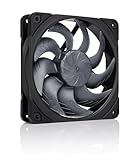
- Next-gen 120x25mm design for unprecedented quiet cooling performance in both high airflow and high static pressure applications: ideal as a PC case fan, on CPU coolers and water cooling radiators!
- All-black chromax version with black anti-vibration mounts; 12cm anti-vibration gasket for tighter seal on radiators, fan screws, Low-Noise Adaptor (LNA), extension cable and splitter cable included
- State-of-the-art engineering (Progressive Bend impeller with winglets and Centrifugal Turbulator, Flow Acceleration Channels, AAO frame) and construction (Sterrox LCP, ultra-tight tip clearance)
- 4-pin PWM version for automatic speed control via 4-pin PWM motherboard fan headers, 360-1800rpm speed range (near-silent at idle, powerful under load), fan stops at 0% PWM (semi-passive option)
- Trusted Noctua quality with premium-grade SSO2 bearing (MTTF > 150,000 h), safety certifications from UL and TÜV, protected against reverse polarity, overvoltage and overcurrent (short-circuits)
For creators who record voiceovers for videos—educational channels, tutorial creators, commentary channels—the same issue applies. Background noise ruins the audio.
For creators who want to work remotely from home, traveling, or from an office—a streaming setup with a constantly loud GPU makes this impossible. You can’t join a video call while the encoder is running because the fan noise will contaminate the audio.
These constraints affect a surprisingly large percentage of creators. And they’re not solved by better coolers, underclocking, or sound dampening. They’re solved by moving the noise off-site.
A GPU running full encoding at 50 decibels continuously makes your room uninhabitable for voiceovers, calls, or focused work. StreamNeo removes the GPU fan from your room entirely: you upload a video once, paste your YouTube stream key, and the stream runs from the cloud with your own machine switched off, restarting itself if the connection drops. The encoding happens in a distant data center. Your room is silent. You can record voiceovers, take calls, work on other projects, all without the hum of cooling fans in the background. There is a free 24-hour trial and no card required, long enough to experience what that silence means: the ability to work in the same space as your streaming infrastructure without hearing the constant hum of cooling fans.
For creators who have been managing streaming noise with separate rooms, sound dampening, or geographic isolation, that silence often becomes the primary reason to switch to cloud. The encoding happens elsewhere. Your environment stays productive, quiet, and under your control.
If eliminating the local fan is the deciding factor, StreamNeo offers a free 24-hour 720p/30fps trial with no card at signup, letting you test the quiet-room workflow before changing your streaming setup.
If fan noise is the deciding factor, StreamNeo offers a free 24-hour 720p/30fps trial with no card at signup. Use it to test a full day of cloud streaming before changing your local setup.
Quick Recap
Product prices and availability are accurate as of the date/time indicated and are subject to change. Any price and availability information displayed on Amazon at the time of purchase will apply.




