Do these 3 things before closing this tab:
1Repair Windows errors before they cause bigger problems2Scan for outdated or missing drivers - takes under a minute3Clear out junk files and repair common Windows errorsClickUp is a strong choice for teams that want tasks, documents, dashboards, time tracking, forms and sprint tools in one work-management platform—and are willing to configure it. Its breadth can reduce the need to stitch together separate apps, but it also brings setup overhead, plan limits and a separate per-user charge for AI. As of August 18, 2026, the advertised annual-billing price starts at $7 per user per month for Unlimited; the practical cost can be higher because ClickUp requires users in a Workspace to share its plan. See ClickUp’s current plan details and confirm the terms that apply to your Workspace before buying.
What is ClickUp?
ClickUp is a work-management platform, not just a task list. Its published feature set spans tasks, project views, Docs, Whiteboards, forms, dashboards, Goals, portfolios, time tracking, chat, email, automations, integrations, sprint management and AI. Which of those capabilities you can use—and their limits—depends on the plan. ClickUp’s feature overview and FAQ describe the broader product.
Work is organized in a hierarchy: a Workspace contains work areas such as Spaces, which can contain Folders and Lists; Lists hold tasks and subtasks. For example: Workspace → Marketing Space → Client Folder → Campaign List → Task → Subtask. ClickUp identifies Spaces as the second level of its hierarchy, and Free Forever Workspaces are limited to five. That structure can accommodate different departments and repeatable client workflows, but teams must agree where work belongs and how statuses, fields and naming conventions are used. ClickUp’s guide to Spaces explains the hierarchy.
ClickUp pricing: what a team actually pays
The prices below are the public rates listed on August 18, 2026, when billed annually. They are per-user rates, not quotes for taxes, promotions or monthly billing. ClickUp’s pricing page supports monthly and yearly billing; the monthly rates are not included here because the annual-billing figures alone do not establish them. Check the live selector for the billing interval you intend to use. ClickUp pricing
#1 Best Overall

- Feel More In Control Every Week - This undated weekly planner pad helps you map priorities, organize tasks, and stay focused without the pressure of a pre-set calendar.
- Make Planning Fun and Motivating - Vibrantly colorful design transforms this weekly planner notepad into a tool that lifts your mood while boosting productivity.
- Tear, Plan, Repeat With Ease - 52 weekly planner tear off pad sheets offer a fresh start every week and effortless organization at your desk, kitchen, school, office, or workspace.
- Built to Last Through Busy Weeks - Printed on thick, premium paper that resists ink bleed, making this weekly planner paper pad reliable for everyday use.
- Designed for Real-Life Needs - Perfect for managing work, family, school, hobbies, and personal goals. Made for teachers, parents, entrepreneurs, students, and professionals to simplify your day and keep you productive.
| Plan | Listed annual-billing price | What it may suit |
|---|---|---|
| Free Forever | $0 | Individuals, pilots and teams comfortable with usage limits |
| Unlimited | $7 per user per month | Small teams that need more storage, views, integrations or native time tracking |
| Business | $12 per user per month | Teams needing more reporting, workload controls or automation capacity |
| Enterprise | Custom pricing | Organizations evaluating advanced governance, identity or contractual requirements |
Free Forever
ClickUp lists unlimited tasks and free-plan members, plus Docs, Kanban boards, Sprint Management, Calendar view, basic Custom Fields, in-app video recording, one Form, two-factor authentication and 24/7 support. The free plan is not unlimited in every respect: it includes 60 MB of storage, has a five-Space limit, allows 60 Gantt uses, and Activity view covers 24 hours. Those limits can matter if a team relies on attachments, recurring project schedules, multiple intake forms or activity history. Plan inclusions; view limits; Space limits
Unlimited
At $7 per user per month annually, Unlimited adds unlimited storage, Spaces, Folders, Forms, Gantt charts, integrations and Custom Fields, along with native time tracking, Goals and Portfolio management, resource management, permission-controlled guests, ClickUp Chat and Email in ClickUp. “Unlimited” refers to specific listed features; it does not mean every usage quota, guest rule or add-on disappears. Check the plan matrix for the capability your workflow depends on. ClickUp pricing
Business
At $12 per user per month annually, Business is aimed at teams that need more operational oversight. ClickUp lists unlimited Dashboards with advanced cards, unlimited Message History, Activity and Timeline views, Webhooks and Automation Integrations, 5,000 automations per month, Mind Maps, private Whiteboards, custom exporting, sprint points and reporting, workload management, Google SSO, SMS two-factor authentication and unlimited proofing. The decision is whether your team needs these specific reporting and control features, not simply whether a higher tier has more items in its feature list. ClickUp pricing
Rank #2

- 52 PAGES UNDATED WEEKLY PLANNER - This weekly planner features 52 undated pages, measuring 11 x 8.5 inches (A4) in a horizontal layout. It provides ample space for year-round planning, allowing you to schedule at your own pace without wasting pages or skipping dates.
- THOUGHTFUL FEATURES FOR PLANNING - Our weekly to do list notepad is designed with a top priority, a low priority, and a follow-up section, allowing you to prioritize and stay organized. It also has to do list part, notes part, which can help you track important daily events and develop daily habits.
- SPIRAL BOUND WEEKLY PLANNER - The weekly planner is spiral-bound for easy page turning and the option to tear off used pages for new plans. It features a transparent cover that protects your pages from dirt and damage.
- 100 GSM THICK PAPER - Our desk calendar planner is crafted with premium 100 GSM FSC-certified wood-based paper, paired with sturdy cardboard backing to resist ink bleeding and ensure a smooth writing experience. Durable, eco-conscious, and designed for daily use.
- VERSATILE USAGE - The weekly to-do list notepad is designed to meet all your planning needs and help you stay organized. It's perfect for work, home and school, including habit tracker, event organization, work schedules, travel plans, and more.
Enterprise
Enterprise uses custom pricing. ClickUp lists features including SAML SSO, SCIM provisioning, audit logs, session management, custom roles, data residency and enterprise API capacity. It also lists MSA and HIPAA availability; that is not a claim that every Workspace is automatically HIPAA-compliant. Confirm applicable agreements, configuration, security and contractual requirements with ClickUp before relying on those options. Enterprise features and terms
Workspace-wide plans change the math
ClickUp says users in one Workspace cannot be on different plans and that upgrading requires upgrading the Workspace’s members. So a feature one department needs may affect the cost for the whole Workspace. Before purchase, count everyone who needs membership—not just the people who requested the feature. Also model occasional collaborators separately: view-only guests are not charged, while permission-controlled guest access and limited-member roles have distinct rules. Confirm current eligibility, permissions and ratios for your Workspace. Workspace plan and role billing; guest types; guest and limited-member access
AI is a separate subscription decision
As of August 18, 2026, ClickUp lists Brain AI at $9 per user per month and Everything AI at $28 per user per month, both billed annually. Brain AI includes unlimited Brain Assistant, @Brain Agent, AI chat with Claude, ChatGPT and Gemini, expanded premium-model use, unlimited AI writing, Enterprise Search and 1,500 AI Super Credits. Everything AI adds tools such as Ambient Answers, AI Notetaker, image generation, AI Fields, AI Automations and Dashboards, AI Assign and Prioritize, private and Workspace search, and 5,000 AI Super Credits. The page also describes free trial access to advanced AI features on Free Forever and lists additional AI Super Credits at $0.001 per 10,000 credits, or $10 per 10,000 credits. Feature descriptions and allowances can change; check the live terms before purchase. ClickUp AI pricing and inclusions
Rank #3

- Ultimate To Do List with Multiple Sections: A to do list lover’s dream, our notepad offers multiple sections with ample space to write all your important tasks so you can organize and track your tasks better than with a regular list. Sheets have separate spaces for each day, as well as sections for a to do list and top priorities, making it easy to prioritize and stay organized. Say goodbye to feeling overwhelmed and hello to a more organized and productive you!
- Minimalist Design to Boost Productivity: Experience the perfect balance of minimalist and functional design with our weekly to-do list notepad. Each notepad measures 8.5” x 11” and has 52 sheets, so there is enough space to write down everything you need to do. Made with a minimalist black and white design and premium materials, our notepad is the perfect tool to keep you on track and motivated throughout the day!
- Premium, non-bleed pages: No more frustrations about pens or markers bleeding through flimsy paper! Our notepad is made with premium non-bleed 100 gsm paper to give you the best writing experience. Unlike with our competitors, these pages won’t bleed onto the next one, even if you write with a permanent marker.
- Sturdy Backing for Writing Anywhere: Our notepad is made with a thick backing that provides a sturdy surface for writing anytime, so you can take it on the go and never miss an important task again. Whether you're at home, in the office, or on the go, you'll always be able to capture your thoughts and stay on top of your daily routine.
- Easy to Tear Off Pages: The easy to tear off, undated pages make it simple to share your lists with others or start each day with a fresh page. You'll love the convenience of being able to remove yesterday's tasks and start with a clean slate, allowing you to focus on what really matters.
These examples multiply the listed annual-billing per-user rates by the number of users. They are arithmetic illustrations, not invoice quotes; they exclude taxes, promotions and any other charges.
| Team size | Unlimited base | Business base | Brain AI add-on | Everything AI add-on |
|---|---|---|---|---|
| 1 user | $7/month | $12/month | +$9/month | +$28/month |
| 5 users | $35/month | $60/month | +$45/month | +$140/month |
| 10 users | $70/month | $120/month | +$90/month | +$280/month |
For instance, five users on Unlimited plus Brain AI comes to $80 per month at the listed annual-billing rates, before taxes or promotions; five on Unlimited plus Everything AI comes to $175. Because upgrades apply at Workspace level, do not assume you can add an AI plan only for the few people expected to use it. Confirm how the add-on applies to your Workspace before calculating a budget. Workspace billing rules
Which ClickUp features matter in practice?
Tasks and workflow structure
ClickUp’s task system supports organizing work into tasks and subtasks, assigning work, setting due dates and statuses, and adding structure through custom fields and relationships. Teams can also use recurring tasks, checklists, dependencies and templates where available. The useful question is not how many task options exist, but whether your team will apply them consistently. If every department invents its own statuses and fields, customization can make work harder to report on rather than easier to manage. Check plan availability for the advanced task features you require. Plan feature matrix
Rank #4

- Durable Materials: Daily notepad is made of smooth and thick white paper, which makes writing smooth and without ink bleeding. The glue binding is not easy to fall off.
- Package Includes: You will receive a notepad composed of 60 tearable papers, with sufficient page numbers for your use. Its size is 24.5×17.5 cm/10×7 inch, which is suitable in size and easy to carry.
- Convenient to Use: Daily notepad is simple in design and easy to tear and carry. It will help you organize your tasks, housework, responsibilities and health, which is very convenient for your daily use.
- Perfect Gift: It can keep us organized in our lives and studies. It is a great gift for holidays, birthdays, graduation ceremonies and celebrations, and it is also the best gift for all busy people.
- Wide Application: Daily notepad will help you organize your tasks, housework, appointments, homework, responsibilities, health, etc. Use it at work as a professional, academic school or college, family baby kids living well plans. You can use it to record or doodle even when you are on the phone.
Views for different kinds of work
ClickUp offers views including List, Board, Calendar, Gantt, Timeline, Workload, Table, Mind Map, Whiteboard, Dashboard, Doc, Form, Map and Activity. Availability and limits vary by plan; a List view can load up to 5,000 tasks at a time. ClickUp’s view availability and limits are more useful than treating the view count as a quality score.
| View | Most useful for | What to keep in mind |
|---|---|---|
| List | Structured task execution | A practical default when people need clear ownership and fields |
| Board | Kanban and status-driven work | Useful when moving work through defined stages is central |
| Calendar | Deadlines and editorial planning | Not a substitute for a full scheduling system |
| Gantt | Dependencies and project schedules | Free Forever use is limited; Unlimited lists unlimited Gantt charts |
| Timeline | Cross-project planning | Availability and limits depend on plan |
| Workload | Capacity planning | Usually more useful to managers allocating work than to individual contributors |
| Dashboard | Reporting and monitoring | Advanced cards and limits depend on plan |
| Doc | Project context and shared knowledge | Most valuable when connected to execution |
| Form | Intake and request collection | Free Forever includes one Form |
| Mind Map or Whiteboard | Brainstorming and visual planning | These do not automatically replace specialist visual-collaboration tools |
Docs, chat and email
ClickUp Docs support collaborative writing, wikis, comments and turning text into trackable tasks. The platform also promotes Chat and Email in ClickUp. This can keep project context close to work, but a team that adds another chat or email destination may create more places to monitor rather than fewer. Decide whether you want to replace a specific tool or simply link documentation and tasks more closely; do not assume ClickUp will replace Notion, Slack or Gmail for every workflow. Views and Docs; ClickUp features
Sprints and software workflows
ClickUp supports Sprint Management, and Business lists sprint points and reporting. ClickUp’s own comparison page says its sprint tooling includes burndown charts and velocity tracking; treat that as a first-party product claim, not independent comparative testing. For a mixed product team that also manages marketing or operations work, ClickUp’s broader workspace may be convenient. Where engineering issue tracking, releases, established developer conventions and Atlassian integrations dominate, Jira may be a better-centered choice. ClickUp’s Asana comparison and sprint claims; Jira product information
Recommended Free Tools
Best Value
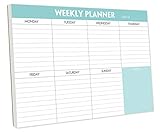
- STAY ORGANIZED & IMPROVE PRODUCTIVITY - Undated weekly planner notepad to help you organize your daily tasks, responsibilities, schedule and stay on your task & goals & planning. Stay organized and motivated each day and each week, improve your productivity with this desktop weekly planning pad
- 52 PAGES - Weekly calendar pad, enough for a full year of weekly planning. 10 x 7 inch planning pad, plenty of room to write in appointments, notes, check lists etc.
- THICK PAPER - Weekly planning pad with 100gsm smooth paper for easy writing and reducing ink leakage. It responds well to almost all pen types, fountain pen, gel pen, ballpoint pen, highlighter, pencil and etc. They are glued on the top edge to a cardboard backing
- CLEAN DESIGN - This weekly to do list notepad contains weekly day spread and notes section, allows you to prioritize by your priority tasks, write your to-dos, mark reminders and important events
- PERFECT FOR - All busy people or makes for a wonderful gift for Holiday, Christmas, Birthday
Time tracking, goals and capacity
Unlimited lists native time tracking, Goals and Portfolio management, and resource management. Time tracking is relevant to billable work and capacity analysis; workload views can help managers see how assignments are distributed. Goals and portfolios are most useful when an organization maintains measurable objectives and needs multi-project oversight. Their presence alone does not make ClickUp a full enterprise project-portfolio-management suite; evaluate the reporting and governance workflow you actually need. Plan inclusions
Automations and integrations
ClickUp lists integrations and automation features, with Business including 5,000 automations per month and Enterprise 250,000 per month. An “unlimited integrations” line is not the same as unlimited automation usage: check the action quota, whether a particular action counts, API limits and any third-party connector charges. If an automation is critical, test its triggers, duplicate-action behavior and failure handling before moving the workflow into production. Automation and integration plan details
Independent reader supportYour contribution helps us test, update, and keep practical guides available for everyone.ClickUp pros and cons
Pros
- Broad coverage: Tasks, documents, views, forms, time tracking, dashboards, collaboration and sprint tools can live in one platform, which may reduce app switching for teams that use several of those functions. Feature overview
- Room for large free teams: Unlimited free-plan members make Free Forever worth considering for a team that can work within its storage and feature limits. Free plan details
- Low advertised entry price for its breadth: Unlimited is listed at $7 per user per month annually. That is a list-price comparison, not proof it will be the cheapest total-cost option for every team; plan capabilities, guest rules, AI and usage needs differ. ClickUp pricing
- Flexible workflows: Custom fields, statuses, views, templates and automations give teams options for different processes, if someone is responsible for keeping the configuration coherent. Feature overview
- Native time tracking and sprint tools: These can be valuable when the team already needs time data or agile reporting and wants those workflows near its tasks. Plan details
Cons
- Configuration can become a job of its own: More hierarchy, views, fields, statuses and modules create decisions for administrators and a risk of inconsistent team habits. This is a practical trade-off inferred from ClickUp’s published feature breadth, not a measured usability result. Views
- “Unlimited” has boundaries: Storage, forms, Gantt uses, Activity history, automation volumes, AI credits and guest rules vary. Check the limit that maps to your workflow rather than relying on the plan name. View limits; guest types
- Workspace upgrades can widen the bill: A Workspace cannot mix plan levels, so a feature needed by one team can affect all members in that Workspace. Pricing by user role and plan
- AI adds materially to per-user cost: Brain AI and Everything AI are separate charges, and the listed rates can multiply across a team. Calculate these separately before treating AI as a low-cost bonus. AI pricing
- Simple workflows may not benefit from the breadth: A team that needs only a to-do list, due dates and one basic board may get little value from the additional modules and customization options.
- Migration needs a realistic trial: ClickUp says its direct Asana import transfers tasks, assignees, due dates and project structure, while custom fields and automations require manual recreation. This is a vendor statement; verify your own records, comments, attachments, Docs, recurring work and integrations in a sample migration. ClickUp’s Asana comparison
ClickUp compared with alternatives
| Consider | When it may fit better | Trade-off or qualification |
|---|---|---|
| Asana | Teams prioritizing structured project execution and a narrower project-management experience; its pricing page lists unlimited free guests on a paid plan. | ClickUp offers a broader published feature set and unlimited free-plan members. ClickUp’s comparative claims about relative simplicity are its own, not independent testing. Asana pricing; ClickUp comparison |
| monday.com Work Management | Teams that find a visual board-and-column model more natural for operating their workflow. | Its free plan lists up to two seats; check seat structure and automation or integration action limits against your team’s needs. monday.com pricing |
| Notion | Documentation-first teams using wikis and flexible databases, with project management as a secondary need. | Notion’s current plan categories and pricing belong on its live pricing page; no price comparison is made here. Notion pricing |
| Jira | Engineering-centered teams where issue tracking, releases, developer workflows and the Atlassian ecosystem dominate. | Current Jira price comparisons are not made here. Jira product information |
Which ClickUp plan should you choose?
- Start with Free Forever if you are an individual, piloting a workflow or a team that can stay within the 60 MB storage, five-Space, one-Form and view-use limits.
- Consider Unlimited if storage, more Spaces and Forms, Gantt charts, integrations, custom fields or native time tracking are the blockers on the free plan.
- Consider Business if you need its specific advanced dashboards, workload management, proofing, Google SSO, sprint reporting or 5,000 monthly automations.
- Discuss Enterprise if governance, identity provisioning, auditability, data residency or contractual options are requirements; confirm the applicable terms directly.
- Price AI separately by multiplying the relevant annual-billing add-on by the users in scope, then confirm how it applies across your Workspace.
What to test before committing
Use a real but contained workflow rather than judging ClickUp from a feature list. A short pilot should reveal both adoption friction and the limits that matter to your budget.
- Build one representative project in a Free Forever Workspace, using the intended hierarchy, statuses and custom fields.
- Set up the views your team would actually use—such as List, Board, Calendar, Gantt, Dashboard, Doc and Form—and confirm each feature’s current plan limits.
- Invite a client, contractor or reviewer with the role they would really need. Test view-only versus editing access and confirm how that user is classified and billed.
- Create a recurring task, dependency and one automation. Check what counts toward any monthly quota and what happens if the trigger fires more than once.
- For a software workflow, create a sprint and verify the reporting your team needs. For billable work, track time and confirm that the resulting report answers a real finance or capacity question.
- Connect a representative integration and test the handoff in both directions. Check for separate connector charges or quotas.
- Import or export a small sample before migrating important work. Inspect custom fields, comments, attachments, recurring tasks, Docs, links and automations rather than assuming they all transfer.
- Calculate the full recurring cost with all Workspace members, the chosen tier, AI users and any expected guest or usage costs. Compare that total with the value of tools you expect to retire.
Do not infer offline capability, mobile parity, speed, reliability, search quality, sync latency or export completeness from ClickUp’s feature and pricing pages. Those questions require testing the specific app versions, workspace size and workflow you plan to use.
What’s actually slowing this PC down?
Pick the symptom - the matching free tool is one click away.
Quick Recap
Is ClickUp worth it?
- Solo users and freelancers: Free Forever is a plausible starting point if storage and view limits are manageable. A paid subscription is harder to justify when a basic task list is all you need.
- Startups and small teams: ClickUp is compelling when several functions—tasks, docs, intake, dashboards or time tracking—will actually be used together. Keep the initial setup small enough that people can learn it.
- Agencies and consultancies: Client folders, repeatable workflows, forms and time tracking may be useful. Model the cost and permissions for clients, contractors and occasional reviewers before choosing a paid Workspace.
- Marketing and operations teams: Docs, approvals, intake, proofing and multiple views can support campaigns and internal requests, but a shared system needs consistent ownership and status conventions.
- Software teams: ClickUp may suit mixed teams that want sprint work beside business operations. Choose Jira instead when engineering-specific issue tracking and established Atlassian workflows are central.
- Large organizations: Enterprise controls may warrant evaluation, but a plan feature list is not a substitute for reviewing identity, security, data-processing and contractual requirements.
- Documentation-first teams: Compare Notion if knowledge management and flexible databases are the core job and task management is secondary.
Product prices and availability are accurate as of the date/time indicated and are subject to change. Any price and availability information displayed on Amazon at the time of purchase will apply.




