The Tool Desk
Outbyte Driver Updater FREEFix the driver behind crashes, sound loss and screen glitchesFind Drivers →Outbyte PC Repair FREERepair Windows errors before they cause bigger problemsFix Now →Choose RAM capacity for the applications you actually run, then confirm your computer supports the memory type, size, and speed before buying. As practical starting points, Crucial recommends at least 8GB for casual use, 16GB for office work and multitasking, and 32GB or more for gaming and creative work. These are vendor recommendations—not universal minimums—and the right speed depends on your exact processor and system.
How much RAM do you need?
Start with the busiest routine workload you expect the computer to handle—not just one application running by itself. Crucial’s September 23, 2025 consumer guide offers these starting points:
| Typical workload | Starting capacity |
|---|---|
| Casual browsing, email, music, and video | At least 8GB, per Crucial’s consumer guidance |
| Office applications, spreadsheets, and routine multitasking | At least 16GB, per Crucial’s consumer guidance |
| Gaming, multimedia editing, and demanding creative work | At least 32GB, per Crucial’s consumer guidance |
Intel recommends 16GB for modern gaming and says 32GB is worth considering if you game while streaming or running other tasks such as chat or background video. Treat both companies’ figures as guidance: the requirements of a particular application, your operating system, browser tabs, and other simultaneous programs all affect how much memory is useful. Check the current requirements for the software you rely on.
To make a more tailored choice, check memory use during your normal heaviest workload and leave room for the applications you commonly keep open together. If a laptop’s memory cannot be upgraded, consider whether the capacity available at purchase will be enough for the computer’s intended service life; verify the exact configuration rather than assuming every version of a model has the same memory layout.
#1 Best Overall

- Requires overclocking/BIOS adjustments. Maximum speed and performance depends on system components, including motherboard and CPU.
- G.SKILL Flare X5 Series DDR5 U-DIMM Memory Kit, Model: F5-6000J3636F16GX2-FX5
- Non-ECC, DDR5 U-DIMM, 288-pin, for Desktop PC & Gaming
- Includes JEDEC default profile, and AMD EXPO & Intel XMP 3.0 memory overclock profile
- Do not mix memory kits. Memory kits are sold in matched kits that are designed to run together as a set. Mixing memory kits will result in stability issues or system failure.
What RAM speed should you choose?
There is no universal speed that is best for every desktop or laptop. The usable data rate depends on the processor, motherboard or laptop design, memory type, number and arrangement of modules, BIOS, and supported memory profiles. Check your exact system’s documentation before comparing advertised speeds.
Read the rating as a data rate
RAM labels commonly express rated data rates in megatransfers per second (MT/s). Intel cautions that MT/s and megahertz (MHz) describe different things, although consumer listings often use the terms interchangeably. Latency also matters, so a single advertised speed number does not tell the whole story.
Rank #2

- Disclaimer: Maximum Speed requires overclocking/PC BIOS adjustments. Maximum speed and performance depend on system components, including motherboard and CPU
- AMD EXPO & Intel XMP 3.0 Compatible Only: Dual memory profiles allow you to easily select optimized settings for your platform, whether you’re running an AMD or Intel processor
- Dynamic RGB Lighting: Individually addressable RGB lighting delivers vibrant effects through a sleek, understated panoramic diffuser
- Onboard Voltage Regulation: Onboard voltage regulation for reliable power at high frequencies
- Maximum Bandwidth and Tight Response Times: Optimized for peak performance on the latest AMD and Intel DDR5 motherboards
Compare performance in the work you do
Intel notes that faster memory can help some games, but the effect varies by game and may be small in others. Look for benchmarks using your actual applications and a comparable platform before paying more for a faster kit. First make sure you have enough capacity: speed cannot make up for too little memory, and capacity beyond what your workload uses may not improve performance.
Verify compatibility before you buy
Record the exact computer model, motherboard model, and processor, then use the manufacturer’s documentation to check each item below. A kit’s advertised capacity and speed do not guarantee that it fits or will run at its rated profile in your system.
Do these 3 things before closing this tab:
1Repair Windows errors before they cause bigger problems2Scan for outdated or missing drivers - takes under a minute3Clear out junk files and repair common Windows errorsRank #3

- Capacity: 16GB(2 x 8GB)
- Tested Frequency Profile 1: PC5-48000 (6000MT/s)
- Tested Timings: 36-46-46-110
- Feature Overclock: XMP 3.0 & EXPO overclocking supported
- On-Die ECC
- Memory generation: Confirm whether the system supports DDR4 or DDR5. The generations are not interchangeable.
- Form factor and upgradeability: Desktop computers generally use DIMMs; laptops with socketed memory generally use SO-DIMMs. Some laptops have soldered or otherwise non-upgradeable memory. Check the exact model’s specifications and maintenance documentation.
- Capacity and module limits: Check the supported total capacity, number of modules, and capacity per slot. For a laptop, consult the computer maker’s documentation as well as the processor specification; the processor’s limits alone do not establish what the full laptop supports.
- Supported speed and configuration: Check the processor specification and system or motherboard documentation for supported data rates with the intended number of modules. For a desktop motherboard, consult its memory compatibility list, often called a QVL.
- Profiles: Verify whether the processor, board, BIOS, and kit support the advertised XMP or EXPO profile. A rated profile may need to be enabled in firmware and is not guaranteed by the memory label alone.
- Installation and service: Confirm any manufacturer service or warranty requirements before opening a laptop or desktop. For multiple modules, use a matched kit where practical and follow the manual’s recommended slots; slot order varies by board.
Intel directs laptop buyers to processor-specific specifications for supported memory type, maximum size, channels, and bandwidth, and recommends checking with the laptop OEM for system-level support. AMD recommends consulting the motherboard QVL to validate rated speeds and features for that board; its Ryzen compatibility list identifies kits tested across systems at rated speed and latency.
Independent reader supportYour contribution helps us test, update, and keep practical guides available for everyone.Understand JEDEC, XMP, and EXPO
Crucial explains that memory follows standardized JEDEC speeds and timings, while support for XMP and EXPO profiles is not universal. Those profiles can offer an advertised overclocked setting, but using it depends on support from the processor, motherboard, BIOS, and memory kit. Confirm compatibility before enabling a profile, and do not assume every system will operate at the kit’s highest advertised rating.
Rank #4
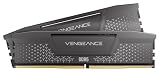
- Disclaimer: Maximum Speed requires overclocking/PC BIOS adjustments. Maximum speed and performance depend on system components, including motherboard and CPU
- AMD EXPO & Intel XMP 3.0 Compatible Only: Dual memory profiles allow you to easily select optimized settings for your platform, whether you’re running an AMD or Intel processor
- Onboard Voltage Regulation: Enables easier, more finely-tuned, and more stable overclocking through CORSAIR iCUE software than previous generation motherboard control
- Maximum Bandwidth and Tight Response Times: Optimized for peak performance on the latest AMD and Intel DDR5 motherboards
- Hand-Sorted, Tightly-Screened Memory Chips: Ensure consistent high-frequency performance with aggressive timing options
How to compare compatible kits
Once you have narrowed the choices to kits your system supports, compare them in this order:
- Total capacity: Choose enough for your regular workload, with suitable headroom for common multitasking.
- Supported data rate and latency: Compare only settings your system can use, and consider both figures rather than speed alone.
- Module arrangement: Check module count and channel configuration. A matched kit and the motherboard’s recommended slots help you install the intended configuration.
- Profile support: Distinguish standard JEDEC operation from an XMP or EXPO profile that requires compatible hardware and may need to be enabled.
- Physical fit and other terms: For desktop builds, check module height against cooler clearance; also compare warranty and price.
Do not pay extra for a speed your system cannot use or for capacity your workload does not need. A motherboard QVL or the computer maker’s compatibility information can help narrow the options; Crucial also offers product compatibility guidance and a selector.
If a new memory kit is unstable
If the computer fails to start, crashes, or becomes unstable after an upgrade, check the installation and settings before concluding that the kit is defective. AMD’s troubleshooting guidance recommends steps including:
- Confirm that the memory configuration appears on the motherboard’s QVL.
- Use modules from the same kit rather than combining separate kits.
- Check that the modules are seated in the manual’s recommended slots.
- Restore optimized defaults and use only a profile supported by the system.
- Update the motherboard BIOS where appropriate.
Change one setting at a time and consult the computer or motherboard maker’s instructions if the system cannot boot or you are unsure how to reset firmware settings.
Quick Recap
Product prices and availability are accurate as of the date/time indicated and are subject to change. Any price and availability information displayed on Amazon at the time of purchase will apply.




