What’s actually slowing this PC down?
Pick the symptom - the matching free tool is one click away.
SpaceX (SPCX) and Rocket Lab (RKLB) are both publicly traded as of October 7, 2026, but they offer exposure to different businesses and risks. SpaceX combines launch operations with satellite connectivity and other growth initiatives; Rocket Lab reports revenue from both space systems and launch services, while developing its larger Neutron rocket. Investors comparing them should look beyond the “space stock” label to business mix, operating maturity, financial scale, execution risk and voting structure.
Are SpaceX and Rocket Lab publicly traded?
Yes. SpaceX completed its initial public offering in June 2026, and its Class A shares trade on the public market under the ticker SPCX. Rocket Lab is listed under RKLB. This updates older descriptions that still characterize SpaceX as a private company.
SpaceX’s June 2026 IPO involved 638.9 million Class A shares offered at $135 per share and $85.675 billion in net proceeds, according to its SEC filing. Those are historical IPO terms, not a current share price or valuation. The filing also describes multiple share classes with different voting rights. Owning publicly traded shares therefore does not necessarily mean holding voting power proportional to the public float. SpaceX Form 10-Q for the quarter ended June 30, 2026.
How do the businesses differ?
SpaceX: launch and satellite connectivity
SpaceX’s business includes launch activity and satellite connectivity, alongside substantial growth initiatives. Its filing describes plans and spending across business areas, but plans should not be treated as existing revenue or proven economics. Capital spending can also be adjusted across segments, making execution and funding choices relevant to investors. SpaceX Form 10-Q for the quarter ended June 30, 2026.
#1 Best Overall

- BEGINNER MODEL-ROCKET LAUNCH SET: The Tandem-X rocket-model launch set offers adults and kids ages 10+ hours of fun during the holidays as they complete and launch our Amazon and Crossfire ISX rocket models. This set includes the easy-to-assemble Amazon model parts, the Crossfire ISX model parts, parachutes, and the launch pad system. It requires rocket engines, Starters, Recovery Wadding, and 4 high-quality 1.5-volt AA alkaline batteries for launch use (sold separately).
- 2 SOARING ALTITUDE HEIGHTS: Our Tandem X set offers a high-performing power duo with our giant 30-inch Amazon model (600-foot projected altitude with a C6-5 rocket engine) and our streamlined 15.6-inch Crossfire ISX model (1,150-foot projected altitude with a C6-7 rocket engine). Other compatible Estes model-rocket engines for Amazon model: B4-2, B4-4, B6-2, B6-4, C5-3, and C6-3. Other compatible engines for Crossfire ISX: A8-3, B4-4, B6-4, and C6-5. All engines sold separately.
- READY TO ASSEMBLE: Our beginner model-rocket launch set comes with 2 build options. The precolored Amazon model features plastic fins and self-stick graphics and can be built in an hour. The Crossfire ISX model comes with laser-cut wood fins, self-stick decals, and aerodynamic parts. Pair the rockets with the included Porta Pad II Launch Pad and Electron Beam Launch Controller for a hands-on educational activity or a unique Christmas gift for a budding scientist or a space aficionado.
- SAFETY FIRST, FUN ALWAYS: Our rockets and rocket launch accessories are designed to be used with the NAR (National Association of Rocketry) model-rocket safety code. Always ensure you have an appropriate launch site, stand back at least 15 ft., insert the safety key, issue a countdown, and then you can let your rocket fly!
- WE IGNITE IMAGINATIONS: Since 1958, Estes has created educational rocket kits and displays designed for an unforgettable aerospace experience. As a family-owned company, we have grown to offer exciting STEM products that engage aspiring rocketeers and the future minds of aerospace.
Rocket Lab: launch services and space systems
Rocket Lab is not simply a launch-services company. Its two reportable operating segments are launch services and space systems, which includes spacecraft and related systems activity. In 2025, space systems generated $402.8 million of revenue and launch services generated $199.0 million, out of $602 million in total revenue, according to the company’s 2025 Form 10-K. Space systems was the larger of the two segments that year.
Rocket Lab completed 21 launch missions in 2025, compared with 16 in 2024; launch-services revenue rose 59% year over year. These are full-year 2025 results, not a measure of Q2 2026 performance. Rocket Lab 2025 Form 10-K.
Rank #2

- Basic Parameters: The SpaceX rocket model is at a 1:144 scale, with a height of 13.4 inches. It is made from durable plastic material and features exquisite surface details
- Package Contents: The rocket model comes in an exquisite gift box and includes a sturdy bracket with a recovery ship pattern. It is perfect as a living room decoration or a gift
- Product Features: All four flaps are movable. It weighs 1.1 pounds and has a great feel. The surface paint is fine and the details are handled excellently
- SpaceX History: The Starship has a reusable feature and boasts the largest payload capacity in the world. With multiple and rapid iterations and upgrades, the Starship is on the verge of a successful launch and recovery
- Best Gift for Boys: This model is an excellent gift for aerospace enthusiasts, making it a fantastic birthday present and keepsake. It is suitable for display in the living room, study, or office
How do their operating scale and financial figures compare?
Figures from different periods and categories answer different questions. Revenue measures activity recognized over a period; backlog is contracted work not yet recognized as revenue; IPO proceeds are cash raised in a share offering. None is interchangeable with market value or profit.
| Measure | SpaceX | Rocket Lab |
|---|---|---|
| Public-market status | Completed IPO in June 2026; Class A ticker SPCX | Publicly listed; ticker RKLB |
| Reported loss | $4.9 billion net loss for 2025 and $4.3 billion loss for Q1 2026, as reported by AP from the prospectus | Not stated here for comparable periods |
| Revenue | Not stated here for comparable periods | $602 million for 2025; $234 million for Q2 2026 |
| Backlog | Not stated here | $2.36 billion at Q2 2026 |
| Operating mix | Launch and satellite connectivity, with other growth initiatives | Space systems and launch services |
The SpaceX loss figures are period-specific amounts reported by the Associated Press from the company prospectus; they should not be treated as a current run rate or a forecast. Associated Press report on SpaceX’s June 2026 prospectus.
Crashes, No Sound, or Screen Glitches?
Random freezes, missing sound and display glitches usually trace back to one bad driver. Find and replace yours safely.Free scan · under a minuteWindows Errors? Fix Them Before They Spread
Repair common Windows errors and clear accumulated junk for a smoother, more stable PC - no reinstall needed.Free scan · no reinstallRank #3

- Extremely exquisite SpaceX Falcon 9 rocket model (For collection or display, not a toy! Children should not buy it)
- First-stage super heavy-duty booster is made of precise aluminum alloy tubes. The rest of the rocket is made of high-quality imported resin.Extremely good laser shapeability& long-lasting shelf life
- The proportional model:1:233
- Actual height: 32cm (the core diameter is 24mm, the real rocket is 9 meters in diameter) This ratio is the best choice for desktop placement
- Note: This model is not a toy model, it is not recommended to buy for children, please buy with caution to avoid unnecessary trouble for your shopping
Rocket Lab reported $234 million in revenue and $2.36 billion in backlog for Q2 2026. The company also said it secured more than $437 million in new launch contracts across Electron, HASTE and Neutron during Q2 and after quarter-end, with a launch backlog of more than 90 missions. These are company-reported contract and backlog measures; they do not establish when all work will convert to revenue or cash. Rocket Lab Q2 2026 earnings release filed with the SEC.
What is the difference between Electron and Neutron?
Rocket Lab’s Electron is an operating launch vehicle, while Neutron is still in development. That distinction matters: an established product’s results cannot be assumed for a newer vehicle that has not completed development and qualification.
Rank #4
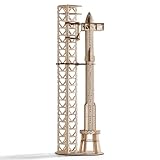
- HANDS-ON ENGINEERING EXPERIENCE: Build this detailed 3d puzzle for adults and explore the complex engineering of the legendary SpaceX Super Heavy booster. A truly immersive dive into aerospace technology
- IMPRESSIVE DISPLAY MODEL: Once completed, this highly detailed and cool-looking model makes a perfect decorative centerpiece for your office, study, or game room, showcasing your unique interests
- SATISFYING MENTAL CHALLENGE: Enjoy hours of focused, relaxing fun. This 3D puzzle provides the perfect level of difficulty, offering a great sense of accomplishment upon completion
- THE PERFECT GIFT IDEA: An unforgettable and inspiring gift for birthSpace-X Falcon Heavydays, holidays, or any occasion. Ideal for space enthusiasts, model kit fans, teens, and adults who love a good challenge
- PREMIUM & SAFE MATERIALS: Made from high-strength, eco-friendly materials with precisely cut pieces for a smooth build. The finished model is robust and durable, designed for long-term display
In its Q2 2026 filing, Rocket Lab said it was targeting delivery of Neutron’s first-stage tank to the launch pad in Q4 2026. The filing also described a narrowing launch window and dependencies on qualification and other critical tests. This is management’s target, not a guaranteed date. Rocket Lab cautioned: “Risk and uncertainty remains in the complex development cycle of a new launch vehicle which could impact our current best estimate of a targeted timeline for first launch.” Rocket Lab Form 10-Q for the quarter ended June 30, 2026.
Independent reader supportYour contribution helps us test, update, and keep practical guides available for everyone.What risks should investors compare?
Execution and development risk
Rocket Lab’s Neutron program depends on completing complex development, qualification and other critical tests. Delays can change the expected timing of a first launch, while development and vehicle production can affect future results. Neutron’s target milestones should therefore be evaluated as uncertain execution goals rather than operating performance.
Best Value

- 1:200 Scale SpaceX Starship Model: This NikolaToy model offers a precise 1:200 scale replica of the SpaceX Starship, showcasing a realistic design for aviation and space enthusiasts.
- LED Lights & Misting Effect: Equipped with LED lights and a misting function, this model creates a dynamic and interactive experience, simulating rocket exhaust in a unique way.
- Durable PLA+ Construction: Made from PLA+, a strong and eco-friendly material, ensuring a sturdy, long-lasting model with fine detailing.
- Precision 3D Printing: Crafted with high-precision 3D printing technology to capture every detail of the SpaceX Starship, from its sleek body to the intricate features.
- Ideal Gift for Space Enthusiasts: A perfect gift for space lovers, engineers, or collectors, adding both a decorative touch and an engaging conversation piece to any home or office.
SpaceX’s filing describes substantial growth spending and risks tied to its business initiatives. The company may adjust capital spending across segments; ambitious plans should not be counted as established operating revenue before they are achieved.
Capital and financial risk
Reported losses, capital expenditure and funding needs matter, but the figures must be read in context. AP reported SpaceX’s 2025 and Q1 2026 losses from the prospectus; those two periods do not, by themselves, establish future profitability or a steady loss rate. Rocket Lab’s revenue and backlog likewise do not establish profit, cash generation or the timing of conversion into recognized sales.
Public-market and governance risk
SpaceX’s dual-class share structure means voting rights differ by share class. Investors should read the filing’s description of those rights rather than assume that share ownership confers equal influence. For either company, a company’s operating prospects and the price investors pay for its stock are separate questions.
How should an investor decide which stock fits?
Start with the exposure you want, then assess whether the valuation and risks make sense at the current price. A strong business can still be an unattractive investment if its shares are priced too high; a promising vehicle program can miss targets or require more capital.
- For a broader launch-and-connectivity business: examine SpaceX’s launch operations, satellite connectivity, growth spending and share-class voting structure.
- For a company reporting both space systems and launch: examine Rocket Lab’s segment performance, the contribution of each segment and the execution demands of Neutron.
- For a financial comparison: compare consistent reporting periods and distinguish revenue, losses, backlog, cash and valuation rather than treating them as equivalent measures.
- For an up-to-date valuation comparison: use fresh share prices and share counts alongside comparable financial periods. IPO proceeds, backlog and one year of revenue are not substitutes for a valuation analysis.
This comparison is general information, not personalized investment advice. The available company filings and prospectus-based reporting support an operating and risk comparison, but they do not determine which stock is suitable for a particular investor.
Quick Recap
Product prices and availability are accurate as of the date/time indicated and are subject to change. Any price and availability information displayed on Amazon at the time of purchase will apply.




