Do these 3 things before closing this tab:
1Repair Windows errors before they cause bigger problems2Fix the driver behind crashes, sound loss and screen glitches3Clear out junk files and repair common Windows errorsChoosing between H.264 and HEVC (also called H.265) for your 24/7 YouTube stream is not a quality preference—it’s a reliability and compatibility decision. H.264 is a decade old, universally supported, and predictable. HEVC is newer, uses 40–50% less data for the same quality, but fails unpredictably on certain hardware, network conditions, and viewer devices.
What the Codecs Actually Do
H.264 encodes video by splitting each frame into predictable blocks, comparing them to previous frames, and transmitting only the differences. It’s computationally expensive but forgiving: if a single packet is lost, the damage is localized.
HEVC uses a more advanced compression model, breaking frames into variable-sized blocks and using more complex prediction methods. It delivers the same visual quality at 40% lower bitrate. For a 2500 Kbps H.264 stream, HEVC produces equivalent results at roughly 1500 Kbps.
The problem is complexity. HEVC’s advanced compression means if network corruption introduces a single bit error, the decoder has no fallback—the entire frame becomes corrupted instead of just the affected block.
Free tools Windows power users keep installed
One-click scans. No signup required.
#1 Best Overall

- 【Hardware H.265/H.264 Encoding at 1080P60】Dedicated hardware encoder delivers broadcast-quality 1080P60 streams with H.265/H.264 compression. Reduces bandwidth usage by up to 50% compared to legacy H.264-only solutions, while maintaining crisp, crystal-clear video output.
- 【Broad Protocol Support for IP Distribution】 Supports SRT, RTMP(S), RTSP, UDP, HTTP, HLS, WebRTC, TRTC, Icecast and SHOUTcast — integrate seamlessly with CDNs, surveillance NVRs, IPTV systems and browser-based monitoring dashboards. One device replaces multiple single-purpose streaming boxes.
- 【Browser-Based Setup in Minutes】 Set up in minutes through any browser — no software, drivers or OS compatibility issues. DHCP is enabled by default to prevent IP address conflicts on your network. Note: basic networking knowledge (IP address, RTSP/RTMP configuration) is recommended for advanced streaming setups.
- 【Compact Design with Flexible Deployment】Palm-sized form factor (approx. 90×54×29mm) fits easily behind monitors, on shelves, or in equipment racks. Low power consumption ensures reliable 24/7 operation for live events, remote monitoring, and digital signage.
- 【Professional Audio & OSD Overlay + 1-Year Warranty】 Supports HDMI embedded audio plus external 3.5mm input. Built-in OSD generator adds scrolling text, logos, or timestamps directly to the video stream — ideal for branding, event info, or security labeling. Backed by a 1-year warranty and 24/7 online technical support.
Compatibility Is Wider Than You’d Expect
YouTube officially supports both H.264 and HEVC for uploads. In theory, all modern browsers and devices can decode HEVC. In practice, Apple devices decode it natively, Android devices decode it inconsistently (depends on the chipset), and some older Smart TVs and Roku devices don’t support it at all.
A viewer on an unsupported device doesn’t see a graceful fallback—the browser either transcodes the stream on the fly (consuming massive server resources, which YouTube only does for premium content) or fails silently, showing a black screen.
For a 24/7 channel with a global audience, you have no control over what devices are watching. Using HEVC means some fraction of your viewers will see a broken stream, and you’ll never hear about it.
CPU Load and Streaming Stability
H.264 encoding on consumer CPUs is efficient but not trivial. A single-threaded encode of 1080p H.264 at 4000 Kbps consumes 30–60% of a modern processor core. Multi-pass encoding (which improves quality) consumes even more.
Quick wins for a faster PC:
Clear out junk files and repair common Windows errorsFree Scan →Scan for outdated or missing drivers - takes under a minuteDriver Scan →HEVC encoding the same footage uses 60–120% of a core for equivalent quality output (fewer bits means the encoder works harder to achieve the same visual result). If your PC is also running other tasks—a Discord bot, file monitoring, backups—HEVC encoding can push the system into thermal throttling much faster than H.264.
For unattended 24/7 streams running on aging consumer hardware, the H.264 lower CPU load is a feature: your encoding stays stable at 3 AM when the ambient temperature in the room has dropped, whereas HEVC triggers thermal throttling and drops quality unexpectedly on older CPUs.
Rank #2
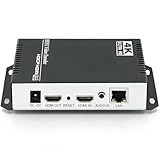
- 【Innovative Product with Leading Technology】- Equipped with an advanced H.265 /H.264 dual encoding chip, supports 4K UHD (3840x2160) video input and output, with a maximum frame rate of 30fps at 4K resolution and up to 120fps at 2K and lower resolutions, delivering a smooth and detailed visual experience. It also supports HDCP 1.4 decryption, easily decoding various HDMI ultra HD video sources, delivering a cinematic visual experience for both professional live streaming and 4K ultra HD content transmission.
- 【Multi-protocol and Multi-platform Compatibility】- Fully compatible with streaming protocols such as HTTP, RTSP, RTMP(S), SRT, HLS(M3U8), MP4, Multicast(UDP, RTP, PTL), ONVIF, FLV, WebRTC, TRTC, ICECAST, it can simultaneously output 4 video streams with different protocols and push them to live streaming platforms such as YouTube, Facebook, Twitch, and Vimeo with one click. Simultaneous live streaming across multiple platforms can be achieved without additional equipment.
- 【Highly Customizable Settings to Meet Individual Needs】- It supports adding static text, scrolling captions, brand logos, and timestamps. Users can freely adjust core parameters such as video resolution, frame rate, and bitrate, and also perform personalized editing functions such as video cropping, rotation, flipping, and mirroring. It supports dual input of HDMI embedded audio and line-in audio, with adjustable sound quality, making your live stream content more distinctive and allowing you to create a unique brand live stream style.
- 【Stable and Efficient Transmission, Easy Operation】- Employing HDMI to Ethernet core connection technology, it ensures stable and reliable network transmission with low latency and no lag, adapting to various network environments. Equipped with an intuitive user interface and detailed instruction manual, no professional technical background is required; setup can be completed quickly after connecting the device. It is also compatible with multiple terminals such as computers and mobile phones for management, and the video stream status can be viewed in real time via a URL.
- 【Lifetime Free Warranty and Technical Supports】- All URayCoder video codecs come with a lifetime free warranty and technical supports, supporting secondary development and feature customization to meet enterprise-level personalized needs. Meanwhile, we providing many kinds of customization services such as shell pattern printing, logo addition, hardware and function development, ensuring reliable quality and worry-free after-sales service.
Bitrate Efficiency: When It Matters
If your upload bandwidth is constrained (a home connection with < 10 Mbps available), HEVC’s 40% savings in bitrate becomes attractive. Instead of using 4000 Kbps for decent 1080p, you get 1080p quality at 2400 Kbps, leaving bandwidth for household traffic.
But that efficiency only matters if viewers can actually receive it. The moment one percentage of your audience loses video due to device incompatibility, the efficiency gain is erased.
What’s actually slowing this PC down?
Pick the symptom - the matching free tool is one click away.
Network Robustness: H.264 Wins
Network packet loss is invisible to an H.264 decoder for small losses (under 1–2%). The encoder inserts periodic keyframes that allow recovery without re-transmitting the entire segment. HEVC is equally robust in theory but less forgiving in practice because the error concealment algorithms are newer and less battle-tested.
On home Wi-Fi with occasional interference, or on a mobile hotspot with variable signal, H.264’s older, simpler error handling is more likely to produce watchable output when packets are lost.
YouTube’s Transcoding Behavior
YouTube always transcodes all uploads to multiple quality levels for adaptive bitrate playback. If you upload 1080p H.264, YouTube generates 720p, 480p, 360p, and 240p variants automatically.
If you upload 1080p HEVC, YouTube must first decode your HEVC stream, then re-encode it to H.264 variants for devices that don’t support HEVC. That transcoding step is CPU-intensive on YouTube’s servers. For on-demand uploads, YouTube distributes this cost across their CDN. For live streams, YouTube’s servers must transcode in real time—a process that can introduce latency or quality drops under load.
Rank #3

- 【Innovative Product with Leading Technology】- This URayCoder video encoder is ideal for broadcast video and audio, support live broadcast for Youtube, Facebook, Ustream, Livestream, Twitch, Vimeo, Streamspot, Dacast, Tikilive, Netrmedi, etc.
- 【Multiple Video Stream Output】- Supports output 4 video streams simultaneously, and each video stream can use different streaming protocols. You can push these video streams to different streaming servers at the same time.
- 【Multiple Streaming Protocols】- Support HTTP, RTSP, RTMP(S), SRT, HLS(M3U8), UDP, RTP, MP4, Multicast, Unitcast, FLV, ONVIF and other streaming protocols. Choose between multiple video streaming types to reduce bandwidth consumption or enhance image quality.
- 【Multiple Video Stream Settings】- You can add static text, scrolling text, logo or time to the output video streams to customize the displayed video. Of course, you can also adjust other parameters, such as resolution, frame rate, bitrate, etc., and even crop, rotate, flip, and mirror. The output audio is also adjustable.
- 【Free Lifetime Support and Service】- All URayCoder video encoders and video decoders include free lifetime technical support and warranty. We also provide SDK and API as well as CGI control protocol documents for secondary development. At the same time, we provide a variety of customizations, such as shell pattern printing, control panel logo addition, firmware or hardware function development, etc.
H.264 uploads skip this re-encoding step, meaning faster ingestion and more predictable live stream performance.
The Settings That Matter Most
If you’re using OBS or similar software, your encoder settings look like this:
H.264: 2500–4000 Kbps, 30 FPS, profile “main” or “high”, preset “medium” to “fast” (depending on CPU headroom).
HEVC: 1500–2400 Kbps, 30 FPS, profile “main”, preset “fast” or “slower” (HEVC presets require more careful tuning).
Recommended Free Tools
The presets control encoding speed: “faster” means quicker encoding but lower quality per bit; “slower” means higher quality per bit but higher CPU load.
For 24/7 streams, use “fast” or “medium” for H.264 and “fast” for HEVC. Avoid “placebo” or “slower” presets on home equipment; they’ll overheat your CPU within hours.
Rank #4

- 【Ultra-Compact & Low-Power Design】 Experience maximum portability with this pocket-sized (2.95 x 1.26 x 0.87 in) HDMI video encoder, weighing only 1.13oz. Engineered for extreme efficiency, it consumes just 2.4W and can be powered directly via USB or the HDMI source. This eliminates the need for bulky external adapters—perfect for professional live broadcasting, mobile setups, and installations with limited space.
- 【Pro-Grade 1080P HD Encoding】 Deliver crystal-clear video transmission with support for up to 1080P60 HD input and stable 1080P30 encoding output. This versatile hardware encoder is fully compatible with a wide range of HDMI sources, including NVRs, PCs, drones, DSLR cameras, and professional camcorders. Whether for security monitoring or live broadcasting, it ensures a high-quality, low-latency video feed for a truly reliable user experience.
- 【2K SRT & Multi-Protocol Compatibility】 Experience broadcast-level stability with 2K SRT support, delivering secure, reliable, and ultra-low latency video over any network. This hardware encoder ensures peak efficiency with H.265/HEVC and H.264/AVC compression. Fully compatible with a wide range of protocols—including RTMP, RTMPS, HLS, RTSP, and UDP—it is tailor-made for social media live production, house of worship, secure IP surveillance, and corporate training.
- 【Centralized Cloud Management】 Beyond standard Web-UI, this encoder supports DDMALL LinkCloud for remote monitoring and control via the Internet. For large-scale deployments, we provide specialized support to assist you in building a self-hosted private cloud, ensuring absolute data security and efficient video distribution. This professional-grade centralized control simplifies complex workflows for multi-site corporate, educational, or broadcast environments.
- 【More Excellent Features & Reliable Support】This encoder elevates your broadcasting with dual-stream output, enabling simultaneous streaming to platforms like YouTube and Facebook. It also features real-time OSD overlays and direct Web-UI signal preview for precise control. Beyond the device, our professional technical team provides customized solutions, continuous firmware updates, and expert guidance to ensure your live production stays seamless.
When HEVC Is the Right Choice
HEVC makes sense if:
- You have upload bandwidth < 5 Mbps and no alternative
- Your entire audience is on modern Apple or Android devices (you’ll know this from analytics)
- Your PC has a dedicated HEVC encoder (NVIDIA RTX, Apple Silicon) reducing CPU load to near-zero
- Your network is wired Ethernet with < 0.1% packet loss
For typical 24/7 YouTube channels, none of these apply.
The Practical Recommendation
Start with H.264. It’s boring, but boring is reliable for 24/7 unattended streams. Leaving a desktop encoding around the clock and using HEVC adds failure modes: device incompatibility, CPU thermal throttling on older hardware, and network robustness issues that H.264 would handle silently.
Once your stream has run stably for 2–3 months on H.264, you can experiment with HEVC on a secondary channel (or a test upload) to measure viewer quality loss in your specific audience. If analytics show no difference, switch. If any segment of your audience loses video, revert.
The safer play, especially for income-generating channels, is H.264’s predictability. Your stream won’t be the most bandwidth-efficient in the world, but it will work for 24 hours straight without your intervention.
Run a 24/7 YouTube Stream Without a Local Encoder
StreamNeo is a strong fit when you want to turn a prerecorded video into an always-on YouTube Live stream without keeping a local encoder running. Upload the video, paste your YouTube stream key, and the stream runs in the cloud while your PC stays off.
For unattended reliability, StreamNeo checks stream health every 30 seconds and automatically restarts dropped streams. Start with the free 24-hour 720p/30fps trial—no card is required at signup—to confirm the broadcast works for your channel before moving it into a longer-running workflow.
Best Value
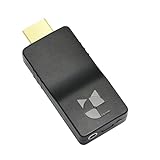
- 【Ultra-Compact & Mobile-Ready】Measuring just 2.95 x 1.26 x 0.59in (75x32x15mm) and weighing only 0.88oz (25g), this ultra-mini wireless HDMI video encoder offers a truly pocket-sized hardware solution for on-the-go broadcasting. Powered by USB with ultra-low 2.6W power consumption, it effortlessly connects to 4G/5G mobile hotspots, ensuring stable video transmission in outdoor or space-constrained environments.
- 【Pro-Grade 1080P HEVC Encoding】Supports up to 1080P 60Hz input and high-efficiency H.265 (HEVC) / H.264 hardware encoding. This professional coder provides dual-stream output, allowing you to broadcast to 4 different platforms simultaneously. Fully compatible with major web portals like YouTube, Facebook, and Twitch via secure RTMP/SRT protocols.
- 【One-Click Live & Cloud Management】Start or stop your live feed instantly with a single press of the physical button on the device. For advanced remote workflows, it supports DDMALL LinkCloud and your private cloud management, enabling secure remote control and real-time status monitoring of your encoder from any internet-connected location worldwide.
- 【Precision NTP Time Synchronization】Equipped with NTP (Network Time Protocol) support, this device ensures millisecond-level time alignment across multiple encoders. This is a critical professional feature for multi-camera setups, ensuring perfect timing consistency for complex live productions, monitoring, and post-event synchronization.
- 【Versatile Professional Applications】 Compatible with SRT, RTMP, RTMPS, RTSP, UDP, and HLS, this hardware encoder is the go-to solution for church services, outdoor sports, remote education, and drone video feeds. Featuring a Web-UI preview for instant signal verification and real-time OSD settings for custom branding, it allows you to monitor and adjust your feed on the fly, ensuring your broadcast is always professional and error-free.
Codec Selection in the Cloud
If you’re not running an encoder at home, codec selection isn’t your problem. StreamNeo handles encoding on the cloud, choosing the optimal codec for your content and viewer base automatically. You upload the video once, paste your YouTube stream key, and the platform manages all encoding complexity in the background, selecting H.264 for universal device compatibility. There is a free 24-hour trial and no card required, which is long enough to confirm that your channel looks great on every device in your viewer’s location without you troubleshooting codec compatibility.
StreamNeo fits a prerecorded 24/7 YouTube workflow by moving the broadcast off the local computer: upload the video, paste your YouTube stream key, and let the stream run in the cloud while your PC stays off. Confirm the resulting stream on the devices that matter before making it your production workflow.
StreamNeo removes the local encoding burden: upload a video, paste your YouTube stream key, and let the broadcast run in the cloud while your PC stays off.
The Real Decision
H.264 is the safe choice for 24/7 unattended streams on home equipment. HEVC is tempting but introduces fragility. Choose based on network constraints and hardware capability, not just bitrate efficiency.
The Tool Desk
Outbyte Driver Updater FREEFix the driver behind crashes, sound loss and screen glitchesFind Drivers →Outbyte PC Repair FREERepair Windows errors before they cause bigger problemsFix Now →If you find yourself debating codec choice, you’re probably overthinking it. Pick H.264, run your stream for a week unattended, and see if anything breaks. If nothing breaks, you’ve chosen correctly.
Before committing your production channel to a local codec setup, use StreamNeo‘s free 24-hour 720p/30fps trial with no card at signup to validate the unattended YouTube broadcast on your target devices.
Quick Recap
Product prices and availability are accurate as of the date/time indicated and are subject to change. Any price and availability information displayed on Amazon at the time of purchase will apply.




