Project 2025 is a Heritage Foundation-led presidential transition effort built around policy planning and personnel preparation for a conservative administration. Its central document, Mandate for Leadership: The Conservative Promise, lays out recommendations for reshaping federal agencies and strengthening presidential direction of the executive branch. The project’s language also frames the country as being in crisis and government institutions and progressive cultural change as threats. Calling that framing “grievance-driven” is an interpretation of the project’s rhetoric—not a neutral finding about the country or a measure of the book’s effects.
What is Project 2025?
The Heritage Foundation describes Project 2025 as its 2025 Presidential Transition Project. It is a coordinated effort to prepare policy and personnel for a future conservative administration; its most visible component is Mandate for Leadership: The Conservative Promise, an agency-by-agency policy volume.


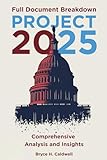
In its 2023 launch announcement, Heritage said the book had 30 chapters, was assembled by editors Paul Dans and Steven Groves, and involved more than 35 primary authors and hundreds of contributors. The full volume is 920 pages. Its recommendations belong to the book’s authors and contributors, and should not be treated as a single author’s policy platform.
Heritage describes the project’s goal as preparing the “right policy and personnel” to “dismantle the administrative state and restore self-governance to the American people.” That is the organization’s own description of its political objective. Project 2025 is not identical to a formal Trump campaign platform: the book is a transition project’s extensive set of recommendations, not proof that every proposal was adopted by a candidate or administration.
Free tools Windows power users keep installed
One-click scans. No signup required.
#1 Best Overall
Why describe the project as grievance-driven?
The characterization comes from the project’s public rhetoric. At the 2023 launch, Heritage president Kevin D. Roberts said, “Our country is all but unrecognizable.” He blamed what he called “the Left” for inflation, violence, problems in education, and transgender participation in women’s sports. Those were Roberts’s political claims, not verified findings established by the launch statement.
In the book’s foreword, Roberts presents the project as conservative political renewal and contrasts Washington’s establishment with ordinary Americans. Read together, this language depicts national decline and cultural change as threats, with federal institutions cast as part of the problem. That is the basis for the article’s use of “grievance-driven”; it is an editorial reading of Heritage’s framing, not a statistic or an independently adjudicated description.
Rank #2
What does Project 2025 propose?
The volume is organized around federal departments and functions, including the executive office, personnel agencies, defense, homeland security, state, and intelligence. Across those areas, a central theme is greater presidential direction over the executive branch and less bureaucratic independence.
More presidential control of the bureaucracy
In the executive-office chapter, Russ Vought argues for aggressive presidential use of power over the bureaucracy. FactCheck.org quotes his prescription that the president should “bend or break the bureaucracy to the presidential will.” This is Vought’s argument in a policy chapter, not a description of enacted law.
Recommended Free Tools
FactCheck.org characterizes the book as treating federal bureaucracies as obstacles to overcome and reports Roberts’s argument for firing federal bureaucrats, shuttering offices, and changing government messaging. These descriptions convey the approach broadly; a claim about a specific agency or proposed change should be checked against the relevant chapter rather than inferred from the book’s overall theme.
Policy recommendations across agencies
Because the book covers many departments and functions, “Project 2025 proposes” does not identify one policy. It is a collection of recommendations spanning the executive branch. To understand a particular proposal, readers need to distinguish the relevant chapter’s recommendation from a campaign commitment, an executive action, a regulation, or a change in law. The existence of a recommendation alone does not establish that it was adopted.
Independent reader supportYour contribution helps us test, update, and keep practical guides available for everyone.How much of Project 2025 has been implemented?
A 2026 report by the Center for Progressive Reform and Governing for Impact says its tracker found that 283 of 532 selected domestic administrative recommendations—53 percent—were initiated or completed in the first 12 months after inauguration. The tracker examined recommendations across 20 executive-branch agencies and identified steps using executive orders, press releases, regulations, and sub-regulatory actions.
That figure is the two organizations’ estimate for the recommendations they selected and the period and scope they defined. It is not an official government count, does not cover every proposal in the 920-page volume, and does not mean that 53 percent of the book “is now law.” The tracker counts recommendations initiated or completed, not only enacted laws. Nor does resemblance between an administration action and a prior recommendation, by itself, show that the recommendation caused the action.
Quick wins for a faster PC:
Fix the driver behind crashes, sound loss and screen glitchesFind Drivers →Clear out junk files and repair common Windows errorsFree Scan →Heritage’s 2023 announcement also cited its own historical comparisons: it said Reagan implemented nearly half of the first Mandate for Leadership edition’s ideas by the end of his first year, and that Trump embraced nearly 64 percent of the 2016 edition’s policy solutions after one year. Those are Heritage’s claims about earlier editions. They are not estimates of implementation of the 2025 project, and the different editions and measures should not be combined with the 2026 tracker’s percentage.
Quick Recap
How to read claims about the blueprint
- Separate rhetoric from evidence. Statements about national decline, blame, and cultural threats are political claims by Heritage figures, not neutral facts established by the book’s publication.
- Separate proposals from actions. A recommendation in Mandate for Leadership is not automatically a campaign pledge, an executive action, or enacted law.
- Keep implementation estimates in scope. When citing a percentage, include who produced it, which recommendations it counts, the agencies covered, and the time period.
- Check the specific chapter. Broad descriptions of the project do not substitute for the text when assessing a particular agency proposal.
Product prices and availability are accurate as of the date/time indicated and are subject to change. Any price and availability information displayed on Amazon at the time of purchase will apply.




