Recommended Free Tools
For a Canadian GST/HST input tax credit (ITC), keep supplier invoices or receipts and related transaction records that show what the business bought, from whom, how much GST/HST was charged, and how the purchase relates to the business. The Canada Revenue Agency (CRA) says you must obtain sufficient documentary evidence before claiming an ITC; keep the records in case the CRA asks to review them.
What to keep for each ITC
Build a record set that lets someone trace the purchase and verify the amount claimed. The CRA accepts several kinds of supporting documents, and information can be spread across more than one document. For example, an invoice, payment record and written agreement may be read together.

- Supplier evidence: an invoice, receipt, contract, credit-card receipt, debit note or other valid supplier-issued document. An account book or ledger and electronic records may also form part of the evidence.
- Transaction details: the date, supplier, description of the property or service, and amount paid or payable.
- Tax details: the GST/HST charged, or information showing that the amount includes tax at the applicable rate; for mixed taxable and exempt supplies, identify the status of the supplies.
- Business record: the accounting entry and reporting period associated with the purchase, plus enough context to explain its business purpose.
- Buyer details, when required: the buyer’s name or trading name, or that of an authorized agent or representative, for purchases of $500 or more.
The CRA’s Input tax credits guidance states: “You obtain sufficient documentary evidence to substantiate the ITC prior to making the claim in a GST/HST return.”
What must appear on the invoice?
The CRA’s invoice-information requirements depend on the total sale. These thresholds took effect April 20, 2021, replacing the former $30 and $150 thresholds, as noted in Excise and GST/HST News No. 118.
#1 Best Overall

- ✅ ALL-IN-ONE RECEIPT ORGANIZERS - Stop drowning in loose receipts! PocketCPA 3-in-1 Receipt Organizer Envelopes make tracking expenses & mileage completely effortless. 12 monthly envelopes = audit-proof records and tax prep all year long.
- ✅ RECEIPTS AT YOUR FINGERTIPS! - Our Smart Indexing System developed by PocketCPA matches every expense entry to its supporting receipt and provides instant access to receipts when needed.
- ✅ BUILT-IN EXPENSE LEDGER + AUTO MILEAGE LOG -Easily record business expenses and deductible business mileage right on your PocketCPA organizer. Ideal for documenting business expense deductions and travel reimbursements, whether needed for accounting, bookkeeping, finance, expense reimbursements or IRS or state tax audits.
- ✅ PERFECT FOR HOME, OFFICE & TRAVEL – Lightweight and portable, each 9.5" x 6.5" organizer can be easily stored or transported, helping you keep receipts and expense records organized wherever you work or travel.
- ✅ IRS AUDIT PROTECTION! - It's easy to locate any and all receipts if you need to produce them to IRS to support a tax deduction - because PocketCPA Organizers let you organize and locate your business receipts.
| Total sale | Information identified by the CRA |
|---|---|
| Under $100 | Supplier’s business or trading name (or intermediary’s); invoice date, or the date tax was paid or payable if there is no invoice; and total amount paid or payable. |
| $100 to $499.99 | All information for sales under $100, plus information showing the GST/HST charged or that the amount includes tax at the applicable rate; the status of supplies if taxable and exempt items are mixed; and the supplier’s or intermediary’s GST/HST registration number. |
| $500 or more | All information for sales from $100 to $499.99, plus the buyer’s name or trading name (or an authorized agent’s or representative’s), a brief description of the property or services, and payment terms. |
Use the CRA’s current invoice-information table for details, especially where the price includes tax or an invoice combines different types of supply.
Can a credit-card record or another document support the claim?
Sometimes, but a payment amount alone may not identify the supply or tax. The CRA’s documentary requirements list invoices, receipts, credit-card receipts, debit notes, account books or ledgers, written contracts or agreements, electronic retrieval or data-storage records, and other valid supplier-issued documents as possible evidence. Related documents may collectively provide the required information; no single paper invoice has to contain everything.
Rank #2

- Easy to Use Financial Records Organizer: This spiral-bound document folder features 12 pockets, to keep your receipts and records easily accessible in one place.
- Space-Saving Design: This petite tax organizer measures 9” x 7” when closed and can easily fit into any drawer, filing cabinet or safe. Inside, each pocket measures 6 ½” W x 4 ½” H allowing you to neatly store your folded tax documents such as medical expenses, prescriptions, donations and tax forms.
- Streamline Tax Time: In addition to a place to store your documents, each pocket includes a lined ledger, allowing even more opportunities for tracking.
- Bold, Professional Design: Featuring a bold blue and white striped design and a prominent title, our tax portfolio is designed for streamlined organization, whether you're managing household finances or a growing small business. Its striking aesthetic not only adds style but also ensures quick and easy location, enhancing your organizational efficiency.
- Perfect for Homes or Small Businesses: We’re confident our tax organizer will keep your documents in order, whether you’re a small business owner, freelancer/consultant or looking to organize your personal finances. This organization system will help to simplify year-end taxes for busy households or entrepreneurs.
Keep the payment record linked to the supplier documentation and accounting entry. The full set should make the supplier, recipient, purchase, tax amount and reporting period traceable. An internal spreadsheet can help organize evidence, but it should not be treated as a universal substitute for source documentation.
When do special recordkeeping rules apply?
The CRA describes conditional provisions for particular transaction types. They are not blanket permission to claim an ITC without adequate supporting information.
Free tools Windows power users keep installed
One-click scans. No signup required.
Rank #3
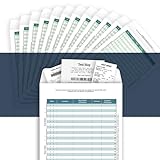
- [Multiple Purpose Business Organizer] Record business expenses on one ledger; Store receipts inside the envelope; Track auto mileage log on the back
- [Match Receipts to Expenses, Find Fast] Record an expense on a line (1-30); Mark the receipt with the line number; Find the receipt fast with the number
- [Receipts Organizer with Expense Ledger] Track your business expenses, prepare for an expense reimbursement or a tax deduction
- [Auto Mileage Log] Track business vehicle mileage; capture valuable business mileage deductions and save on your taxes
- [Perfect Size, Durable Paper Material] Heavy 100 lb paper, easy to write and no ink bleed. This business receipts organizer envelope measures 9.5×6.5 inches, large enough to comfortably fill out while being small enough to fit in a glove compartment, center console or work bag.
Procurement-card transactions
Under the applicable conditions, the CRA may accept procurement-card information including the transaction date, merchant name, place of supply (city and/or province), merchant category, transaction amount, employee or cardholder name, and procurement-card number. Check the CRA’s current guidance for the conditions that apply.
Computerized records and recurring contracts
For electronic records, relevant details include supplier and recipient identity and address, the supplier’s GST/HST registration number, reporting period, tax paid or payable, and nature of the supply. If a contract governs recurring purchases, retain the agreement and related documents so the supplier, recipient, tax, period and type of supply can be followed across transactions. The CRA’s documentary requirements memorandum explains these provisions.
Rank #4

- HOLDS LARGE AMOUNT OF DOCUMENTS:Stores up to 2000 sheets of A4 or letter-size paper. Ideal for organizing tax records, medical documents, insurance papers, receipts, and household files in one place.
- STAND-UP DESIGN FOR EASY ACCESS:Rear locking hole allows the folder to stand upright on the desk. Makes it easier to sort, review, and access documents during daily organization.
- MONTHLY AND FLEXIBLE ORGANIZATION:Includes 12 monthly labels, 24 blank labels, and 12 dividers. Suitable for bills, invoices, school work, projects, and personal records.
- LARGE TABS FOR QUICK IDENTIFICATION:4.5 × 1.5 cm tabs provide extra writing space for clear labeling. Helps quickly locate documents without searching through folders.
- DAILY DOCUMENT PROTECTION:Made of lightweight water-resistant PP material. Elastic cord closure keeps documents secure during transport. Suitable for home, school, and office use.
Taxi, ride-share and some cash purchases
The CRA identifies distinct recordkeeping information for taxi, limousine and commercial ride-sharing fares, as well as certain cash purchases. Requirements depend on the transaction and circumstances, so consult the relevant section of the CRA’s ITC guidance rather than assuming a general receipt rule applies.
Independent reader supportYour contribution helps us test, update, and keep practical guides available for everyone.How long should you keep the records?
Keep copies of purchase invoices or receipts and other GST/HST records that support the claim. The CRA’s general rule is to retain records for six years from the end of the year to which they relate. Electronic filers do not attach the supporting documents to the GST/HST return, but must retain them in case the CRA requests them. See the CRA pages on GST/HST and payroll records and GST/HST records to keep.
The CRA may require records to be kept longer. If you want to destroy them earlier, make a written request and wait for approval. For practical recordkeeping, preserve electronic files in readable, retrievable formats, keep backups, and connect each source document to its accounting entry. The CRA’s General Requirements for Books and Records discusses sound books-and-records practices.
Quick Recap
A practical check before filing
- Match each ITC to an invoice, receipt or other applicable source document.
- Check the total sale amount against the CRA’s invoice-detail threshold and confirm the required supplier, tax and buyer information is present.
- Link related payment, contract and accounting records so they identify the same purchase and GST/HST reporting period.
- Confirm the purchase and tax amount can be traced from the records to the ITC claimed.
- Store the complete record set so it remains accessible for the CRA’s retention period.
Product prices and availability are accurate as of the date/time indicated and are subject to change. Any price and availability information displayed on Amazon at the time of purchase will apply.




