Start by listing your household income, spending, debts, and savings, then identify which debts have rates that can change. A market-rate move does not affect every household the same way: an existing fixed-rate loan payment generally stays the same, while variable-rate borrowing costs can shift as the rate index changes. A simple budget stress test can show whether you could absorb a higher required payment without missing essential bills or draining accessible savings.
1. Take a clear snapshot of household cash flow
Use recent bank and card statements to see what actually comes in and goes out, rather than relying on memory. The CFPB’s home-buying preparation guide recommends reviewing several months of statements, adding up monthly spending, and using a budget tool.
- List take-home income. Record the net amount and timing of paychecks and other dependable income. If income varies, use a conservative estimate rather than assuming every month will be a strong one.
- Write down recurring obligations. Include housing, utilities, insurance, transportation, subscriptions, debt minimums, and regular savings contributions.
- Categorize flexible spending. Review groceries, fuel, dining, personal purchases, and other variable costs from your statements. Separate essential costs from expenses you could reduce temporarily.
- Calculate what remains. Subtract spending and required payments from income. This is the amount available for savings, extra debt payments, and unexpected costs—not automatically money to commit in full to any one goal.
A household budget planner or spreadsheet can help record categories and compare scenarios. It cannot tell you how a lender will change a payment; for that, use your account agreement and notices.
2. Identify which debts are exposed to rate changes
For each credit card, loan, or line of credit, record the balance, current annual percentage rate (APR), required payment, and whether the rate is fixed or variable. A fixed-rate loan payment generally does not change solely because market rates move. A variable APR can change with an index, and the account agreement explains how that rate may change. See the CFPB’s explanations of fixed and variable rates and variable rates.
What’s actually slowing this PC down?
Pick the symptom - the matching free tool is one click away.
#1 Best Overall

- Effective Budget Plan Book – Take control of your finances with the SUNEE budget account book. This all-in-one budget planner allows you to plan and track your income, expenses, savings, and financial goals. Its intuitive layout and easy-to-use sections help you stay organized and make smart decisions to reach financial success. Our financial planner also included a comprehensive guidebook with valuable tips and instructions to help you get the most out of your budgeting planner.
- Full-Page Calendars – Each month’s full-page calendar provides plenty of space to track paydays, bills due dates, appointments, and important events. No more cramped boxes or tight writing areas, you can easily plan and organize your schedule at a glance.
- Colorful Pages Layout and Tabs – This vibrant budget planner features a user-friendly design for easy navigation and organization. Each month includes dedicated budget pages to set financial goals, track income, and plan expenses. Additional sections like debt trackers, savings goals, and bill payment trackers make managing your finances a breeze. The colorful backgrounds on each page offer clear, instant visibility.
- Bonus 4 Stickers and Convenient Design – This monthly budget planner is built for convenience and durability. Water-resistant cover protects against spills, while the elastic band keeps everything secure, and the dual-sided pocket offers extra storage. Plus, we’ve included 4 adorable sticker sheets to personalize your planner and make budgeting more enjoyable. Experience a budget planner that combines practicality with lasting quality.
- UNDATED DESIGN & 1 YEAR USE - Undated finance books start with 1 page-financial goals, 1 page-Mind Map, 1 page-Financial Strategy, 1 page-Tactics, 2 pages-Important Dates, 4 pages-Bill Tracker, 4 pages-Saving Tracker, 8 pages-Debt Tracker, followed by 12 Months(10 pages per month, 1 unique color for each month). 2 pages-Christmas Budgeting, 2 pages-Yearly Summary, 2 pages-Check Register and 12 pages-Notes(dotted). It is UNDATED, so you could start at any time, suitable for 1 year use.
Check the agreement or current statement for the details that determine when and how a variable rate can affect you:
- Index and margin: the benchmark used and the additional amount applied to it.
- Reset timing: when the rate is reviewed or can change, if the agreement specifies a schedule.
- Payment calculation: how a higher rate affects the amount due, including whether the minimum payment formula can change.
- Caps or other limits: any ceiling, floor, or restriction on rate or payment changes.
Do not assume that every variable-rate debt resets at the same time or responds in the same way. For credit cards, the CFPB says the card agreement explains how a variable APR may change.
Rank #2
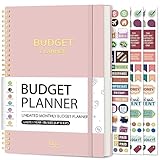
- Effective Budget Planning - Take control of your finances with the budget account book. This comprehensive planner allows you to plan and track your income, expenses, savings, and financial goals in one convenient place. With its intuitive layout and easy-to-use sections, you can stay organized and make informed decisions to achieve financial success.
- User-Friendly Layout - The budget planner features a user-friendly layout designed for easy navigation and organization. Each month, you'll find dedicated budget pages where you can set financial goals, track your income, and plan your expenses. Additional sections include debt trackers, savings goals, bill payment trackers, and more, making it simple to stay on top of your finances.
- Undated Monthly Calendar & Bonus Stickers - Featuring undated calendar each month, you'll have ample space to mark paydays, bills due, appointments, and important dates. Say goodbye to difficult writing spaces. Plus, we've included 3 cute sticker sheets that allow you to personalize your financial organizer and make budgeting more fun. Dates are not pre-printed and are completed by the user.
- Reliable and Convenient Design - Our monthly budget planner is designed for your convenience and built to last. The elastic band keeps everything securely in place, and the dual-sided pocket provides extra storage. Experience a budget planner that combines practicality and durability.
- Master Budgeting with Ease - Our financial planner includes a complete guidebook that provides valuable insights and instructions for optimal usage. From setting financial goals to tracking expenses, this guidebook offers step-by-step guidance and practical tips. Whether you're new to budgeting or an experienced user, this resource will help you make the most of your budget planner, empowering you to achieve financial success.
| Debt | What to record | Budget treatment |
|---|---|---|
| Fixed-rate loan | Balance, rate, required payment, and any terms that could otherwise alter the payment | Keep the scheduled payment in the baseline; do not raise it just because market rates have moved. |
| Variable-rate loan or line of credit | Balance, rate, index, margin, reset timing, payment calculation, and caps | Include the current required payment in the baseline and test a higher payment using the agreement’s terms. |
| Credit card | Balance, APR, minimum-payment method, and whether the APR is variable | Budget for the current minimum and test a higher cost if the APR can change. |
3. Stress-test the monthly budget
Build one baseline from current bills and required debt payments. Then create one or more higher-payment scenarios for debts that can change. Use a lender’s stated terms when available; if you choose an illustrative increase yourself, label it as hypothetical. Neither a scenario nor this exercise predicts future rates or your lender’s exact payment.
- Write down monthly take-home income and essential expenses.
- Add current required debt payments and planned savings contributions.
- For each rate-exposed debt, calculate a higher-payment scenario using the agreement’s payment method or a clearly labeled hypothetical amount.
- Subtract the scenario’s essentials, required debt payments, and savings contributions from income.
- Check whether the remaining cash is enough for irregular bills and whether any adjustment would force you to skip essentials or rely on new borrowing.
If a scenario leaves too little room, decide in advance which flexible spending could be reduced, whether you can build savings before the next reset, and whom to contact if a payment becomes difficult. Avoid treating a hypothetical amount as a forecast or relying on a single best-case month.
Rank #3

- Effective Budget Planning - Take control of your finances with the budget account book. This comprehensive planner allows you to plan and track your income, expenses, savings, and financial goals in one convenient place. With its intuitive layout and easy-to-use sections, you can stay organized and make informed decisions to achieve financial success.
- User-Friendly Layout - The budget planner features a user-friendly layout designed for easy navigation and organization. Each month, you'll find dedicated budget pages where you can set financial goals, track your income, and plan your expenses. Additional sections include debt trackers, savings goals, bill payment trackers, and more, making it simple to stay on top of your finances.
- Undated Monthly Calendar & Bonus Stickers - Featuring undated calendar each month, you'll have ample space to mark paydays, bills due, appointments, and important dates. Say goodbye to difficult writing spaces. Plus, we've included 3 cute sticker sheets that allow you to personalize your financial organizer and make budgeting more fun. Dates are not pre-printed and are completed by the user.
- Reliable and Convenient Design - Our monthly budget planner is designed for your convenience and built to last. The elastic band keeps everything securely in place, and the dual-sided pocket provides extra storage. Experience a budget planner that combines practicality and durability.
- Master Budgeting with Ease - Our financial planner includes a complete guidebook that provides valuable insights and instructions for optimal usage. From setting financial goals to tracking expenses, this guidebook offers step-by-step guidance and practical tips. Whether you're new to budgeting or an experienced user, this resource will help you make the most of your budget planner, empowering you to achieve financial success.
4. Balance debt costs with accessible emergency savings
An emergency fund is for unplanned expenses, not routine monthly spending. The CFPB recommends keeping emergency savings somewhere safe and accessible and notes that borrowing to cover an emergency can add interest and fees. It does not prescribe one universal target amount; set a goal around your household’s likely unexpected bills, income stability, and circumstances.
There is a trade-off between using spare cash to reduce costly debt and keeping cash available for urgent needs. Paying down debt can reduce interest costs, but sending every available dollar to a balance may leave you short when an unplanned expense arrives. Choose a balance that reflects both the cost of your debt and the cash you would need to avoid borrowing in an emergency. If you use the reserve, plan to rebuild it.
Rank #4

- ALL-IN-ONE B5 BUDGET PLANNER: With 15+ Functional Inserts –it covers every money-management pain point for beginners & pros. Stop juggling messy notebooks or incomplete trackers! The budget planner includes, monthly budget, bill expense detail, debt tracker, bill tracker, saving tracker...matches 90% of "how to manage money" search queries
- DURABLE BUDGET BOOK: Our budget organizer features a PVC waterproof cover and elastic band—no more ruined pages, made of 100GSM thick paper—no smudges or ghosting, coming with a heavy-duty double spiral binding—lays flat for easy writing. Built for daily use: toss it in your work bag, backpack, or purse without worry
- CONVENIENT B5 SIZE (7.3”X10.15”): No more choosing between "too small to write" or "too bulky to carry"! The B5 budget planner gives ample space to log expenses, note bill due dates, or map financial goals—without being cumbersome. Fits easily in laptop bags, backpacks, or purses—perfect for "on-the-go budget tracking
- UNMATCHED VALUE & COMPREHENSIVE GUIDEBOOK: Comes with 5 practical, high-quality freebies crafted, plus a comprehensive user guide that takes the guesswork out of financial planning. You’ll get: PVC waterproof colorful monthly tabs & wide range of label stickers, a ribbon bookmark, an elastic pen holder, a elastic band, an inner pocket, and a detailed step-by-step user guide handbook
- VISUAL CLARITY & LESS FATIGUE: Unlike plain black-and-white budget planners, our vivid color highlights reduce eye strain during long budgeting sessions, helping you track expenses, savings, and bills quickly and accurately. It’s the perfect fit for working professionals, international students, family financial managers, freelancers, new graduates, retirees
5. Read rate-change notices and account terms
For U.S. credit-card accounts, a rate change is not always unrestricted. The CFPB’s answers to “Can my credit card company change the terms of my account?” and “When can my credit card company increase my interest rate?” explain that issuers generally cannot increase the rate on an existing balance except in specified circumstances, including changes tied to a variable index. Significant changes generally require 45 days’ advance notice, subject to exceptions; the notice rules depend on the type of change.
When a notice arrives, compare it with your statement and agreement. Confirm which balance or transactions are affected, when the change takes effect, and whether the required payment calculation changes. The CFPB’s Regulation Z resource lists amendments through April 8, 2026. These protections are U.S.-specific; check applicable rules and your agreement if you live elsewhere.
Do these 3 things before closing this tab:
1Fix the driver behind crashes, sound loss and screen glitches2Repair Windows errors before they cause bigger problems3Scan for outdated or missing drivers - takes under a minuteBest Value
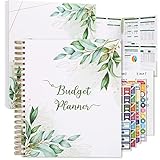
- Keep Track of Your Finances: Manage your personal and family’s finances with this monthly budget planner! Intuitive, comprehensive and fun, this budgeting planner allows you to keep track of your debts, expenses and bills, organize your spending and saving and optimize your budget for achieving your financial goals!
- Large Budgeting Planner: Our budget notebook features a large design of 8.5 x 11-inch that provides enough space for budgeting, financial planning and spending tracking but also for monthly reviews and building strategies for optimizing your budget!
- Well-Organized for Your Convenience: This budget book planner features an easy yet efficient template that includes a monthly budget with customizable categories, a debt tracker, a bill tracker, an expenses tracker as well as a section for financial goals and monthly review that will make things easier when it comes to budget planning!
- 12-Month Budget Management: Our budgeting book features a spiral-bound hardcover design made with high-quality 120gm thick paper and a 12-month undated design that allows you to start budget planning at any time of the year!
- Chic, Practical, Giftable: Featuring a superb boho cover and packed in a matching gift box, this budget book journal makes a lovely gift for a friend, family member or co-worker! The budget journal includes a special pocket for bills, receipts or other documents and comes with 5 stickers that will make your planning more fun and effective!
6. Set a review routine
Review the budget when a rate notice arrives, a variable-rate debt resets, income changes, or a major bill occurs. Keep the baseline and stress-test figures together so you can update the affected payment without rebuilding the whole budget. Recheck the actual statement after a change to see how it compares with the scenario.
If you move emergency savings to another bank or credit union, account for automatic deposits and withdrawals before closing or changing the old account. The CFPB’s March 17, 2022 guidance on how rising interest rates may affect consumers specifically cautions that automatic transactions need to be tracked when moving savings. That 2022 article describes general mechanisms, not current rates or a forecast.
Quick Recap
Product prices and availability are accurate as of the date/time indicated and are subject to change. Any price and availability information displayed on Amazon at the time of purchase will apply.