A semiconductor fabrication plant can add a large, steady electricity load, but its effect on the local grid depends on where it is built, how much power it requests, and the capacity of the surrounding electricity system. Its demand comes from both chipmaking equipment and the cleanroom and support systems that keep production conditions stable. A new fab does not automatically cause blackouts or raise household bills; those outcomes require site-specific evidence.
How much electricity does a semiconductor fab use?
There is no single figure that applies to every fab. NIST reports that energy use varies with facility size and efficiency. In a sample of 29 fabs, the median energy use in 2021 was approximately 2.74 million megawatt-hours (MWh), according to its 2024 assessment. That is a historical sample median, not a forecast or a typical-fab guarantee. A particular facility’s consumption depends on its production capacity, process mix, operating profile, and efficiency. NIST’s assessment provides the underlying context.
Keep annual energy and instantaneous power demand separate. MWh measure energy used over time; megawatts (MW) describe the rate of power use at a given moment. The 2.74 million MWh figure does not tell you the peak MW a new fab will draw or what capacity its utility connection must provide.
Why do semiconductor fabs need so much power?
Electricity runs both the process tools that make chips and the systems that maintain the conditions those tools require. NIST identifies lithography, etching, and deposition as energy-intensive process steps. Supporting loads include vacuum pumps, exhaust-abatement equipment, nitrogen generation and gas purification, cleanroom air circulation, and temperature and humidity control. The facility infrastructure is therefore an important part of the total load, not just an add-on to the manufacturing machines.
Windows Errors? Fix Them Before They Spread
Repair common Windows errors and clear accumulated junk for a smoother, more stable PC - no reinstall needed.Free scan · no reinstallOutdated Drivers Are Slowing You Down
One free scan finds every outdated or missing driver and matches the right update for your exact hardware.Free scan · exact hardware match#1 Best Overall
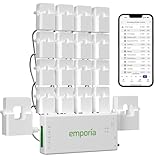
- SAFETY YOU CAN TRUST WITH UL CERTIFICATION: With Emporia Energy, your home energy monitoring is safe, reliable, and certified. The Emporia Vue is UL Listed, meaning it has met rigorous safety standards for electrical products in the U.S. and Canada. This certification ensures that every component has been thoroughly tested to prevent hazards, such as overheating, short-circuiting, or fire, offering you peace of mind as you manage your home’s energy consumption.
- INSTALLS IN CIRCUIT PANEL of most homes with clamp-on sensors. Supports Single phase, Single-split phase, and 2-wire systems. 3-wire systems; 3-phase, 4-wire Wye systems with earthed (TN or TT) neutral (no-Delta) are supported with an additional 200A sensor (sold separately).
- 24/7 ENERGY MANAGEMENT AND MONITORING: Automate, manage and control your home's real power anywhere, anytime to prevent costly repairs, conserve energy, and save costs. Monitor solar / net metering. PROTECTED BY A 1-YEAR WARRANTY.
- LOWER YOUR ELECTRIC BILL: Configure settings in the Emporia Energy App to automate energy management for time of use, peak demand, excess solar, and rewards programs. You can even see live reporting and invaluable savings opportunities instantly. Gauge real-time spending and get actionable notifications and automated energy management to help you reduce costs.
- REAL-TIME ENERGY DATA: REQUIRES 2.4 GHz WIFI WITH AN INTERNET CONNECTION to monitor energy use with iPhone / Android / Web app. Vue sensors collect energy data and are accurate from ±2%. The Vue is UL and CE Listed for your safety. 1 second data is only available in the app (when actively open) and retained 3 hours. Minute and hour data are retained in the cloud. 1 minute data is retained 7 days, 1 hour data is retained indefinitely. Export cloud data whenever you want in the app.
A historical EPRI survey of 14 fabs illustrates how those loads can be distributed: process tools used over 40% of electricity, chillers about 25%, and recirculating air units about 11%. The survey also identified thin films, dry etch, thermal processing, and patterning as major process-area users. These shares describe that limited, older survey—not a current industry-wide breakdown for every fab. EPRI’s survey is useful for understanding categories, but its percentages should not be applied as constants to a proposed facility.
Can a fab strain the local electricity grid?
It can create a substantial new connection and supply requirement, but whether that strains a particular grid depends on local conditions. Utilities and grid operators must assess the requested load alongside available generation, transmission capacity, the timing and pace of the fab’s ramp-up, and how steadily it operates. A site with adequate nearby capacity may have a different impact from one that requires new substations, lines, generation, or other upgrades.
Rank #2

- Various Monitoring Parameters: The power meter plug can monitor the power (W), energy (kWh), volts, amps, hertz, power factor, cost, minimum and maximum power (W), cumulative days and time of your appliances. By switching 7 display modes, you can easily know the various parameters while the appliance is working. The home energy monitor can also calculate and display how much power your appliance uses and how much electricity bill it cost in cumulative time
- Upgraded LCD Display: With large screen size 2.36 inch x 1.85 inch, clearer monitor backlit, our electrical usage monitor can display the data clearer and more visible no matter day or night. 180°full wide viewing angles is great for reading and recording the data in any angles. No need to stand on the front of the display and bend over to read the numbers
- Adjustable Backlight Time: Our upgraded watt meter has 5 options of backlight time. The default backlight time duration is 10 minutes(bL-0). If you want to change the backlight time, you can press and hold "UP" and "DOWN" button at the same time to enter backlight time setting, then press "UP" and "DOWN" to select the backlight time (bL-0 =10 minutes, bL-1=1 hour, bL-2=4 hours, bL-3=8 hours, bL-4=always on), finally press the "COST" to save the backlight time settings
- Overload protection: When the power of the appliance exceeds the overload power, the LCD will display “OVERLOAD” to warn the user. All the buttons will quit working and can only be workable when you lower or remove the load power. The default overload power is 3680W and is adjustable from 0 to 3680W. In general, you need to set the overload power to 1800W before using. Just press the "function" button for more than 3 seconds to enter the setting
- Data Memory Function: The wattage meter will record your power consumption data when you remove it from socket, or remove appliances from the electricity monitor. You can directly see the last data when you use it next time. This function can also automatically save the data when there is a sudden power failure
FERC’s large-load docket addresses questions such as how to study interconnections, make upgrade costs transparent, handle flexible or curtailable service, and treat generation located near a large customer. The docket is a developing policy process, not a final rule that determines every fab’s requirements. FERC’s RM26-4 docket covers the proposal-stage issues.
On June 18, 2026, FERC directed six regional grid operators to justify or revise tariffs addressing large users, including manufacturing facilities. The proceedings cover transmission studies, cost allocation and prevention of cost shifting, co-located or behind-the-meter generation, flexible large-load service, and studies for generation serving electrically nearby loads. FERC describes tailored regional orders rather than a single uniform approach. The Commission’s release describes the action and its scope.
What’s actually slowing this PC down?
Pick the symptom - the matching free tool is one click away.
Rank #3

- ⚡ EASY INSTALLATION: Installs in circuit panel of most homes with clamp-on sensors. Supports single-phase up to 240VAC line-neutral; single, split-phase 120/240VAC; and three-phase up to 415Y/240VAC (no Delta). The branch lines can automatically match different phases and have no restrictions in terms of quantity and voltage.Panels with access only to busbars will need flexible sensors available from SEM-Meter.
- ⚡ ENERGY MONITORING ANYTIME, ANYWHERE: Monitor your home's real power anywhere, anytime to prevent costly repairs, conserve energy, and save costs. Monitor solar / net metering. Light commercial 3 phase option available as a separate bundle. Protected by a 1-year warranty.
- ⚡ VARIOUS ELECTRICAL APPLIANCE MONITORING: Comes with 16 50A sensors to accurately monitor your air conditioner, furnace, water heater, washer, dryer, range, etc.
- ⚡ LOWER YOUR ELECTRIC BILL: SEM-Meter measures real-time spending and gets actionable notifications to understand where savings can be made, both to lower your electric bill and to conserve energy and protect the planet’s resources. Be an environmentalist.
- ⚡ REAL-TIME ENERGY DATA: Connect SEM-Meter device via 2.4GHz WiFi to monitor energy usage, with an accuracy range of 1%. View usage in real time through Android/Apple software. Statistics of power usage in now/day/week/month/year format: the validity period of hourly exported data is 90 days, and the exported data of day/month/year data is permanent, available at any time Export from application.
Will a new fab raise household electricity bills?
Not necessarily, and the available evidence does not establish a universal bill effect. Whether households bear costs associated with a fab depends on local utility decisions, rate treatment, grid studies, resource plans, and who is responsible for upgrades. The existence of a large new load alone does not show that residential customers will pay more. To evaluate a specific proposal, look for the utility’s filings and rate decisions, the relevant grid studies, and the project’s connection and cost-allocation terms.
Why does reliability matter so much to a fab?
Fab operations are sensitive to interruptions and power quality. NIST says outages and voltage sags can disrupt manufacturing and waste batches. Many facilities use uninterruptible power supply (UPS) equipment to bridge a short interruption while utility power returns or generators take over. A UPS supports downstream systems for the time its stored energy allows; it is not, by itself, an indefinite power source for an entire fab. Backup arrangements and grid reliability therefore matter alongside total electricity consumption.
Rank #4
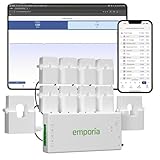
- SAFETY YOU CAN TRUST WITH UL CERTIFICATION: With Emporia Energy, your home energy monitoring is safe, reliable, and certified. The Emporia Vue is UL Listed, meaning it has met rigorous safety standards for electrical products in the U.S. and Canada. This certification ensures that every component has been thoroughly tested to prevent hazards, such as overheating, short-circuiting, or fire, offering you peace of mind as you manage your home’s energy consumption.
- INSTALLS IN CIRCUIT PANEL of most homes with clamp-on sensors. Supports Single phase, Single-split phase, and 2-wire systems. 3-wire systems; 3-phase, 4-wire Wye systems with earthed (TN or TT) neutral (no-Delta) are supported with an additional 200A sensor (sold separately).
- 24/7 ENERGY MANAGEMENT AND MONITORING: Automate, manage and control your home's real power anywhere, anytime to prevent costly repairs, conserve energy, and save costs. Monitor solar / net metering. PROTECTED BY A 1-YEAR WARRANTY.
- LOWER YOUR ELECTRIC BILL: Configure settings in the Emporia Energy App to automate energy management for time of use, peak demand, excess solar, and rewards programs. You can even see live reporting and invaluable savings opportunities instantly. Gauge real-time spending and get actionable notifications and automated energy management to help you reduce costs.
- REAL-TIME ENERGY DATA: REQUIRES 2.4 GHz WIFI WITH AN INTERNET CONNECTION to monitor energy use with iPhone / Android / Web app. Vue sensors collect energy data and are accurate from ±2%. The Vue is UL and CE Listed for your safety. 1 second data is only available in the app (when actively open) and retained 3 hours. Minute and hour data are retained in the cloud. 1 minute data is retained 7 days, 1 hour data is retained indefinitely. Export cloud data whenever you want in the app.
What can reduce a fab’s electricity demand?
Efficiency can lower energy use per unit of production, but it does not remove the need for adequate grid planning. EPRI’s historical survey associated better energy performance with factors including monitoring, efficient motors, variable-speed drives, and newer or minienvironment fabs. Those examples do not establish a guaranteed savings amount for a particular project. Assessing a proposal requires facility-specific data on expected production, energy use, peak demand, and planned efficiency measures.
How to compare the power impact of two proposed fab sites
A useful comparison separates what the facility will draw from what the local grid can provide. Ask for the following information for each site:
Free tools Windows power users keep installed
One-click scans. No signup required.
Best Value

- EM16P MODEL & LOCAL CONTROL & DATA PRIVACY: Access your home energy monitor data locally via Built-in Web UI, Open API, and MQTT without relying on cloud services. Unlike cloud-dependent monitors, Refoss ensures your data stays within your home network. Direct local access protects your privacy while giving you 100% full control of your home energy system.
- NATIVE HOME ASSISTANT & OPENCLAW AI: Experience seamless Native Home Assistant integration right out of the box—no firmware flashing or complex coding required. Featuring ✨NEW✨ OpenClaw Support, it enables AI-driven automation for smarter, real-time energy management and seamless smart home control.
- MAXIMIZE SOLAR & ZERO FEED-IN AUTOMATION: Designed for solar homes, the power monitor works with the Refoss app and Home Assistant to automatically use surplus solar power. Appliances like EV chargers, washing machines, and water heaters are powered during midday peaks, maximizing solar self-consumption and reducing low-value electricity feed-in to the grid. Optimizes usage and reduces bills.
- REAL-TIME MONITORING & ±1% ACCURACY: Monitor voltage, current, active power, and power factor of major appliances. Provides ±1% accuracy (200A: 2–200A; 60A: 1–60A) and ±2% at low current. Daily data stored up to 5 years and exportable. With no subscriptions or hidden fees, you get deep historical insights to help you identify every energy-saving opportunity and save 10–20% on monthly bills.
- SMART ALERTS & CIRCUIT-LEVEL CONTROL: Set usage targets for each individual circuit and receive instant alerts when appliances exceed normal consumption. Refoss app supports automation and peak management to optimize schedules, reduce peaks, and improve efficiency. Real-time electricity usage monitor for circuit-level insights.
- Peak power and annual energy: requested MW and expected MWh, presented separately.
- Load profile: expected operating pattern, ramp-up schedule, and whether demand is steady or can be shifted or curtailed.
- Local capacity: available generation and transmission capacity near the proposed connection.
- Connection work and costs: required upgrades and the parties responsible for paying for them.
- Reliability arrangements: backup power, possible co-located generation, and any demand-flexibility commitments.
- Efficiency: expected energy use relative to planned production and the measures intended to reduce it.
These questions help distinguish a large electricity user from a project that actually creates a local capacity or cost problem. The answer depends on the utility and grid studies for that location; national fab-energy figures cannot settle it.
Quick Recap
Product prices and availability are accurate as of the date/time indicated and are subject to change. Any price and availability information displayed on Amazon at the time of purchase will apply.




