The Tool Desk
Outbyte Driver Updater FREEScan for outdated or missing drivers - takes under a minuteDriver Scan →Outbyte PC Repair FREERepair Windows errors before they cause bigger problemsFix Now →Before buying a construction stock, check whether demand is concentrated in a vulnerable market, whether contract terms leave the company exposed to cost overruns, how dependable its backlog really is, and whether it can turn reported earnings into cash while meeting debt and bonding needs. Construction companies do not share one uniform risk profile: a materials producer, a homebuilder and a government-focused contractor can respond very differently to the same economic conditions.
Use the company’s latest annual and quarterly filings to work through the checklist below. Company-specific figures are examples, not sector-wide benchmarks; the disclosures cited here reflect fiscal 2025 reporting available as of October 7, 2026.



1. Where does the company’s demand come from?
Start with the business mix. Identify how much revenue depends on residential building, nonresidential construction, infrastructure, utilities, construction materials or engineering services. Then look at customer and regional concentration: dependence on one project owner, state, market segment or funding source can make a downturn or delay unusually damaging.
Demand can shift with interest rates, inflation, financing access, customer conditions and public budgets. These forces affect markets differently. For example, Martin Marietta says demand for construction materials can be affected by elevated interest rates, inflation, affordability, private investment and tighter credit; it also identifies public funding and project-letting schedules as drivers of infrastructure activity. In its fiscal 2025 reporting, residential and nonresidential construction markets together accounted for 58% of Martin Marietta’s aggregates shipments. That is one company’s mix, not a sector statistic. Martin Marietta Materials, Inc., 2025 Form 10-K.
#1 Best Overall
2. Who bears the risk when project costs rise?
Check the company’s contract mix, where disclosed: fixed-price or lump-sum, fixed-unit-price, cost-reimbursable, and time-and-materials work can allocate cost risk differently. A fixed-price contract can limit the customer’s exposure while leaving the contractor responsible if labor, materials, fuel or other actual costs exceed its estimate.
Look beyond the contract labels. Review discussion of bidding assumptions, project delays, labor productivity, change orders, claims, cost escalators and recognized contract losses. Sterling Infrastructure warns that inaccurate estimates or failure to control actual costs can lead to overruns, losses or lower-than-expected profitability. Granite Construction identifies inflation, tariffs, inefficiency and incorrect assumptions as potential sources of higher project costs. Sterling Infrastructure, Inc., 2025 Form 10-K; Granite Construction Incorporated, 2025 Form 10-K.
Rank #2

- Keep track of everything from attendance to test scores
- Spiral bound
- Measures 8-1/2" x 11"
Compare contract mix with project results and margins over several reporting periods. The disclosures do not show that one contract type is always safer: protection depends on specific terms, escalation clauses, execution and the company’s estimating and project-control record.
3. Is the backlog likely to convert into profitable work?
Read the company’s exact definition of backlog rather than treating the headline amount as guaranteed revenue. Check whether projects are awarded, funded, permitted and released to proceed; when the work is expected to convert into revenue; and whether management expects it to be profitable. Watch for cancellations, reduced scope, delayed starts and backlog growth driven by acquisitions.
Tutor Perini defines backlog as awarded work but warns that projects may be cancelled or reduced, and that reported backlog may not become revenue or may not be profitable. The company reported approximately $20.6 billion of uncompleted construction backlog at December 31, 2025, and estimated that about $6 billion—approximately 29%—would be recognized as 2026 revenue. This was a dated company estimate, not an assurance of completion or profit and not a sector benchmark. Tutor Perini Corporation, 2025 Form 10-K.
4. Can the company manage labor, materials and subcontractor risks?
Review exposure to labor shortages and wage pressure, materials and fuel inflation, tariffs, energy costs, supplier disruptions and subcontractor availability. Then ask whether contract terms allow the company to pass through cost increases, whether escalation clauses apply, and whether it can obtain supplies and qualified subcontractors when needed.
Rank #4
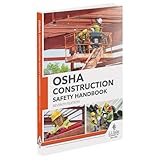
- 2024 OSHA Construction Safety Book is the seventh edition with the new OSHA HazCom final rule on 5/20/24. While the rule takes effect 7/19/24, the compliance dates don’t begin until 1/19/26 per 29 CFR 1910.1200(j).
- Construction Site Book offers quick access to essential OSHA regulations, jobsite hazards, and practical safety tips. It also helps employees identify hazards and prevent injuries and illnesses.
- Features easy-to-read format, full-color images, chapter quizzes with answer key, and comes in a compact size making it a convenient reference for employees.
- Critical topics include Confined Space Entry; Cranes & Derricks; Electrical Safety; Emergency Response; Ergonomics & Back Safety; Excavations; Fall Protection; First Aid & Bloodborne Pathogens; HazCom; Health & Wellness; Jobsite Exposures; Lockout/Tagout; Ladders & Stairways; Materials Handling/Storage; Motor Vehicles; PPE; Scaffolds; Site Safety & Security; Slips, Trips & Falls; Tool Safety; Welding, Cutting & Brazing; and Work Zone Safety.
- Specifications: 5 1/4” x 7 1/4", English, Soft bound. 7th Edition. Copyright 2024.
Sterling Infrastructure identifies suppliers and subcontractors as significant dependencies: shortages or higher costs can affect margins and the company’s ability to bid competitively. Its disclosure is an example of a risk to investigate, not evidence that every construction company has the same exposure. Sterling Infrastructure, Inc., 2025 Form 10-K.
5. How exposed is the business to public funding and government contracts?
For a government-focused contractor, examine the source and timing of appropriations, procurement delays, payment timing, audit exposure, termination rights and consequences of performance failures. A project can be awarded yet remain vulnerable to changes in funding or timing.
Granite Construction reported that about 70% of its construction revenue in fiscal 2025 was funded by federal, state and local agencies and authorities. That figure describes Granite’s own revenue mix, not a typical level for construction stocks. Tutor Perini’s filing also illustrates how government customers and contract termination or funding decisions can affect project timing and backlog. Granite Construction Incorporated, 2025 Form 10-K; Tutor Perini Corporation, 2025 Form 10-K.
Independent reader supportYour contribution helps us test, update, and keep practical guides available for everyone.6. Do earnings translate into cash, and can the company finance its obligations?
Compare operating cash flow with reported earnings. Track working capital, receivables, contract assets, retainage, capital spending, debt maturities, interest expense and liquidity. Project companies may have to pay for labor and materials before receiving customer payments, so cash timing can matter even when revenue and earnings appear strong.
Also assess bonding capacity: surety providers’ decisions and collateral requirements can affect a contractor’s ability to pursue or perform new work. Quanta Services identifies surety decisions, collateral costs, liquidity, debt service and operating cash needs as relevant risks or funding needs. There is no single debt or cash-flow threshold that fits every contractor; interpret these measures in light of the issuer’s business model, project risk, obligations and access to financing. Quanta Services, Inc., 2025 Form 10-K.
7. How can you compare two construction companies?
Compare like with like, and use the same reporting periods where possible. The following dimensions help reveal differences in exposure; they are analytical guidance, not a regulator-issued scoring system.
| Comparison area | What to examine |
|---|---|
| End markets and geography | Revenue mix by market and region; sensitivity to private investment, housing, infrastructure and local economic conditions. |
| Customers and funding | Dependence on major customers, government agencies, appropriations or other funding sources. |
| Contract mix | Share and terms of fixed-price, fixed-unit-price, cost-reimbursable and time-and-materials work; cost escalation and pass-through protections. |
| Backlog | Definition, award and funding status, permits or release requirements, expected conversion timing, cancellation history and expected profitability. |
| Execution record | Margin stability, cost overruns, project losses, delays, claims and change-order experience. |
| Inputs and partners | Exposure to labor, materials, tariffs, suppliers and subcontractors, plus ability to secure supply and recover higher costs. |
| Financial resilience | Cash conversion, working capital, debt and interest obligations, liquidity and bonding capacity. |
8. How should you use the risk disclosures?
Risk-factor language describes possibilities, not forecasts or proof that a loss will occur. The useful question is whether a stated risk connects to the company’s actual business mix, contract terms, project performance and financial position. Read the latest annual and quarterly filings because disclosures can change; figures from fiscal 2025 reports may be superseded by later filings. The company examples above do not establish a uniform risk profile for the sector.
Quick Recap
Product prices and availability are accurate as of the date/time indicated and are subject to change. Any price and availability information displayed on Amazon at the time of purchase will apply.




