Do these 3 things before closing this tab:
1Scan for outdated or missing drivers - takes under a minute2Repair Windows errors before they cause bigger problems3Fix the driver behind crashes, sound loss and screen glitchesA neocloud is a cloud provider specializing in GPU computing and AI workloads, particularly model training and inference. AWS, Microsoft Azure, and Google Cloud also offer GPU capacity; the difference is that their GPU services sit within much broader cloud platforms. For a buyer, the useful comparison is not simply GPU price: it is the full cost and operational fit of the workload, including hardware availability, networking, storage, managed services, support, and compliance.
What is a neocloud?
“Neocloud” is a recent label for a cloud provider built around GPU compute and AI workloads rather than general-purpose enterprise applications. Microsoft for Startups uses the term this way and names CoreWeave, Crusoe, Lambda, and Nebius as examples. It is a description of provider focus, not an industry-wide certification or a fixed membership list. Microsoft for Startups’ explanation
These providers may offer direct access to GPU servers, including bare-metal systems, and networking designed to connect multiple machines for distributed training. That can suit large AI jobs, but it does not automatically mean a simpler or cheaper deployment. Customers may need to handle scheduling, failed nodes, data movement, driver and CUDA compatibility, security updates, and keeping costly accelerators occupied. Microsoft for Startups’ guide
How does a neocloud differ from a hyperscaler?
The central distinction is specialization versus breadth. Neoclouds focus on GPU infrastructure and AI-oriented services. Hyperscalers pair GPU offerings with a much wider platform, which can include storage, databases, identity, security, compliance tools, and cloud regions. This does not mean hyperscalers lack GPUs: all three major providers document GPU products.
#1 Best Overall

- System Compatibility Note: This 2-slot card measures 271 x 112 x 39 mm and requires a single 12V-2x6-pin power connector. Please verify chassis and PSU compatibility before purchase.
- Dedicated Support: Please contact us directly through Amazon for any product questions or assistance you may require.
- Professional Intel Arc Pro B70 GPU: Built on the Intel Xe2-HPG architecture, it features 32 Xe cores and 256 XMX engines, designed to accelerate AI, rendering, and complex visualization workloads.
- Massive 32GB GDDR6 VRAM: Equipped with 32GB of high-speed GDDR6 memory on a 256-bit bus, running at 19 Gbps, which allows for handling large AI models and complex datasets locally.
- High-Performance Engine Clock: Delivers an engine clock of 2540 MHz, providing the compute power needed for demanding professional applications and AI inference.
| Consideration | Neocloud | AWS, Azure, or Google Cloud |
|---|---|---|
| Provider focus | GPU compute and AI workloads. | GPU compute within a broad cloud platform. |
| Infrastructure and operations | May provide direct or bare-metal access and AI-oriented networking; the customer may take on more infrastructure operations. | GPU services can be used alongside the provider’s wider cloud services; the precise operating model depends on the product. |
| GPU availability | Depends on provider, accelerator, cluster size, and location. | Also depends on accelerator, instance or VM SKU, and location; verify current regional availability. |
| Cost comparison | Compare more than the GPU-hour rate, including storage, data transfer, operations, and contract terms. | Use the same workload assumptions and include related cloud services, storage, and transfer costs. |
The table describes category-level differences, not guarantees for every provider or product. Microsoft’s guide says neoclouds may offer faster access and lower raw GPU-hour prices for AI-specific work, but that is a general claim in a vendor-authored guide, not a live price survey or promise. A meaningful price comparison needs the same date, accelerator, region, duration, networking, storage, and service level.
What GPU options do the hyperscalers offer?
Official product pages show that GPU capacity is available from AWS, Google Cloud, and Azure. Their instance and VM families change, and the sources do not establish identical availability in every region. Check the current SKU and capacity for the location you need before committing.
Rank #2
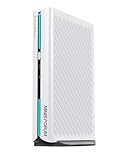
- 【Powerful Performance】The MINISFORUM G1 Pro Mini PC is powered by the high-performance AMD Ryzen 9 8945HX processor (16 cores, 32 threads, up to 5.4GHz). It delivers exceptional speed to smoothly handle heavy computing workloads and multitasking with ease. Ideal for gaming, image and video editing, web browsing, media streaming, programming, and more.
- 【Stunning Graphics Performance】Features a dedicated GeForce RTX 5060 8GB graphics card for outstanding visual performance. Supports real‑time ray tracing and DLSS super‑resolution technology, producing highly realistic lighting, shadows, and reflections for an immersive gaming experience. Built on the Ada Lovelace architecture, it maximizes ray‑tracing efficiency and accurately simulates real‑world light behavior. DLSS 4, an advanced AI‑powered graphics technology, boosts performance significantly by generating high‑quality additional frames, perfectly optimized for next‑generation high‑efficiency gaming.
- 【Five Outputs for Four Displays】The G1 Pro Mini PC comes with 2x HDMI and 3x DisplayPort, it supports you to connect four ultra high definition monitors simultaneously. Expand your workspace and greatly improve work efficiency. Suitable for high performance computing and graphics intensive applications such as digital signage, securities trading, CAD, engineering design, scientific computing, animation production, and film and television post production—perfect for professional users and industry experts.
- 【Wired & Wireless Connectivity】Equipped with a 5G RJ45 Ethernet port for stable wired networking, plus Wi‑Fi 7 and Bluetooth 5.4 for ultra‑fast wireless connections. Compared to Wi‑Fi 6’s maximum 8×8 spatial streams, Wi‑Fi 7 supports up to 16×16 spatial streams, greatly enhancing network speed, stability, and overall system performance.
- 【Expandable Storage】This Mini Computer has pre-installed 32GB DDR5-5200MT/s RAM and 1TB M.2 2280 PCIe4.0 SSD. However, you could expand the DDR5 RAM up to 64GB and 2TB for the SSD. There is another M.2 2280 PCIe4.0 slot available for expanding the storage. Without worrying about lack of capacity, you can run software smoothly, watch and storage large-scale movies, photos without any stress.
- AWS: Its accelerated-computing page lists EC2 P5 instances with NVIDIA H100 or H200 configurations and P6 instances using Blackwell-family GPUs. AWS accelerated computing
- Google Cloud: Its Compute Engine GPU page lists a range of GPU types and describes flexible machine configurations. Google Cloud GPU documentation
- Microsoft Azure: Its VM documentation lists GPU-optimized families, including ND H100 and H200 series. Azure GPU-accelerated VM sizes
Which providers are described as neoclouds?
Provider labels and service descriptions can help identify the category, but they are not independent evaluations of speed, reliability, or value. NVIDIA’s partner directory describes Crusoe Cloud as an AI cloud, Lambda as an AI developer cloud with hosted GPUs and managed inference options, and Nebius as a full-stack AI cloud offering compute, storage, and managed services. NVIDIA partner directory
In a May 18, 2025 announcement about DGX Cloud Lepton, NVIDIA also named CoreWeave, Crusoe, Lambda, and Nebius among GPU cloud providers participating in its announced ecosystem. NVIDIA founder and CEO Jensen Huang said, “NVIDIA DGX Cloud Lepton connects our network of global GPU cloud providers with AI developers.” That is NVIDIA’s description of its ecosystem, not an independent performance assessment. NVIDIA DGX Cloud Lepton announcement
Quick wins for a faster PC:
Scan for outdated or missing drivers - takes under a minuteDriver Scan →Clear out junk files and repair common Windows errorsFree Scan →Rank #3

- System Compatibility Note: 2-slot card, 271x112x39mm, single 8-pin power, 200W TDP. Verify chassis clearance and PSU capacity before purchase.
- Dedicated Support: Please contact us directly through Amazon for any product questions or assistance you may require.
- 24GB GDDR6 on 192-Bit Bus: Massive 24GB memory with 456 GB/s bandwidth – ideal for LLMs, AI inference, 3D rendering, and generative design.
- Intel Xe2-HPG Architecture: Built on Intel's next-gen architecture with 20 Xe cores and 160 XMX engines for AI acceleration (197 INT8 TOPS).
- PCIe 5.0 Support: PCI Express 5.0 x16 interface for maximum bandwidth with the latest workstation platforms.
How should you compare GPU cloud options?
Start with the workload, then compare the complete deployment rather than a headline hourly rate. The same provider may be a good fit for a large training cluster and a poor fit for a production application that depends on managed databases, identity controls, or regional services.
- Define the job. Distinguish model training, inference, and application hosting. Estimate the number and type of GPUs, memory needs, cluster scale, runtime, and how tightly machines must communicate.
- Confirm the actual capacity. Compare GPU model and memory, interconnect and networking, region, and time to capacity. A listed SKU is not proof that the required amount of capacity is available when and where you need it.
- Calculate total cost. Include GPU compute, storage, data transfer and egress, networking, contract or committed-use terms, and the engineering time needed to run the environment. Compare like-for-like configurations and terms on the same date.
- Check platform needs. Identify whether the application relies on managed databases, identity, security tools, compliance offerings, or other cloud services. Account for the cost and work of operating those capabilities separately if they are not included.
- Assess operational capacity. Decide who will schedule jobs, recover from node failures, manage drivers and CUDA versions, patch systems, move data, and keep GPUs utilized. Direct hardware access can bring flexibility but also more responsibility.
- Review production requirements. Compare support, reliability commitments, security and compliance requirements, portability, and the consequences of splitting identity and security across providers.
Using more than one cloud can improve access to different capacity or services, but it can also add data movement and egress costs, separate identity and security setups, and operational complexity. Treat those as part of the comparison rather than incidental overhead.
Rank #4

- POWERFUL BUSINESS PERFORMANCE – The Dell Precision 3431 is a professional-grade business workstation featuring an Intel Core i5-9500 9th Gen Hexa-Core processor, delivering fast performance, efficient multitasking, and enterprise-level reliability for office environments.
- OPTIMIZED MEMORY & STORAGE FOR PRODUCTIVITY – Equipped with 16GB DDR4 RAM for smooth multitasking and a 1TB SSD, this workstation provides lightning-fast boot times, quick file access, and ample storage for business applications and large datasets.
- PPROFESSIONAL GRAPHICS FOR VISUAL WORKLOADS – Featuring an NVIDIA Quadro P620 2GB graphics card, the Dell Precision 3431 is designed for business professionals, engineers, and creatives who need reliable performance for CAD, 3D modeling, and multi-display setups.
- WINDOWS 11 PRO & ESSENTIAL CONNECTIVITY – Pre-installed with Windows 11 Pro, offering advanced security, remote desktop access, and business-friendly features. Built-in WiFi and Bluetooth ensure seamless connectivity to networks, wireless peripherals, and office devices.
- READY-TO-USE WITH INCLUDED KEYBOARD & MOUSE – Comes with a wired keyboard and mouse, ensuring a plug-and-play setup for immediate productivity in any office or professional workspace.
When might each approach fit?
A neocloud may fit when GPU compute is the main requirement
A specialized provider is worth evaluating when the work is centered on AI compute, the required accelerators and cluster networking are available, and the team can operate the surrounding infrastructure or has suitable managed options. Confirm support, region, capacity, and the full cost before choosing.
A hyperscaler may fit when the GPU is one part of a larger application
A broad cloud platform may be convenient when the workload already depends on its storage, databases, identity, security, compliance offerings, or regional footprint. Its GPU product still needs to be checked for the needed hardware and capacity; platform breadth alone does not settle the price or performance question.
Best Value

- Oversized Mighty40 cooling system with two 220 x 40 mm front intake fans and one 180 x 40 mm rear exhaust fan.
- Low airflow resistance design uses large front and rear ventilation openings to improve airflow throughput.
- Split-level cable management optimizes routing space and creates room for oversized rear exhaust cooling.
- MasterRail mounting system supports multiple fan and radiator sizes at the front and top of the case.
- Dual-Mode GPU Holder clamps a single GPU for added stability or supports two GPUs up to 3.6 slots (72 mm) thick each.
Is there a universally best or cheapest GPU cloud?
No universal ranking is established by the available product descriptions. The better choice depends on workload, GPU and cluster requirements, region, total cost, managed-service needs, compliance, support, and the team’s ability to operate the environment. Compare current offers against the same deployment assumptions instead of treating “neocloud” or “hyperscaler” as a guarantee.
Quick Recap
Product prices and availability are accurate as of the date/time indicated and are subject to change. Any price and availability information displayed on Amazon at the time of purchase will apply.




