Free tools Windows power users keep installed
One-click scans. No signup required.
Before deciding whether a listed company merits further research, read its quarterly update as a connected set of disclosures—not as a headline earnings number. For a U.S. public company, start with its earnings release and any related Form 8-K, then use the Form 10-Q to examine the financial statements, management’s explanations, risks, and outlook. Comparing those disclosures with prior periods can help you identify questions to investigate; it cannot predict returns or guarantee an investment outcome.
What to read first: the release, 8-K, and 10-Q
An earnings release is a useful entry point because it summarizes results and may announce an earnings call. Companies may furnish or file the release and related information in a Form 8-K. The release is not a substitute for the quarterly filing: it may be concise, while the 10-Q contains fuller financial statements and disclosures. Investor.gov explains how to read an 8-K.


For a U.S. issuer, open the company’s Form 10-Q in SEC EDGAR. Investor.gov describes the 10-Q as a quarterly report with unaudited financial statements and information about the company’s operations in the prior three months. It also includes management’s discussion and analysis (MD&A), risk information, and other disclosures. Use Investor.gov’s EDGAR guide to find filings. A 10-Q’s interim financial statements are unaudited; annual 10-K financial statements are generally audited.
Compare the right periods
Before judging whether a result is improving or weakening, label the periods you are comparing. A company’s fiscal quarter may not align with a calendar quarter. Compare with the same fiscal quarter a year earlier to account for seasonality, then use the immediately preceding quarter when it helps explain recent direction. Check year-to-date figures and segment results where disclosed. This is a practical reading method, not an SEC scoring formula.
Recommended Free Tools
#1 Best Overall
Investor.gov’s guide to reading a 10-K or 10-Q explains the parts of these filings. Read the figures alongside the notes and MD&A rather than treating any one growth rate or ratio as a verdict.
Read the three financial statements together
The statements answer different questions. A strong headline result can look less convincing when you examine cash generation, debt, working capital, or the explanations in the notes.
Rank #2
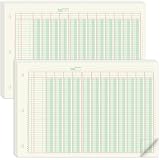
- 12 Column Ledger Book Bulk: this set includes 2 packs of analytical notebooks, 50 sheets per pack, 100 sheets in total, ample supply to meet long term needs and reduce repeat purchases, the multi-column design facilitates recording income and expenses
- Accounting Ledger Details: measuring 16.4 x 11 inches, a moderate size, easy to carry and write on. Made with 80gsm is archival for long term record preservation; each sheet is numbered in rows and columns, eliminating the need for manual numbering
- Green for Eye Comfort: the columnar analysis pad features a soothing green color designed to minimize eye strain during long periods of work. Suitable for those who need to view spreadsheets for extended periods ans want to avoid excessive eye fatigue
- 3 Hole Accounting Ledger Pad: this 12 column accounting ledger features 3 holes, 40 rows of numbered data, 12 columns per row and includes instructions for easy binding with a binder.This design provides flexibility in using and storing these ledgers
- Usage of the Ledger Book: This 12 column ledger has a padded backing and tear lines and adhesive on the front, making it convenient for use. These ledgers are versatile and can meet the needs of various groups, including accountants, teachers, and students
Income statement: what changed in performance?
- Did revenue rise or fall, and what does management say drove the change?
- Did gross or operating margins move? Consider whether changes reflect pricing, costs, product mix, or other disclosed factors.
- Were earnings affected by unusual gains or costs, financing expenses, taxes, or a change in share count?
Balance sheet: what is the company’s financial position?
- Review cash and debt, then look for changes in receivables, inventory, and other working-capital balances relative to sales.
- Read the notes for commitments, liabilities, estimates, and assumptions that help explain reported balances.
- Interpret changes in context. Rising inventory may be normal ahead of a seasonal sales period, or it may deserve closer attention if demand is weakening.
Cash-flow statement: how did cash move?
- Compare operating cash flow with earnings. The two can diverge because operating cash flow adjusts net income for non-cash items and working-capital changes.
- Separate cash from ordinary operations from movements tied to working capital, investment, borrowing, or issuing or repurchasing shares.
- Check investing cash flow for purchases or sales of long-lived assets, which the SEC’s Beginners’ Guide to Financial Statements discusses.
Test management’s explanation against the filing
MD&A is management’s account of operating results, liquidity, capital resources, material changes, critical accounting judgments, and known trends or uncertainties. Treat its explanations as management’s interpretation, then check whether the financial statements and notes support them. The SEC guide says its MD&A rules require disclosure of trends, events, or uncertainties known to management that would materially affect reported financial information.
Also review the risk disclosures for material changes and look for disclosures about control problems or changes. A new or revised disclosure is a reason to understand what changed; by itself, it does not establish misconduct or forecast a stock’s performance.
Separate GAAP results from adjusted figures
If a company emphasizes adjusted earnings, EBITDA, or another non-GAAP measure, find the closest comparable GAAP measure and the reconciliation. Identify which costs or gains were excluded, and whether similar exclusions appear repeatedly. Non-GAAP measures do not conform to GAAP, and presentation and reconciliation are addressed in the SEC’s guidance on non-GAAP financial measures. An adjusted figure can provide context, but it should not replace your review of reported results.
Read outlook as an expectation, not a result
Keep reported performance separate from management’s forecasts. Note any change in guidance, the assumptions behind it, and the risks the company identifies. A forecast is not a guarantee. When a later report becomes available, compare the outcome with the earlier expectations and consider what changed.
Compare companies only when the comparison is meaningful
For genuinely comparable businesses, useful axes may include growth, margins, cash conversion, liquidity and leverage, segment trends, share count, and outlook. Compare each company with its own history as well as with peers. Business mix, seasonality, fiscal calendars, and accounting estimates can make a simple ratio comparison misleading. SEC and Investor.gov guides explain what filings contain; they do not provide a universal cross-industry ranking formula.
Independent reader supportYour contribution helps us test, update, and keep practical guides available for everyone.Make the process manageable during earnings season
If you follow many companies, use the same sequence for each rather than trying to read every document with equal attention. An earnings release can orient you, but the 10-Q is the primary quarterly filing for checking the underlying numbers and disclosures. A presentation or call transcript may add context, but do not let either replace the filing’s statements, notes, and MD&A.
What’s actually slowing this PC down?
Pick the symptom - the matching free tool is one click away.
Best Value
- Find the latest release and related 8-K, if available, to identify the reported period and headline changes.
- Open the 10-Q through EDGAR and confirm the fiscal period covered.
- Compare the income statement, balance sheet, cash flow, and disclosed segments with the same quarter a year earlier; add sequential and year-to-date comparisons where useful.
- Read MD&A, relevant notes, risk updates, and control disclosures to check management’s explanations and identify unresolved questions.
- Reconcile highlighted non-GAAP measures to GAAP results and record changes in outlook for comparison with future reports.
A 10-Q is a snapshot that can reflect seasonality, unusual events, estimates, and timing. A repeatable reading process helps surface questions and risks; it does not replace individualized financial advice or establish whether an investment is suitable for you. The forms and guidance discussed here apply to U.S. reporting. Foreign issuers and other jurisdictions may use different forms, reporting calendars, and accounting rules, so confirm the applicable filing and reporting basis for the company you are reviewing.
Quick Recap
Product prices and availability are accurate as of the date/time indicated and are subject to change. Any price and availability information displayed on Amazon at the time of purchase will apply.




