Crashes, No Sound, or Screen Glitches?
Random freezes, missing sound and display glitches usually trace back to one bad driver. Find and replace yours safely.Free scan · under a minutePC Slower Than It Used to Be?
A free scan shows the junk files, broken settings and background clutter dragging Windows down - then fixes them in one click.Free scan · Windows 10 & 11You can invest in Indian stocks through an index mutual fund by completing KYC, choosing a fund that tracks an index suited to your goals, reviewing its current costs and tracking information, and investing through an AMC or an AMFI-registered distributor. A demat or trading account is not a universal prerequisite for buying mutual-fund units directly.
What an index mutual fund does
An index mutual fund aims to mirror a named stock-market index, such as the Nifty 50, by holding all or most of its constituent companies in proportions intended to track the index. It is passively managed: its aim is to follow the benchmark, not outperform it. Fund expenses and operational factors can cause its returns to differ from the index; this difference is associated with tracking error. Diversification across companies can reduce reliance on any one stock, but it cannot remove market risk or guarantee gains. SEBI’s investor material on index funds explains the concept and uses the Nifty 50 as an example.


How to start investing
- Choose the kind of market exposure. Find the index the scheme tracks and consider whether its breadth fits your purpose. An “index fund” may track a broad-market index or a narrower sectoral or thematic index; the label alone does not mean it represents the whole Indian market.
- Complete KYC. KYC is required before investing in mutual funds. Follow the current instructions from the AMC or intermediary you choose. AMFI’s investor guidance describes this prerequisite and the available investment channels.
- Select an access route. You can invest directly through an AMC’s online channel without routing the purchase through a distributor, or use an AMFI-registered distributor. AMFI also describes conventional application channels. Check the provider’s current process; a third-party platform should not be treated as endorsed by AMFI just because it offers mutual funds.
- Review the scheme and plan documents. Check the scheme information document and key information for the benchmark, current expense ratio, and published tracking information. Compare like with like: the same index, plan type, and current disclosures.
- Place the investment and save the records. Follow the AMC or distributor’s instructions for a lump-sum purchase or systematic investment plan (SIP). The minimum amount and available transaction options depend on the scheme and its current terms, so verify them before placing an order.
How to compare index funds
Use the same core checks when comparing schemes, rather than choosing by name alone:
- Index and breadth: Identify the exact benchmark and the exposure it represents. A broad index and a sector-specific index have different concentrations and risks.
- Expense ratio: Check the current figure for the plan you would actually buy. Do not rely on old examples or historical figures as current scheme costs.
- Tracking: Review the scheme’s published tracking information. Expenses and operational factors can lead the fund to diverge from its benchmark; tracking error is one measure of that divergence.
- Plan and route: Establish whether the scheme is offered as a direct or regular plan and compare the current documents for that plan.
There is no single “best” index fund established by these general criteria. Current scheme-level fees and tracking figures change and must be checked in the relevant documents; the comparison method is more durable than a stale ranking.
#1 Best Overall
Direct versus regular plans
A direct plan is purchased from the AMC without an intermediary. A regular plan involves an intermediary, such as a distributor. SEBI’s educational guidance explains that direct plans have lower costs because distributor commissions are not included in the same way, while regular plans include intermediary support and have higher costs. The trade-off is therefore not simply “cheap versus expensive”: consider whether you want distributor assistance and compare the actual current plan documents and expense ratios. SEBI’s investor education materials discuss the distinction; illustrative examples on educational pages are not current offers or return forecasts.
Do you need a demat account or broker?
Not necessarily. SEBI’s general securities-market guidance describes a route involving a demat account with a registered depository participant, a trading account with a registered broker, and a bank account for payments. That is the securities-market route. Mutual-fund purchases can instead be made through an AMC or an AMFI-registered distributor, as AMFI describes. A demat account may be used to hold mutual-fund units where applicable, but that is distinct from the direct mutual-fund route and should not be assumed to be mandatory for every investor.
Rank #2
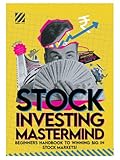
- Master Stock Investing: Beginner's guide covers fundamental analysis, Indian market strategies, and risk management, offering confidence in navigating the stock market effectively.
- Indian Market Strategies: Strategies for profitable investing by understanding market dynamics, regulations, and opportunities available in the Indian market.
- Manage Risk, Maximize Returns: Learn essential strategies for protecting and optimizing investments, including diversification, position sizing, and hedging against volatility.
- Fundamental Analysis Strategies & Methods for Investing in Growing, Multibagger stocks, at the right price | Buy, Hold, & Sell Based on Stock Performance | Long Term Investing
- Proven Investment Strategies: Uncover effective approaches to navigate market fluctuations and achieve sustainable long-term financial objectives with confidence.
Risks and limits to keep in mind
- An index fund follows its stated benchmark; it does not promise to beat the market or deliver a particular return.
- Its value can fall when the underlying shares fall. Diversification does not eliminate market risk.
- Fund performance can differ from index performance because of costs and operational factors.
- Past index performance is not a promise of future fund returns. The current documents, rather than a generic example, are the place to verify scheme-specific costs and terms.
This is general educational information, not individualized financial or tax advice. The cited investor materials explain the basic process and concepts; they do not establish a current recommended scheme, a universal minimum investment, or scheme-specific expected returns.
Quick Recap
Best Value

- WHAT'S INCLUDED: 110 durable (3"x5") flashcards covering all the essential aspects of fundamental analysis. Learn to analyze financial statements, key ratios, valuation metrics, and stock evaluation techniques like a pro. Plus, get 1 month of exclusive access to an online training and research platform focused on fundamental analysis for evaluating companies. Simply scan the QR code on your thank-you card to access your digital content.
- MASTER DEFINITIVE INVESTMENT PRINCIPLES, SUITABLE FOR INVESTORS AND TRADERS, Providing a Clear Roadmap for Understanding Financial Metrics and Analyzing Stocks.
- DISCOVER THE POWER OF QUICK STUDY CARDS: An Effective Alternative to Lengthy Books. They Deliver Precise, Focused Information on Financial Metrics and Stock Analysis, Making Learning Fun and Efficient for Investors and Traders.
- INSTANTLY RECOGNIZE STOCK VALUATION TRENDS AND IDENTIFY HIDDEN OPPORTUNITIES with Strategies Most Investors and Traders Overlook.
- DON'T WASTE TIME ON LOW-PROBABILITY INVESTING STRATEGIES. Focus on Learning High Probability, High Payout Strategies for Optimal Investing Success.
Product prices and availability are accurate as of the date/time indicated and are subject to change. Any price and availability information displayed on Amazon at the time of purchase will apply.




