Free tools Windows power users keep installed
One-click scans. No signup required.
TBPN’s October 5, 2026 episode brought together five distinct debates: whether to license company data to AI developers, how to make mortgage-servicing software work in live operations, how to support founders and assign responsibility for autonomous systems, whether personal AI can run privately on users’ devices, and how to train AI on office work beyond coding. The account below follows Dealroom.co’s October 6 summary; the claims and figures are attributed to that secondary account, not independently verified against a transcript or video.
Why the episode ranged across five different AI questions
The segments were not a single product discussion. Instead, they covered five parts of the AI economy: access to data, enterprise workflow software, venture support and safety, local computing, and training environments. Read together, they ask who controls the inputs to AI, where it runs, how it is tested, and who bears responsibility when it acts.
Ridge weighed a data-licensing payment against brand risk
Dealroom reports that Ridge CEO Sean Frank declined a data broker’s offer of around $480,000 to license Ridge data to AI developers. The summary says Frank viewed the payment as relatively small beside Ridge’s revenue, which he described as already in the hundreds of millions of dollars, while the prospect raised reputational concerns.
The episode’s reported discussion also touched on AI’s effects on e-commerce operations, advertising and creative production, agent-driven shopping, TikTok marketing, celebrity partnerships, and possible physical retail. The decision described is specifically about the broker’s offer; the summary does not establish whether Ridge data was available to AI developers through any other channel.
The Tool Desk
Outbyte PC Repair FREERepair Windows errors before they cause bigger problemsFix Now →Outbyte Driver Updater FREEFix the driver behind crashes, sound loss and screen glitchesFind Drivers →#1 Best Overall
![Arduino® UNO™ Q 4GB [ABX00173]- Hybrid Board, Qualcomm Dragonwing QRB2210 microprocessor (MPU) & STM32U585 Microcontroller(MCU), AI Vision, Voice, IoT, Robotics, Linux Debian OS, Wi-Fi 5, USB-C](https://m.media-amazon.com/images/I/51cl4xygwGL._SL160_.jpg)
- Dual-Brain Hybrid Power: Combines the Qualcomm Dragonwing QRB2210 MPU (Quad-core Arm Cortex-A53 @ 2.0 GHz CPU, Adreno GPU, AI acceleration) and the real-time, low-power STM32U585 MCU for advanced applications like object recognition, voice commands, and motion detection.
- AI & Linux Capabilities: Unlocks AI-powered vision and sound solutions; runs Linux Debian OS for coding in Python and supports the Arduino ecosystem with libraries and Sketches; quick start with Arduino App Lab.
- Advanced Features: Equipped with 4 GB LPDDR4 RAM, 32 GB eMMC built-in storage, ideal for single-board computer (SBC) mode, running multiple simultaneous high-level processes, more complex AI or ML models, extensive logs. Dual-band Wi-Fi 5 (2.4/5 GHz), Bluetooth 5.1, and high-speed headers for vision, audio, and display peripherals.
- Seamless Expansion & Connectivity: Features the classic UNO form factor for shields compatibility, an 8x13 LED matrix, and a Qwiic connector for easy expansion with Modulino nodes; power and connect via the USB-C connector.
- Intended Use & Development: The perfect platform for prototyping robotics or IoT projects, empowering innovators with a unified development experience to mix Arduino Sketches, Python scripts, and containerized AI models in a single interface.
Valon’s case for proving mortgage software in production
Valon president, COO, and co-founder Linda Du described a strategy of building and operating the company’s own mortgage servicer before selling its AI-powered servicing technology to other firms. The idea is to test the software against the demands of a live servicing operation, rather than relying only on a product demonstration.
Dealroom’s recap reports that Du announced a $150 million Series D at a $2.3 billion valuation. Those financing figures are reported by Dealroom as part of its episode summary. Du also argued that AI agents need directly callable APIs—interfaces that let software request actions or data—rather than relying on screens designed for human operators. That distinction matters when a lender wants automation to interact with servicing systems as software, not imitate a person navigating a website.
Neo changed its founder programs and raised an AI-liability question
Ali Partovi described changes to Neo’s founder programs. According to Dealroom, the Neo Scholars class was reduced to ten people from a prior class size of eighteen to twenty, while Neo Accelerator became Neo Residency. The Residency was described as supporting roughly a dozen companies with more capital for each. The summary also mentions Neo investments in Cursor and Etched.
Rank #2
- Dual-Brain Hybrid Power: Combines the Qualcomm Dragonwing QRB2210 MPU (Quad-core Arm Cortex-A53 @ 2.0 GHz CPU, Adreno GPU, AI acceleration) and the real-time, low-power STM32U585 MCU for advanced applications like object recognition, voice commands, and motion detection.
- AI & Linux Capabilities: Unlocks AI-powered vision and sound solutions; runs Linux Debian OS for coding in Python and supports the Arduino ecosystem with libraries and Sketches; quick start with Arduino App Lab.
- Advanced Features: Equipped with 2 GB LPDDR4 RAM, 16 GB eMMC built-in storage, ideal to develop in PC-connected mode, running the OS, Python scripts, and basic network services (SSH) without a demanding GUI or heavy multitasking; great for lightweight AI and memory-optimized TinyML applications, needing local storage for basic OS and core libraries. Dual-band Wi-Fi 5 (2.4/5 GHz), Bluetooth 5.1, and high-speed headers for vision, audio, and display peripherals.
- Seamless Expansion & Connectivity: Features the classic UNO form factor for shields compatibility, an 8x13 LED matrix, and a Qwiic connector for easy expansion with Modulino nodes; power and connect via the USB-C connector.
- Intended Use & Development: The perfect platform for prototyping robotics or IoT projects, empowering innovators with a unified development experience to mix Arduino Sketches, Python scripts, and containerized AI models in a single interface.
On AI safety, Dealroom attributes to Partovi the view that companies training models should bear liability when autonomous systems commit crimes users did not request. The summary characterizes his reasoning as analogous to a duty of care. This is a reported position, not a statement of settled law or a verbatim quotation.
Underdog’s pitch is personal AI that stays on a user’s devices
Conway Research founder Sigil Wen discussed Underdog, described by Dealroom as a free personal AI designed to run entirely on a user’s devices, without databases or data centres. The report said an invite-only beta had opened that week and that the team had received around 5,000 requests on X within days. It also described an iOS app as near launch, with Nvidia, Windows, Linux, and Android support planned.
Those rollout details are time-sensitive: they describe what Dealroom reported on October 6, 2026, not confirmation of current availability. The summary does not name a supported computer or minimum hardware requirements, so it does not establish which devices can run Underdog.
Rank #3
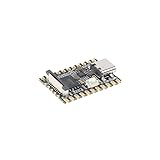
- Single core ARM Cortex-A7 32-bit core, integrated with NEON and FPU
- Built in Micro's self-developed 4th generation NPU, with high computational accuracy and support for mixed quantization of int4, int8, and int16. Among them, int8 has a computing power of 0.5 TOPS and int4 has a computing power of up to 1.0 TOPS
- Built in self-developed 3rd generation ISP3.2, supports 4 million pixels, and supports various image enhancement and correction algorithms such as HDR, WDR, and multi-level denoisin
- It has powerful encoding performance, supports intelligent encoding, adapts to save bit rates according to the scene, and saves more than 50% of the bit rate compared to conventional CBR mode, making the captured images high-definition, smaller in size, and doubling the storage space
- The design with built-in RISC-V MCU supports low-power fast startup, 250ms fast capture, and simultaneous loading of AI model library, enabling facial recognition to be completed within 1 second
Wen called his estimate “Underdog’s law”: his claim, as reported by Dealroom, that frontier-model intelligence reaches consumer devices roughly six months after labs release it. That is his framing, not a verified general rule or a measured forecast for every model and device.
Independent reader supportYour contribution helps us test, update, and keep practical guides available for everyone.Halluminate wants RL training to cover office work, not just code
Halluminate co-founder and CEO Jerry Wu described benchmarks and reinforcement-learning environments—simulated tasks in which a model’s output can be evaluated—for non-coding knowledge work such as finance, accounting, and consulting. In the example reported by Dealroom, an agent receives spreadsheets and a task such as building a leveraged buyout (LBO) analysis; a verifier scores the result so it can be used in post-training.
What’s actually slowing this PC down?
Pick the symptom - the matching free tool is one click away.
Dealroom reports that Halluminate had raised $30 million. Wu also offered what the summary calls a “Moore’s law of RL environments”: his estimate that the complexity of tasks AI labs can train on roughly doubles every six to eight months. He described development moving toward multi-agent teams and simulated companies. The doubling interval is Wu’s analogy or forecast, not an independently measured law.
Rank #4

- 【POWERFUL ESP32‑S3 CONTROLLER】Built‑in Xtensa 32‑bit LX7 dual‑core processor, 512KB SRAM, 8MB PSRAM, 16MB Flash for stable AI voice computing and multitask processing.
- 【Preloaded Dual AI Platforms】Comespre-installed with complete Deepseek and OpenAI voice dialogue projects.Experience intelligent voice interaction instantly. (Note: OpenAI functionality requires your own API key.)
- 【STABLE WIRELESS & CLEAR AUDIO】Integrated 2.4GHz Wi‑Fi + Bluetooth 5 (LE); dedicated audio decoding module for natural, responsive voice interaction.
- 【USER‑FRIENDLY VISUAL & PLUG‑AND‑PLAY】2” TFT‑SPI color screen shows real‑time chat; modular design, no extra wiring, ready to use after setup.
- 【FULL LEARNING SUPPORT】45 programmable GPIOs, rich interfaces, online web tutorials, free technical support for beginners & developers.
What connects the five segments
Each story focuses on a different constraint on practical AI. Ridge’s reported decision puts data access alongside customer trust. Valon emphasizes integration with operational systems. Neo’s discussion combines founder support with responsibility for unintended autonomous actions. Underdog makes privacy and device execution central to its product description. Halluminate focuses on designing tasks and verification methods that make performance on office work measurable.
Because the episode account is a single secondary summary, it supports a recap of what Dealroom says the speakers discussed, not independent confirmation of each company’s claims, financing, product rollout, or forecast.
Quick Recap
Product prices and availability are accurate as of the date/time indicated and are subject to change. Any price and availability information displayed on Amazon at the time of purchase will apply.
Recommended Free Tools




