Digital signage works best when it runs constantly, but most businesses end up paying for expensive hardware displays and someone to manage the content. You can stream menu boards, information loops, and rotating promotional screens directly to YouTube instead, reaching customers through a display they already own while your staff focuses on real work.
The traditional approach locks you into buying and maintaining physical displays in each location. A decent digital sign board costs hundreds or thousands of dollars upfront, requires a computer or dedicated device running beside it to feed updates, and depends on that device staying powered on and connected. If the device crashes or loses connection, you have no backup. If you need to update the menu, you have to manually edit files or log into software. The real cost comes down to how many hours someone spends keeping the system running instead of doing their actual job.
YouTube offers a much simpler alternative. You prepare your menu boards, schedules, pricing sheets, or promotional rotations as a single looped video file, upload it once to YouTube, and let StreamNeo handle the 24/7 playback. The stream runs continuously from the cloud, meaning your staff computer can stay off entirely. Customers watch on any display in the store or office that has an internet connection—a TV, tablet, or monitor—and you control everything from YouTube’s dashboard. If the stream pauses, it restarts automatically. There is a free 24-hour trial and no card required, which gives you time to test whether a looped video actually works for your use case.
Keep YouTube Digital Signage Running Without an On-Site PC
StreamNeo lets you upload a prerecorded signage video and paste a YouTube stream key, then runs the stream in the cloud while your business PC stays off. That fits menu boards, schedules, promotional loops, and other displays that need to remain available around the clock without an on-site encoder.
The Tool Desk
Outbyte PC Repair FREERepair Windows errors before they cause bigger problemsFix Now →Outbyte Driver Updater FREEScan for outdated or missing drivers - takes under a minuteDriver Scan →#1 Best Overall
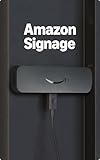
- Professional digital signage: The Amazon Signage Stick auto-launches your CMS in kiosk mode for seamless, unattended operation.
- Easy setup: Setup one or multiple Signage Sticks with the free Amazon Signage app. No tech skills needed.
- Works with over 80+ content management systems (CMS subscription may be required).
- Secure by design: Secure boot and encrypted storage keep your signage protected and running smoothly.
- Manage on the go: Create profiles, organize by location, and monitor real-time right from your phone.
StreamNeo checks stream health every 30 seconds and automatically restarts dropped streams. This reduces the need for staff to monitor the broadcast manually and supports a more dependable display workflow across locations.
You can start by testing your signage loop with StreamNeo’s free 24-hour 720p/30fps trial, with no card required at signup. Use the trial to confirm that the text remains readable and the stream works reliably on the displays at your locations.
How Digital Signage Video Loops Solve Real Operational Friction
Running physical displays on-site means three separate problems you have to solve. First, the hardware itself demands power, space, and occasional replacement. A retail location or office might have five or six displays showing different information—each one is another point of failure, another thing that needs cooling and maintenance. Second, keeping the content fresh requires someone to update files on the device or manage software that pushes changes out. This is work that takes time and is easy to forget. Third, if the internet connection drops or the device reboots unexpectedly, the display goes blank and confused customers see either nothing or an error screen until someone notices and fixes it.
YouTube-based signage removes all three problems. The video file contains everything the display needs to show—menu items, prices, hours, promotions, rotation sequences. You create it once, upload it, and it plays indefinitely. Updates mean creating a new version of the file and uploading that; the previous stream simply ends and the new one begins. Because the playback happens in the cloud, your local network only has to carry a viewing stream, not a complex device-management connection. A simple TV or display in your location just connects to YouTube and watches the stream like any other user. The quality and stability are identical whether this is your 10th location or your 100th.
Do these 3 things before closing this tab:
1Scan for outdated or missing drivers - takes under a minute2Repair Windows errors before they cause bigger problems3Fix the driver behind crashes, sound loss and screen glitchesThe financial case is straightforward. A wall-mounted digital display with decent quality runs 300 to 1500 dollars depending on size and brightness. A device to manage that display adds another 100 to 500 dollars. Over three years, you’re looking at hardware costs alone in the thousands, plus the hourly overhead of keeping the system functional. Cloud-based streaming eliminates the device cost entirely and reduces the management cost to however long it takes to create and upload a new video file when prices or offerings change. For restaurants with daily specials, retail locations with rotating promotions, or offices with ever-changing schedules, this is a meaningful operational simplification.
Setting Up Video Loops for Information Screens
The technical setup is simpler than most people expect. Start with content creation. If you’re displaying a menu, you can use templates in design software like Canva or Figma to create slides with your menu items, prices, and product photos. Set each slide to display for 8 to 10 seconds, then move to the next one. If you’re showing a schedule or announcement board, design each screen in the same tool, arrange them in order, and set the timing. The slides don’t need to be fancy—clean, readable layouts with good contrast actually perform better on displays in noisy environments like restaurant floors or retail spaces.
Export this as a video. Most video editing tools can take a sequence of images or slides and turn them into an MP4 file with crossfades or simple transitions. If you’re more comfortable with spreadsheets, some tools like Display.Tech or Zoom Signage can read a Google Sheet and render it as a video automatically. The video file should be at least 720p resolution for clarity on televisions, and the total duration doesn’t matter—it can be five minutes long (looping 288 times per day) or one hour long (looping 24 times). Shorter loops work better because viewers see fresh content quickly; longer loops work better because you can fit more information without repetition getting too obvious.
Upload the video to YouTube as an unlisted stream. Don’t publish it as a regular video—use YouTube Studio’s scheduling feature or a streaming tool that keeps the stream running indefinitely. This is exactly what StreamNeo does: it takes your video file, streams it continuously, and monitors the playback so that if anything interrupts the feed, it restarts automatically within seconds. Your display simply stays tuned to that YouTube URL, and the content plays continuously whether it’s 2am or 2pm.
What’s actually slowing this PC down?
Pick the symptom - the matching free tool is one click away.
Cost Comparison: Physical vs. Cloud Signage
The math shifts when you compare total cost of ownership across multiple locations. A company with five retail locations faces a decision between five independent display systems or one cloud-based approach that works from a single content platform.
Physical display approach: Five 65-inch displays at 800 dollars each is 4000 dollars. Five management devices at 300 dollars each is 1500 dollars. Installation, networking, and power infrastructure across five locations adds 1500 to 2500 dollars. One person spending 5 hours per week managing updates, troubleshooting connectivity, and replacing crashed devices—at 30 dollars per hour—is 7800 dollars per year. Total first-year cost: 14,800 to 15,300 dollars. Replacement of a failed display happens every 18 to 24 months on average, adding 1500 to 2500 dollars every two years.
Rank #2

- Optimized for Digital Signage: Suitable for digital signage use, fully supports all OptiSigns features and apps available on your subscription plan
- Easy Setup and Remote Management: Pre-installed OptiSigns Player allows you to manage your screen from anywhere using OptiSigns portal or OptiSigns Admin app
- Extensive Integration Options: 160+ apps help you quickly and easily put useful content on the screens
- Simplified Content Creation: 5000+ ready to use templates and easy to use designer help you design your digital signs in minutes
- Compact and Powerful Hardware: Easy install with no mounting brackets and screws required, features Amlogic 4 Core CPU, 2G DDR4 RAM, 16 GB eMMC, 4K HDR support, and AV1 decoding
Cloud streaming approach: A single video design and upload workflow takes the same five hours to set up initially. Updates take 2 hours every week (fewer than the physical approach because there’s no troubleshooting). At 30 dollars per hour, that’s 3120 dollars per year. No hardware beyond what the business already owns—five TVs or displays that play YouTube like any other content. Zero failure recovery because the cloud handles auto-restart. Total first-year cost: under 3500 dollars. No per-location hardware means no replacement costs.
For businesses comparing the long-term cost of physical signage systems with cloud playback, StreamNeo provides a practical way to test the cloud approach. Upload the signage loop, paste the YouTube stream key, and use the free 24-hour 720p/30fps trial to evaluate the workflow without leaving an on-site PC running.
The payback period is roughly nine months if the business already has displays in place, or immediately if displays are being purchased new. Over five years, the cloud approach saves 20,000 to 30,000 dollars for a five-location business.
Real Scenarios Where This Works Best
Restaurant chains use this for menu boards that need daily updates. A shift manager can upload a new menu video every morning without calling IT or visiting each location. Fast-casual restaurants with specials that rotate weekly benefit most because the update workflow stays the same regardless of frequency.
Fitness centers display class schedules, promotions, and open hour updates this way. Because the stream runs 24/7, members see the information even outside operating hours.
Real estate offices loop through property listings and neighborhood information. Updated listings go live the moment they’re uploaded; no delay from a device that needs to be managed locally.
Medical offices display appointment availability, insurance information, and check-in instructions without maintaining a physical kiosk.
Office buildings use this for tenant directories, emergency procedures, and administrative announcements that need to be consistent across a large facility.
Retail stores show price changes, promotions, seasonal offerings, and educational content about products without restocking or maintenance.
Video Quality and Technical Specifications for Digital Signage
When streaming to YouTube for signage purposes, technical specifications matter more than they do for casual viewing. A menu board displays text and images that viewers read; if the resolution is too low or the image is blurry, the effectiveness of the entire system collapses. Resolution of 1080p is the practical minimum for displays larger than 32 inches. Anything smaller than 32 inches can function at 720p, but text legibility suffers. The video frame rate should be 30 fps (frames per second) at minimum; 60 fps is unnecessary and wastes bandwidth. Bitrate—the amount of data transmitted per second—should be at least 2500 to 5000 kbps for 1080p at 30 fps to maintain sharpness.
Quick wins for a faster PC:
Fix the driver behind crashes, sound loss and screen glitchesFind Drivers →Clear out junk files and repair common Windows errorsFree Scan →Scan for outdated or missing drivers - takes under a minuteDriver Scan →Rank #3

- TURN ANY TV INTO A PROFESSIONAL DIGITAL SIGNAGE DISPLAY - Transform any TV or monitor into a powerful TV signage display. Perfect for digital menu boards, retail promotions, office presentations, waiting room displays, announcements and video content.
- REMOTE CONTENT MANAGEMENT FROM ANYWHERE - Control your TV signage screens remotely using the ExiBit cloud dashboard. Upload content, manage playlists, schedule campaigns and update displays across multiple locations.
- BUILT FOR COMMERCIAL DIGITAL SIGNAGE - Designed specifically for business signage applications. Ideal for restaurants, cafés, retail stores, schools, churches, gyms, offices and reception areas.
- ALL-IN-ONE TV SIGNAGE SOLUTION - Unlike basic media players, ExiBit combines hardware and TV signage software in one easy-to-use platform. No complicated setup or technical knowledge required.
- SIMPLE SETUP IN MINUTES - Plug in, connect to WiFi, upload content and go live. Create professional digital signage displays without hiring designers, developers or IT teams.
File formats matter for compatibility. MP4 with H.264 codec is the universal standard that works across all devices and browsers. QuickTime or MXF formats may cause playback issues on some displays. When creating the source video file, use a video editor that supports batch export, which saves time if you’re making updates monthly.
Aspect ratio depends on your display. Most modern televisions are 16:9 (widescreen). Some office installations use 16:10 or even 4:3 (square displays for industrial or kiosk settings). Always check your display specification and export video at the matching aspect ratio. A video stretched or letterboxed on a display looks unprofessional and confuses viewers.
Continuous playback is a technical consideration often overlooked. YouTube’s stream scheduler is designed for live events and on-demand playback, not for continuous loops. This is where a dedicated streaming service becomes valuable. The stream must restart seamlessly when it completes, with no black screens, no buffering, and no need for manual intervention. Services that handle this automatically (like checking the stream health and restarting if it stalls) save enormous operational headaches.
For this continuous-playback requirement, StreamNeo checks stream health every 30 seconds and automatically restarts dropped streams, reducing the need for manual intervention when a live feed stops.
Recommended Free Tools
Color accuracy and brightness are factors for displays in bright environments. A retail environment with windows or bright overhead lighting requires higher brightness (at least 400 nits of panel brightness, ideally 500+) to be legible. Muted or dark color palettes wash out; high-contrast designs with bright whites, reds, and blues remain visible even in bright light. Test your designs on the actual display in the actual lighting before finalizing the video file.
Independent reader supportYour contribution helps us test, update, and keep practical guides available for everyone.Scaling Across Multiple Locations
Managing digital signage across five, ten, or fifty locations introduces new complexity that cloud-based systems solve cleanly.
Synchronization becomes critical if you’re displaying real-time information. A restaurant with multiple screens showing wait times, open tables, or current specials needs every screen to display identical information at the same moment. YouTube’s streaming approach ensures this because every viewer receives the same stream simultaneously—there’s no lag between one display updating and another.
Update frequency drives operational decisions. If you’re changing content daily (restaurant specials, weather information, news), the overhead of updating 10 locations independently is enormous. With cloud-based signage, you create one updated video and upload it once. All 10 displays automatically see the update within minutes (depending on YouTube’s content distribution).
Free tools Windows power users keep installed
One-click scans. No signup required.
Monitoring becomes easier with cloud systems. You can check from a dashboard whether each display is currently online and viewing the stream. Physical displays on-site offer no such visibility; you have to walk to each location to verify it’s working. Many cloud signage platforms (though YouTube doesn’t offer this natively) provide analytics about viewing time, errors, and uptime percentages.
Hardware maintenance is decentralized. Instead of having 10 independent display systems that need individual IT support, you have 10 displays that all work the same way: connect to YouTube and play the stream. Software updates or changes happen once, not on each device.
Rank #4

- Great for storefronts, restaurants, retail stores, food trucks or concession trailers! High quality professional advertising printed in bold color with an eye-catching gloss finish. Super easy to install -just peel & stick
- Perfect for outdoor use, decal will last for over 5 years in direct sunlight thanks to our fade proof inks, You will always receive the highest quality product when you buy a SignMission brand product.
- High quality professional decals printed in bold color can be the cheapest way to advertise a business or a product
- Incredibly durable vinyl decal will last until you're ready to remove it, and is shipped with a protective transfer layer to ensure a quick and easy install that will last for years!
- Proudly manufactured in the U. S. A. , these decals are commonly used in industrial, commercial, public and private settings. Warning: this is a Vision Graphics original artwork and branded item. Purchasing from any source other than Vision Graphics will likely result in receiving an inferior quality item.
FAQ: Cloud Signage and YouTube Streaming
Can I display something other than YouTube video? (Is this just playing a video on TV?)
Exactly. Your display points to a YouTube URL and watches it like a viewer would. This means any display that can load YouTube—a smart TV, a web browser on a monitor, an iPad, even a Roku device—becomes your signage system. Nothing else is needed.
What if someone changes the YouTube URL or the stream gets taken down?
Make the stream unlisted so only people with the direct link can find it. YouTube doesn’t remove streams unless they violate policies (which informational content doesn’t). If you ever need to update content, you end the current stream and start a new one pointing to a different URL. Your displays then point to the new URL. This is a scheduled change, not an emergency.
How often can I update the content?
As often as you want. Create a new video file, upload it, and switch the displays to the new stream URL. Many businesses update weekly, some update daily. The workflow is the same regardless.
Is 720p good enough for a large display?
For most signage, yes. Menu boards and schedule displays look crisp at 720p on displays up to 65 inches. If you’re showing detailed product photography or design work, 1080p is noticeably better. Anything above 1080p provides minimal visual improvement for the added file size and bandwidth cost.
What if the internet connection at a location goes down?
The display shows nothing until reconnected. This is the same behavior any cloud-based service would have. To minimize disruption, many businesses use a backup connection (4G modem or second ISP) or keep a local playback device as a failover. For most non-critical signage, the rare outage is acceptable.
How many locations can I stream to simultaneously?
Unlimited. One YouTube stream can be watched by thousands of displays at the same time. Bandwidth flows from YouTube’s edge servers to each display, so your local internet at each location only bears the viewing load, not the streaming load.
Quick Recap
Product prices and availability are accurate as of the date/time indicated and are subject to change. Any price and availability information displayed on Amazon at the time of purchase will apply.




