Gas-fired cooking can add combustion pollution and heat to a restaurant kitchen. Studies have measured higher pollutant levels and warmer conditions in some gas kitchens than in electric kitchens, and one worker study found more respiratory symptoms and lower adjusted lung-function measures among workers in gas-fuelled kitchens. These findings point to risks worth controlling—not proof that every gas kitchen is unsafe or that fuel type alone determines exposure.
What pollutants can gas stoves add to a restaurant kitchen?
Burning gas produces combustion pollutants. The U.S. Environmental Protection Agency identifies carbon monoxide (CO), nitrogen dioxide (NO₂) and particles among the major pollutants released by gas stoves. Exposure depends on the appliance, how it is used and how effectively the kitchen exhausts air outdoors. EPA’s combustion-products guidance says: “Using a stove hood with a fan vented to the outdoors greatly reduces exposure to pollutants during cooking.” It does not say a hood eliminates exposure.
Those pollutants do not all behave alike, and a single reading cannot describe every exposure. The worker studies below measured different pollutants and conditions in particular kitchens; their results should not be treated as a universal estimate for restaurants.
What have studies measured in gas and electric kitchens?
A 2011 study of Chinese restaurant workers
Wong and colleagues studied 393 kitchen workers at 53 Chinese restaurants over 16 months: 32 restaurants used gas cookers and 21 used electric cookers. They measured pollutants, temperature and other workplace conditions, and surveyed workers’ respiratory symptoms and lung function. The study found these differences between the groups: Wong et al., Occupational and Environmental Medicine (2011).
Recommended Free Tools
#1 Best Overall

- DETECTS CARBON MONOXIDE: Model COB monitors CO and sounds a loud 85 dB alarm to signal evacuation to fresh air; LED warning light indicates hazard; Test/Hush button allows quick checks or temporary silencing
- AA BATTERY POWERED: This CO detector is battery-powered, installs without wiring, mount it on the wall or set it on a table, and operates during outages using two included AA batteries
- TRAVEL-READY DESIGN*: Compact carbon monoxide detector is suitable for use at home or for travel; lightweight design allows you to take it on the go to use in hotels or vacation rentals when detection is needed away from home
- TESTED & TRUSTED: This carbon monoxide alarm is rigorously tested to meet UL 2034 5th Edition standards, and is ETL Listed; includes a 10-year limited warranty on alarm
- BUILT FOR EVERY HOUSEHOLD: Designed to help provide dependable carbon monoxide monitoring for everyday residential use; supports renters, homeowners, and pet owners seeking added awareness and protection from CO hazards in the home
| Measure | Finding in the study |
|---|---|
| Median nitric oxide | 7.4 times higher in gas-fuelled kitchens than in electric kitchens |
| Median nitrogen dioxide | 1.5 times higher in gas-fuelled kitchens |
| Median carbon monoxide | 1.6 times higher in gas-fuelled kitchens |
| Average PM₂.₅ | 81% higher in gas-fuelled kitchens |
| Average total volatile organic compounds (TVOCs) | 78% higher in gas-fuelled kitchens |
| Kitchen temperature | Electric kitchens were 4.5°C cooler than gas-fuelled kitchens |
| Adjusted average lung-function measures | Workers using electric cookers had mean FEV₁ values 5.4% higher and FVC values 3.8% higher |
Workers in the gas-kitchen group also reported more respiratory symptoms. These are observational findings: the study shows an association, not that gas cooking alone caused the symptoms or lung-function differences. It was conducted in Chinese restaurants, so its results should not be assumed to represent every restaurant, kitchen design or country.
Measurements from U.S. commercial kitchens
A summary published by PSE Healthy Energy on October 6, 2026, describes a study of gas, propane and all-electric commercial kitchens in California, Pennsylvania and New York. In the sampled gas kitchens, hourly average NO₂ measured outside ventilation hoods exceeded the EPA outdoor standard of 100 parts per billion by volume (ppbv) in roughly 70% of cases. That outdoor ambient-air benchmark is not an occupational exposure limit; an exceedance should not be read as a direct measure of a worker’s personal exposure or as proof of a specific health outcome. The summary says sampled electric kitchens remained below the study’s pollutant thresholds and were cooler, while commercial hoods reduced but did not eliminate exposure. PSE Healthy Energy’s study summary reports the findings.
Rank #2

- Electrochemical sensor technology detects CO gas
- Easy installation, no wiring needed, detects during a power failure by operating on 2-AA batteries (included); Install on a wall of your home or place on a tabletop
- Green LED indicates power to the carbon monoxide detector, while an 85-decibel alarm & a red LED indicates the presence of carbon monoxide
- Event Memory records the last time carbon monoxide was detected or when the unit was last tested
The same summary says approximately 68% of sampled gas kitchens exceeded both the cited California indoor heat-illness prevention regulations and OSHA’s proposed 90°F high-heat trigger. Ten sampled kitchens recorded maximum temperatures above 100°F, and four exceeded 122°F. These figures describe the studied sites, not all restaurants. The benchmarks also have different purposes and should not be treated as interchangeable measures of an individual worker’s risk.
A separate NIOSH evaluation illustrates why results can vary from kitchen to kitchen: during limited sampling in three New York commercial kitchens, NOx and NO₂ were not detected, and brief CO readings at one site were below the occupational limits cited in the report. Different equipment, ventilation, operating conditions and sampling periods can produce different measurements. NIOSH’s evaluation of the three kitchens does not establish that all commercial kitchens have low exposure.
PC Slower Than It Used to Be?
A free scan shows the junk files, broken settings and background clutter dragging Windows down - then fixes them in one click.Free scan · Windows 10 & 11Outdated Drivers Are Slowing You Down
One free scan finds every outdated or missing driver and matches the right update for your exact hardware.Free scan · exact hardware matchRank #3

- Fast and Accurate: The TOPTES CT-580 Carbon Monoxide Detector is a manual inspection tool equipped with a high-sensitivity, high-accuracy DDS sensor providing a quick response within 0.3 seconds. It detects CO concentrations from 0 to 1000 PPM and features two alarm thresholds, allowing for rapid assessment of environmental changes
- Suitable for Individual and Business Use: For personal needs, this CO alarm is ready to operate right out of the box, with a straightforward graphical display for easy reading. For business needs, it offers advanced menu options, including alarm history and both zero and standard gas calibration settings
- Three Alarm Modes: The CO alarm features three alarm modes: indicator light, audible alarm, and vibration. When the CO concentration reaches the alarm threshold, all three modes activate simultaneously, ensuring reliable alerts in various environments, adapting to different conditions
- User-Friendly & Durable Design: The CT-580 is made from high-quality ABS engineering plastic for easy grip and use. It also features adjustable screen brightness, auto screen-off, a built-in flashlight, and USB-C charging, providing convenience and user-friendly functionality in every aspect
- Certified Precision and Trusted Reliability: Certified by a national accredited lab, it is a reliable and trusted handheld CO detector in any environment. You will receive CT-580 Carbon Monoxide Detector, Protective Case, Type-C Charging Cable, User Manual
Can a commercial hood remove gas-stove pollution?
A hood that exhausts outdoors is an important control because it can capture and remove some pollutants where they are generated. EPA says an outdoor-vented fan hood greatly reduces exposure during cooking. In the sampled U.S. kitchens described by PSE Healthy Energy, commercial hoods reduced exposure but did not eliminate it.
A hood’s presence alone therefore does not establish how well a kitchen is protected. Exhaust design, operation and the way air moves through the cooking area matter. If workers have symptoms or exposure concerns, a qualified assessment of the actual workplace is more informative than assuming the hood is either fully protective or ineffective.
Rank #4
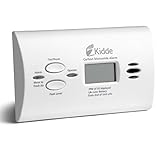
- Electrochemical sensor technology detects CO gas
- Easy installation, no wiring needed, detects during a power failure by operating on 2-AA batteries (included)
- Conveniently designed & portable: simple to install on a wall of your home or place on a tabletop
- Green LED indicates power to the smoke detector, while an 85-decibel alarm & a red LED indicates the presence of carbon monoxide
- Peak Level Memory records the last time carbon monoxide was detected or when the unit was last tested
Why can cooking heat become a serious workplace hazard?
Cooking equipment adds heat to an already active work area. Heat stress can range from heat rash and cramps to heat exhaustion and heat stroke, which can be fatal. OSHA’s restaurant guidance recommends keeping cooking areas cool and using measures such as spot or evaporative cooling, air conditioning, general ventilation and local exhaust ventilation at high-heat sources. OSHA’s restaurant cooking guidance also recommends providing water, allowing cooling breaks and gradually acclimatizing workers to hot conditions.
Workers and supervisors should recognize possible heat-exhaustion symptoms, including dizziness, lightheadedness, weakness, blurred vision and nausea. OSHA advises cooling the affected worker. Suspected heat stroke is an emergency because it can be fatal; follow workplace emergency procedures and seek urgent medical help. Employers should follow applicable local workplace rules, which may set requirements beyond the general guidance summarized here.
Best Value

- DETECTS CARBON MONOXIDE: Model COBD sounds a loud 85-decibel alarm when carbon monoxide is detected; easy-to-read backlit digital display shows status and alarm operation; a test/hush button enables quick checks or silencing alerts; replaces model 900-0146LP
- AA BATTERY POWERED: Carbon monoxide detector installs without wiring, mount it on the wall or set it on a table, and operates during outages using two included AA batteries; mounting hardware included
- TRAVEL-READY DESIGN*: Compact CO detector is suitable for use at home or for travel; lightweight design allows you to take it on the go to use in hotels or vacation rentals when detection is needed away from home
- TESTED & TRUSTED: This carbon monoxide alarm is rigorously tested to meet UL 2034, 5th Edition standards, and is ETL Listed; includes a 10-year limited warranty on alarm
- BUILT FOR EVERY HOUSEHOLD: Designed to help provide dependable carbon monoxide monitoring for everyday residential use; supports renters, homeowners, and pet owners seeking added awareness and detection from CO hazards in the home
What can restaurant owners and workers do?
- Exhaust combustion pollutants outdoors. Use effective outdoor-vented exhaust and have ventilation assessed and maintained. A hood can reduce exposure without removing it completely.
- Maintain gas appliances. NIOSH’s investigation of a 2017 industrial-kitchen incident identified fryer gas burners as the CO source; the burners had been replaced several days earlier. NIOSH recommends routine maintenance and adequate ventilation. The CDC/NIOSH incident report describes the case.
- Use CO alarms as one layer of protection. NIOSH recommends detectors that alert to potentially unsafe CO levels. A CO alarm does not measure NO₂, particles or heat stress, so it cannot stand in for ventilation, maintenance or heat controls.
- Plan for heat as well as air pollution. Keep cooking areas cool where possible; use appropriate cooling and ventilation; provide water and cooling breaks; and acclimatize workers gradually. Make sure staff know how to recognize and respond to heat-illness symptoms.
- Take reports seriously. Workers should promptly tell a supervisor about unusual symptoms, a suspected appliance or ventilation problem, or excessive heat. A CO alarm, household air purifier, generic respirator or consumer air monitor is not a replacement for workplace engineering controls or a qualified exposure assessment.
OSHA states that “Employers have the primary responsibility for protecting the safety and health of their workers.” The practical response is a workplace plan that addresses the actual kitchen’s exhaust, equipment and heat conditions, rather than relying on fuel choice or a single device to determine whether the environment is safe.
Quick Recap
Product prices and availability are accurate as of the date/time indicated and are subject to change. Any price and availability information displayed on Amazon at the time of purchase will apply.




