Do these 3 things before closing this tab:
1Clear out junk files and repair common Windows errors2Scan for outdated or missing drivers - takes under a minute3Repair Windows errors before they cause bigger problemsHigher mortgage rates raise the principal-and-interest payment on a given loan and reduce how much a buyer can borrow for a fixed monthly budget. Freddie Mac’s national average for a 30-year fixed mortgage was 7.28% on October 1, 2026, but that weekly benchmark is not an individual quote. Your offer depends on your finances, loan terms, lender fees and other details.
What were mortgage rates nationwide on October 1, 2026?
Freddie Mac’s Primary Mortgage Market Survey reported a U.S. average of 7.28% for 30-year fixed-rate mortgages and 6.60% for 15-year fixed-rate mortgages on October 1, 2026. These are national benchmark averages based on mortgage applications, not rates guaranteed to any borrower. Freddie Mac’s archive shows the 30-year average rose from 6.76% on September 10 to 7.28% on October 1.
A national average can describe the direction of the market, but it cannot tell you what a lender will offer you. Your rate may differ based on your credit profile, down payment, loan type, lender, points and rate-lock terms. The benchmark also does not explain why rates rose during that period; it should not be treated as a forecast.
How does a higher rate change your payment and buying power?
For the same loan amount and term, a higher interest rate generally means a higher monthly principal-and-interest payment. If you have a fixed monthly budget, that higher payment generally leaves room for a smaller loan. Freddie Mac’s illustration shows the change for a $200,000, 30-year fully amortizing loan:
#1 Best Overall
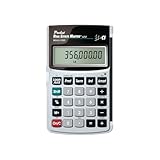
- Loan Amortization and Remaining Balances
- Instant Principal, Interest, Interest Only and Total Payments
- Future Values
- Date math function
| Interest rate | Monthly principal and interest |
|---|---|
| 6.5% | $1,896 |
| 7% | $1,996 |
| 7.5% | $2,098 |
| 8% | $2,201 |
These are Freddie Mac’s displayed monthly payments for the stated $200,000 loan, not a complete housing budget or a payment estimate for a different loan amount. Property taxes, homeowners insurance, mortgage insurance, homeowners association (HOA) charges and maintenance can add substantially to the monthly cost.
To estimate a workable price range, start with the total monthly housing cost you can comfortably manage. Then model principal and interest separately from taxes, insurance and other costs, and adjust the loan amount and rate to see how the payment changes. The CFPB’s rate-exploration tool can compare scenarios using assumptions such as credit score, down payment, term and loan type. Its displayed example uses a $400,000 primary-residence purchase, 10% down, a 700 credit score, a conventional 30-year fixed loan and a 60-day lock; its rate inputs reflect April 1, 2025, so they are not a current offer.
Why are mortgage rates higher?
The national snapshot establishes that the average 30-year fixed rate rose between September 10 and October 1, 2026; it does not identify the causes of that increase. A weekly average is useful for tracking market movement, but it does not establish why rates changed or where they will go next. Treat explanations of a particular move or predictions about future rates as separate claims, not as something the average alone proves.
Rank #2

- SPEAKS YOUR LANGUAGE: Keys clearly labeled in residential mortgage finance terms like Loan AMT, Int, Term, PMT. This industry-standard calculator is super easy to use on all realty financing matters from finding a loan that works for your client to considering trust deeds investments, or finding remaining balances or balloon payments and much more
- CONFIDENTLY AND EASILY SOLVES: All your clients' financial questions whether they are buyers, sellers, investors or renters. Increase your perceived professionalism as a new agent, experienced broker or seasoned loan officer. Close more home sales and impress your clients with fast, accurate answers to all their real estate finance questions
- DEDICATED BUYER QUALIFYING KEYS: Enter client's income, debt and expenses to pre-qualify them to only show properties they can afford. Include tax, insurance and mortgage insurance then compare loan options and payment solutions to give your client choices before they make an offer to buy
- FIGURE OUT THE RIGHT LOAN: At the press of a button for jumbo, conventional, FHA/VA, or even 80:10:10 or 80:15:5 combo loans; check to see if ARMs or bi-weekly loans, quarterly payments or if interest-only payments are the answer; giving your client more choices; easily perform what if loan or tvm calculations Find loan amount, term, interest or PITI or PI payments
- BECOME AN INVALUABLE RESOURCE: Reduce your clients' confusion and uncertainty; ensuring they are able to make a purchase offer; knowing they can afford the down payment; and determining which is the right loan for them. Date-math for listings and contracts too. Comes with a protective slide cover, quick reference guide, pocket User's Guide, and long-life batteries
What is the difference between a mortgage rate and APR?
The interest rate is the cost of borrowing expressed as a percentage and is used to calculate interest on the loan. The annual percentage rate (APR) reflects the interest rate plus certain charges, which can include points, broker fees and other loan costs. Because APR includes some costs beyond interest, it can help when comparing offers, but it is not a universal ranking score—particularly when one offer is fixed-rate and another is adjustable-rate.
Outdated Drivers Are Slowing You Down
One free scan finds every outdated or missing driver and matches the right update for your exact hardware.Free scan · exact hardware matchWindows Errors? Fix Them Before They Spread
Repair common Windows errors and clear accumulated junk for a smoother, more stable PC - no reinstall needed.Free scan · no reinstallCompare offers on equivalent terms: the same loan amount, term, down payment and lock period, with points and lender fees clearly identified. A lower advertised rate may come with higher upfront costs. Ask what points or charges are included and how long the quoted rate is locked; a quote is not necessarily available indefinitely.
How should you compare mortgage offers?
Request written Loan Estimates from several lenders—such as banks, credit unions and lenders that work with your circumstances—on or near the same day. CFPB consumer guidance recommends shopping among lenders and comparing both costs and terms. Use equivalent loan scenarios so that a different term, down payment or fee structure does not make one offer appear cheaper than another.
Rank #3

- DEDICATED FUNCTION KEYS for Quick Financial Solutions: Clearly labeled function keys enable you to quickly and confidently provide financial answers and options for your clients, whether in the office, in the car or at an open house. Compare loan options and provide payment solutions to give your client choices
- INSTANT FINANCIAL PROBLEM SOLVING: Solve the financial questions your clients have whether they are buyers, investors or renters; increase your perceived professionalism and close more home sales by quickly answering real estate finance problems including remaining balances
- RESIDENTIAL REAL ESTATE FINANCE TERMS: Keys labeled in residential real estate finance terms like Loan AMT, Int, Term, PMT; Calculator is super easy to use to determine a mortgage loan that works for your client
- VERSATILE LOAN CALCULATION OPTIONS: Calculate 80:10:10 or 80:15:5 combo loans at the press of a button; check to see if ARMs or bi-weekly loans, quarterly payments or if interest-only payments are the answer; giving your client more choices
- COMES COMPLETE: Comes with a protective slide cover, quick reference guide, pocket user's guide, two long-life batteries, and 1-year warranty
- Choose the scenario. Give each lender the same target loan amount, down payment, loan term and property details, and specify whether you want a fixed-rate mortgage or an adjustable-rate mortgage (ARM).
- Compare the rate and APR. Record both figures for each offer. Read the fee details rather than treating either number as a stand-alone verdict.
- Inspect points and lender charges. Find out whether the quoted rate assumes discount points and what lender fees apply. Compare the upfront cost against the payment difference over the time you expect to keep the loan.
- Check the rate lock. Ask how long the rate is locked, when the lock expires and what happens if closing is delayed. Confirm the terms with the lender rather than assuming a quote will hold.
- Compare the full monthly cost. Add estimated taxes, homeowners insurance, mortgage insurance and any HOA charges to principal and interest. Keep maintenance in your own budget as well.
- Review the written Loan Estimate. Check that the rate, loan type, term, projected payment and closing costs match the scenario you requested. Ask the lender to explain differences or unclear charges.
Check your credit reports and ask each lender how your credit profile, down payment, loan type and points affect its actual offer. A lender can explain how a specific change would alter your terms; do not assume that a national average or an online example reflects your eligibility.
Should you choose a 15-year or 30-year loan?
A 15-year mortgage usually has a higher monthly payment than a 30-year mortgage because the balance must be repaid sooner. It can also have a lower total loan cost over the life of the loan. Whether that trade-off works depends on your cash flow: compare the payment with your complete housing budget, not just the amount you would save in interest.
What’s actually slowing this PC down?
Pick the symptom - the matching free tool is one click away.
Compare both terms using the same loan amount and ask lenders for written estimates. A smaller total interest bill is not an advantage if the higher payment leaves too little room for other expenses or savings.
Rank #4

- SPEAKS YOUR LANGUAGE: Keys clearly labeled in residential mortgage finance terms like Loan Amt, Int, Term, Pmt; this industry-standard calculator is super easy to use on all realty financing matters from finding a loan that works for your client to considering trust deeds investments, or finding remaining balances or balloon payments and more
- CONFIDENTLY AND EASILY SOLVE: Clients' financial questions whether they're buyers, sellers, investors or renters. Increase your perceived professionalism as a new agent, experienced broker or seasoned loan officer. Close more home sales and impress your clients with fast, accurate answers to all their real estate finance questions from PITI Payments to IRR, NPV and Cashflows
- DEDICATED BUYER QUALIFYING KEYS: Enter client's income, debt and expenses to pre-qualify them to only show properties they can afford. Include tax, insurance and mortgage insurance then compare loan options and payment solutions to give your client choices before they make an offer to buy
- FIGURE OUT THE RIGHT LOAN: For your client at the press of a button for jumbo, conventional, FHA/VA, or even 80:10:10 or 80:15:5 combo loans; check to see if ARMs or bi-weekly loans, quarterly payments or if interest-only payments are the answer; giving your client more choices; easily perform what if loan or TVM calculations find loan amount, term, interest or PITI or PI payments
- BECOME AN INVALUABLE RESOURCE: To your clients by reducing their confusion and uncertainty; ensuring they are able to make a purchase offer; knowing they can afford the down payment; and determining which is the right loan for them. Date-math for listings and contracts too. Comes with a protective slide cover, quick reference guide, pocket user's guide, and long-life battery
How do fixed-rate mortgages and ARMs differ?
Fixed-rate mortgage
The interest rate stays steady for the life of the loan, so the principal-and-interest payment is predictable. The total housing payment can still change if property taxes, insurance or other costs rise.
Adjustable-rate mortgage
An ARM’s rate can change after an initial fixed period, so its payment may rise or fall. An initial rate that is lower than a fixed-rate offer does not remove the risk of a later increase. Before choosing an ARM, check when adjustments begin, how often they can occur and what caps limit them. Use the actual Loan Estimate and loan note to examine payments under plausible higher-rate scenarios. Do not base affordability on an assumption that refinancing will be available.
Neither structure is best for every buyer. Consider how much payment uncertainty your budget can absorb, how long you expect to keep the loan and whether predictable payments are more valuable to you than a potentially lower initial ARM rate.
Best Value

- Extra large 12-digit angled display.
- Loan Wizard.
- Automatic Tax Keys.
- Selectable decimal setting.
- Input any three loan variables to compute the fourth.
How do the down payment and mortgage insurance affect affordability?
A smaller down payment may preserve cash or make a purchase possible, but it can add an ongoing cost. Conventional borrowers who put down less than 20% typically pay mortgage insurance. FHA and USDA mortgages commonly require mortgage insurance as well. Mortgage insurance protects the lender and adds to the buyer’s cost.
Compare the full monthly payment for each down-payment option, including mortgage insurance, taxes and homeowners insurance. Also consider how much cash you would have left after closing; a larger down payment may reduce borrowing but should not leave you without a workable financial cushion.
How can higher rates affect the wider housing market?
Higher borrowing costs can change both buyers’ budgets and sellers’ decisions. In a 2024 historical analysis, the Consumer Financial Protection Bureau found that the rate rise it examined from trough to peak added $1,265, or 78%, to the principal-and-interest payment on a $400,000 loan. That figure describes the CFPB’s specific historical scenario, not the current payment increase for a typical buyer.
The CFPB also described “rate lock-in”: homeowners with low-rate mortgages may be less willing to move, which can reduce the number of homes offered for sale. This is a possible market effect, not a guarantee about local inventory or a forecast of home prices.
Is it better to buy now or wait?
There is no one answer for every buyer, and the national average alone cannot settle the decision. A more useful test is whether a specific home and loan fit your budget under the actual terms available to you. Compare the full monthly cost with your income and other obligations, consider how long you expect to stay, and decide whether the payment remains manageable if your costs change.
If rates move before closing, ask your lender to recalculate the payment and explain your rate-lock options. State and local homebuyer assistance programs vary; check eligibility and terms directly with the relevant housing agency rather than assuming assistance is available.
Quick Recap
Product prices and availability are accurate as of the date/time indicated and are subject to change. Any price and availability information displayed on Amazon at the time of purchase will apply.