Credit cards are most useful when you can manage the bill without letting a balance linger. Pay the statement balance by its due date when possible; if you cannot, protect your account by paying at least the minimum on time, then use the card’s terms and your budget to make a realistic payoff plan.
1. Pay the statement balance in full when possible
On a card that offers a purchase grace period, paying the statement balance in full by the due date is generally how to avoid interest on purchases. A grace period is not guaranteed, and its rules are set by the card agreement. The FTC recommends paying the full balance when possible to take advantage of a grace period: FTC guidance on using credit cards.

If you carry a balance, you may lose the purchase grace period and incur interest. Check your agreement for when interest begins and what you must pay to restore the grace period. Do not assume that making a payment equal to the minimum—or paying the balance after the due date—will prevent purchase interest.
2. If you cannot pay in full, pay the minimum on time and pay extra when you can
The minimum payment is the amount required to keep the account current for that billing cycle; it is not a recommended payoff target. Paying only the minimum can make repayment slower and more expensive because interest continues to accrue. Paying more than the minimum generally helps reduce interest costs and pay down the debt sooner. See the CFPB’s credit card guidance.
#1 Best Overall

- Organize Debts with a Debt Payoff Planner - Track all your debts efficiently using this debt payoff planner, including starting balances, minimum payments, due dates, and interest rates.
- Monitor Payments with a Debt Payoff Tracker - Log each payment, track end balances, and store confirmation numbers in this debt payoff tracker to stay on top of your finances.
- Plan Your Strategy with a Debt Snowball Planner - Prioritize debts, set goals, and create repayment strategies with this debt snowball planner for faster debt elimination.
- Track Bills with a Bill Tracker Notebook - Keep track of recurring bills, payment dates, and amounts with this bill tracker notebook, ensuring nothing is missed.
- Stay Motivated with a Debt Management Planner - Celebrate milestones and monitor progress using this debt management planner, perfect for anyone seeking control over their finances and achieving debt freedom.
- Make the minimum by the due date. A late or missed minimum can result in a late fee and other consequences under your agreement. A late payment may also affect a promotional rate, depending on the offer’s terms.
- Pay more when your budget allows. Even an extra amount can reduce the balance on which interest accrues. If you have balances at different APRs, the amount above the minimum generally goes to the highest-APR balance first, subject to applicable rules and your agreement.
FTC guidance says card issuers generally must send a bill at least 21 days before the due date and must credit a payment on the day they receive it, subject to reasonable conditions such as a stated cutoff time or required account details: FTC billing and payment guidance. Follow your issuer’s payment instructions and leave enough time for the payment to arrive and be credited.
3. When carrying a balance, pay earlier if you can
Many issuers calculate interest daily using an average-daily-balance method. With that method, paying part of the balance earlier in the billing cycle can lower the balance on which interest accrues for the remaining days. The precise calculation and payment-posting rules vary, so check your statement or agreement. The CFPB explains common interest calculations in How does my credit card company calculate the amount of interest I owe?
Rank #2

- Comprehensive Debt Management Tool:The debt payoff planner log offers a detailed table design to help users manage debt information comprehensively. Each page includes creditor details, target payoff dates, credit types, starting balances, minimum payments, interest rates, and other key data, ensuring users have a clear overview of each debt. With systematic tracking, users can create effective repayment plans and work towards becoming debt-free.
- High-Quality Materials and Practical Design:Featuring 110 pages of 80gsm high-quality paper with double-sided printing and a sturdy copperplate cover, this debt payoff tracker is both durable and professional. The 8.5 x 11-inch large page size is perfect for desktop use and portable enough to carry around. The spiral-bound design allows the debt payoff planner spiral bound to lay flat at 180 degrees for easy writing, and it works seamlessly with gel pens, ink pens, or pencils without smudging.
- User-Friendly Table Design:The credit card debt payoff planner features a simple and intuitive table layout, making it easy to add entries and track repayment progress. Each page includes columns for dates, starting and ending balances, payment amounts, confirmation numbers, and notes, enabling users to efficiently monitor every payment. This straightforward design simplifies debt management, even for first-time users.
- Versatile Use Cases:Whether for personal debt management, family financial planning, or small business cash flow tracking, the debt snowball planner is a versatile tool. Finance planner is ideal for students, professionals, freelancers, and small business owners, helping them clearly record and track debt in various scenarios. By staying organized, users can better manage their finances and reduce financial stress.
- Improve Credit Scores and Reduce Stress:With systematic debt tracking and repayment planning, the fbill tracker notebook helps users reduce their debt burden and improve credit scores over time. Clear repayment progress and goal-setting features provide peace of mind, empowering users to tackle financial challenges with confidence and work towards financial freedom.
If you can make an additional payment before the due date, confirm how your issuer applies it and whether it will post promptly. Continue to make at least the required minimum by the due date; an early extra payment does not necessarily satisfy the next minimum-payment requirement.
4. Check rates, fees, and promotion terms before you use the card
A card may have different APRs for purchases, balance transfers, and cash advances. Fees can include annual fees, transaction fees, and balance-transfer fees. Compare the terms that apply to the transaction you actually plan to make, rather than relying on one headline APR. The CFPB’s credit card key terms explains common rate and fee terms.
Recommended Free Tools
Rank #3

- Organize Debts with a Debt Payoff Planner - Track all your debts efficiently using this debt payoff planner, including starting balances, minimum payments, due dates, and interest rates.
- Monitor Payments with a Debt Payoff Tracker - Log each payment, track end balances, and store confirmation numbers in this debt payoff tracker to stay on top of your finances.
- Plan Your Strategy with a Debt Snowball Planner - Prioritize debts, set goals, and create repayment strategies with this debt snowball planner for faster debt elimination.
- Track Bills with a Bill Tracker Notebook - Keep track of recurring bills, payment dates, and amounts with this bill tracker notebook, ensuring nothing is missed.
- Stay Motivated with a Debt Management Planner - Celebrate milestones and monitor progress using this debt management planner, perfect for anyone seeking control over their finances and achieving debt freedom.
- Look up the APR for each relevant balance type.
- Check annual and transaction fees, including any balance-transfer fee.
- For a promotional rate, record when it ends, what rate applies afterward, and whether a late payment can affect the offer.
- Work out how much you would need to pay each month to clear the balance by the end of the promotion; do not treat a temporary rate as permanent.
Compare a balance transfer by its full cost
A balance transfer moves debt to another card. A low or 0% promotional APR may help, but offers commonly have a fee and last only for a limited period; the rate can rise when the promotion ends. Compare the transfer fee, the promotional period, the post-promotion APR, the monthly payment needed to pay off the balance in time, and any consequences of a late payment. Offers and eligibility vary, and the agreement controls.
Also check what happens to new purchases. On many cards, carrying a transferred balance can mean purchases accrue interest from the transaction date, even while the transferred balance has a 0% promotional APR. Verify the purchase grace-period rules in the agreement and avoid putting new purchases on the transfer card if they would generate interest. For broader considerations, see the CFPB’s guide to consolidating credit card debt.
Rank #4
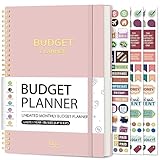
- Effective Budget Planning - Take control of your finances with the budget account book. This comprehensive planner allows you to plan and track your income, expenses, savings, and financial goals in one convenient place. With its intuitive layout and easy-to-use sections, you can stay organized and make informed decisions to achieve financial success.
- User-Friendly Layout - The budget planner features a user-friendly layout designed for easy navigation and organization. Each month, you'll find dedicated budget pages where you can set financial goals, track your income, and plan your expenses. Additional sections include debt trackers, savings goals, bill payment trackers, and more, making it simple to stay on top of your finances.
- Undated Monthly Calendar & Bonus Stickers - Featuring undated calendar each month, you'll have ample space to mark paydays, bills due, appointments, and important dates. Say goodbye to difficult writing spaces. Plus, we've included 3 cute sticker sheets that allow you to personalize your financial organizer and make budgeting more fun. Dates are not pre-printed and are completed by the user.
- Reliable and Convenient Design - Our monthly budget planner is designed for your convenience and built to last. The elastic band keeps everything securely in place, and the dual-sided pocket provides extra storage. Experience a budget planner that combines practicality and durability.
- Master Budgeting with Ease - Our financial planner includes a complete guidebook that provides valuable insights and instructions for optimal usage. From setting financial goals to tracking expenses, this guidebook offers step-by-step guidance and practical tips. Whether you're new to budgeting or an experienced user, this resource will help you make the most of your budget planner, empowering you to achieve financial success.
Do not confuse a 0% APR offer with deferred interest
A true 0% promotional APR applies no interest during the promotional period under its terms. A deferred-interest offer works differently: if you do not pay the entire promotional balance by the deadline, interest may be charged retroactively from the purchase date. Minimum payments may not be enough to clear the balance in time. Calculate the monthly amount needed to pay it off by the deadline, and keep making required minimum payments on time. The CFPB explains the distinction in its guidance on no-interest purchase offers.
Independent reader supportYour contribution helps us test, update, and keep practical guides available for everyone.5. Contact the issuer early if repayment is becoming difficult
If you are worried you will miss a payment, contact the card issuer before the account falls further behind. Some creditors may consider lower monthly payments, a reduced interest rate, fee waivers, or a due date that better matches your pay schedule, but none of these outcomes is assured. Ask what options are available, how long they last, and whether they change the account’s rates or other terms. The CFPB discusses creditor contact and debt-consolidation considerations in its guide to consolidating credit card debt.
Do these 3 things before closing this tab:
1Fix the driver behind crashes, sound loss and screen glitches2Clear out junk files and repair common Windows errors3Scan for outdated or missing drivers - takes under a minuteA consolidation offer or new loan does not remove the need for an affordable repayment plan. Include fees, any temporary rate, the rate after a promotion, and the effect of new spending in your comparison. If the proposed payment still does not fit your budget, discuss that directly with the creditor rather than relying on a transfer or loan to solve the underlying shortfall.
Quick Recap
Product prices and availability are accurate as of the date/time indicated and are subject to change. Any price and availability information displayed on Amazon at the time of purchase will apply.




