Airfares can keep rising even as airline profits shrink because ticket prices are only one part of the equation: airlines’ fuel and other costs are rising faster than their total revenue. The International Air Transport Association (IATA) forecasts that global airline revenue will grow 9.4% in 2026 while operating expenses grow 13%, leaving net profit at $23 billion, down from $45 billion in 2025. Those are forecasts, not completed-year results. IATA’s June 2026 outlook expects airlines to absorb part of the fuel shock rather than pass all of it to passengers immediately.
How can airfare rise while airline profits fall?
A fare is revenue from a ticket; profit is what remains after an airline pays its costs. Higher ticket prices can increase revenue without increasing profit if fuel, labor, maintenance, aircraft leases and other expenses rise faster.
IATA’s June 2026 forecast puts the difference in scale: global airline revenue is projected to reach $1.165 trillion, up 9.4%, while operating expenses are projected to reach $1.117 trillion, up 13%. The forecast net profit is $23 billion, with a 2.0% net margin, compared with $45 billion and 4.2% in 2025. Revenue growth is not profit growth. IATA’s June outlook
The forecast does not mean every airline will lose money, or that every route will become more expensive by the same amount. It is an industry-wide projection; carriers differ in route mix, financial resilience, fuel hedging and ability to adjust schedules.
Recommended Free Tools
#1 Best Overall

- Smooth & Effortless Mobility: Equipped with 360° spinner wheels that glide smoothly and silently across all surfaces. The ergonomic telescopic handle ensures easy maneuverability, making this luggage a must-have for hassle-free travel
- Spacious & Organized Storage: Designed with dual compartments, including an expandable section for extra packing space. The left side features a zippered divider with a mesh pocket for small essentials, while the right side includes an X-strap to keep clothes secure and wrinkle-free
- Durable & Scratch-Resistant: Made from high-quality ABS hard shell, this suitcase is impact-resistant, lightweight, and built to withstand travel wear and tear. The reinforced aluminum telescopic handle is sturdy and resistant to bending, ensuring long-lasting durability
- TSA-Approved Lock & Stylish Design: Features a TSA-certified combination lock for enhanced security and worry-free inspections. The sleek textured surface with horizontal stripes adds a modern, stylish touch while minimizing scratches
- Lightweight & Travel-Friendly: Meets most airline luggage size regulations. The lightweight build, top and side carry handles, and 3-level adjustable telescopic handle provide added convenience, making packing and transport effortless
Why is fuel putting so much pressure on airlines?
Fuel is a large operating expense, and the forecast increase is substantial. IATA projects global airline fuel costs of $350 billion in 2026, up from $252 billion in 2025. Fuel is forecast to account for 31.4% of operating expenses, compared with 25.4% in 2025. The June forecast assumes Brent crude averages $95 a barrel and jet fuel averages $152 a barrel, nearly 70% above the $90 jet-fuel average IATA cited for 2025. IATA’s June 2026 outlook
Crude oil is not the whole fuel bill. IATA also projected an average jet-fuel crack spread—the premium between jet fuel and crude—of $57 a barrel. Hedging can soften short-term price swings, but it cannot eliminate the impact of a sustained increase. Airlines had hedged roughly one-third of expected 2026 fuel consumption, and many hedge crude rather than jet fuel, leaving them exposed when the refining premium widens. IATA’s June 2026 outlook
Fuel is not the only pressure. IATA cited higher non-fuel expenses, including labor, aircraft leases and maintenance. Aircraft delivery shortfalls can keep older planes in service longer, adding maintenance and lease costs while delaying expected fuel-efficiency gains. IATA’s June outlook; IATA’s annual general meeting comments
Rank #2

- CARRY-ON DESIGN: Best for 1-5 day trips without the hassle of checking luggage; measures 14.8 x 10 x 21.7 inches, including wheels
- DURABLE AND RELIABLE: Extra-thick hard shell with scratch-resistant finish guards against impact and rough handling
- EXPANDABLE: Increase packing space up to 25% for added flexibility and organization
- ORGANIZED INTERIOR: Keep essentials organized with an interior divider and three zippered pockets
- EFFORTLESS TRAVEL: Navigate with ease thanks to four multi-directional wheels, telescoping handle, and short lift handle
Why can’t airlines raise every fare as soon as fuel gets more expensive?
Airlines sell many tickets well before departure and plan seats and schedules months ahead. Once a passenger has bought a ticket, the airline generally cannot change that ticket’s price to cover a later fuel increase. A fare rise therefore affects new bookings, not all the seats already sold.
The timing can leave a meaningful share of upcoming travel priced at older levels. Associated Press reported that about 35% of United’s tickets for the final three months of 2026 had already been booked when the renewed fuel-price rise hit. United CFO Mike Leskinen said those fares could not be raised retroactively and that cost recovery would not be immediate. Associated Press reporting
That mismatch is why a sudden cost shock can squeeze profit even while current fares are climbing. IATA Director General Willie Walsh put it this way: “Airlines are bearing the brunt of the fuel price shock. While air fares are rising, airlines are still absorbing part of the hike in their bottom lines.” IATA’s June 2026 outlook
Rank #3

- Airline-approved Luggage: This 20-inch carry-on Luggage meets the overhead compartment size requirements of most airlines. The durable hardside luggage features TSA-approved locks and smooth double-ended zippers for secure and convenient travel. It has a volume of 35 liters and weighs only 6.83 lbs
- 20% Expandable, Packing More: Maximize travel luggage storage space with expandable features. Simply unzip the expandable zipper to increase capacity from 35L to 42L, adding 20% more packing space when you need it. Dual main compartments feature a secure buckle compression system to keep clothes neatly organized, while convenient storage pockets hold small items
- Excellent Craftsmanship: Crafted from high-quality ABS composite materials, this lightweight carry-on luggage offers exceptional strength and flexibility. Its scratch-resistant surface maintains a like-new appearance trip after trip. Rigorously tested for impact resistance, it's built to protect your belongings under tough travel conditions
- Superior Maneuverability: Equipped with silent 360 spinner wheels, this travel luggage glides effortlessly through crowded airports and uneven streets. The 4-level adjustable aluminum handle offers a comfortable grip, while top and side silicone handles make lifting this carry-on suitcase easy and ergonomic
- Durable Construction and Support: Designed with durability in mind, our carry on luggage features reliable construction for all essential components, including the shell, handles, wheels, locks, and zippers. Travel confidently with quality materials and craftsmanship built to last
What do recent fare figures show—and what don’t they show?
Recent U.S. fare measures show increases, but they should not be confused with a global fare index or with airline profit. The Bureau of Transportation Statistics’ average U.S. fare, excluding optional fees, was $405 in 2025 Q4, $428 in 2026 Q1 and $436 in 2026 Q2, as reported by AP. Separately, AP reported that U.S. airfares in August 2026 were 23% above a year earlier, citing the Labor Department. These are U.S. figures with different measurement periods, not a statement about every route or the rest of the world. Associated Press reporting
Ticket yield and ticket revenue are also not the same thing as an individual traveler’s fare. IATA forecasts passenger ticket yields to rise 7% in 2026 and passenger ticket revenue to reach $839 billion, up 9.2%, while passenger demand measured in revenue passenger kilometers grows 2.1%. Those are global forecast measures; they do not mean every route’s fare will rise 7% or that every passenger will pay more by that amount. Ticket revenue also does not include the full picture of airline costs or establish the price of a specific ticket. IATA’s June 2026 outlook
Optional fees and other ancillary revenue are another reason an average ticket fare is not a complete measure of what travelers spend or what an airline earns. The cited U.S. average explicitly excludes optional fees. Route, fare class, booking date and carrier can all affect the price a passenger sees.
Rank #4

- Airline-Approved & Expandable Design: Our carry on luggage 22x14x9 airline approved and meets most airline overhead bin requirements, saving you time and baggage fees. The expandable zipper instantly increases capacity from 33 liters to 41 liters, offering flexible packing for short trips, business travel, or leisure
- Effortless 360° Maneuverability: The carry-on luggage is equipped with silent, precision-engineered 360° spinner wheels, allowing you to glide smoothly through airports and city streets. The sturdy 4-stage aluminum telescopic handle delivers a wobble-free and comfortable grip, while top and side handles ensure easy lifting for every traveler
- Durable & Scratch-Resistant Exterior: Constructed with a high-quality ABS composite hard shell, this lightweight carry on suitcase weighs just 6.94 pounds and is rigorously tested for impact resistance. The scratch-resistant surface keeps its sleek appearance, and the integrated TSA-approved lock ensures secure and convenient travel
- Optimized & Organized Interior: The carry on luggage with wheels features a spacious main compartment, paired with multiple internal pockets for efficient organization. Tear-resistant lining and cross-straps keep everything neatly in place, whether packing for a family vacation or a business trip
- Reliable Lifetime Support: We stand behind the durability of every component. Our commitment includes dependable support for the shell, handles, wheels, locks, and zippers. Travel confidently, knowing we ensure your luggage performs reliably, trip after trip
Why can fares stay high after jet fuel falls?
Airfares do not necessarily move in lockstep with fuel prices. Tickets may have been sold at earlier prices, and airlines may still be managing elevated costs or uncertainty even after a fuel benchmark declines. A short-lived dip does not establish that the cost trend has reversed.
AP reported that the Argus U.S. Jet Fuel Index fell from an early-April 2026 peak of $4.88 per gallon to a June low of $2.70, while fares remained elevated; jet fuel then rose again. The same report relayed economist Brett House’s point that volatility itself is a challenge, not just the absolute fuel-price level. Stephen Treanor, a finance professor at California State University, Chico, told AP that jet fuel prices would need to fall and stay down for airfares to decline on a sustained basis. That is expert commentary, not a guaranteed timetable for every airline or route. Associated Press reporting
There is no single universal rule for how quickly fares respond when fuel becomes cheaper. The timing depends on when seats are sold, how long lower fuel costs persist, airline costs and route-level demand.
Do these 3 things before closing this tab:
1Repair Windows errors before they cause bigger problems2Scan for outdated or missing drivers - takes under a minute3Clear out junk files and repair common Windows errorsBest Value
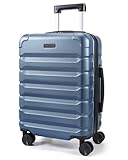
- Airline-Approved Carry-On Size: 22x14x9 carry on luggage meets the overhead compartment requirements of most airlines, making it a perfect travel companion for air, train, and bus travel. 20 inch carry on luggage measuring 22" x 15.16" x 9.65”, compact case measuring 19.29" x 14.33" x 9.65” ensure easy handling and seamless boarding, making your journey stress-free and convenient
- Expand Your Packing Capacity by 24%: Luggage designed to maximize your packing efficiency. The luggage features an expandable zipper that increases capacity from 33L to 41L. Carry on suitcase provides 8L more space for travel essentials, last-minute items or additional souvenirs
- Effortless Maneuverability: Carry on luggage 22x14x9 airline approved glide through crowded terminals with ease using the 360° spinner wheels. Suitcases with wheels smooth-rolling through tight spaces or rough surfaces effortlessly. Carry on luggage with sturdy 3-stage telescopic handle ensures a wobble-free experience as you roll your luggage in any direction
- Durable and Lightweight Construction: At just 6.94 lbs carry on bag is light enough for easy lifting and maneuvering. Carryon suitcase built with a robust ABS hardshell is both lightweight and durable, designed to withstand the rigors of travel. Carry on luggage with wheels offers impact resistance, scratch resistance, and reliable protection for your belongings, keeping your luggage looking sharp trip after trip
- Well-Organized Interior for Efficient Packing: Keep your belongings organized with the spacious interior, featuring dual compartments with a secure buckle compression system and practical storage pockets. Whether for business or leisure, this suitcase offers the organization you need to keep everything in place throughout your trip
How much did IATA’s 2026 profit forecast change?
IATA’s June 2026 outlook sharply revised its earlier forecast. The figures below compare two forecasts for the same year, not two realized results.
| IATA forecast for 2026 | December 2025 outlook | June 2026 outlook |
|---|---|---|
| Net profit | $41 billion | $23 billion |
| Net margin | 3.9% | 2.0% |
| Average jet fuel assumption | $88 per barrel | $152 per barrel |
The June outlook attributed the deterioration to the fuel shock and Middle East-related disruption. Because the forecast changed during the year, the December figures should not be read as actual 2026 profit or as evidence of how the year ultimately ended. IATA’s December 2025 outlook; IATA’s June 2026 outlook
Will airfare come down if jet fuel gets cheaper?
It could, but cheaper fuel alone does not guarantee an immediate or uniform fare drop. A sustained decline may ease an important airline cost, but fares also reflect when seats were booked, demand, other expenses and the competitive conditions on a route. For a traveler deciding whether to book, compare the actual itinerary and total price—including optional fees—rather than treating a fuel-price move or an industry forecast as a prediction for a particular ticket.
Demand is another limit on fare increases: passengers may balk if travel becomes unaffordable. Walsh said the open question was how long travelers and shippers would tolerate higher connectivity costs. The outlook is therefore not simply “fuel rises, fares rise by the same amount”; airlines must balance cost recovery against what customers will pay. IATA’s annual general meeting comments
PC Slower Than It Used to Be?
A free scan shows the junk files, broken settings and background clutter dragging Windows down - then fixes them in one click.Free scan · Windows 10 & 11Outdated Drivers Are Slowing You Down
One free scan finds every outdated or missing driver and matches the right update for your exact hardware.Free scan · exact hardware matchQuick Recap
Product prices and availability are accurate as of the date/time indicated and are subject to change. Any price and availability information displayed on Amazon at the time of purchase will apply.




