International Women’s Day is rooted in labor organizing and demands for women’s rights—not shopping. Retailers now sell March 8-themed gifts and merchandise, and corporate campaigns can turn a political observance into a promotional moment. That tension is real, but it does not prove that every company’s participation is empty: the useful question is whether the message connects to material commitments and accountability.
What International Women’s Day is—and why it falls on March 8
The United Nations says International Women’s Day emerged from labor movements in North America and Europe around the turn of the twentieth century. The UN officially recognized the observance in 1977; that recognition came decades after the movement began. March 8 is associated with women’s movements during the Russian Revolution of 1917. United Nations, “Background | International Women’s Day”.


UN Women’s timeline says the first International Women’s Day took place in 1911, when more than one million people in Austria, Denmark, Germany, and Switzerland mobilized for women’s suffrage and labor rights. Early observances also protested World War I. UN Women, “Women of the world, unite!”.
For additional context, the Associated Press reports that the American Socialist Party organized a National Women’s Day in 1909, and that Clara Zetkin proposed an international observance at a 1910 conference in Copenhagen. The movement later took up March 8 after a 1917 Russian protest. Associated Press, March 7, 2024.
Quick wins for a faster PC:
Fix the driver behind crashes, sound loss and screen glitchesFind Drivers →Clear out junk files and repair common Windows errorsFree Scan →#1 Best Overall
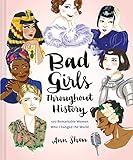
- Aphra Behn first female professional writer.|Sojourner Truth women's rights activist and abolitionist.|Ada Lovelace first computer programmer.|Marie Curie first woman to win the Nobel Prize.|Joan Jett godmother of punk.
This history makes the day more than a seasonal celebration. UN Women describes feminism as “a movement advocating for women’s social, political, legal and economic rights equal to those of men.” UN Women.
How the observance became a marketing occasion
Retail promotion is one visible sign of commercialization. The Associated Press reported online sellers offering International Women’s Day sweatshirts, greeting cards, sticker packs, cloth totes, games, cupcake toppers, and other themed goods. A 2023 World Economic Forum article published with Quartz characterized the day as “somewhat commercial” and corporate, while noting criticism of that shift. That is a reported characterization, not a measurement of the size of the market or proof that every corporate campaign lacks substance. Associated Press; World Economic Forum / Quartz, March 8, 2023.
Rank #2

- Used Book in Good Condition
Promotional language can borrow the vocabulary of equality and empowerment while directing attention toward a purchase, a brand, or a one-day celebration. That does not establish that a campaign is harmful or insincere. It does create a practical question: does the company connect the symbolism to the rights or material changes it invokes?
A practical way to assess a corporate campaign
Instead of assuming every brand’s observance is either meaningful or performative, look for evidence on several fronts. These are questions for evaluating a campaign, not claims about any particular company’s results.
What’s actually slowing this PC down?
Pick the symptom - the matching free tool is one click away.
- Purpose: Is the communication mainly recognition or promotion, or does it clearly address demands for rights, justice, and action?
- Material connection: Does it identify concrete workplace, legal, economic, or safety commitments, rather than relying on slogans or themed products alone?
- Voice and beneficiaries: Whose work, leadership, and experience are represented? Women’s experiences are not uniform, so a campaign should not imply otherwise.
- Accountability: Is there a specific commitment or result that an audience can check? A campaign’s wording alone cannot establish whether a promise was fulfilled.
- Context: Do the symbols fit the setting and audience? The AP reports that flowers are customary in parts of Eastern Europe, while some people in protest contexts regard gifts such as flowers or sweets as belittling when they ignore the struggles behind the day.
These questions distinguish participation from proof of impact. The available reporting documents examples of merchandise and criticism of commercialization, but it does not provide a systematic audit of corporate practice or evidence about the results of individual campaigns.
Independent reader supportYour contribution helps us test, update, and keep practical guides available for everyone.Why the rights agenda remains central in 2026
The United Nations’ 2026 International Women’s Day theme is “Rights. Justice. Action. For ALL Women and Girls.” On its 2026 campaign page, the UN states: “Right now, women have only 64 per cent of the legal rights that men hold worldwide.” This is the UN’s figure and framing for its 2026 campaign, not a timeless measure to apply without that attribution. United Nations, International Women’s Day 2026.
The AP describes International Women’s Day demonstrations and calls for equal pay, healthcare access, justice for survivors of gender-based violence, and girls’ education. Those concerns help explain why many people see the date as a call to action rather than simply a celebration. Whether a commercial campaign supports that purpose depends on what it says and does—not just on the date or the imagery it uses.
Quick Recap
Product prices and availability are accurate as of the date/time indicated and are subject to change. Any price and availability information displayed on Amazon at the time of purchase will apply.




