You can make money with Canva by earning royalties through Canva Creators, selling original templates or finished products, taking on design work, teaching, or using Canva to support a business with a defined audience. Canva is the tool—not a guaranteed source of income. Each route has different approval, licensing, customer-finding, and fulfillment requirements.
The options below distinguish Canva’s own royalty program from independent sales and services. Canva’s rules and program availability can change; check the current terms linked in each relevant section before you publish or sell work.
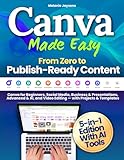
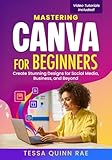


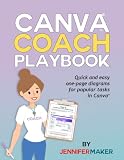
Which Canva income route fits your business?
| Route | How you earn | Main requirement |
|---|---|---|
| Canva Creators | Royalties | Apply and be accepted |
| Editable templates | Product sales | Find customers and follow Canva’s template rules |
| Finished digital products | Product sales | Create an original, complete product |
| Print-on-demand designs | Product sales | Meet Canva’s license and the provider’s terms |
| Social-media design services | Client fees | Find clients and define deliverables |
| Other design services | Client fees | Agree scope, revisions, and rights with clients |
| Teaching and learning materials | Course, teaching, or product sales; potentially Canva royalties for eligible Education Creators | Choose independent teaching or apply for Canva’s Education Creator route |
| Audience or storefront business | Sales or client acquisition | Build a specific audience or customer channel |
| Apps | Potentially sales or business revenue | Develop an app and establish demand; details depend on the app business |
| Referrals and promotion | Potentially referral income | Verify a current program and its terms before relying on it |
There is no reliable comparative evidence here for typical income or time to first sale, so the routes are not ranked by earnings. The practical choice depends on whether you want to make products, serve clients, teach, or build distribution.
1. Apply to Canva Creators for royalties
Canva’s Creators program includes Template and Education Creator roles. Canva reviews applications; acceptance is not automatic. Its page says Education applicants need to be verified qualified educators with a Canva for Education account. The same page says Element Creator applications are paused, with the pause noted as of 2025.
Canva Creator Support describes royalties for Pro template exports as coming from a pool allocated as a percentage of Canva Pro revenue. A creator’s share is influenced by their proportion of Pro template exports; selected Free template usage may also earn royalties. The reviewed program information does not state a fixed per-export rate or typical income, so do not treat this as a predictable monthly payout. See Canva Creator Support’s program overview for its explanation.
Read the current Contributor Agreement before applying. Effective January 14, 2026, the agreement grants Canva a worldwide, non-exclusive license to use, reproduce, make derivatives of, display, market, sublicense, and sell accepted Stock Media, subject to the agreement. It also contains age, ownership, and permission requirements; releases may be relevant for identifiable people or property.
Canva’s Creators page allows AI in ideation and efficiency, but says submissions are not accepted when AI generation means the final work cannot be considered wholly the creator’s own. The Contributor Agreement separately represents that human authorship is the creative source of submitted Stock Media and that it is not AI-generated. These are requirements for Canva submissions, not a blanket rule for every independent Canva project.
2. Sell editable Canva templates independently
You can sell original templates through your own site or marketplaces such as Etsy or Creative Market, provided the buyer is brought back to the Canva editor. Shopify also names Fiverr and Gumroad as marketplace examples in its guide to making money with Canva; those are examples, not endorsements or a guarantee of marketplace demand.
Recommended Free Tools
Rank #2
Canva’s commercial-use guidance sets the key content distinction: templates containing Pro Content that you sell to customers must be offered as Canva template links, not PDFs or other file types. Original templates made with Free Content and your own assets may also be sold as PDFs. Canva also says submissions cannot be identical to templates available through direct competitors.
Make the product useful for a defined buyer—for example, a small-business content calendar or an event invitation system—rather than relying on Canva design alone to create demand. State clearly what the customer receives and how they access and edit it.
3. Create finished digital products
A finished digital product is different from a reusable template: it is a completed work intended to be read, printed, or used as-is. Possible formats include planners, educational resources, activity books, invitations, e-books, online magazines, and newsletters. These are product ideas, not evidence that any one category will sell.
Canva’s Help Center says original digital publications such as e-books, online magazines, and newsletters may be sold under its conditions. Follow the same commercial-use guidance for the assets in the work, and avoid selling Canva content as a standalone element. A distinctive subject, clear intended customer, and complete product matter more than the number of pages or decorative features.
The Tool Desk
Outbyte PC Repair FREERepair Windows errors before they cause bigger problemsFix Now →Outbyte Driver Updater FREEFix the driver behind crashes, sound loss and screen glitchesFind Drivers →Rank #3
4. Sell physical designs through print-on-demand
Original designs can be used on items such as shirts, mugs, stickers, and posters, but Canva content must not be reproduced as-is. Before uploading a design, check both Canva’s commercial-use rules and the print-on-demand provider’s terms.
The provider’s rights requirement matters. Canva says use may be acceptable where a provider requires you to have rights to use the design and you comply with Canva’s license. If the provider requires you to own copyright in every uploaded element, Canva-licensed content cannot be included on that basis: a license to use content is not ownership of it. Do not assume every provider or every Canva design qualifies.
5. Offer social-media design services
Businesses may hire a designer to create social posts, story assets, ad graphics, or a repeatable content set. In this model, customers pay for your service and judgment—not merely access to a Canva file. Canva can help you produce and hand off designs, but client acquisition, communication, and delivery remain your responsibility.
Agree in writing on the deliverables, schedule, number of revisions, usage rights, and what editable files or links the client receives. Do not promise exclusive logo rights or trademark clearance merely because a design was made in Canva; those issues require separate care and clear client terms.
6. Sell other design and marketing services
Canva skills can support client work in areas such as presentations, marketing materials, websites, video content, and broader design support. Shopify’s overview lists these as service possibilities, but the income comes from the defined work you deliver, not from a standard Canva payout.
Choose a service narrow enough that a client understands what they are buying. For example, package a launch presentation or a monthly set of branded campaign assets instead of offering an undefined promise to “do design.” Specify who supplies copy and brand materials, what is included, when work is due, how revisions work, and what usage rights transfer.
7. Teach Canva or create learning materials
You can independently offer lessons, tutorials, courses, or educational resources for people who want to learn Canva or use it for a particular task. Those are separate from Canva’s Education Creator program, which is an application-based role for eligible verified educators using Canva for Education.
Start with a specific learning outcome, such as teaching a community group to make accessible event materials or helping a small business create a consistent social-media workflow. For the Canva Creator route, check the current eligibility and application details on the Canva Creators page; for independent teaching, explain the curriculum, format, and support buyers receive.
What’s actually slowing this PC down?
Pick the symptom - the matching free tool is one click away.
8. Build an audience or storefront around a customer need
Canva designs can support a content brand, online store, or audience focused on a particular interest. For example, consistent graphics may help a creator publish useful content, demonstrate expertise, and direct interested people to products or services. This is a distribution strategy: Canva does not pay simply because you post designs, and an audience does not guarantee sales.
Choose a recognizable customer and problem first. Then use Canva to make the supporting content and product presentation. Shopify describes approaches such as a faceless content brand, but the channel still needs useful material and a way to convert attention into a sale or client inquiry.
9. Explore app-related opportunities cautiously
Shopify lists creating apps among possible Canva-related money-making ideas. That broad suggestion is not enough to establish a particular Canva app marketplace, revenue share, or approval route. Treat app development as its own product business: identify a user need, confirm the relevant platform rules, and validate demand before investing substantial time.
The reviewed information does not establish a standard Canva payout for app makers. Do not present an app idea as an official Canva monetization program unless the current terms for that specific route confirm it.
Quick wins for a faster PC:
Scan for outdated or missing drivers - takes under a minuteDriver Scan →Repair Windows errors before they cause bigger problemsFix Now →Fix the driver behind crashes, sound loss and screen glitchesFind Drivers →10. Check referral and promotion programs before planning around them
Promoting a product through an affiliate or partner program can sometimes produce referral income, but the current status of Canva’s affiliate or Canvassador arrangements is not conclusively established by the official sources reviewed for this guide. A third-party-hosted document presented as Canva Help Center material describes an older affiliate-program change; it is not sufficient confirmation of present-day availability or terms.
Before including a Canva referral link in a business plan, verify the program directly with Canva: whether enrollment is open, who qualifies, what activity earns a commission, and what disclosure rules apply. Do not rely on old commission figures or assume that sharing a Canva link earns money.
How to choose a route and get started
- Pick the business model. Decide whether you want royalties, product sales, client fees, teaching income, or a business supported by audience reach.
- Name the buyer and the outcome. Define who the work is for and what it helps them do. “Templates for independent wedding planners” is more actionable than “designs for everyone.”
- Check rights before making the deliverable. Identify whether you will use Pro Content, whether customers need an editable template, and whether a marketplace or fulfillment provider imposes additional requirements.
- Make a small, complete offer. Prepare one coherent service package or product that a customer can understand, preview, and purchase or request.
- Choose a route to customers. A marketplace, direct outreach, your own storefront, or a content audience each requires different work. Do not assume a marketplace listing alone will bring buyers.
- Review performance and terms. Track inquiries, sales, costs, and customer questions, then improve the offer. Recheck Canva program and licensing terms when they affect what you sell.
How much can Canva creators earn?
There is no fixed earnings figure established by the reviewed Canva Creator program information. Canva describes a variable royalty pool, not a guaranteed rate per template export. Independent sellers and service providers set their own offers, but their results depend on customers, pricing, costs, and delivery; no reliable typical-income or time-to-sale comparison is established here.
Quick Recap
Product prices and availability are accurate as of the date/time indicated and are subject to change. Any price and availability information displayed on Amazon at the time of purchase will apply.




