Public speaking matters at work because it helps you make your expertise understandable and useful to other people. That can mean giving a presentation, explaining a recommendation in a meeting, answering an unexpected question, or describing your experience in an interview. It is an enabling career skill, not a guarantee of a promotion or higher pay.
Why is public speaking important for my career?
Workplace public speaking is broader than delivering a formal speech. Whenever you explain an idea to a group, give an update, present a recommendation, or respond to questions in front of others, you are using spoken communication skills that can shape how people understand your work.


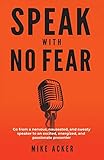
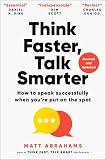
The U.S. Bureau of Labor Statistics (BLS) defines speaking and listening as skills used “to convey and receive information.” In a March 2025 analysis, the BLS reported that these skills were rated very important in 314 occupations, based on occupation-level ratings for 2023. That breadth matters: the skill is relevant well beyond jobs centered on presentations.
The BLS’s selected examples span different kinds of work. Its 2023–33 projections show annual average openings of 42,200 for training and development specialists, 41,800 for coaches and scouts, 35,600 for lawyers, 27,100 for public relations specialists, and 23,000 for chief executives. These are projected openings in occupations where speaking and listening score highly—not counts of jobs that specifically require public speaking, and not evidence that each role involves the same kind of speaking.
#1 Best Overall
How can public speaking help me at work?
Clear speaking can help other people act on what you know. The value is practical: colleagues, clients, or managers need to understand the issue, your recommendation, and what should happen next.
- Explain complex work: Translate a technical or detailed issue into terms an audience can use.
- Make recommendations: State what you propose, why, and what decision or support you need.
- Keep work moving: Give concise project updates and help a group focus its discussion.
- Show relevant expertise: Answer questions in an interview, performance review, or project meeting with specific examples.
- Take responsibility in a group: Communicate plans and decisions when coordinating a project or team.
These are ways spoken communication can support your contribution; speaking skill alone does not establish expertise or produce a particular career outcome. Advancement also depends on performance, opportunity, organizational context, and other skills. The available BLS occupational data does not show that public-speaking training by itself raises salary, improves promotion odds, or secures a job.
Rank #2
What makes workplace speaking effective?
Effective speaking is not simply sounding polished. It combines a clear point, an order the audience can follow, delivery suited to the situation, and careful listening when people respond.
- Structure: Lead with the point or request, support it with a few relevant facts, and end with a decision, action, or next step.
- Audience awareness: Choose the detail and terminology that help this particular group understand or decide.
- Delivery: Use a pace and volume people can follow; avoid relying on a script so heavily that you cannot adapt.
- Listening: Hear the question being asked, answer it directly, and clarify when you do not know or need more context.
A short decision-focused update calls for different preparation from a keynote-style speech. Practice the type of communication you actually need to do.
Rank #3
How do I get better at public speaking for work?
Use a real upcoming task as your practice material. A project update, interview response, or recommendation to a team gives you a useful audience, purpose, and time limit.
- Choose one situation. Identify a specific presentation, meeting contribution, or question you expect to answer.
- Name the audience’s main question. Decide what they need to know, decide, or do after hearing you.
- Write your takeaway. Put the one point you want them to remember into a sentence.
- Build a simple structure. Open with your point, add a few supporting ideas, and close with the requested decision or next step.
- Rehearse aloud and time yourself. Practice without reading every word, then prepare for likely questions.
- Ask for focused feedback. Have a colleague, mentor, or peer listen for one or two observable things, such as clarity, pace, structure, or connection with the audience.
- Use the feedback in a realistic setting. Try the revised approach in a work-like discussion or presentation, then notice what still needs practice.
Feedback is most useful when it points to a behavior you can change, rather than offering only a general verdict such as “good” or “bad.” Repeating the full cycle—prepare, speak, listen to feedback, adjust—helps you practice the skill in context.
Rank #4
Should I join a public-speaking club or take a course?
A club, course, coach, colleague, or speaking group can provide practice and feedback; there is no established comparison showing one route is best for everyone. Toastmasters is one example of a structured option. Its official materials describe opportunities for prepared and impromptu speaking, peer feedback, mentoring, and an education program. Those features may suit someone who wants regular practice, but the organization’s descriptions of its own program are not independent evidence that it is the most effective choice.
Toastmasters also notes that club speeches may need adapting for workplace use: a polished speech is not automatically a concise, decision-focused business presentation. Whichever route you choose, compare it with the communication you want to improve.
Recommended Free Tools
- Goal: Does it focus on formal speeches, workplace presentations, interviews, impromptu answers, or anxiety management?
- Practice: How often will you speak, and do the exercises resemble situations you face at work?
- Feedback: Will you receive specific, actionable feedback more than once?
- Format and access: Does the location, online or in-person format, language, and schedule work for you?
- Cost and commitment: Check current fees, time requirements, and whether you can visit or try a session before committing.
Other options include volunteering to present a team update, rehearsing with a colleague, joining a speaking group, or taking a presentation course. A book can provide ideas for self-study, but it cannot replace speaking aloud and receiving feedback.
Quick Recap
Product prices and availability are accurate as of the date/time indicated and are subject to change. Any price and availability information displayed on Amazon at the time of purchase will apply.




