Recommended Free Tools
Arm announced on June 12, 2018, that it had acquired Stream Technologies, an enterprise provider of Internet of Things (IoT) connectivity management. Arm said it planned to combine Stream’s network-connectivity tools with its Mbed device-management platform so organizations could manage device connections and lifecycles in a more unified way. The announcement describes Arm’s plans at the time; it does not establish Stream’s current ownership or the present availability of related services.
Why did Arm acquire Stream Technologies?
Arm’s stated aim was to extend IoT management beyond devices and software to the networks that connect devices. Mbed focused on managing IoT devices, while Stream provided tools to manage their physical connectivity. Arm presented the acquisition as a way to bring those functions together for customers deploying connected devices across networks and locations. Arm’s June 12, 2018 announcement described this as a plan for more seamless onboarding, connectivity and device management.

The announcement attributed the following explanation to Hima Mukkamala, then senior vice president and general manager of Arm IoT Cloud Services: “The addition of the Stream team to Arm accelerates our mission to securely manage IoT complexities from chip to the cloud, enabling our customers to focus their efforts on deriving real actionable insights from the data generated by their connected devices.”
What capabilities did Arm say Stream would add?
Arm said Stream supported multiple wireless connectivity types, including cellular, LoRa and satellite. Its stated capabilities and expected benefits included:
Do these 3 things before closing this tab:
1Fix the driver behind crashes, sound loss and screen glitches2Repair Windows errors before they cause bigger problems3Scan for outdated or missing drivers - takes under a minute#1 Best Overall
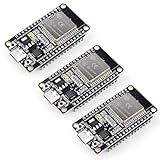
- Dual-Core Performance Up to 240 MHz: Run sensor processing, wireless communication, automation logic and connected-device tasks on a 32-bit dual-core ESP32 platform designed for responsive embedded and IoT projects
- Built-in Wi-Fi and Bluetooth 4.2: Connect to 2.4 GHz Wi-Fi networks or use Bluetooth Classic and BLE for wireless sensors, smart devices, remote controls, home automation and other connected projects
- Flexible Power-Saving Modes: ESP32 power-management features support dynamic clock scaling and low-power operating modes, helping developers reduce energy use in compatible sensing, monitoring and connected-device applications, suitable for battery-powered Internet of Things (IoT) devices.
- USB-C Programming with CP2102: Connect through USB-C for power, sketch uploads and serial monitoring, while GPIO, UART, SPI and I2C interfaces support sensors, displays, motor drivers and other modules (USB-C cable not included)
- Over-the-Air Update Support: Configure OTA functionality through a compatible ESP-32 software framework to update deployed firmware over Wi-Fi without reconnecting the board by USB for every revision
- A unified view of connectivity and device management across devices and locations.
- eSIM orchestration and zero-touch onboarding to help provision devices.
- Connectivity aggregation across network types, with options selected for a device, region or use case.
- APIs and automated controls intended to simplify billing and reconciliation.
- Device updates and quality-of-service management.
These were capabilities and benefits described by Arm at the time of the announcement, not independently verified results or a guarantee that every planned integration was completed.
What figures did Arm report about Stream in 2018?
In its 2018 acquisition announcement, Arm said Stream managed more than 770,000 subscribers and handled an average of 2 TB of traffic per day. Those are historical figures attributed to Arm and describe Stream as presented at acquisition time; they should not be treated as current operating data.
Rank #2

- Certified & Future-Ready: Espressif-certified ESP32-WROOM-32E ensures full hardware compatibility and lifetime firmware support. Upgraded 8MB Flash handles IoT data and OTA updates.
- Dual-Core Speed: 240MHz dual-core processor runs Wi-Fi/BLE and sensors 2x faster. 38 GPIO pins (10 RTC) support SPI/I2C/UART for LCDs, motors, and industrial sensors.
- Plug & Play Dev: USB-C driver pre-installed: upload code instantly on Windows/Mac/Linux. Works with Arduino IDE, MicroPython, and Espressif IDF.
- All-Environment Ready: Run Wi-Fi smart switches (Home Assistant) and BLE tracking on one board. Industrial-grade stability (-40°C~85°C) for outdoor/automated systems.
- Advantages: The ESP32 development board offers high performance, low power consumption, and rich wireless connectivity, making it suitable for developers of all levels, especially beginners.
How did Stream fit into Arm Pelion?
On August 2, 2018, Arm described a broader IoT strategy bringing Stream’s connectivity management together with Arm Mbed Cloud and Treasure Data’s enterprise data-management technology under the Arm Pelion IoT Platform. Arm characterized Pelion as covering connectivity, device and data management. That announcement records the strategy Arm presented; it does not demonstrate that all proposed integrations or benefits were delivered.
Independent reader supportYour contribution helps us test, update, and keep practical guides available for everyone.What happened to Arm’s IoT businesses after the announcement?
On July 7, 2020, Arm announced proposed organizational changes that would transfer its IoT Platform and Treasure Data businesses to new entities owned and operated by SoftBank Group and affiliates. Arm said the proposal was subject to board review, customary closing conditions and local staff consultation where applicable, and was expected to be finalized by the end of September 2020 if approved. The announcement sets out the proposal and its conditions, but does not by itself confirm that the transfer closed. The announcements cited here do not establish Stream’s present ownership, branding, service availability or terms.
Quick Recap
Best Value
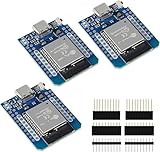
- D1 Mini NodeMCU Type-C ESP32 WLAN WiFi Bluetooth IoT Development Board 5V Compatible for Arduino
- Designed with ultra-low power technology, it offers the full range of performance and features of the ESP32 chip. The pin arrangement provides compatibility with the modules developed for the D1 Mini ESP8266 while also offering fast WLAN, enhanced GPIO, Bluetooth functionality, and with its higher performance, a wider range of applications.
- 100% compatible with Arudino IDE, Lua and Micropython, it shows robustness, versatility, and reliability in a wide variety of applications and power scenarios.
- All I/O pins have interrupt, PWM, I2C and one-wire capability, except the pin DO.
- Designed with ultra-low power technology, it offers the full range of performance and features of the ESP32 chip. The pin arrangement provides compatibility with the modules developed for the D1 Mini ESP8266 while also offering fast WLAN, enhanced GPIO, Bluetooth functionality, and with its higher performance, a wider range of applications.
Rank #4

- 2.4GHz Dual Mode WiFi + Bluetooth Development Board
- Support LWIP protocol, Freertos
- SupportThree Modes: AP, STA, and AP+STA
- Ultra-Low power consumption, Compatible with Arduino IDE
- ESP32 is a safe, reliable, and scalable to a variety of applications
Rank #3
Product prices and availability are accurate as of the date/time indicated and are subject to change. Any price and availability information displayed on Amazon at the time of purchase will apply.




