Higher mortgage rates can make buying a home more expensive—and can make some current homeowners less willing to sell. A homeowner with a low-rate mortgage may face a much larger payment on a replacement home if moving means giving up that loan and borrowing at today’s rates. That “lock-in” can discourage some owners from listing, adding friction to the supply of existing homes.
How higher rates affect buyers and sellers differently
Buyers face higher borrowing costs
When mortgage rates rise, a buyer financing a home generally pays more in principal and interest for the same loan amount. That can make a home unaffordable at the buyer’s previous budget, lead the buyer to look at less expensive homes, or prompt a delay in purchasing. The Consumer Financial Protection Bureau reported that rates peaked at 7.79% in October 2023; in its historical illustration, the principal-and-interest payment for a median-priced home had risen 78% to $2,891. That figure describes the CFPB’s analysis at that time, not a current payment quote. Read the CFPB’s rate-impact analysis.
Some owners face a costly move
A homeowner who has a below-market fixed-rate mortgage may be able to keep that loan while remaining in the home. If the owner sells and finances the next home with a new mortgage, the old loan generally does not follow them; new borrowing may come at a substantially higher rate. The prospect of a larger payment can make moving less attractive, even when the owner would otherwise consider selling.
The effect is not automatic. A move may still make sense because of work, family, health, finances, or other needs. Equity, loan terms, taxes, transaction costs, replacement-home prices, and local inventory can also shape the decision.
The Tool Desk
Outbyte PC Repair FREERepair Windows errors before they cause bigger problemsFix Now →Outbyte Driver Updater FREEFix the driver behind crashes, sound loss and screen glitchesFind Drivers →#1 Best Overall
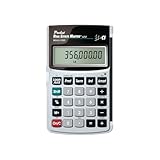
- Loan Amortization and Remaining Balances
- Instant Principal, Interest, Interest Only and Total Payments
- Future Values
- Date math function
What mortgage-rate lock-in means for housing supply
When owners hold mortgages at rates below those available on new loans, some may delay listing rather than give up the financing advantage. Fewer such owners putting homes on the market can add friction to existing-home supply. Freddie Mac describes this mortgage-rate lock-in effect as contributing to the lack of homes for sale, while noting that the size of its contribution remains an active research area. Freddie Mac’s analysis estimated an average lock-in effect of $55,000 for fixed-rate loans in its portfolio active as of June 2023, and an aggregate effect of $700 billion for fixed-rate loans in its single-family mortgage portfolio. These are portfolio-specific estimates from 2023, not current figures for all U.S. homeowners.
Mortgage-rate lock-in is different from a rate lock on a new mortgage application. A new-loan rate lock is an agreement to hold a quoted rate for a set period during the application process; mortgage-rate lock-in refers to an existing borrower’s reluctance to give up a lower-rate loan by moving.
Rank #2

- SPEAKS YOUR LANGUAGE: Keys clearly labeled in residential mortgage finance terms like Loan AMT, Int, Term, PMT. This industry-standard calculator is super easy to use on all realty financing matters from finding a loan that works for your client to considering trust deeds investments, or finding remaining balances or balloon payments and much more
- CONFIDENTLY AND EASILY SOLVES: All your clients' financial questions whether they are buyers, sellers, investors or renters. Increase your perceived professionalism as a new agent, experienced broker or seasoned loan officer. Close more home sales and impress your clients with fast, accurate answers to all their real estate finance questions
- DEDICATED BUYER QUALIFYING KEYS: Enter client's income, debt and expenses to pre-qualify them to only show properties they can afford. Include tax, insurance and mortgage insurance then compare loan options and payment solutions to give your client choices before they make an offer to buy
- FIGURE OUT THE RIGHT LOAN: At the press of a button for jumbo, conventional, FHA/VA, or even 80:10:10 or 80:15:5 combo loans; check to see if ARMs or bi-weekly loans, quarterly payments or if interest-only payments are the answer; giving your client more choices; easily perform what if loan or tvm calculations Find loan amount, term, interest or PITI or PI payments
- BECOME AN INVALUABLE RESOURCE: Reduce your clients' confusion and uncertainty; ensuring they are able to make a purchase offer; knowing they can afford the down payment; and determining which is the right loan for them. Date-math for listings and contracts too. Comes with a protective slide cover, quick reference guide, pocket User's Guide, and long-life batteries
What recent sales figures show—and what they don’t
National sales data offer a snapshot of market activity, but they do not prove that mortgage rates alone caused a change. In August 2026, existing-home sales decreased 2.0% from July, while sales were up 1.6% year-to-date through the first eight months of 2026, according to the National Association of Realtors’ existing-home sales data.
Pending home sales tell a different, forward-looking part of the story: they track contract signings, not completed sales. In August 2026, pending sales rose 0.3% from July but were 4.7% below August 2025. NAR reported that the 30-year fixed mortgage rate averaged 6.67% that month. These figures describe different comparisons and stages of a transaction; pending contracts are not the same measure as closed sales. NAR’s September 17, 2026 report provides the pending-sales figures.
Quick wins for a faster PC:
Clear out junk files and repair common Windows errorsFree Scan →Fix the driver behind crashes, sound loss and screen glitchesFind Drivers →Repair Windows errors before they cause bigger problemsFix Now →Rank #3

- DEDICATED FUNCTION KEYS for Quick Financial Solutions: Clearly labeled function keys enable you to quickly and confidently provide financial answers and options for your clients, whether in the office, in the car or at an open house. Compare loan options and provide payment solutions to give your client choices
- INSTANT FINANCIAL PROBLEM SOLVING: Solve the financial questions your clients have whether they are buyers, investors or renters; increase your perceived professionalism and close more home sales by quickly answering real estate finance problems including remaining balances
- RESIDENTIAL REAL ESTATE FINANCE TERMS: Keys labeled in residential real estate finance terms like Loan AMT, Int, Term, PMT; Calculator is super easy to use to determine a mortgage loan that works for your client
- VERSATILE LOAN CALCULATION OPTIONS: Calculate 80:10:10 or 80:15:5 combo loans at the press of a button; check to see if ARMs or bi-weekly loans, quarterly payments or if interest-only payments are the answer; giving your client more choices
- COMES COMPLETE: Comes with a protective slide cover, quick reference guide, pocket user's guide, two long-life batteries, and 1-year warranty
Rates can influence what buyers can afford and whether some owners list, but they do not by themselves determine home prices, inventory, or when any household sells. Local employment, wages, prices, and the number of homes available also matter.
How to assess the effect in a local market
National averages cannot tell a homeowner whether local conditions make selling easier or harder. A more useful local comparison looks at several measures together:
Rank #4

- SPEAKS YOUR LANGUAGE: Keys clearly labeled in residential mortgage finance terms like Loan Amt, Int, Term, Pmt; this industry-standard calculator is super easy to use on all realty financing matters from finding a loan that works for your client to considering trust deeds investments, or finding remaining balances or balloon payments and more
- CONFIDENTLY AND EASILY SOLVE: Clients' financial questions whether they're buyers, sellers, investors or renters. Increase your perceived professionalism as a new agent, experienced broker or seasoned loan officer. Close more home sales and impress your clients with fast, accurate answers to all their real estate finance questions from PITI Payments to IRR, NPV and Cashflows
- DEDICATED BUYER QUALIFYING KEYS: Enter client's income, debt and expenses to pre-qualify them to only show properties they can afford. Include tax, insurance and mortgage insurance then compare loan options and payment solutions to give your client choices before they make an offer to buy
- FIGURE OUT THE RIGHT LOAN: For your client at the press of a button for jumbo, conventional, FHA/VA, or even 80:10:10 or 80:15:5 combo loans; check to see if ARMs or bi-weekly loans, quarterly payments or if interest-only payments are the answer; giving your client more choices; easily perform what if loan or TVM calculations find loan amount, term, interest or PITI or PI payments
- BECOME AN INVALUABLE RESOURCE: To your clients by reducing their confusion and uncertainty; ensuring they are able to make a purchase offer; knowing they can afford the down payment; and determining which is the right loan for them. Date-math for listings and contracts too. Comes with a protective slide cover, quick reference guide, pocket user's guide, and long-life battery
- Existing owners’ rates versus current mortgage rates: The wider the gap, the greater the potential payment difference for an owner who would replace a low-rate mortgage with a new loan. The gap alone does not establish how many owners will list.
- Active listings and months of supply: These help show how much choice buyers have in the local market. A low number of listings may reflect several factors, not just rate lock-in.
- Pending sales versus closed sales: Pending contracts can indicate activity ahead, while closed sales show transactions that have completed. The timing and measures differ.
- Local prices, wages, and employment: These provide context for affordability and demand that a national mortgage-rate average cannot capture.
What this means if you’re deciding whether to sell
A low mortgage rate is one factor to weigh, not a rule that says to stay put. Compare the full cost and practical benefits of moving with the cost of remaining in your current home. Consider your next home’s price and likely financing, your current loan terms and equity, transaction costs and taxes, and whether your household needs to move. Market-wide lock-in can help explain why some owners hesitate, but it cannot answer what is right for a particular homeowner.
Quick Recap
Best Value

- Extra large 12-digit angled display.
- Loan Wizard.
- Automatic Tax Keys.
- Selectable decimal setting.
- Input any three loan variables to compute the fourth.
Product prices and availability are accurate as of the date/time indicated and are subject to change. Any price and availability information displayed on Amazon at the time of purchase will apply.




