Quick wins for a faster PC:
Repair Windows errors before they cause bigger problemsFix Now →Fix the driver behind crashes, sound loss and screen glitchesFind Drivers →Clear out junk files and repair common Windows errorsFree Scan →Canadian companies can pursue defence and dual-use technology support through several distinct federal routes—not one general-purpose grant. NRC IRAP’s Defence Industry Assist is aimed at eligible Canadian SMEs developing technologies that fit defence needs and have a commercialization path; DND’s IDEaS program offers several forms of innovation support, including development funding and military assessment. Other initiatives support supply-chain growth, broader technology development, financing, or international R&D partnership formation. Each has its own eligibility rules, intake, and scope.
How Canada links defence spending with domestic innovation
Canada’s first Defence Industrial Strategy, launched in February 2026, treats defence procurement as a way to strengthen domestic suppliers, develop Canadian innovation, commercialize technology, and give industry more predictable demand. Its Build–Partner–Buy approach means building essential capabilities in Canada where feasible, partnering with trusted allies where collaboration makes sense, and buying from allies where necessary under conditions intended to preserve Canadian sovereign control and domestic capability. The strategy also describes practical navigation measures for industry, including industry days, an inventory of procurement opportunities, a single-window service, and a dedicated ISED concierge for defence and dual-use companies. The launch announcement and the strategy set out the framework.

The policy context is substantial, but it does not mean every company can claim a share of a single fund. ISED reported that Canada’s defence industry contributes nearly $10 billion to GDP and supports more than 81,000 jobs; these are industry-wide figures, not forecasts of new jobs or funding available to applicants. ISED’s March 2026 announcement also reports that NRC Challenge programs have provided more than $240 million in joint R&D funding since 2018 and produced 2,600 technologies and tools and nine spin-off companies. Those are reported program outputs, not a guarantee of outcomes for a new project.
Which support route fits your company?
Start with the kind of help you need, rather than the largest headline amount. A technology that needs defence-market guidance or validation is a different fit from one that needs an international R&D partner, supply-chain expansion, or a specific opportunity to be assessed by the Canadian Armed Forces.
What’s actually slowing this PC down?
Pick the symptom - the matching free tool is one click away.
#1 Best Overall
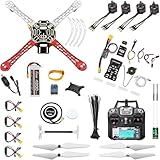
- 𝐘𝐨𝐮𝐫 𝟏𝐬𝐭 𝐃𝐈𝐘 𝐃𝐫𝐨𝐧𝐞 - F450 is the best DIY drone for both beginners to learn the basics and experts to conduct research or secondary development.
- 𝐌𝐨𝐫𝐞 𝐂𝐚𝐩𝐚𝐜𝐢𝐭𝐲 & 𝐌𝐨𝐫𝐞 𝐒𝐩𝐚𝐜𝐞 - Wheelbase: 450mm, Maximum take-off weight: approx. 1.8 kg. It has enough space for flight control, Raspberry Pi, camera, sensors, etc.
- 𝐍𝐞𝐰𝐛𝐢𝐞 𝐅𝐫𝐢𝐞𝐧𝐝𝐥𝐲 - We have prepared a quick start guide for new players that will assist you with the assembly and calibration of a DIY drone. Please contact us if you need it.
- 𝐁𝐫𝐚𝐧𝐝 𝐏𝐚𝐫𝐭𝐬 - We use parts from brands for stable and reliable quality. Free replacement for quality problems within 3 months.
- 𝐅𝐥𝐢𝐠𝐡𝐭 𝐂𝐨𝐧𝐭𝐫𝐨𝐥 𝐍𝐎𝐓 𝐈𝐧𝐜𝐥𝐮𝐝𝐞𝐝 – Assembling a complete drone requires flight controls, which are not included in this kit. You can choose the flight control according to your needs and budget.
| Route | Type of support and potential fit | Published scale or limit |
|---|---|---|
| NRC IRAP Defence Industry Assist (DI Assist) | Advice, connections, and funding for eligible Canadian SMEs advancing made-in-Canada defence or dual-use technologies. Support can address early R&D and refinement, testing, or validation closer to completion. | A $241 million investment was announced for DI Assist; this is not a per-company award or an automatic entitlement. |
| DND IDEaS | Five mechanisms for defence and security innovation: Competitive Projects, Innovation Networks, Contests, Sandboxes, and Test Drives. The particular call determines who can apply and what it offers. | DND describes over $1 billion of investment over 20 years. Competitive Projects offer up to $6.75 million in phased development funding, and Innovation Networks up to $3 million; these are ceilings, not typical awards. |
| CanExport Innovation | Eligible Canadian SMEs, academic institutions, and non-government research centres seeking international collaborative R&D partnerships around a Canadian technology they own. Support is for forming and formalizing a partnership, not the R&D work that follows. | Up to 75% of eligible costs, capped at $37,500 per project under the September 2026 guide. |
| Regional Defence Investment Initiative (RDII) | Supports SME growth and integration into domestic and international defence supply chains. | $379.2 million was announced for the initiative; the figure does not establish an individual applicant’s award or current intake. |
| Other strategy-linked channels | Different channels address financing, defence and dual-use technology commercialization, drone innovation, or aircraft research, development, demonstration, and qualification. | The launch announcement listed a $4 billion BDC Defence Platform; an initial $656.9 million for technology development and commercialization through channels including the Strategic Response Fund, Innovative Solutions Canada, and the Life Sciences Fund; a $105 million Drone Innovation Hub over three years; and a $459 million aircraft platform over five years. |
The amounts in this table describe different programs and commitments, with different purposes, recipients, and time periods. They should not be added together as a dedicated dual-use fund. In particular, the $4 billion BDC platform is an announced platform, not a stated grant allocation to companies, while the $656.9 million is an initial amount routed through several channels. The launch announcement provides the scope of these commitments. Check its descriptions alongside each program’s own terms.
When DI Assist may be a fit
NRC IRAP describes DI Assist as support for Canadian SMEs working on made-in-Canada defence or dual-use technology. The program combines advice and connections with potential funding, and can help a company understand defence markets and procurement processes as well as move technology through development stages. Its announced $241 million investment is the program-level figure, not a promise that funds are available to every interested business.
Rank #2

- 1. Unique DIY Drone:This DIY drone integrates optical flow positioning modules, video modules, and high-power brushless motors.The assembly process takes approximately 1.5 hours and requires patience and hands-on skills. Recommended for users aged 14 and above. Difficulty level: 5/5.
- 2. A Project Worth Showcasing:Packed with extensive foundational knowledge about drones, this kit allows you to deeply understand drone technology during assembly. Master the principles and confidently showcase your expertise, gaining admiration from friends.
- 3. Multifunctional Flight Experience:360° flips,One-click takeoff/landing,Headless mode,Speed adjustment,Optical flow positioning,Real-time video transmission,Perfect for indoor/outdoor flight performances,Operation difficulty : 5/5(practice required for proficiency).
- 4. Worry-Free Flying:Includes spare propellers for quick post-crash replacements.Flight time can be up to 30 minutes.【about LED】Slight flight control algorithm differences across batches. If LEDs won't light up, switch to the other installation mode. No impact on flight.
- 5. Educational Value:The detailed manual explains drone fundamentals and serves as a reference for STEM project plans or curriculum design. Includes editable PowerPoint teaching materials to support educators.
NRC identifies screening conditions for a prospective project. It must support Canadian Armed Forces capability needs, align with Defence Industrial Strategy priorities and key sovereign capabilities, show a clear commercialization path, and meet NRC IRAP’s minimum support requirements. Treat these as eligibility and fit tests—not as approval criteria that guarantee funding. NRC’s DI Assist page gives the program’s current description.
- Strongest potential fit: a Canadian SME with a defined defence or dual-use technology and a plausible route to commercial use, whose project addresses a stated defence capability or sovereign-priority need.
- Likely mismatch: a proposal that is only generally innovative, has no clear defence application, or cannot explain how it could reach commercialization.
- Before investing in an application: compare the project against NRC IRAP’s minimum support requirements and confirm current program conditions with NRC IRAP.
How IDEaS support differs by mechanism
DND’s Innovation for Defence Excellence and Security (IDEaS) program is not a single award stream. Its five elements cover different stages and ways of engaging with defence innovation. The current opportunity or call—not the program-wide headline—sets requirements and available support. DND describes IDEaS as investing over $1 billion in defence and security innovation over 20 years. DND’s explanation of how IDEaS works was modified on May 29, 2026.
Rank #3
- Unique DIY Drone: This DIY drone integrates advanced optical flow positioning modules, video modules, and high-power brushless motors. You need to complete everything from every single screw to the overall assembly, and the assembly takes approximately 1.5 hours. It is recommended for users over 14 years old. Difficulty level: 5 stars (out of 5 stars).
- An Impressive Project to Show Off: This project is packed with extensive basic knowledge of drones. It enables you to acquire more profound knowledge about drones during the assembly process, allowing you to boast more confidently and draw more admiration from others.
- Multi-functional Flight Experience: It offers five amazing flight functions: 360° roll, one-click takeoff and landing, headless mode, speed adjustment, optical flow positioning, and real-time video viewing, adding infinite fun to your flight experience and allowing you to perform flight shows easily in the office or at home. Operation Difficulty: 5 stars (Proficiency in flight requires practice).
- Worry-free Flight: Spare propellers are included to ensure that you can quickly replace them even if you encounter an accident during flight and continue to enjoy the fun of flying. The single flight duration can reach 30 minutes.
- Educational Significance: The detailed instruction manual not only introduces the basic principles of drones but is also very suitable as reference material for STEM project plans or curriculum design. In addition, we provide easily modifiable PPT courseware to assist your educational work.【about LED】Slight flight control algorithm differences across batches.If LEDs won't light up, switch to the other installation mode.No impact on flight.
- Competitive Projects: phased development funding of up to $6.75 million. The maximum is not a typical award or an assurance that a project will receive that amount.
- Innovation Networks: support of up to $3 million. Applicants should check the applicable opportunity for its requirements and form of support.
- Contests: competition-based opportunities; eligibility, challenge and award details depend on the specific contest.
- Sandboxes: opportunities to explore or develop technology in a defence-relevant setting, subject to the particular offering’s terms.
- Test Drives: opportunities for the Canadian Armed Forces to assess technology. Assessment is not the same as procurement or a commitment to buy.
For any IDEaS element, read the live call and program requirements before deciding that a company, technology, or proposed cost qualifies. A program-wide ceiling cannot substitute for call-specific rules.
When CanExport Innovation may help
CanExport Innovation may suit an eligible Canadian SME, academic institution, or non-government research centre that needs to establish an international collaborative R&D partnership around a Canadian technology owned by the applicant. The September 2026 applicant guide gives priority consideration to proposals involving defence and dual-use technologies and says the technology should be capable of reaching commercialization readiness within five years. Priority consideration is not a guarantee of support.
Rank #4

- 𝐘𝐨𝐮𝐫 𝟏𝐬𝐭 𝐃𝐈𝐘 𝐃𝐫𝐨𝐧𝐞 - F450 is the best DIY quadcopter drone for both beginners to learn the basics and experts to conduct research or secondary development.
- 𝐌𝐨𝐫𝐞 𝐂𝐚𝐩𝐚𝐜𝐢𝐭𝐲 & 𝐌𝐨𝐫𝐞 𝐒𝐩𝐚𝐜𝐞 - Wheelbase: 450mm, Maximum take-off weight: approx. 1.8 kg. It has enough space to connect flight control, Raspberry Pi, camera, sensors, etc.
- 𝐏𝐢𝐱𝐡𝐚𝐰𝐤 𝐈𝐧𝐜𝐥𝐮𝐝𝐞𝐝 - It can be used as a master controller for fixed-wing, multi-rotor, helicopter, boat, car, etc. By connecting relevant components, it allows for automated driving and customization.
- 𝐍𝐞𝐰𝐛𝐢𝐞 𝐅𝐫𝐢𝐞𝐧𝐝𝐥𝐲 - We have prepared a quick start guide for new players that will assist you with the assembly and calibration of a DIY drone. Please contact us if you need it.
- 𝐁𝐫𝐚𝐧𝐝𝐞𝐝 𝐏𝐚𝐫𝐭𝐬 - We use parts from brands for stable and reliable quality. Free replacement for quality problems within 3 months.
Under that guide, the program can cover up to 75% of eligible costs, to a maximum of $37,500 per project. It supports activities up to formalizing the partnership; it does not pay for the subsequent R&D itself. The guide warns that eligible applicants may still not receive support if demand exceeds available funds. Intake timing and budget status can change, so check the current guide and intake information before committing costs. Read the September 2026 CanExport Innovation Applicant’s Guide.
Independent reader supportYour contribution helps us test, update, and keep practical guides available for everyone.How to assess an opportunity before applying
- Define the project need. Decide whether the immediate gap is technical refinement, testing, defence-market guidance, partnership formation, supply-chain integration, or another form of financing. A program that funds one stage may not cover the next.
- Make the defence case specific. Explain the Canadian Armed Forces capability need or defence and dual-use application, and how it relates to a strategy priority or sovereign capability where the program requires that fit.
- Check the applicant rules and live intake. Confirm geography, organization type, technology ownership, eligible activities, minimum requirements, co-funding, deadlines, and whether the relevant call is open. Eligibility for one route does not imply eligibility for another.
- Map the path beyond the support. Identify what evidence, validation, partnership, or production capability the funded activity is expected to create, and how the technology could be commercialized or considered for procurement. Funding or testing alone is not a procurement commitment.
- Use the announced navigation channels. Look for the strategy’s industry days, procurement-opportunity inventory, single-window service, and ISED concierge for defence and dual-use companies, then confirm program-specific questions with the administering organization.
How to read the headline funding figures
Several federal announcements describe investments that are related to defence and dual-use development but are not directly comparable. In March 2026, ISED said NRC would invest over $900 million under the Defence Industrial Strategy, including work involving drones and aerospace, biomedical countermeasures, and quantum technologies. That broader NRC total is distinct from DI Assist and from other announced initiatives; the available figures do not establish a consolidated total for funding specifically earmarked for dual-use development, and overlap should be checked before combining them. ISED’s announcement describes the NRC investment.
The useful distinction is between an announced commitment, a program’s overall investment description, a maximum available under a particular mechanism, and an award to an individual applicant. Only the last represents funding actually secured by a company. A company should rely on the live terms and a specific decision—not on national headline totals—when budgeting a project.
Quick Recap
Product prices and availability are accurate as of the date/time indicated and are subject to change. Any price and availability information displayed on Amazon at the time of purchase will apply.




