Silvaco helps semiconductor manufacturers explore process and device choices in software before committing to physical wafer experiments. Its approach combines traditional technology computer-aided design (TCAD), a machine-learning platform it calls Fab Technology Co-Optimization (FTCO), and electronic design automation (EDA) tools. Silvaco says this can reduce wafer learning cycles and support cost, time-to-market, and yield goals; the available sources do not establish independently measured savings or yield gains.
What Silvaco sells—and what it does not do
Silvaco sells software and related services for semiconductor technology development, including TCAD, EDA, and semiconductor intellectual property. Its 2025 Form 10-K says customers use these solutions to optimize manufacturing processes and bring semiconductor products to market (2025 Form 10-K). Silvaco describes modeling and optimization tools, not a wafer-fabrication equipment line or chip manufacturing service.



The distinction matters: software can help engineers decide what to test and how a process or device may behave, but physical manufacturing still requires fabrication equipment and actual process runs.
How traditional TCAD helps engineers explore trade-offs
Technology computer-aided design (TCAD) simulates semiconductor process steps and device behavior. Engineers can use those models to examine how design or process changes may affect performance, power, size, and reliability before settling on a particular technology.
Free tools Windows power users keep installed
One-click scans. No signup required.
#1 Best Overall
Silvaco describes virtual experimentation across layouts, process steps, and operating conditions. Its TCAD overview also describes integration into a design-technology co-optimization flow that can span layout, process, device, SPICE simulation, and resistance-capacitance extraction (Silvaco TCAD overview). This is the vendor’s description of an intended workflow; it does not establish that every customer follows the same sequence or uses every tool.
How FTCO builds on simulation and process data
Silvaco’s FTCO platform adds analytics and machine learning to process co-optimization. In the workflow described on its product page, a TCAD engineer uses Victory Analytics and Victory DoE to train a nonlinear model with data from fabrication and physical-process experiments as well as simulation. Device and circuit simulations can also be included to relate process parameters to device and circuit parameters. Silvaco calls the resulting model a “Digital Twin” (Silvaco FTCO product page).
The company describes using this model to screen process variables virtually, explore design targets, and analyze variation with Monte Carlo and Cp/Cpk process-capability methods. The purpose is to investigate cause and effect and narrow down which physical experiments are worth running. A digital twin in this workflow is a model trained on available data; it is not an autonomous guarantee of manufacturing yield.
Where the expected efficiency gains come from
Silvaco’s proposed efficiency mechanism is fewer physical wafer learning cycles. If engineers can use simulation and data-trained models to evaluate more options before a wafer run, they may reduce the number of costly experimental iterations needed to develop or refine a process. Silvaco says FTCO can minimize cost and time to market while supporting yield optimization (FTCO product page; 2025 Form 10-K).
Do these 3 things before closing this tab:
1Scan for outdated or missing drivers - takes under a minute2Repair Windows errors before they cause bigger problems3Fix the driver behind crashes, sound loss and screen glitchesRank #3

- Wide Input Voltage Range: Supports 340-550VAC or 480-780VDC input, enabling stable operation in diverse industrial environments with flexible power source compatibility.
- High Efficiency Performance: Achieves up to 92% efficiency with passive PFC, reducing energy loss and heat generation for reliable long-term operation in automation applications.
- Comprehensive Protection Features: Integrated short-circuit, overload, over-voltage, and over-temperature safeguards ensure device safety and durability under demanding conditions.
- Compact Rail Mount Design: Slim 63mm width with TS-35/7.5 or 15 rail mounting, optimizing space utilization in control cabinets while facilitating easy installation and maintenance.
- Industrial Compliance & Certification: Meets UL61010, BS EN/EN61000-3-2, and EMC standards, guaranteeing suitability for industrial controls, manufacturing equipment, and electromechanical systems.
These are vendor-stated benefits, not a quantified result. The available sources do not provide an independently verified percentage for cost reduction, cycle-time improvement, or yield increase. Actual effects would depend on the process, the quality and coverage of the input data, the model’s fit to production conditions, and how a manufacturer uses the predictions to choose experiments.
Silvaco’s account of its Micron collaboration
Silvaco identifies Micron Technology as a development and deployment partner for FTCO. According to Silvaco, the collaboration uses production data and physics-based simulation for memory-device development, with work focused on etching, deposition, and mechanical stress (Silvaco FTCO product page; 2025 Form 10-K). This is the companies’ described collaboration, not independent evidence of a particular savings or yield outcome.
Rank #4
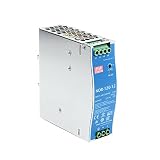
- Original and Genuine NDR-120W|(12V 10A).(24V 5A).(48V 2.5A) For Industrial automation control system,Semiconductor fabrication equipment,Electro-mechanical apparatus
- The NDR-120 series relevant certificates for industrial control apparatus (UL508, TUV BS EN/EN62368-1, and etc.) is a very competitive power supply solution for industrial applications.
- Input 90-264Vac, in line with German industrial standard thin economical power supply
- The metal shell has good heat dissipation, stable operation in the environment of -20? to 70?, and the efficiency is as high as 89%
- It is equipped with constant current mode for over-load protection, fitting various inductive or capacitive applications.
How EDA connects process work to circuit design
Silvaco’s broader portfolio includes EDA tools for a later part of the engineering flow. Its 2025 filing describes a sequence that can include design capture and circuit simulation, layout, physical verification, parasitic extraction and reduction, and post-layout analysis. The filing also says FTCO data structures can be used with Silvaco’s EDA modeling, analysis, simulation, verification, and yield-enhancement tools (2025 Form 10-K).
This connection is relevant because process choices affect device and circuit behavior. Linking process exploration with circuit-level design and verification may help engineers evaluate those relationships within a connected toolset. The filing does not quantify how much time or money the integration saves.
What to ask when evaluating the approach
For a manufacturer assessing a process-optimization platform, the useful questions are about workflow fit and evidence rather than a headline claim of efficiency:
- Wafer learning cycles: How many physical experiments does the current development process require, and which could the model realistically screen first?
- Data coverage: Can the platform combine the manufacturer’s experimental and production data with relevant simulation data?
- Correlation: Does the workflow connect process parameters to device and circuit behavior in the way the engineering team needs?
- Variation and yield: Are Monte Carlo and Cp/Cpk analyses appropriate for the team’s process-capability questions, and how will predictions be checked against production?
- EDA integration: Does the proposed tool flow fit the team’s existing circuit simulation, layout, verification, and extraction work?
- Customer-specific proof: What independently measured cycle-time, cost, or yield results can be shown for a comparable process and operating context?
The last question is essential before treating a vendor’s qualitative benefit claims as a financial or manufacturing forecast.
Quick Recap
Product prices and availability are accurate as of the date/time indicated and are subject to change. Any price and availability information displayed on Amazon at the time of purchase will apply.




