Your return on a prediction-market trade depends on more than whether your forecast is right. The price you actually pay or receive, venue and intermediary fees, payment charges, and tax treatment can all change the result. Those costs vary by market, order, venue, and your tax situation.
How to calculate a prediction-market return
Start with the amount you receive if the contract settles in your favor—or the proceeds you could get by selling before settlement—then subtract what you paid to enter and the charges associated with the trade.


Net result before tax = payout or exit proceeds − entry cost − trading fees − broker or exchange charges − payment charges − spread or slippage cost.
This is a planning framework, not individualized tax advice. If you use the actual prices at which your entry and exit orders filled, those prices already reflect the spread and slippage embedded in the fills. Do not subtract that execution cost a second time.
Recommended Free Tools
#1 Best Overall
The CFTC gives an illustrative example: a winning “yes” position bought for $0.70 on a contract that pays $1 at settlement produces a $0.30 gross gain before fees and taxes. That example is not a forecast or a promised return. CFTC: Understanding Prediction Markets and Event Contracts.
What trading fees can include
There is no single fee that applies to every prediction-market trade. A venue may calculate its trading fee from the number of contracts, contract price, and a market-specific rate; whether your order takes liquidity or rests on the order book can also matter. A broker or exchange may charge separately, and depositing or withdrawing funds can have its own cost.
| Venue or access route | Published fee information | Important qualifications |
|---|---|---|
| Kalshi | Its schedule effective July 7, 2026, gives a general formula for immediately matched trades: round up(M × 0.07 × C × P × (1-P)). The schedule’s example is $1.75 for 100 contracts priced at $0.50. |
The schedule has contract-specific multipliers and exceptions. Non-immediately matched resting orders generally are not charged under the trading-fee section, but specified cases have maker fees. It lists no settlement or membership fee, free ACH deposits and withdrawals, and card deposits that may cost up to 2%; third-party or other payment rails may add charges. Check the applicable terms. Kalshi fee schedule. |
| Polymarket | Its help article dated July 10, 2026, gives the formula C × feeRate × p × (1-p). Makers pay zero; taker fee-rate parameters range from 0.04 to 0.07 in charged categories. Fees are in USDC and rounded to five decimal places. |
The article says geopolitical and world-events markets are fee-free and that taker rates vary by category. The 0.04–0.07 figures are inputs to the formula, not flat percentages of the trade value. Rates can change. Polymarket trading fees. |
| Interactive Brokers, U.S. pricing page | For Kalshi contracts, the page lists $0.01 commission plus a $0.01 exchange fee per contract. For CME event contracts, it lists the same amounts. For ForecastEx forecast contracts, it lists $0.00 commission plus a $0.01 exchange fee per contract. | These are the listed U.S. rates; rates may change, and introduced or managed accounts may pay more. Interactive Brokers event-contract pricing. |
The schedules are not directly comparable by headline rate alone: the formulas, contract categories, order treatment, and charges differ. The published Kalshi and Polymarket figures above are schedule details dated July 2026, not a guarantee of what a future or every current trade will cost.
Why the bid-ask spread affects your return
The displayed contract price may be interpreted as a market-implied probability, but it does not guarantee that you can trade at that price immediately. In most cases, order books show real-time customer bid and ask prices, the CFTC explains. A buyer crossing the spread may pay the ask; if the buyer later sells, the available bid may be lower. The difference can reduce the result even if the market moves little.
Rank #3
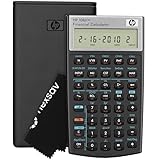
- HP 10BII+ FOR STUDENTS & PROFESSIONALS – This HP calculator is built for business, finance, accounting, and statistics courses. Perfect for learners and professionals who need to solve common financial problems quickly without memorizing formulas or relying on spreadsheets.
- 100+ FUNCTIONS FOR REAL WORLD MATH – Quickly solve time value of money, interest rates, loan payments, NPV, IRR, cash flows, and more. The 10bII+ also includes probability distributions for statistics courses—a feature not often found in financial calculators.
- ALGORITHMIC INPUT WITH DEDICATED KEYS – This high-school/college calculator uses algebraic and chain logic with minimal keystrokes. Layout appears the same as standard calculators for easy learning. Dedicated keys give quick access to commonly used financial and statistical functions
- APPROVED FOR MAJOR EXAMS – The HP 10bII+ algebra calculator is permitted for use on SAT, PSAT/NMSQT, and AP tests. An ideal statistics calculator and business calculator for school finance and accounting students preparing for class, coursework, or standardized exams.
- INCLUDES TRAVEL CASE, CLEANING CLOTH & BATTERIES– Slim, durable, and easy to keep on hand or store in a backpack or locker. Includes a protective case, cleaning cloth, and batteries so it’s ready out of the box. Large screen with clear contrast (non-backlit) is easy to read during exams or lectures.
Spreads and available order-book depth vary by market and moment. There is no typical spread established by the sources here, so check the live bid, ask, and quantity available near those prices for the size you intend to trade. A quoted price is not the same as an executable price for your full order.
Before entering or exiting
- Check the current bid and ask, not just a displayed midpoint or last-traded price.
- Look at the quantity available at each price; a large order may fill at several prices.
- Compare the net value of selling now with holding to settlement, including the venue and intermediary charges.
How to compare the all-in cost of venues
Compare costs for the specific market and order you plan to place. A lower fee rate does not necessarily mean a cheaper trade if the spread is wider, your order faces different maker or taker treatment, or an intermediary adds charges. No universally cheapest venue is established by the published schedules cited here.
Rank #4
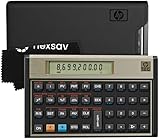
- HP 12C: INDUSTRY STANDARD SINCE 1981 – Trusted by professionals in real estate, banking, and finance for over 40 years. The HP 12C finance calculator remains the go-to tool for fast and accurate calculations in high-stakes business environments.
- 120+ FUNCTIONS FOR FINANCIAL ANALYSIS – Calculate loan amortization, bond pricing, mortgage payments, NPV, IRR, depreciation, and more with this large calculator. Built-in business and statistical functions allow you to perform complex calculations in just a few keystrokes.
- RPN ENTRY FOR FASTER WORKFLOWS – Reverse Polish Notation (RPN) allows for efficient data entry with fewer keystrokes and no formulas. This RPN calculator is perfect for a mortgage payment calculator, accounting calculator, business calculator, or real estate calculator for desktop.
- PROGRAMMABLE FOR REPEAT TASKS – The HP12C desk calculator stores custom keystroke sequences for repeated use. This large calculator supports up to 20 cash flows for IRR/NPV analysis, modeling investment scenarios, projecting returns, and automating routine calculations.
- INCLUDES CLEANING CLOTH, CASE & BATTERIES – Compact design fits easily on a desk or crowded table area. Includes a protective carrying case, cleaning cloth, and comes with pre-installed batteries so it's ready to use out of the box. A great choice for home finances, business professionals, and accountants.
- Order treatment: Determine whether your order is likely to take liquidity or rest on the book, and whether the schedule charges or rebates either type.
- Market and price formula: Check the category-specific rate, contract-price formula, rounding, and any multiplier or exception.
- Execution: Compare the live bid and ask and the depth available at your intended size.
- Other charges: Include broker and exchange fees, deposit and withdrawal methods, and any payment-rail charges.
- Exit and records: Check whether you can sell before settlement, at what executable price, and what trade and tax records the venue or intermediary provides.
Fee schedules can change. Verify the current market-specific schedule and payment terms before trading.
Independent reader supportYour contribution helps us test, update, and keep practical guides available for everyone.How prediction-market winnings are taxed
Tax treatment is a separate question from trading costs, and it depends on the contract and the taxpayer’s facts and jurisdiction. IRS Publication 550 (2025) describes Section 1256 rules for specified contract categories, including regulated futures contracts and nonequity options, and explains mark-to-market treatment for qualifying contracts held at year-end. It does not specifically establish that prediction-market event contracts as a class qualify. The sources cited here therefore do not support treating every event-contract gain as capital gain, ordinary income, gambling winnings, or Section 1256 gain. IRS Publication 550 (2025).
Do these 3 things before closing this tab:
1Scan for outdated or missing drivers - takes under a minute2Clear out junk files and repair common Windows errors3Fix the driver behind crashes, sound loss and screen glitchesBest Value

- DEDICATED FUNCTION KEYS for Quick Financial Solutions: Clearly labeled function keys enable you to quickly and confidently provide financial answers and options for your clients, whether in the office, in the car or at an open house. Compare loan options and provide payment solutions to give your client choices
- INSTANT FINANCIAL PROBLEM SOLVING: Solve the financial questions your clients have whether they are buyers, investors or renters; increase your perceived professionalism and close more home sales by quickly answering real estate finance problems including remaining balances
- RESIDENTIAL REAL ESTATE FINANCE TERMS: Keys labeled in residential real estate finance terms like Loan AMT, Int, Term, PMT; Calculator is super easy to use to determine a mortgage loan that works for your client
- VERSATILE LOAN CALCULATION OPTIONS: Calculate 80:10:10 or 80:15:5 combo loans at the press of a button; check to see if ARMs or bi-weekly loans, quarterly payments or if interest-only payments are the answer; giving your client more choices
- COMES COMPLETE: Comes with a protective slide cover, quick reference guide, pocket user's guide, two long-life batteries, and 1-year warranty
A venue’s CFTC-regulated status, by itself, does not establish the federal tax classification of a particular contract. State, local, and non-U.S. treatment may differ as well. For advice on reporting, consult a tax professional familiar with derivatives and event contracts.
Keep records that let you reconstruct the trade
As a practical recordkeeping workflow—not an IRS-specific mandate established by the cited publication—save trade confirmations, contract identifiers and terms, dates, quantities, entry and exit or settlement prices, fees, deposits and withdrawals, and any positions still open at year-end. These details help distinguish a contract’s outcome from the costs and transactions that produced your account result.
Quick Recap
Product prices and availability are accurate as of the date/time indicated and are subject to change. Any price and availability information displayed on Amazon at the time of purchase will apply.




