What’s actually slowing this PC down?
Pick the symptom - the matching free tool is one click away.
Neither Cardano nor Ethereum is a universal winner for AI-agent payments. Ethereum’s account-based design and ERC-4337 smart accounts support programmable authorization, bundled operations and optional gas sponsorship. Cardano’s eUTxO model represents transaction state through inputs, outputs and attached data; its official developer materials describe per-request x402 payments and Masumi escrow and agent-economy components. Choose based on how your application handles state, payment terms, wallet authority and fees—not on an assumed speed or cost advantage.
How do Cardano and Ethereum handle smart-contract state?
Cardano: transactions carry the state being checked
Cardano uses an extended unspent transaction output (eUTxO) model. Instead of a single mutable account balance and contract storage, an application commonly represents state in UTxOs, with relevant data attached to outputs as datums. A validator checks whether a proposed transaction satisfies its rules.
Cardano’s official smart-contract guide describes the model this way: “On Cardano a contract is a validator: a script that a transaction has to satisfy.” The application constructs the transaction, including its inputs and outputs, before it is submitted for validation. A script does not independently wake up and initiate an action; some transaction must spend the relevant output.
Ethereum: contracts execute against account and contract state
Ethereum is account-based. Addresses have balances, and contracts maintain storage in global state. A transaction calling a contract executes its code, which can update that storage and make further contract calls.
Do these 3 things before closing this tab:
1Clear out junk files and repair common Windows errors2Fix the driver behind crashes, sound loss and screen glitches3Repair Windows errors before they cause bigger problems#1 Best Overall

- EAL5+ CERTIFIED SECURE ELEMENT + FINGERPRINT PROTECTION — Your private keys stay encrypted offline on a certified EAL5+ chip, the same security tier used in EMV bank cards. Built by DCENT, securing crypto since 2018. Fingerprint authentication adds a second layer no PIN-only wallet can match.
- 10,000+ ASSETS NATIVE ON 100+ BLOCKCHAINS — Hold Bitcoin, Ethereum, XRP, Solana, Cardano, popular stablecoins (USDT, USDC), and NFTs in one wallet. No third-party apps, no fragmented setup — every supported asset works straight out of the box.
- TAP-TO-SIGN MOBILE EXPERIENCE — Pair your wallet with the DCENT mobile app over Bluetooth. Manage tokens, review transactions, and access in-app swap features directly from your phone — no cables, no desktop required.
- WEB3 & dAPP ACCESS VIA METAMASK — Connect to MetaMask and other browser extension wallets to manage NFTs, claim airdrops, and access dApps. A large screen and intuitive 4-button interface keep every transaction clearly visible before you sign.
- SEAMLESS FIRMWARE UPDATES & 30-DAY MONEY-BACK GUARANTEE — Apply security updates without resetting your wallet or migrating funds. Backed by Amazon's 30-day money-back guarantee — your purchase is risk-free.
These models change how developers represent shared state, compose operations and handle competing transactions. Cardano can check multiple script inputs and minting policies within one transaction, which succeeds or fails atomically. Ethereum applications commonly compose behavior through contract calls, routers, aggregators or multicalls. Neither description establishes that one approach is cheaper or simpler for every application.
What does this mean for an AI agent making payments?
Ethereum: smart accounts and sponsored fees
ERC-4337 adds account abstraction without requiring a consensus-layer protocol change. An agent’s wallet can be a smart-contract account with custom validation rules rather than a basic externally owned account. The agent submits a UserOperation to a separate mempool; bundlers collect operations and submit a transaction that calls the EntryPoint contract. The ERC-4337 specification describes bundlers as packaging operations into a transaction that makes a handleOps call.
Rank #2

- Superior Security - Elevate the cold storage safety of your digital assets with Arculus's innovative 3-factor authentication system: biometric lock, 6-digit PIN, and the Arculus metal card with private key encryption for multiple layers of security.
- Effortless Transactions - Simplify your crypto management with the Arculus Cold Storage Wallet and Arculus App, to seamlessly send, swap, or receive assets with a simple tap to your mobile device.
- CC EAL6+ Secure Element Technology – Safeguard your keys on the Arculus Card through robust, certified encryption, protecting against unauthorized access.
- Supports 95% of the Cryptocurrency Market Cap, including Bitcoin (BTC), Ethereum (ETH), Tether (USDT), XRP (XRP), and Cardano (ADA), Litecoin (LTC), Polkadot (DOT), and other popular coins.
- Hassle-Free - The Arculus Cold Storage Wallet communicates with your phone using secure tap-to-transact NFC technology. No cords, no connections and no internet required for next-gen levels of security.
A paymaster can agree to cover transaction costs instead of the sender. The standard’s goals include developer-sponsored fees, fee payment in ERC-20 tokens, custom signature or validation rules, and bundling operations. Those mechanisms add operational dependencies: an application must configure and fund its sponsorship arrangement, set permissions, and monitor its availability and spending.
Ethereum.org’s account-abstraction overview, last updated October 1, 2026, reports more than 26 million smart wallets and more than 170 million UserOperations. These are figures reported by ethereum.org about the account-abstraction ecosystem; they do not measure AI-agent activity or compare adoption with Cardano.
The Tool Desk
Outbyte PC Repair FREEClear out junk files and repair common Windows errorsFree Scan →Outbyte Driver Updater FREEScan for outdated or missing drivers - takes under a minuteDriver Scan →Cardano: direct HTTP payments, escrow or a custom contract
Cardano’s official agent-commerce documentation describes an x402 flow for paid HTTP requests: a service responds with HTTP 402 Payment Required and payment terms, the client pays on-chain, then retries the request with proof of payment. The documented options include paying an address directly, using Masumi escrow, or using a seller-selected custom contract.
Rank #3

- EAL5+ CERTIFIED SECURE ELEMENT + FINGERPRINT PROTECTION — Your private keys stay encrypted offline on a certified EAL5+ chip, the same security tier used in EMV bank cards. Built by DCENT, securing crypto since 2018. Fingerprint authentication adds a second layer no PIN-only wallet can match.
- 10,000+ ASSETS NATIVE ON 100+ BLOCKCHAINS — Hold Bitcoin, Ethereum, XRP, Solana, Cardano, popular stablecoins (USDT, USDC), and NFTs in one wallet. No third-party apps, no fragmented setup — every supported asset works straight out of the box.
- TAP-TO-SIGN MOBILE EXPERIENCE — Pair your wallet with the DCENT mobile app over Bluetooth. Manage tokens, review transactions, and access in-app swap features directly from your phone — no cables, no desktop required.
- WEB3 & dAPP ACCESS VIA METAMASK — Connect to MetaMask and other browser extension wallets to manage NFTs, claim airdrops, and access dApps. A large screen and intuitive 4-button interface keep every transaction clearly visible before you sign.
- SEAMLESS FIRMWARE UPDATES & 30-DAY MONEY-BACK GUARANTEE — Apply security updates without resetting your wallet or migrating funds. Backed by Amazon's 30-day money-back guarantee — your purchase is risk-free.
Masumi is documented as an agent-economy layer for payments, identity, traceability and discovery. Its escrow model holds funds against job terms, which is conceptually different from simply paying a service address for each request. Documentation of these components establishes that they are described as capabilities; it does not establish broad production adoption or a measured success rate.
The Cardano x402 material says a hosted facilitator URL would be published later. Because that is a changing integration detail, verify facilitator availability and the current payment flow in the official implementation documentation before building around a hosted service.
Rank #4
![[Copper Edition] Safe Seed Crypto Metal Wallet Stamp Plate - 12-25 Words Recovery Passphrase Cold Storage Bitcoin Ethereum BNB Cardano Solana ERC20 BIP39 Hardware Wallet Cryptocurrency](https://m.media-amazon.com/images/I/31PPCrul7aL._SL160_.jpg)
- 【Safe & Secure】By manually stamping or engraving your backup recovery passphrase into this Copper plate, you can ensure your cryptocurrency wallet remains safe and secure.
- 【Crypto Wallet Copper Edition】Protect your cryptocurrency with the copper metal plate, laser engraved crypto seed phrase storage. To secure your passphrase you’ll need a hammer and a letter punch set (5/32”, 4mm or smaller) or a hand etching tool.
- 【Heavy Duty】This corrosion-resistant thick copper plate is designed to last forever while remaining malleable, to easily stamp and etch your passphrase.
- 【Protect Passphrase】Backup your 12-25 word passphrase into this sturdy copper plate to securely protect your investment. Compatible with Bitcoin, Ethereum, Solana, and all other cryptocurrencies.
- 【Fortified Crypto Cold Storage Wallet】 Safe Seed cold storage wallet is built to be both fire and water-resistant with a 2000 °F melting point. Compatible with all software and all hardware wallets.
How should you choose for a real application?
Start with the transaction and trust model your service actually needs. The choice is not “which chain is better for AI”; it is which implementation fits the workload and can be operated safely.
Quick wins for a faster PC:
Fix the driver behind crashes, sound loss and screen glitchesFind Drivers →Clear out junk files and repair common Windows errorsFree Scan →- State model: Choose an architecture your application can represent clearly. Consider whether it needs shared mutable contract state and familiar EVM composition, or whether state can be modeled as UTxOs and transaction-carried data.
- Concurrency: Determine whether agents make independent payments that can proceed in parallel or contend for the same inputs or shared state. Test how conflicts and retries behave in the actual design.
- Payment terms: Decide whether a direct per-request payment is enough, or whether the service needs escrow, refunds, dispute handling, identity or agent discovery. A payment mechanism alone does not define those business rules.
- Fees and onboarding: If users should not need the network’s native token to get started, evaluate sponsorship or token-fee arrangements, who funds them, and how limits and monitoring work. A sponsor or relayer is an operational service, not a costless property of the chain.
- Existing users and infrastructure: Confirm which networks, tokens, wallets, APIs and developer SDKs your customers can actually use. A technically suitable contract is not useful if the intended users cannot access its payment route.
- Measured behavior: Benchmark a representative end-to-end flow, including wallet setup, payment submission, confirmation, retries and service response. Compare all-in cost, latency, inclusion success and failure recovery for the same workload, token, volume and provider setup.
The official sources covered here do not provide an apples-to-apples independent comparison of latency, throughput, reliability or total cost for AI-agent payments. Do not infer a winner from general chain characteristics or unrelated network transaction totals.
Best Value
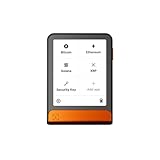
- Simply & securely take control of your digital assets and identity with the all-in-one Ledger Wallet crypto app and Ledger Flex touchscreen signer.
- Digital asset control at your fingertips: manage 15,000+ crypto across multiple chains. Earn rewards. Top up & share with ease. Explore DeFi with confidence. Collect and showcase NFTs. Make informed choices with clarity.
- Connect effortlessly with Ledger Wallet: pair your secure Ledger signer with the all in one Ledger Wallet crypto app to manage thousands of digital assets across multiple devices and accounts with Ledger Sync from a single, secure dashboard.
- Cutting-edge design: monitor the market, compare rates, and Clear Sign transactions on the secure, high resolution, 2.8'' E Ink touchscreen.
- This is what security feels like: Ledger touchscreen signers all come with a private, offline, PIN-protected backup, Ledger Recovery Key, to never lose access to your assets.
Who controls an autonomous agent’s wallet?
Settlement is only part of the risk. An agent with signing authority can act within the permissions and funds available to that authority. Account-abstraction rules, an escrow contract or a payment protocol do not automatically make an agent’s spending safe.
Autonomous signing
If the agent can sign and submit transactions on its own, define its spending limits and permitted destinations, protect its keys, monitor activity, and decide how to pause or recover the system if a key, model, tool or integration is compromised. The exact controls depend on the wallet and application; the chain comparison does not supply a comparative security audit or real-world loss rate.
Human-reviewed signing on Cardano
Cardano’s agent overview also describes an MCP-server pattern in which an agent reads chain information or drafts a transaction, then returns an unsigned transaction for a person to review and sign through a wallet. That can keep signing keys outside the model or server, but it is a different interaction model from an agent that spends autonomously. It is an architecture option, not a guarantee provided by every agent tool.
Free tools Windows power users keep installed
One-click scans. No signup required.
For either chain, review the exact transaction or operation before authorizing it. Cardano’s guide notes that a transaction can be evaluated before signing, but an input spent in the meantime can still make submission fail. A wallet review is an important check, not proof that an unfamiliar transaction is harmless.
Quick Recap
What should you test before deployment?
- Specify the workload: Write down the agent’s payment frequency, typical and maximum amounts, transaction shape, supported tokens and expected concurrency.
- Define authority: Decide whether an agent signs transactions, uses constrained smart-account permissions, or only proposes unsigned transactions for human approval. Document limits and a pause or recovery procedure.
- Prototype the complete payment path: Include the wallet, contract or validator, bundler or facilitator if used, fee payer, service endpoint and confirmation logic. A chain transaction alone is not the complete user experience.
- Exercise failure cases: Test rejected or delayed transactions, duplicate requests, stale inputs or state, depleted sponsorship funds, unavailable providers and interrupted service responses. Specify when the agent retries, stops or requests human help.
- Compare like with like: Run both implementations against the same representative workload and operating assumptions. Measure end-to-end costs and outcomes rather than extrapolating from a generic network statistic.
Product prices and availability are accurate as of the date/time indicated and are subject to change. Any price and availability information displayed on Amazon at the time of purchase will apply.




