Windows Errors? Fix Them Before They Spread
Repair common Windows errors and clear accumulated junk for a smoother, more stable PC - no reinstall needed.Free scan · no reinstallOutdated Drivers Are Slowing You Down
One free scan finds every outdated or missing driver and matches the right update for your exact hardware.Free scan · exact hardware matchWhen prices or borrowing costs rise, start by measuring what your household actually spends and owes. Then adjust the budget around the bills that changed, protect essential payments, and make debt or savings decisions only after checking their full terms. A higher market rate does not affect every loan the same way, and a budget that works for one household may not suit another.
1. Build a baseline from actual spending
Use several months of bank and credit-card statements, receipts and cash-spending notes—not memory—to see where take-home pay goes. The Consumer Financial Protection Bureau (CFPB) recommends tracking spending as it happens or reviewing receipts weekly or monthly. A small notebook, bank or credit-union tool, or the CFPB’s budgeting tools can help; you do not need a paid app or planner.
Include recurring bills and savings contributions alongside everyday purchases. Add insurance, medical costs, family support, gifts, seasonal bills and annual expenses, as well as a miscellaneous category for costs that do not fit elsewhere. Compare the total with monthly take-home income, then check whether the apparent leftover amount matches what is actually in your account. The CFPB’s spending tracker and budget worksheet are free options.
2. Identify what changed—and what did not
Compare recent bills with your own earlier bills, category by category. Note whether each increase is recurring, seasonal or a one-time expense. This helps distinguish a lasting change in household costs from an unusual month.
Free tools Windows power users keep installed
One-click scans. No signup required.
#1 Best Overall

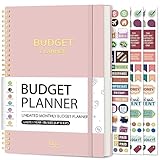
- Effective Budget Planning - Take control of your finances with the budget account book. This comprehensive planner allows you to plan and track your income, expenses, savings, and financial goals in one convenient place. With its intuitive layout and easy-to-use sections, you can stay organized and make informed decisions to achieve financial success.
- User-Friendly Layout - The budget planner features a user-friendly layout designed for easy navigation and organization. Each month, you'll find dedicated budget pages where you can set financial goals, track your income, and plan your expenses. Additional sections include debt trackers, savings goals, bill payment trackers, and more, making it simple to stay on top of your finances.
- Undated Monthly Calendar & Bonus Stickers - Featuring undated calendar each month, you'll have ample space to mark paydays, bills due, appointments, and important dates. Say goodbye to difficult writing spaces. Plus, we've included 3 cute sticker sheets that allow you to personalize your financial organizer and make budgeting more fun. Dates are not pre-printed and are completed by the user.
- Reliable and Convenient Design - Our monthly budget planner is designed for your convenience and built to last. The elastic band keeps everything securely in place, and the dual-sided pocket provides extra storage. Experience a budget planner that combines practicality and durability.
- Master Budgeting with Ease - Our financial planner includes a complete guidebook that provides valuable insights and instructions for optimal usage. From setting financial goals to tracking expenses, this guidebook offers step-by-step guidance and practical tips. Whether you're new to budgeting or an experienced user, this resource will help you make the most of your budget planner, empowering you to achieve financial success.
For each debt, record the balance, interest-rate type, minimum payment and due date. Many credit cards and other credit products have variable rates, which may increase as rates change. A fixed-rate loan payment typically does not change just because market rates move. Do not assume every debt reprices at once: check your own account terms and statements. The CFPB’s explanation of rate changes and variable-rate credit provides general context, not a statement about current rates.
3. Match bill dates to income dates
If money is tight at certain points in the month, the problem may partly be timing rather than the monthly total. Put paydays and bill due dates on a calendar, and track your balance through the month. The CFPB suggests asking creditors or service providers whether a due date can be adjusted. Keeping a bill calendar can help you plan payments and avoid missed bills, which can have broader credit consequences.
Rank #2
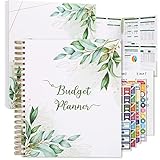
- Effective Budget Planning - Take control of your finances with the budget account book. This comprehensive planner allows you to plan and track your income, expenses, savings, and financial goals in one convenient place. With its intuitive layout and easy-to-use sections, you can stay organized and make informed decisions to achieve financial success.
- User-Friendly Layout - The budget planner features a user-friendly layout designed for easy navigation and organization. Each month, you'll find dedicated budget pages where you can set financial goals, track your income, and plan your expenses. Additional sections include debt trackers, savings goals, bill payment trackers, and more, making it simple to stay on top of your finances.
- Undated Monthly Calendar & Bonus Stickers - Featuring undated calendar each month, you'll have ample space to mark paydays, bills due, appointments, and important dates. Say goodbye to difficult writing spaces. Plus, we've included 3 cute sticker sheets that allow you to personalize your financial organizer and make budgeting more fun. Dates are not pre-printed and are completed by the user.
- Reliable and Convenient Design - Our monthly budget planner is designed for your convenience and built to last. The elastic band keeps everything securely in place, and the dual-sided pocket provides extra storage. Experience a budget planner that combines practicality and durability.
- Master Budgeting with Ease - Our financial planner includes a complete guidebook that provides valuable insights and instructions for optimal usage. From setting financial goals to tracking expenses, this guidebook offers step-by-step guidance and practical tips. Whether you're new to budgeting or an experienced user, this resource will help you make the most of your budget planner, empowering you to achieve financial success.
4. Choose realistic changes after you see the numbers
Once the baseline is accurate, look for reductions you can sustain. Start with categories where spending has changed materially or where you have room to adjust without compromising essential needs. There is no across-the-board percentage cut that suits every household.
Update the working budget when income, bills or spending habits change, and check it again after the next billing cycle. If spending still exceeds take-home income, a balance transfer or consolidation loan alone will not fix the underlying gap.
Rank #3
- Keep Track of Your Finances: Manage your personal and family’s finances with this monthly budget planner! Intuitive, comprehensive and fun, this budgeting planner allows you to keep track of your debts, expenses and bills, organize your spending and saving and optimize your budget for achieving your financial goals!
- Large Budgeting Planner: Our budget notebook features a large design of 8.5 x 11-inch that provides enough space for budgeting, financial planning and spending tracking but also for monthly reviews and building strategies for optimizing your budget!
- Well-Organized for Your Convenience: This budget book planner features an easy yet efficient template that includes a monthly budget with customizable categories, a debt tracker, a bill tracker, an expenses tracker as well as a section for financial goals and monthly review that will make things easier when it comes to budget planning!
- 12-Month Budget Management: Our budgeting book features a spiral-bound hardcover design made with high-quality 120gm thick paper and a 12-month undated design that allows you to start budget planning at any time of the year!
- Chic, Practical, Giftable: Featuring a superb boho cover and packed in a matching gift box, this budget book journal makes a lovely gift for a friend, family member or co-worker! The budget journal includes a special pocket for bills, receipts or other documents and comes with 5 stickers that will make your planning more fun and effective!
5. Keep an accessible reserve for unexpected expenses
A reserve can help cover an unplanned car or home repair, medical bill or period of lost income. Borrowing to meet an unexpected expense can add interest and fees, the CFPB cautions. There is no single reserve target that fits everyone, but even a small amount can provide some security if a larger goal is out of reach.
Choose a safe, accessible place for the money that fits your circumstances. Building the habit through regular cash-flow management or saving part of a one-time inflow may help. If you use the reserve, work to rebuild it over time. The CFPB’s emergency-fund guide covers ways to get started.
Rank #4
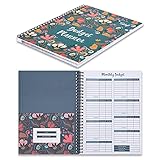
- Customize & Get Budgeted - With blank free of pre-filled categories and months budgeting pages, Soligt undated budget planner gives you complete control of your finances on a daily monthly and annual basis and enable you to manage your personal finance, cash money payment, and budgeting effective without any restrictions.
- Keep you on Track & Organized - The budget book journal provides 12 cute pockets for effortless bill, receipt, envelopes storage, along with a spacious layout perfect for recording and tracking incomes, expenses, savings, debt payoff, bills calendar and paying with ease.
- Achieve Financial Goals - This bill organizer provides a simple yet comprehensive budgeting system that is perfect for home household or small business beginners and encourages celebrating successes while identifying opportunities for improvement, both visually appealing and user-friendly.
- Your perfect companion - The Spiral bound budgeting notebook is the perfect small size, measuring at 9.25 x 6.81" and featuring a durable hardcover and 100 gsm paper. Lightweight and portable, It is easy to take with you wherever you go and built to last throughout the year.
- Bonus Month Tabs - The paycheck Budget Planner Financial Organizer boasts colored sticker labels to aid in simple navigation through your budget pages, ensuring added convenience and ease of use to help locate important information quickly and efficiently.
6. Compare debt options by total cost, not just monthly payment
Before moving credit-card balances or consolidating debt, understand why the balances accumulated and make a budget for repayment. Ask creditors whether they can offer more affordable payments, and consider free nonprofit credit counseling. Compare fees, the length of any promotional rate, the rate afterward, the repayment term and the total amount you would pay.
| Option | What to check | Main risk or trade-off |
|---|---|---|
| Balance transfer | Transfer fee, promotional-rate length and the rate after the promotion | A temporary lower rate may not last through repayment; fees add to the cost. |
| Consolidation loan | Rate, fees, repayment term and total repayment amount | A lower monthly payment can come from a longer term and a higher total cost. |
| Home-equity borrowing | Loan terms and whether payments fit the household budget | The home secures the debt and can be at risk of foreclosure if the loan is not repaid. |
The CFPB’s debt-consolidation guidance explains these trade-offs. Compare the full offer before committing rather than treating a smaller required payment as proof that borrowing has become cheaper.
Do these 3 things before closing this tab:
1Scan for outdated or missing drivers - takes under a minute2Clear out junk files and repair common Windows errors3Fix the driver behind crashes, sound loss and screen glitchesBest Value

- Effective Budget Plan Book – Take control of your finances with the SUNEE budget account book. This all-in-one budget planner allows you to plan and track your income, expenses, savings, and financial goals. Its intuitive layout and easy-to-use sections help you stay organized and make smart decisions to reach financial success. Our financial planner also included a comprehensive guidebook with valuable tips and instructions to help you get the most out of your budgeting planner.
- Full-Page Calendars – Each month’s full-page calendar provides plenty of space to track paydays, bills due dates, appointments, and important events. No more cramped boxes or tight writing areas, you can easily plan and organize your schedule at a glance.
- Colorful Pages Layout and Tabs – This vibrant budget planner features a user-friendly design for easy navigation and organization. Each month includes dedicated budget pages to set financial goals, track income, and plan expenses. Additional sections like debt trackers, savings goals, and bill payment trackers make managing your finances a breeze. The colorful backgrounds on each page offer clear, instant visibility.
- Bonus 4 Stickers and Convenient Design – This monthly budget planner is built for convenience and durability. Water-resistant cover protects against spills, while the elastic band keeps everything secure, and the dual-sided pocket offers extra storage. Plus, we’ve included 4 adorable sticker sheets to personalize your planner and make budgeting more enjoyable. Experience a budget planner that combines practicality with lasting quality.
- UNDATED DESIGN & 1 YEAR USE - Undated finance books start with 1 page-financial goals, 1 page-Mind Map, 1 page-Financial Strategy, 1 page-Tactics, 2 pages-Important Dates, 4 pages-Bill Tracker, 4 pages-Saving Tracker, 8 pages-Debt Tracker, followed by 12 Months(10 pages per month, 1 unique color for each month). 2 pages-Christmas Budgeting, 2 pages-Yearly Summary, 2 pages-Check Register and 12 pages-Notes(dotted). It is UNDATED, so you could start at any time, suitable for 1 year use.
7. Review savings accounts and their terms
When market rates rise, deposit rates may not move as quickly as borrowing rates. If you have savings, compare current rates and account terms at banks and credit unions rather than relying on a headline rate alone. Check fees and how readily you can access funds. If you move money, identify any automatic payments linked to the old account and update them so essential bills are not disrupted. The CFPB’s rate explainer offers general guidance on comparing savings options; it is not a current provider or rate ranking.
What published inflation and rate figures can—and cannot—tell you
Historical figures can explain why households have faced pressure, but they do not describe conditions in 2026. The CFPB’s 2024 annual report, citing the U.S. Bureau of Labor Statistics, says consumer prices rose 3.2 percent from December 2022 to December 2023, down from 6.5 percent from December 2021 to December 2022. The report also says the Federal Reserve’s federal funds rate reached 5.5 percent in July 2023. These are dated figures, not current inflation or interest rates, and they cannot substitute for checking your own bills and loan terms.
Statistics about emergency savings also need careful reading. A CFPB financial-well-being guide reports that 81 percent of adults in its “high” financial-well-being score range were certain they could come up with $2,000 for an emergency. That is a result for a score-defined subgroup in the CFPB’s analysis of the National Financial Well-Being Survey, not the share of all U.S. households able to raise that amount. See the CFPB’s financial well-being resources for context.
Quick Recap
Product prices and availability are accurate as of the date/time indicated and are subject to change. Any price and availability information displayed on Amazon at the time of purchase will apply.




